

You are scrolling through saved pins, and the same thing keeps happening: a highlight placement that looks incredible on someone else but leaves you wondering how it would hold up on your Tuesday. That is the gap this collection closes, not just what to ask for, but how each option actually behaves after the blowout cools.
Twenty-nine ideas, and that is exactly how many you will find here in Pretty Highlights Hair 2027. They run the range from a single face-framing ribbon to a full ombré, from straight fine bobs to thick curly manes. The struggle of matching a technique to your texture and your schedule is the one this set solves.
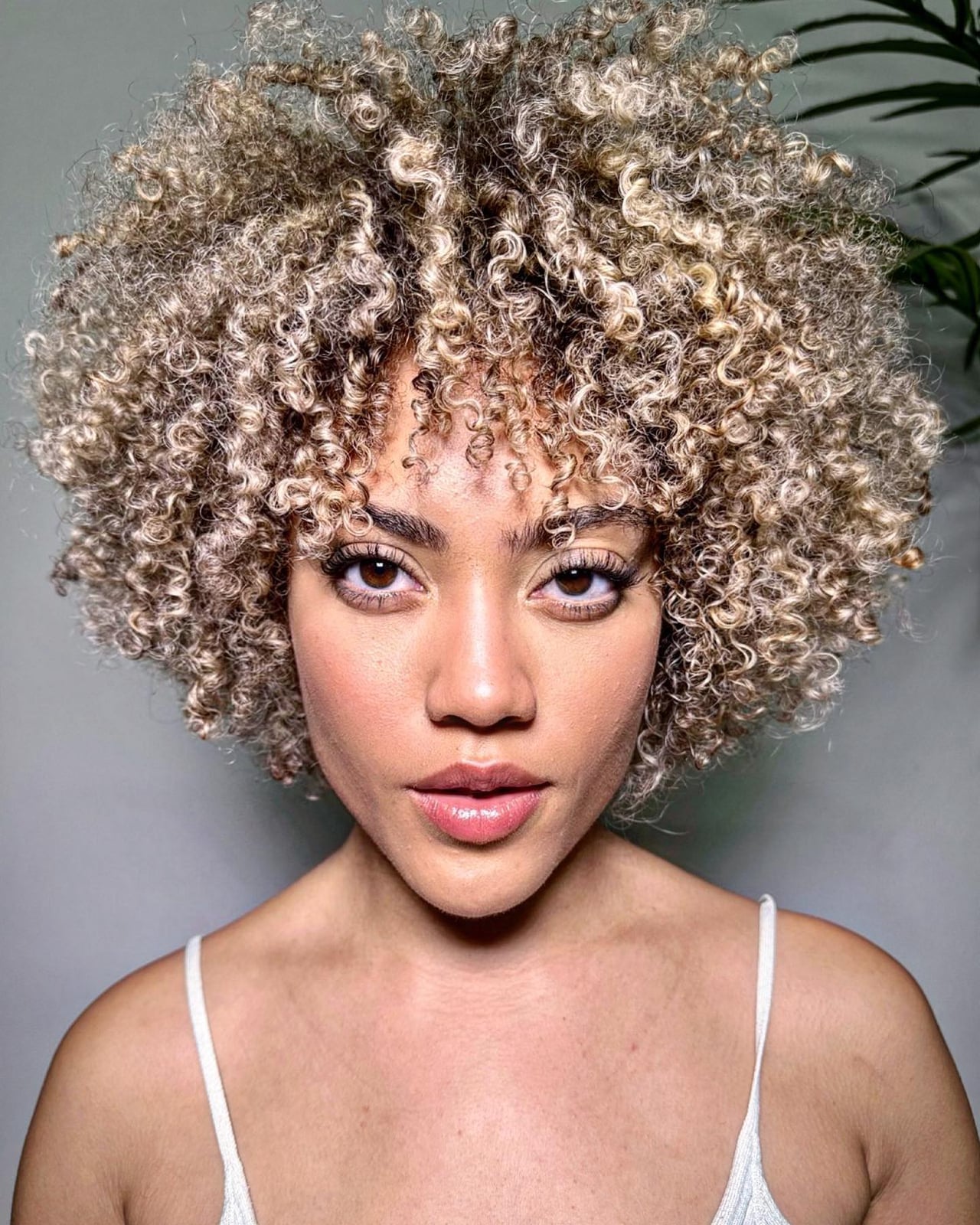
Natural dimension with curly, thick hair and blonde highlights
Contrasting blonde highlights against a dark blonde base do the work here. The curly, thick texture is air-dried, which lets each coil catch a different slice of light. Layers end around the ear, so the curl pattern stays bouncy rather than weighed down. A middle part keeps the framing even. You need a texture that holds its own shape without a round brush. Skip it if you prefer straight hair or have fine texture. Tell your colorist: dark blonde base with contrasting blonde highlights, layered cut, air-dried finish.
Wavy fine bob with ash blonde highlights and side-swept bangs
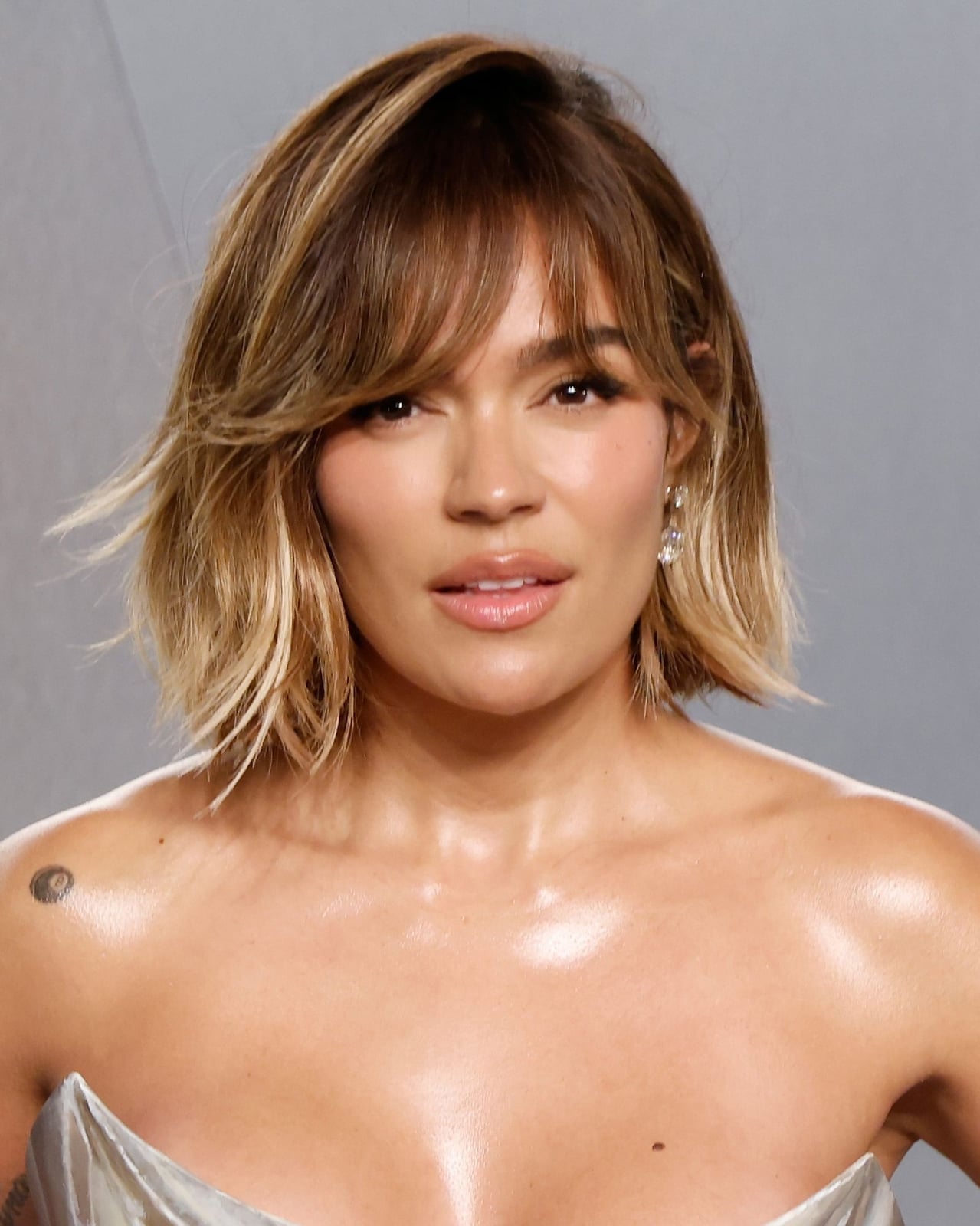
How do you translate ash blonde highlights into something the colorist can actually execute? Start with a dark blonde base, then ask for fine ribbons of ash through the mid-lengths and ends. The bob has layers, so the lighter pieces sit where the cut moves. Side-swept bangs pull the tone forward. Fine, wavy texture takes a blowout well. Skip it if you have very thick hair.
Golden highlights on a dark blonde base with wavy thick hair
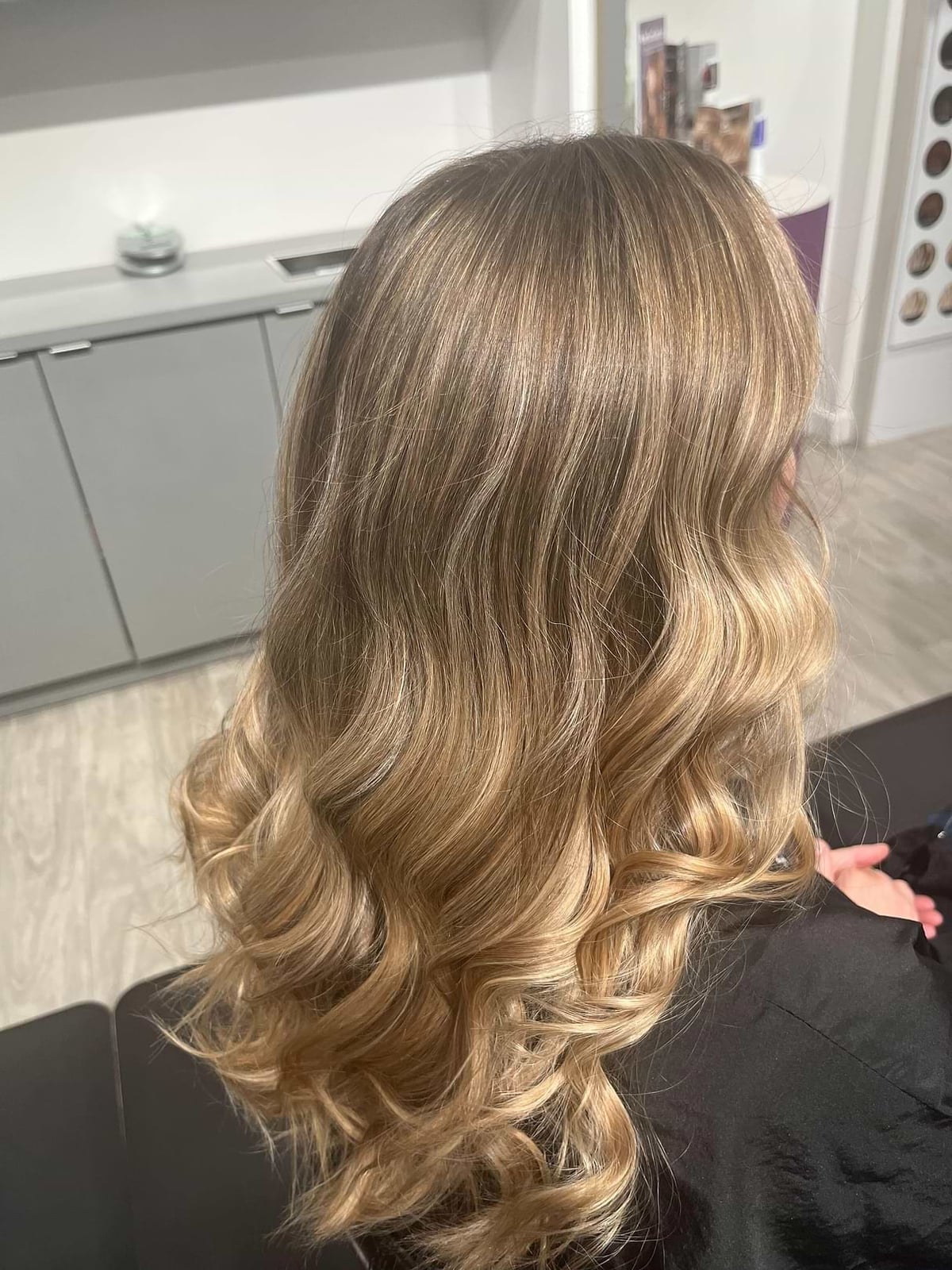
Golden highlights versus caramel. The difference is warmth versus richness. Here the golden pieces stay subtle, woven through a dark blonde base so the overall effect looks sun rather than brass. Thick, wavy texture gives the blowout volume without teasing. A middle part lets the highlights fall evenly on both sides. The tone leans warm but not orange. A cooler tone is a different look. Tell your colorist: dark blonde base with golden highlights, soft waves, layered cut.
Striking face-framing highlights on medium brown layered hair
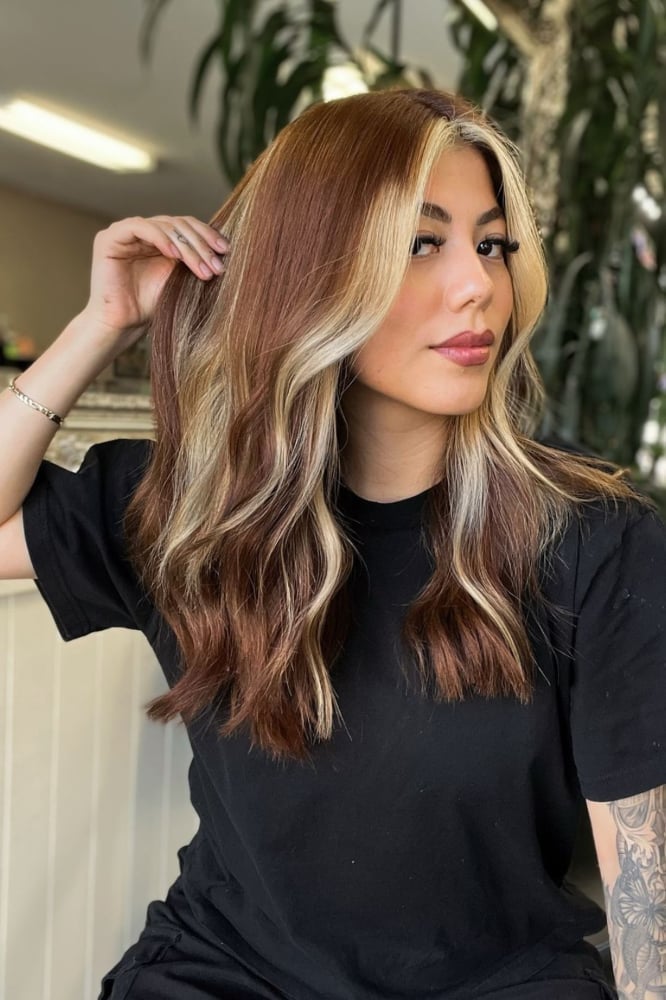
Bold blonde face-framing highlights on medium brown hair create a deliberate contrast. The layers are cut so the lighter pieces start near the cheekbone and widen toward the ends. Fine, wavy texture keeps the strands from looking heavy. A middle part centers the attention on the front. This works best when your base has enough depth to make the blonde look intentional. Skip it if you prefer subtle highlights or a darker base.
Voluminous blowout with curtain bangs and honey blonde highlights
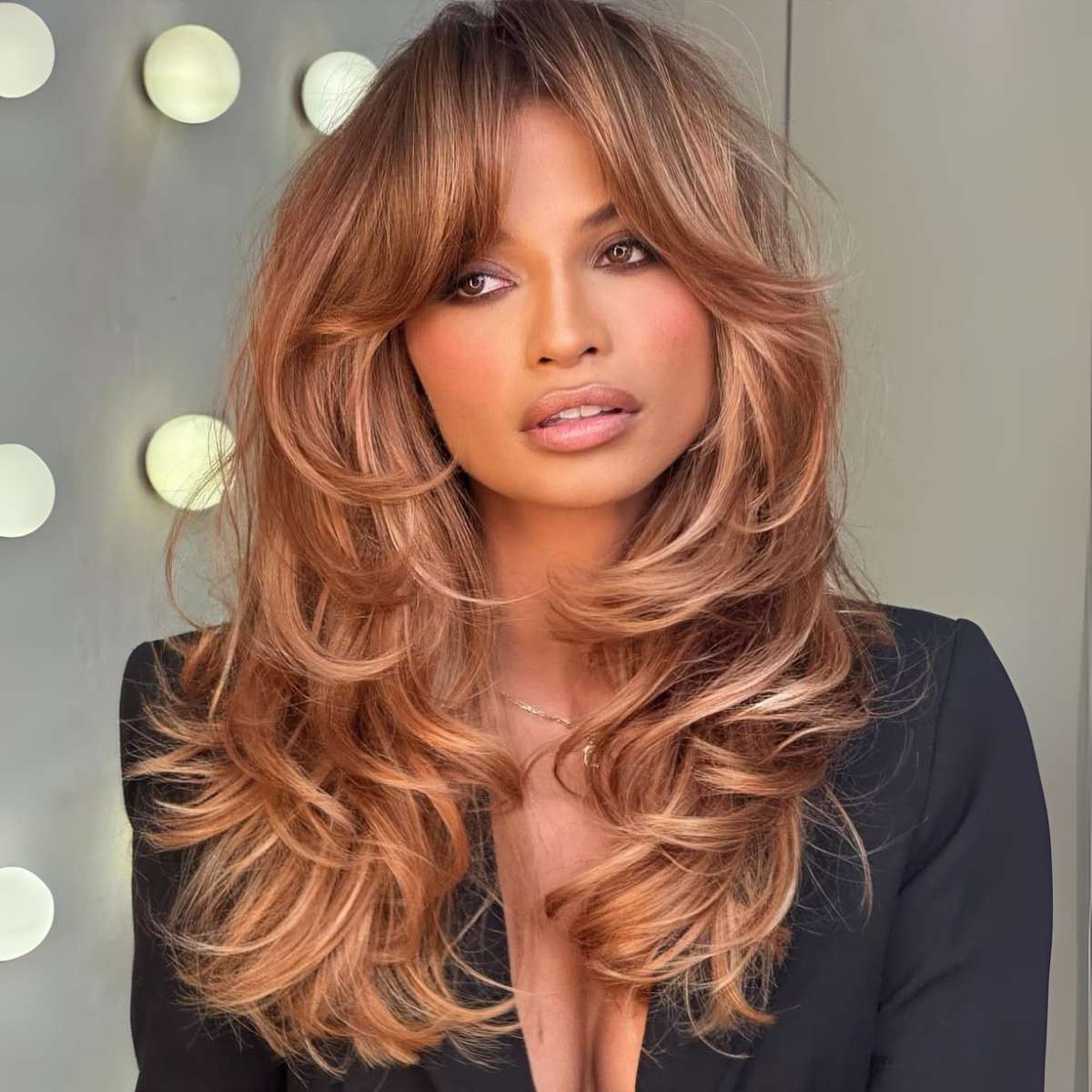
Curtain bangs and honey blonde highlights are a pairing built for a voluminous blowout. The warm brown base anchors the lighter pieces, which are subtle enough that the bangs remain the focal point. Thick, wavy texture holds the shape without pinning. A middle part splits the bangs evenly, softening the forehead. The tone is warm but not brassy, with the honey sitting a shade lighter than the base. Skip it if you dislike bangs or prefer straight hair. Tell your colorist: warm brown base with honey blonde highlights, curtain bangs, layered cut.
Blonde money piece with balayage on dark brown layered hair
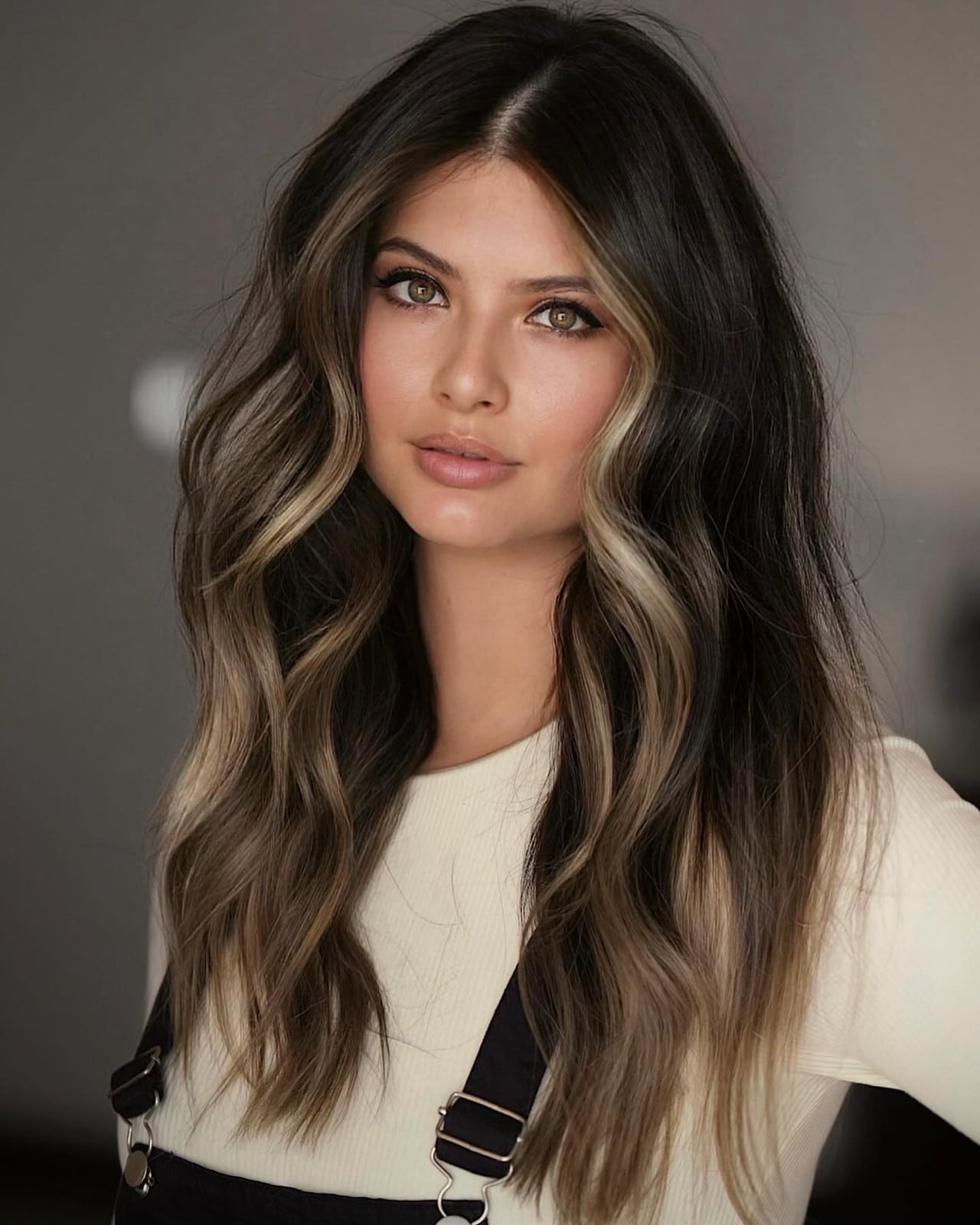
A dark brown base gets a sharp blonde money piece at the front, then softens into balayage through the rest. The contrast does the talking, bold around the face, subtle everywhere else. Long layers and loose waves keep it from feeling severe. Skip it if you prefer all-over color or a shorter cut; the money piece needs length to land right. Touch-up the money piece and balayage every ten to twelve weeks.
Thick, wavy texture carries this design best. The blonde sits on top of the wave, not buried in it. A middle part shows off the symmetry of the face-framing pieces. That is the whole arrangement: one sharp accent, then a fade into the rest.
A bolder take on highlights with silver on dark gray
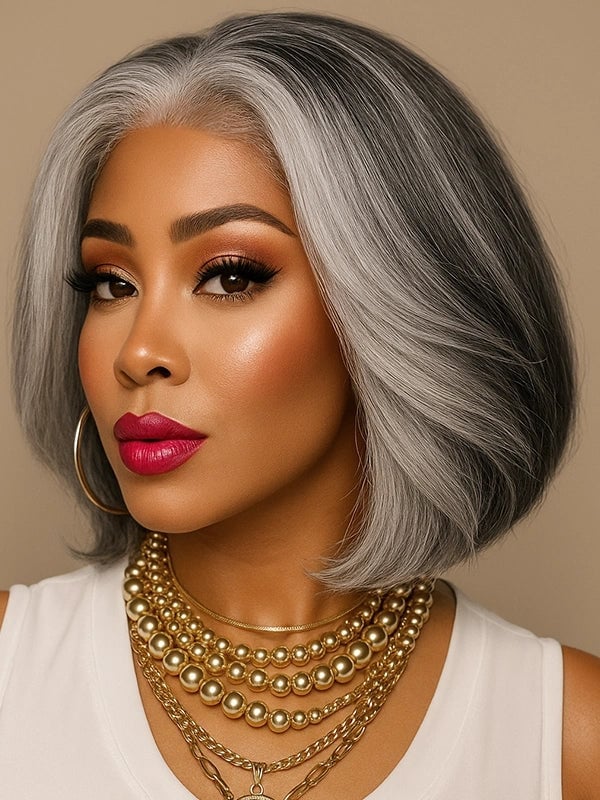
How do you get silver that looks intentional, not faded? A dark gray base with silver highlights, placed on a bob with a side part and a smooth blowout. The key is the base tone, dark enough to anchor the silver, not pale enough to look washed out. Fine, wavy texture works best here; the silver strands catch the light without needing volume. Tell your colorist: dark gray base with silver highlights, bob cut. The catch: skip it if you prefer natural hair colors. This is a statement, not a neutral.
Natural dimension with face-framing highlights on dark brown hair
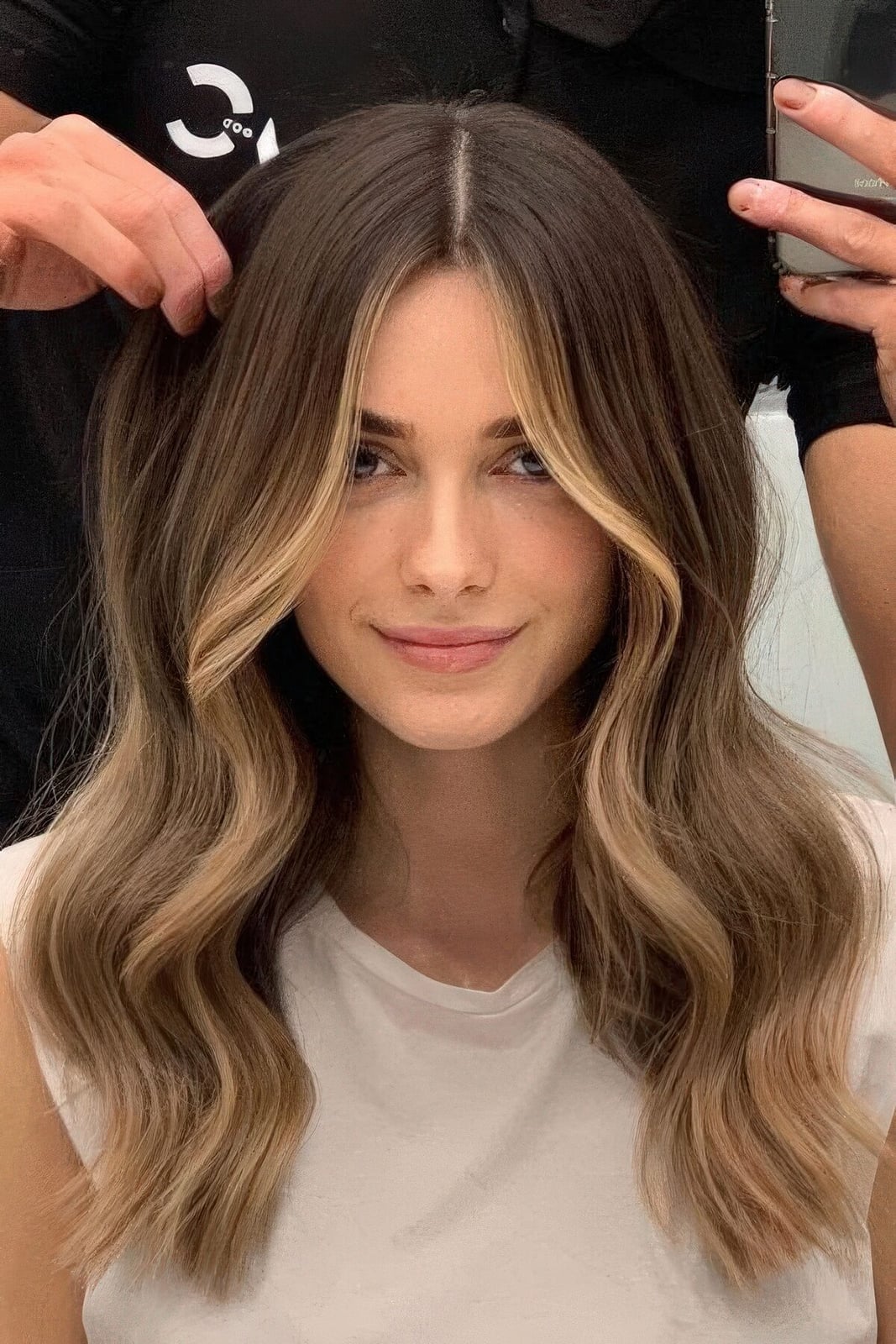
All-over highlights brighten everything. Face-framing highlights brighten only what needs it. This is the second camp: dark brown base, blonde highlights placed at the front, soft waves, a centered part. The rest of the hair stays dark, so the contrast is natural, not stripey. Thick, wavy texture gives the highlights room to sit on top of the wave. A cooler base tone is an alternative to this warm blonde. A layered cut helps the face-framing pieces land at the right angle. The result is subtle brightness, not a full commitment.
Caramel highlights on dark brown layered hair with face-framing
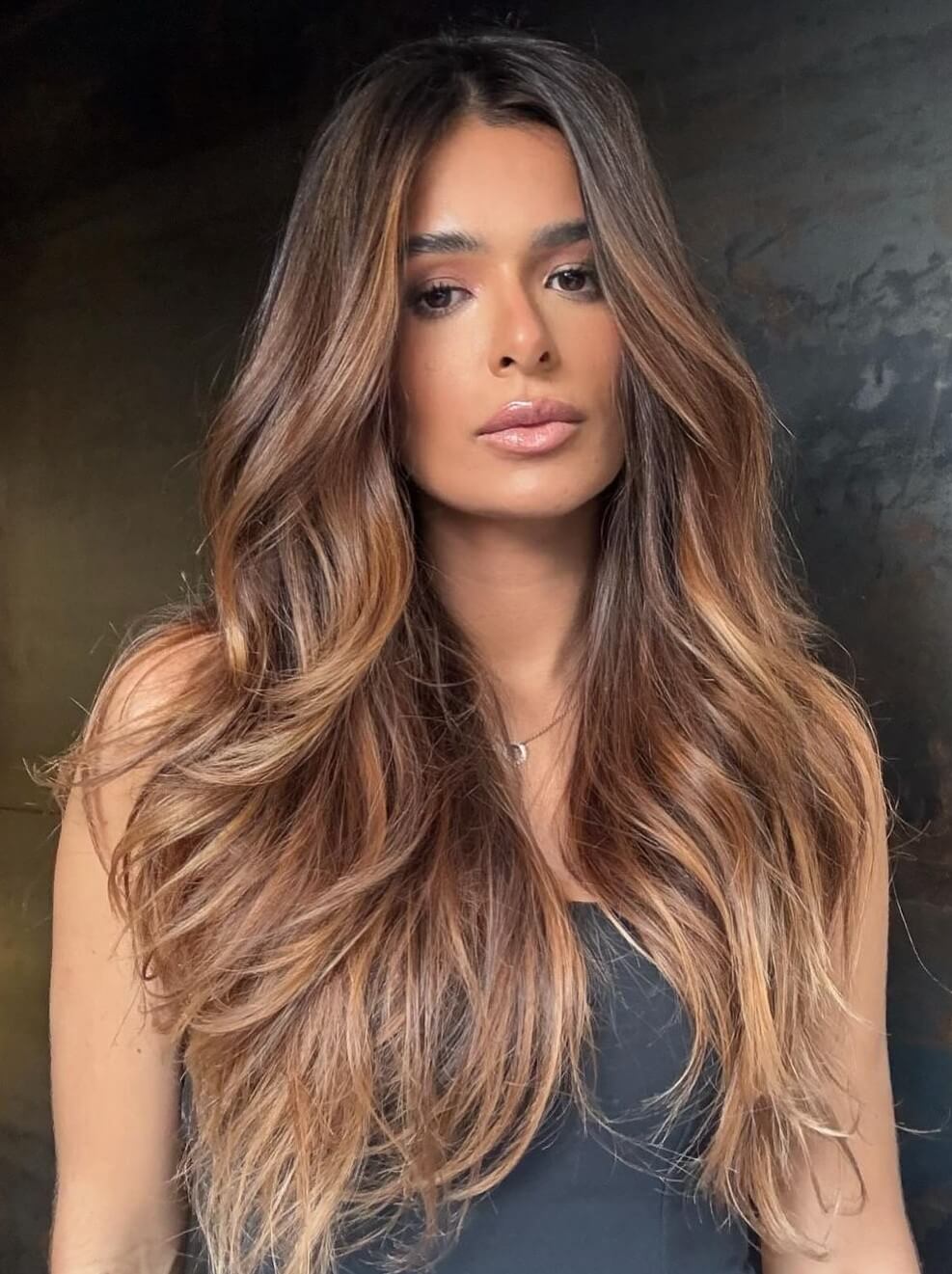
A dark brown base with caramel highlights sounds simple. The placement makes it specific. The caramel sits in face-framing layers and through the ends, leaving the top and crown dark. That keeps the root line soft and the warmth where it shows. Thick, wavy texture and a middle part let the caramel strands wrap around the face. Skip it if you prefer ash tones, caramel reads undeniably warm. Tell your colorist: dark brown base with caramel highlights, face-framing layers. A blowout or loose waves is the styling move; straightening flattens the dimension.
Lighter dimension with caramel highlights on dark brown hair
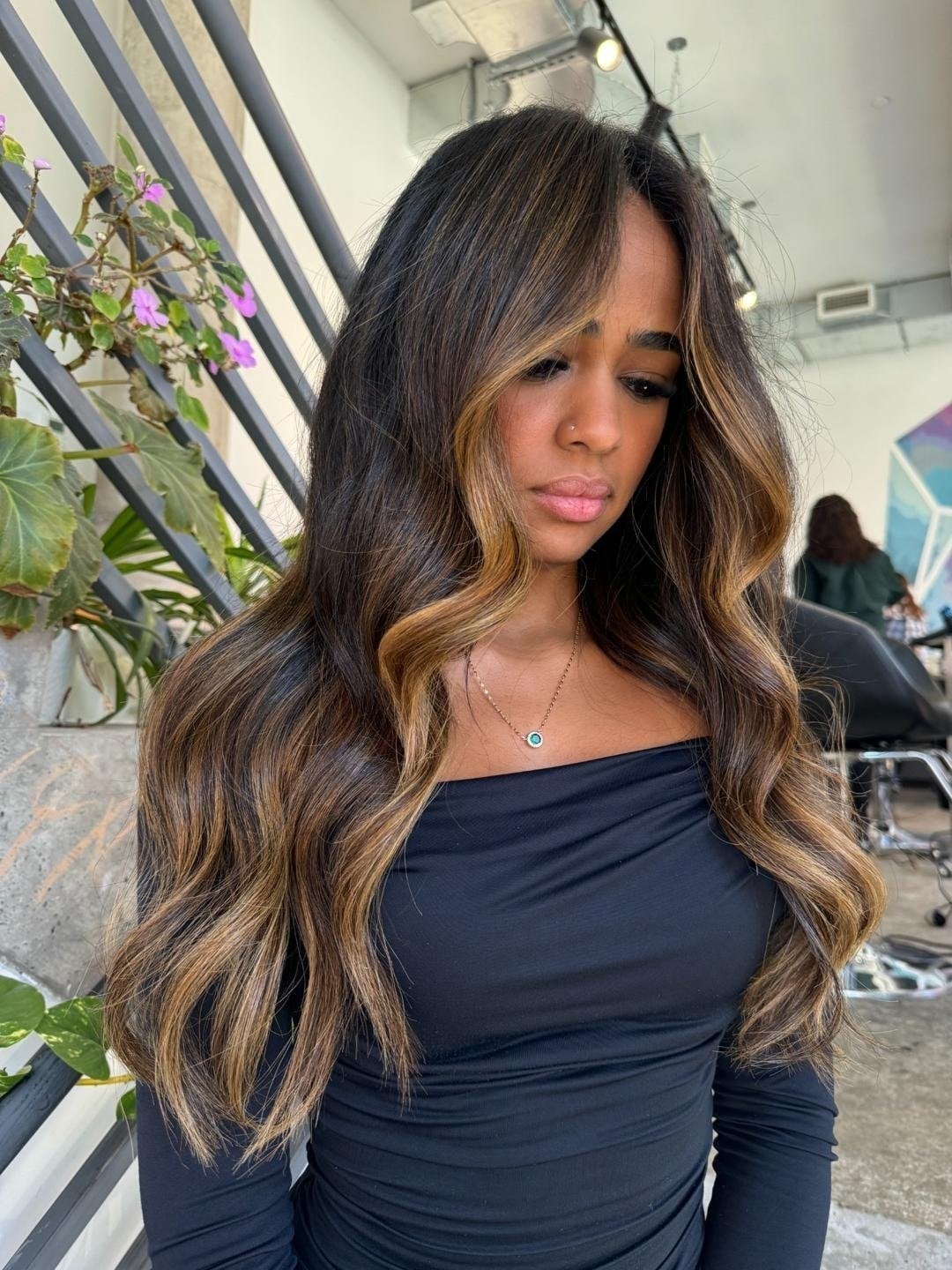
The technique here is balayage painted onto a dark brown base, with caramel highlights that stay concentrated around the face and through the ends. The middle part and wavy texture help the caramel look sun-struck. Thick hair holds the wave pattern longer, which keeps the highlight placement visible. Caramel is warm by nature. The upkeep is straightforward: a toning gloss every eight to ten weeks keeps the caramel from turning brassy. No foils, no heavy root line, just a fade that grows out gracefully.
Smooth blonde balayage on dark brown layered hair with wavy blowout
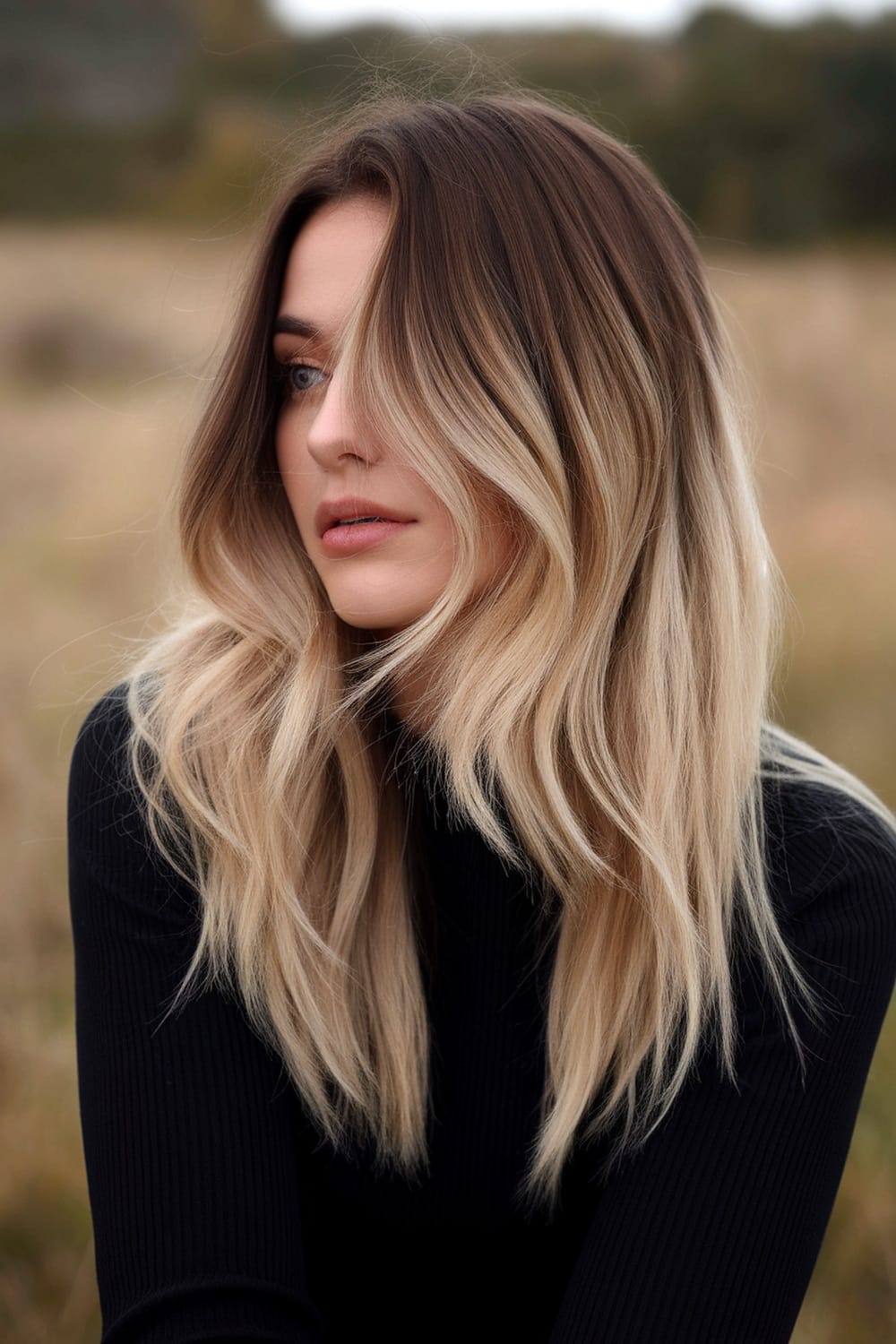
Dark brown meets blonde balayage, and the blend creates a soft transition. The technique skips a defined root line. The blonde starts lower and softens upward, so the grow-out phase is generous. Fine, wavy texture holds the color well without the weight of a full highlight. A side part lets the face-framing pieces land where they catch the most light. Ask your colorist for: dark brown base with smooth blonde balayage, layered cut. The result is a tonal shift, not a stripe. The chair time is longer, but the payoff is a color that moves with the wave instead of sitting on top of it.
A high-contrast, chunkier highlight is a different look. The subtlety is the draw, and that means the difference between the base and the blonde is measured in shades, not leaps. Balayage on layered hair needs a stylist who paints rather than foils, the shape of the layer dictates where the light tone lands. Touch up every ten to twelve weeks, and style in waves to keep the dimension visible. Straightening flattens the transition.
Natural lighter look with caramel highlights on fine straight hair
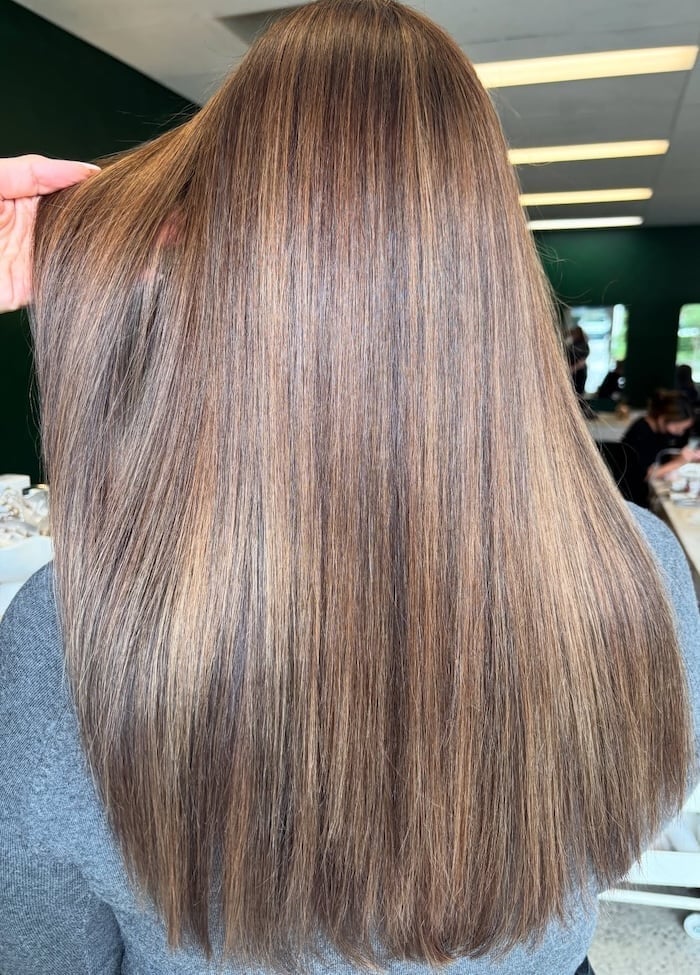
Caramel on dark brown looks sun, not salon, when the highlights are fine and the base stays rich. The straight, fine texture here is the secret. The caramel slices sit close to the surface without overwhelming the root. A centered part and a smooth blowout keep the look clean. The layers are soft, not choppy, so the tone looks a wash rather than a pattern. One catch: fine hair needs a light hand with the lightener. Over-painting creates gaps.
Copper highlights on dark brown wavy thick hair
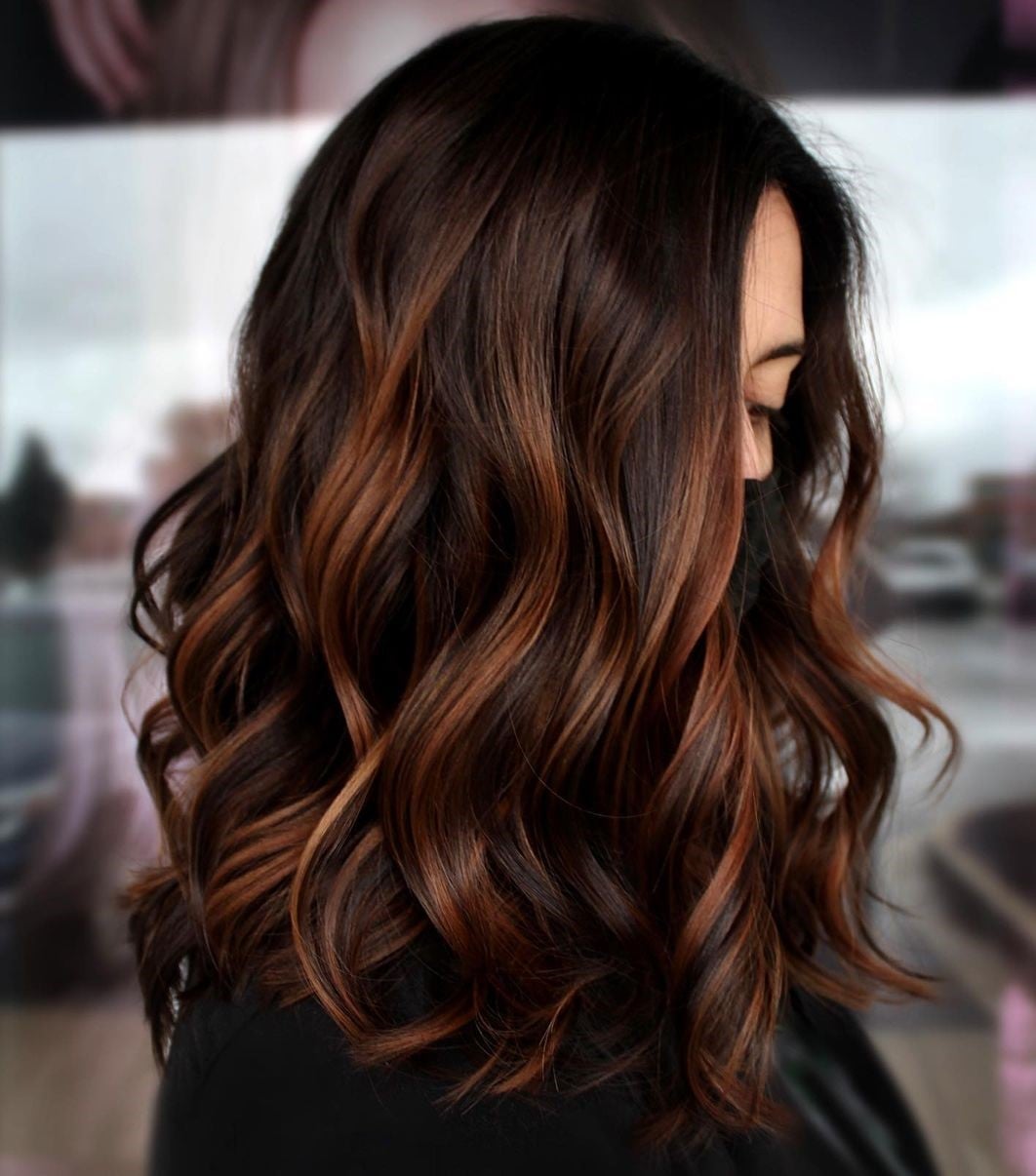
Copper versus caramel: the difference is temperature. Caramel leans warm and buttery; copper leans bright and metallic. On a dark brown base with thick, wavy texture, copper provides contrast against the base. The middle part and side view show the highlights wrapping around the layers instead of sitting flat. Copper demands warmth from the base to look cohesive. Thick hair carries the color without the highlights disappearing into the density. The words for the chair: dark brown base with copper highlights, layered cut. A texturizing spray on the waves helps the copper reflect light at different angles.
Honey blonde highlights on light brown base with bouncy blowout
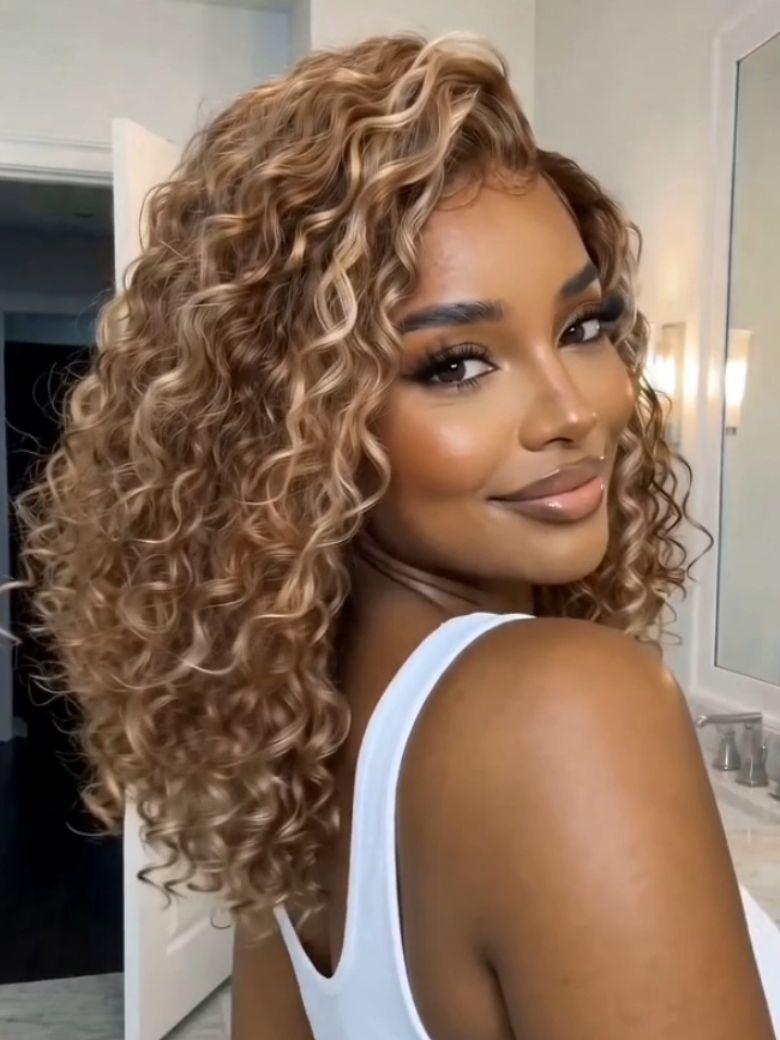
Light brown as a base gives honey blonde room to look a highlight rather than a full color change. The bouncy blowout and thick, wavy texture push the honey pieces to the surface in a way that straight hair cannot replicate. A middle part keeps the distribution even. This suits anyone with a medium to warm base who wants dimension without a root commitment. Tell your colorist: light brown base with honey blonde highlights, layered cut. The layers need to be cut to hold the blowout volume, flat hair makes honey blonde look heavy. The tone warms up over time, so plan a toning appointment at week eight to keep the honey from tipping into gold.
Not for a cool-toned base. Honey blonde on ash brown looks muddy, not dimensional. The base has to have some warmth for the highlight to relate to it. Thick hair is ideal; fine hair can work if the highlights are painted sparingly. The blowout is non-negotiable for the full effect, air-drying mutes the contrast.
Honey blonde highlights adding dimension to dark brown hair
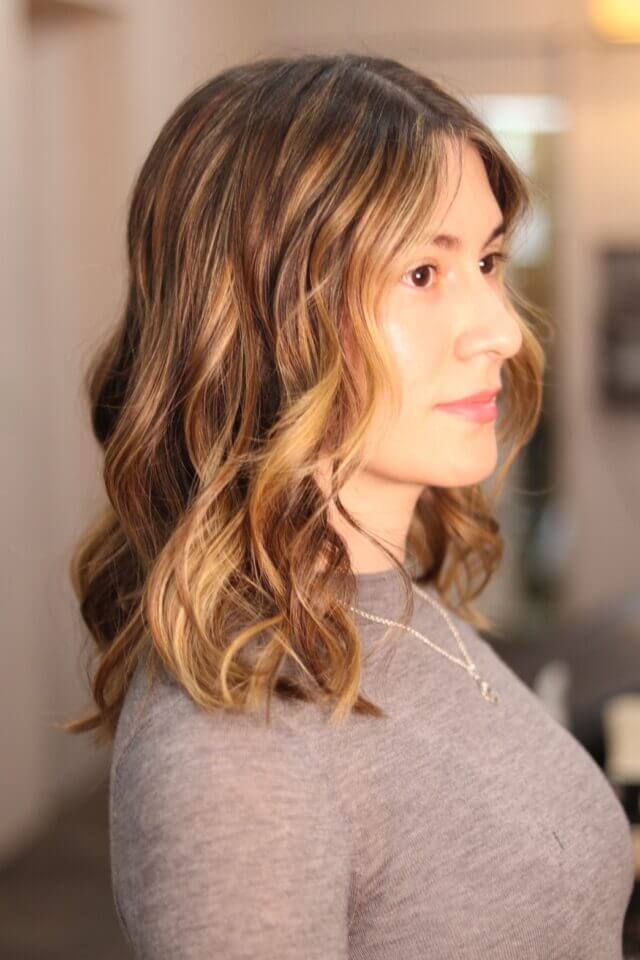
Honey blonde on dark brown creates a lighter effect that looks natural rather than dramatic. The technique places the honey pieces through the mid-lengths and ends, leaving the root area darker for a lived-in grow-out. Thick, wavy texture helps the highlights wrap around the layers instead of sitting on top. A centered part and side profile show the tone shifting with the wave pattern. The contrast is soft, not stark. The difference between the base and the highlight is about three shades.
Vibrant red highlights on a dark red shag with curtain bangs
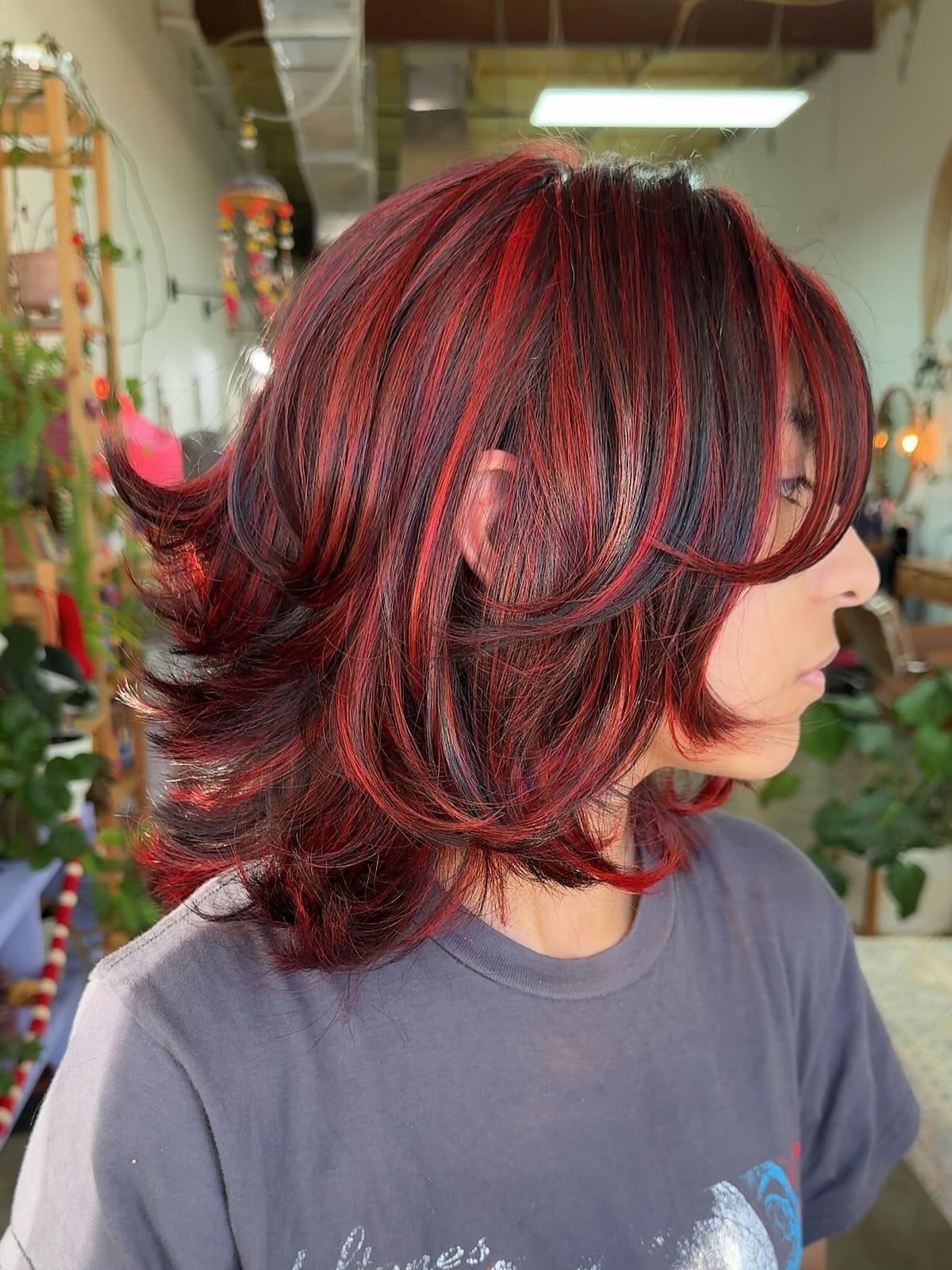
Dark red base with bright red highlights is a commitment that pays off. The shag cut and curtain bangs give the color a framework, so those vivid pieces land where they catch the eye. Thick, wavy texture holds the shape without fighting it. Tell your colorist: dark red base with bright red highlights, shag haircut, curtain bangs. Skip it if you prefer subtle colors or a classic cut. Tone every 4-6 weeks to keep that vibrancy from fading into a rusty memory.
Subtle ash blonde highlights on an ash blonde bob
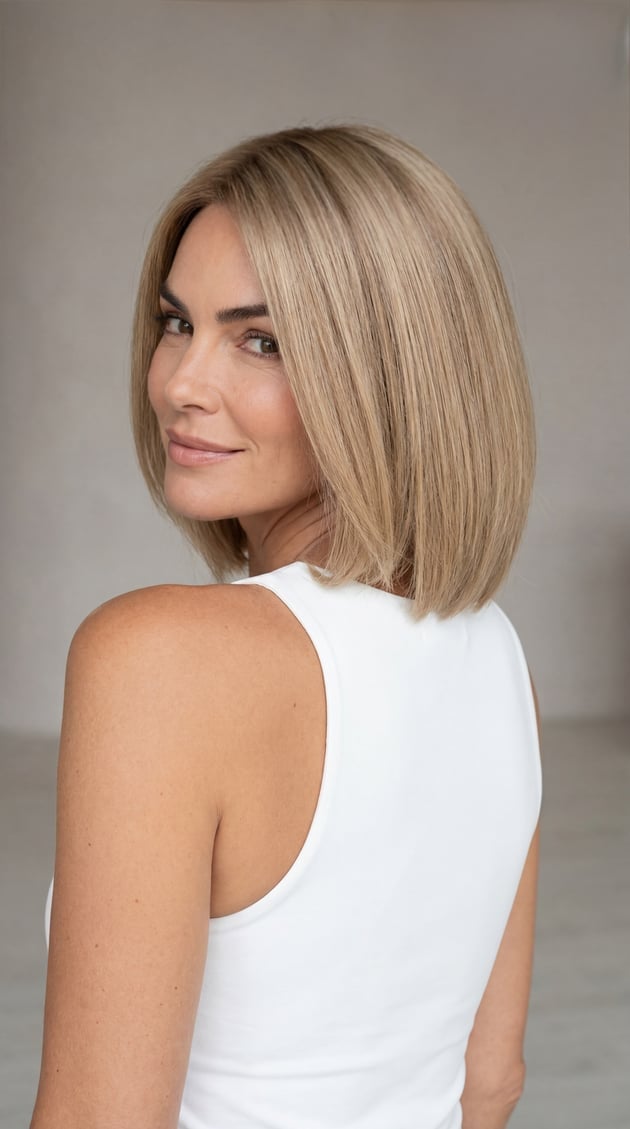
Ash blonde base with subtle highlights looks one color until the light moves. The bob cut and middle part keep it clean, so the blended pieces register as texture rather than streaks. Fine, straight hair is the ideal canvas here. Pass when you have thick or wavy hair, or prefer warmer tones.
Face-framing highlights on dark brown layered hair, close-up take
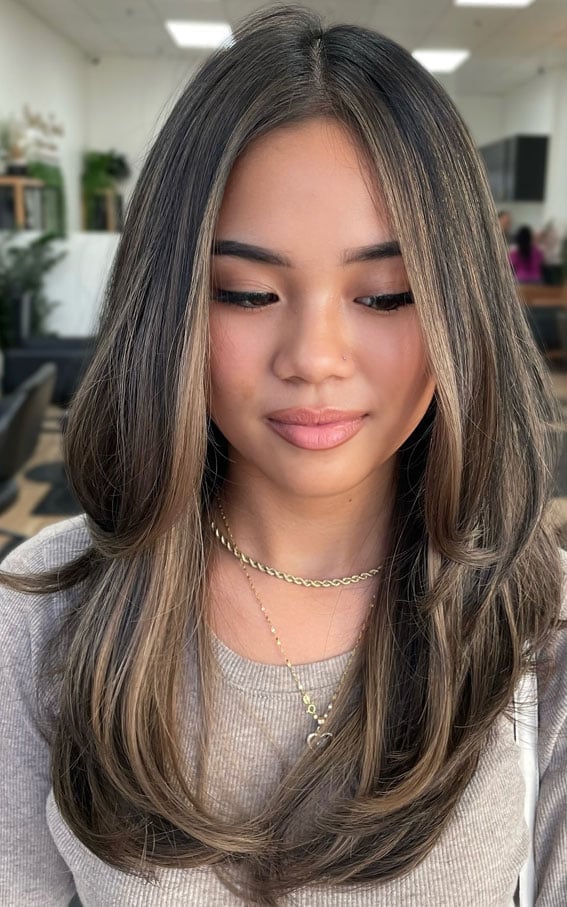
Face-framing highlights on a dark brown base differ from all-over color in one key way: the rest of the hair stays untouched. Ash blonde pieces are concentrated around the front, so the lift reads deliberate rather than accidental. Thick, wavy texture benefits from the contrast. Ask your colorist for: dark brown base with ash blonde face-framing highlights, layered cut. Not for anyone who prefers warmer tones or a sleeker style.
Soft face-framing effect with ash blonde highlights on dark blonde
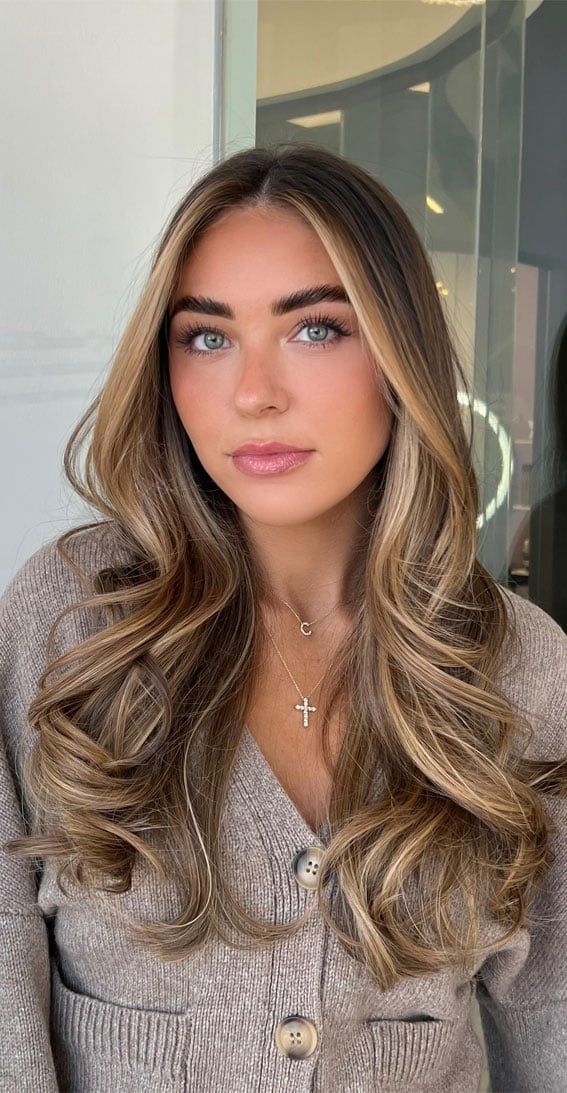
Two tones work best when one does the talking. Dark blonde base with ash blonde highlights creates a soft face-framing effect that relies on the middle part and loose waves. Thick, wavy texture keeps the blend from looking flat. Skip it if you prefer bold highlights or a straight texture.
Contrasting ash blonde highlights on dark blonde wavy hair
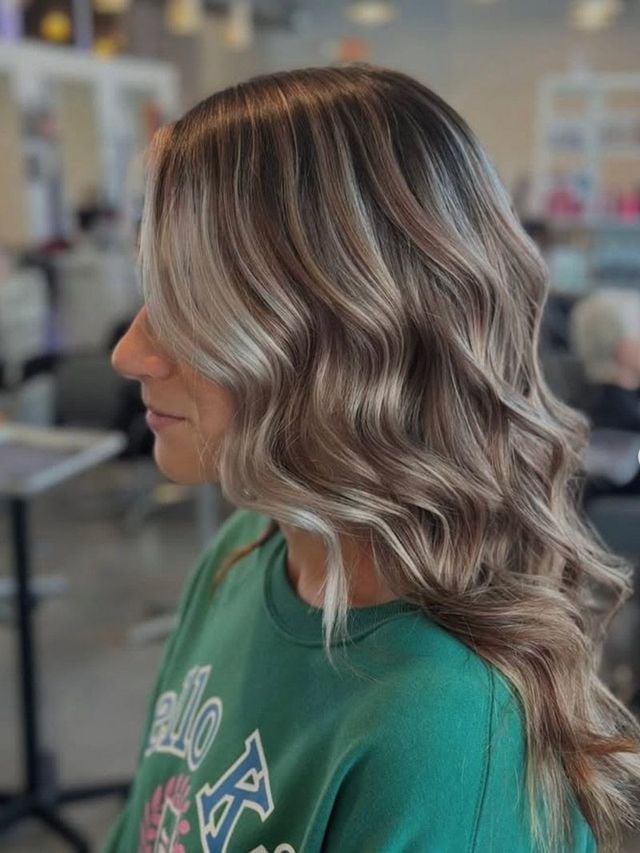
Contrasting ash blonde highlights on a dark blonde base is a deliberate design choice. The layers and wavy blowout ensure the lighter pieces sit at different depths instead of stacking in one row. Thick, wavy texture gives the contrast room to breathe.
Ask your colorist for: dark blonde base with contrasting ash blonde highlights, layered cut. Those who prefer subtle highlights or a straight texture may not favor this look. Touch up highlights every 6-8 weeks to maintain the separation between the two tones.
Lived-in blonde with face-framing highlights on dark blonde hair
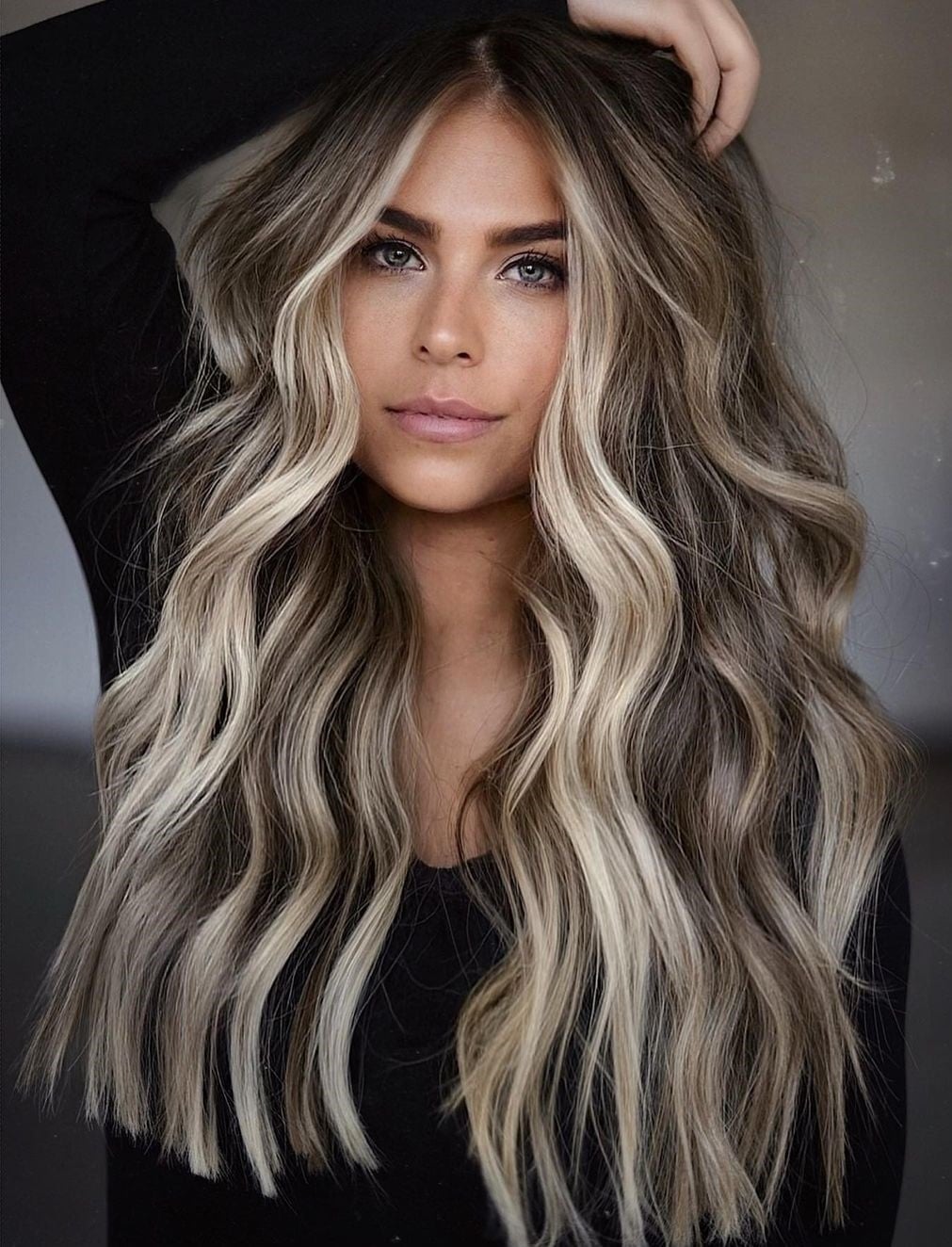
Face-framing highlights work best when they start a few inches from the root. This dark blonde base keeps the ash blonde pieces concentrated at the front, so the rest stays mostly natural. The waves and middle part let those lighter strands catch the eye without looking stripey. Layers through the ends help the color blend rather than sit in a solid block. Thick, wavy texture carries the contrast well, fine hair might need a lighter hand with the foils. A trim every eight weeks keeps the ends from swallowing the lighter pieces.
Prominent caramel highlights on dark brown layered hair
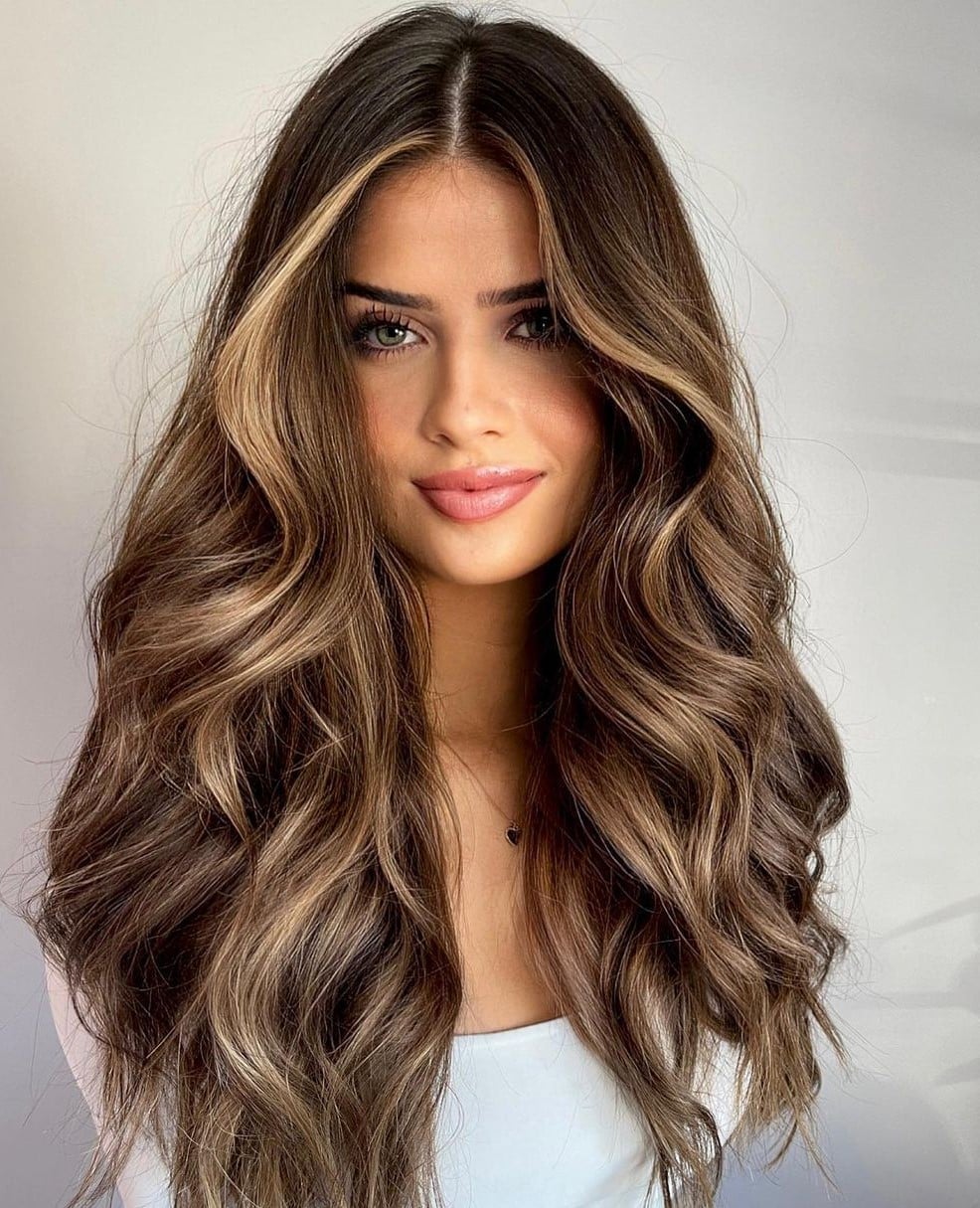
Caramel on dark brown can look warm or brassy depending on the tone. This version leans into the warmth with thick caramel sections woven through the layers and concentrated around the face. The neat blowout smooths everything so the highlights sit flush against the base. Wavy, thick texture gives the caramel enough surface to show up without needing a heavy hand. These highlights are visible and deliberate. Ask your colorist for: dark brown base with prominent caramel highlights, layered cut. A gloss at week six keeps the caramel from drifting too golden.
Natural appearance with ash blonde highlights on fine wavy hair
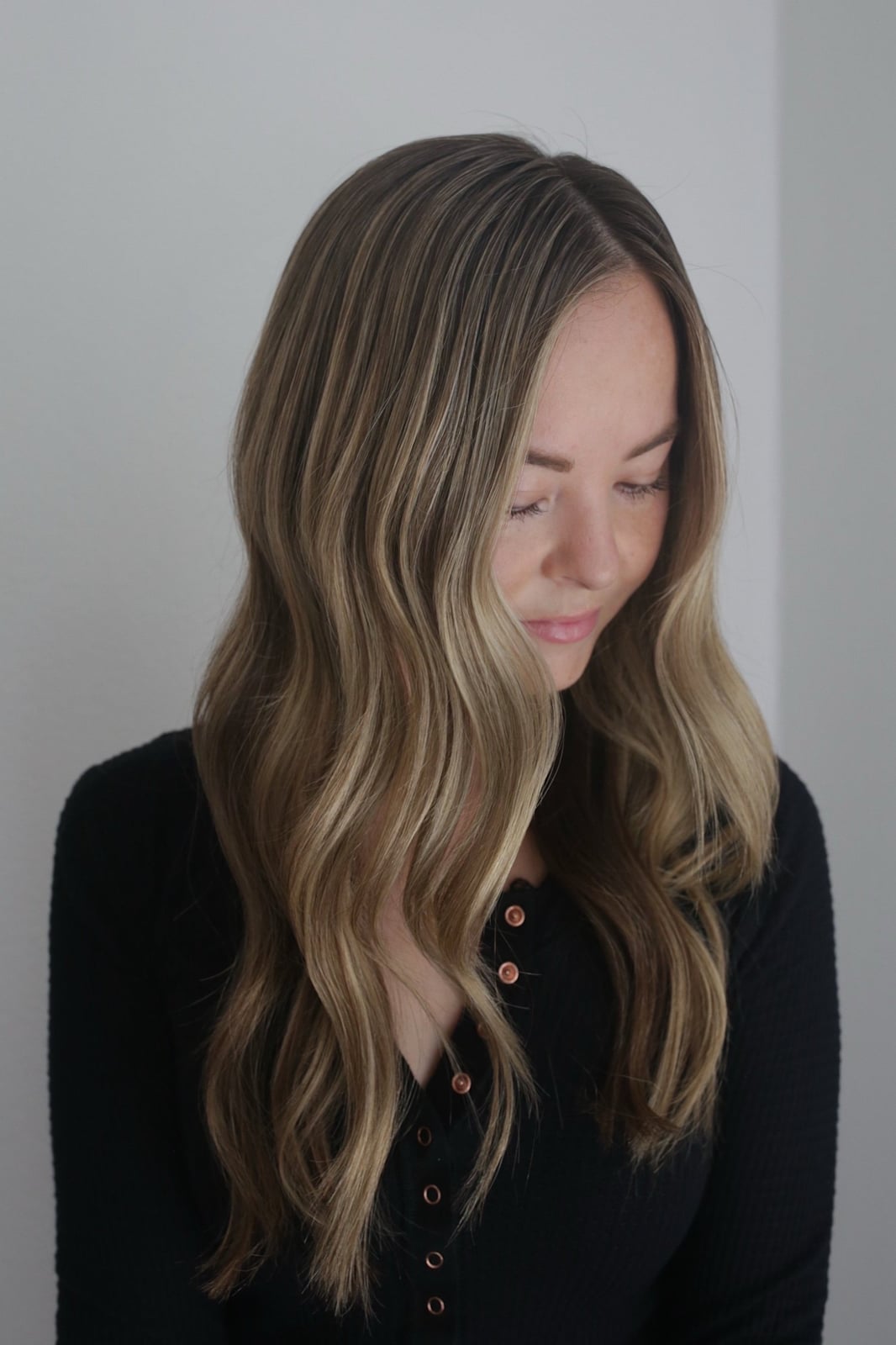
Ash blonde on fine hair walks a line between subtle and flat. This version stays on the right side by keeping the highlights fine and spaced, so the dark blonde base shows through clearly. The gentle waves add enough texture to bring out the lighter strands without making them look chunky.
Fine hair benefits from a root-smudge technique that softens the grow-out line, with no harsh bands at week four. A middle part and soft layers keep the weight from pulling the waves straight. For fine hair that is also thin, the contrast may look sparse. A purple shampoo once a week keeps the ash from warming up.
Blue and green Ombré for vibrant effect on wavy thick hair
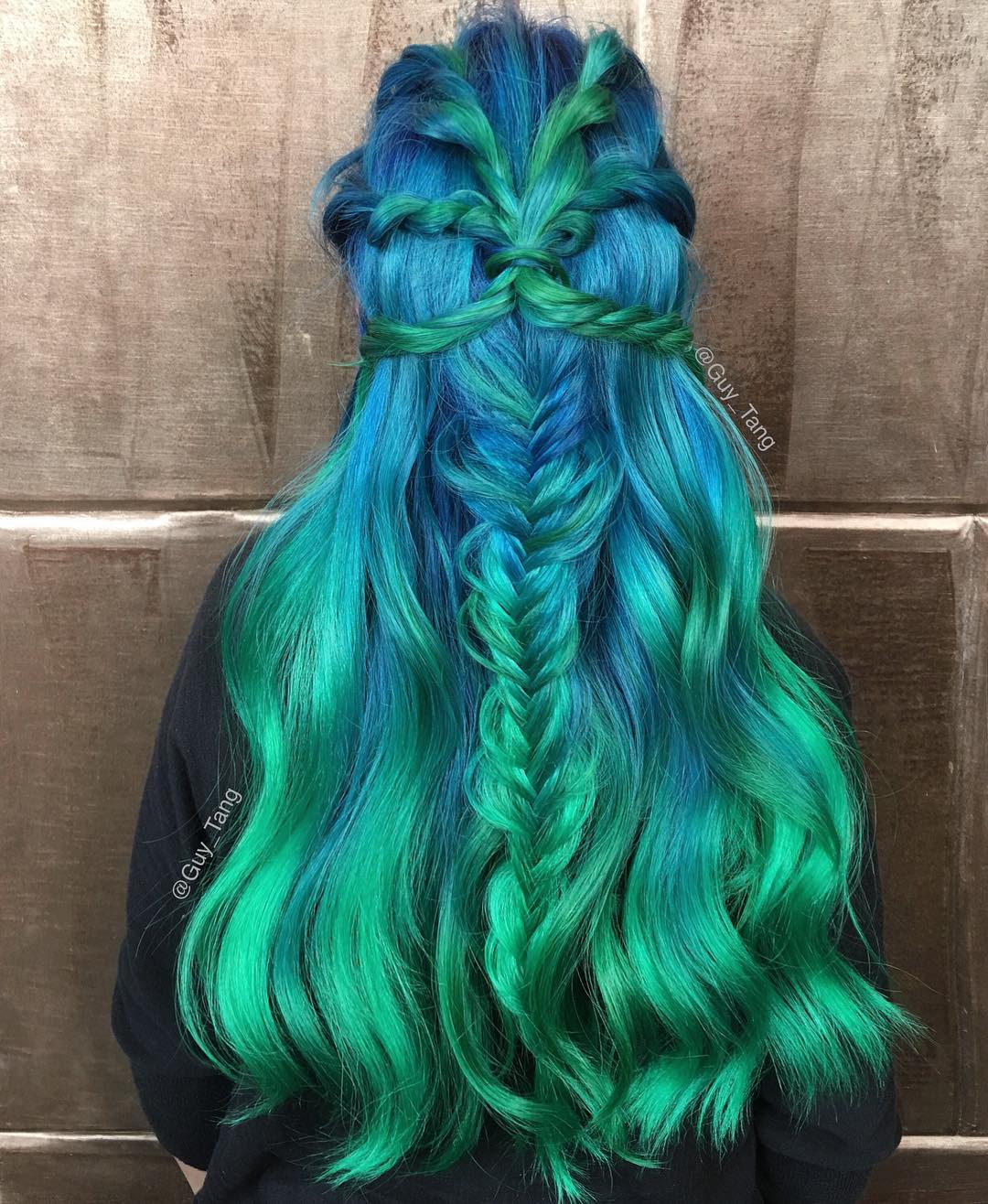
Vivid color on thick, wavy hair has one advantage: the texture holds the pigment in a way straight hair cannot. This ombré starts deep blue at the roots and shifts through teal to emerald at the ends, with braids breaking up the transition so it looks dimensional rather than striped. Skip it if your hair is fine or damaged, the lightening required for the green and teal sections puts stress on the cuticle. Thick texture can handle the lift better and keeps the color from washing out after a few washes. Tell your colorist: blue and green ombré, deep blue roots to bright teal and emerald ends. A cool-water rinse every wash extends the vibrancy by about two weeks.
Dramatic blonde highlights framing long black layered hair
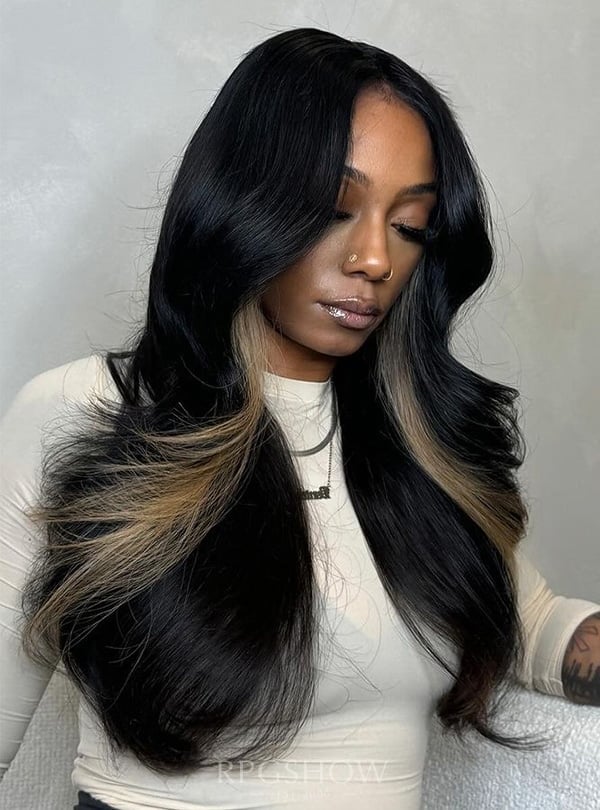
Blonde on black is never subtle, which is the point. The face-framing placement keeps the light pieces at the front while the rest stays dark, creating contrast without needing to lighten the whole head. The middle part shows the symmetry of the placement, and the waves keep the blonde from sitting in a solid block. Long layers let the color move rather than land in one spot. Thick, wavy texture supports the weight of the highlights without the ends feeling stringy. A purple shampoo in the first week keeps the blonde from pulling yellow against the dark base.
Relaxed look with face-framing layers on dark blonde hair
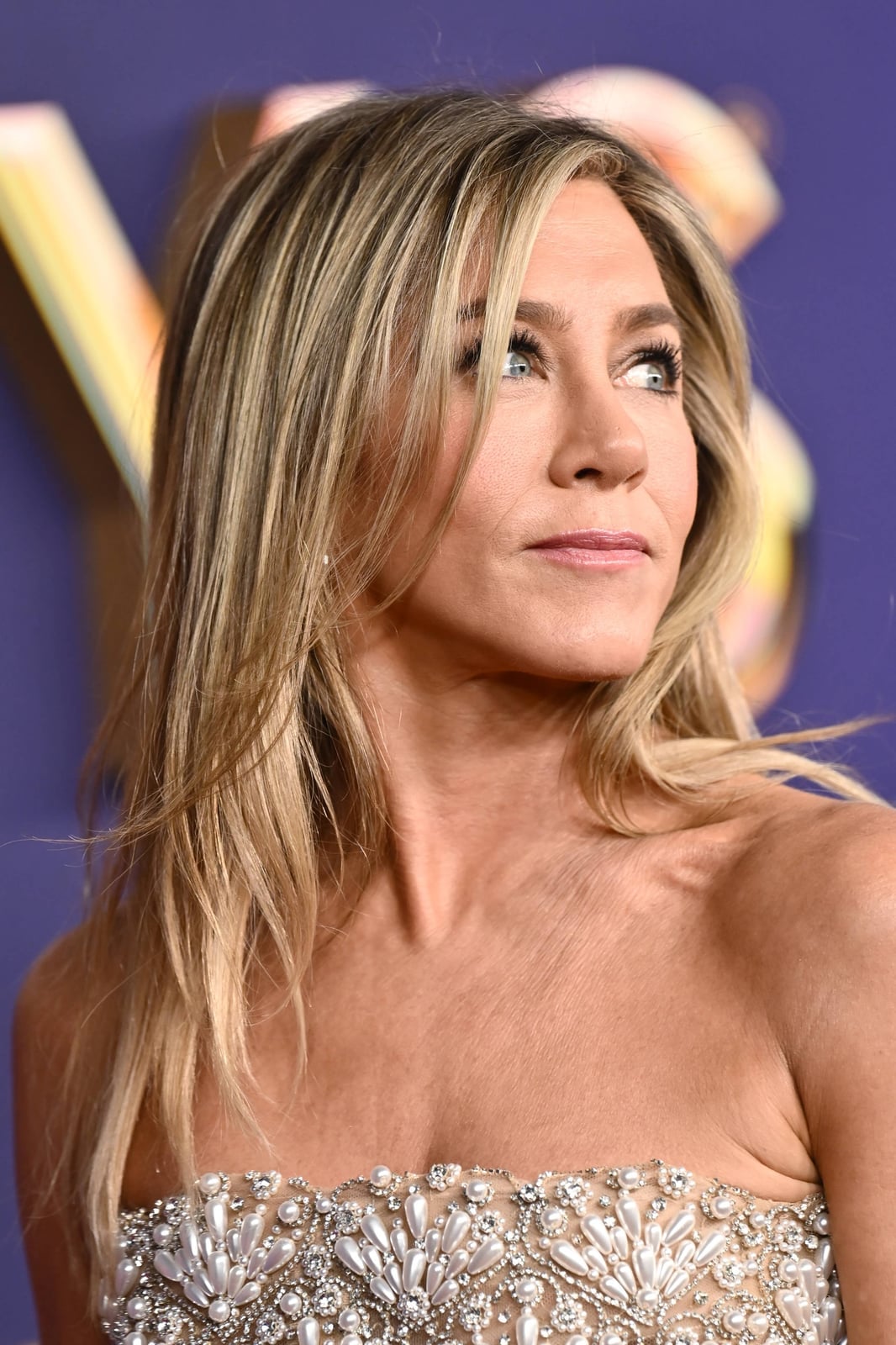
Fine, wavy dark blonde hair catches the most natural dimension when the highlights stay subtle and the layers do the work. The middle part lets the face-framing layers fall forward, softening the line around the jaw without losing length. Air-dried texture keeps it from looking over-styled. Skip it if you prefer bold highlights or a sleeker finish. Ask your colorist for: dark blonde base with subtle blonde highlights, face-framing layers. A trim every six to eight weeks keeps those layers landing right.
Ash blonde highlights on dark brown layered hair with waves
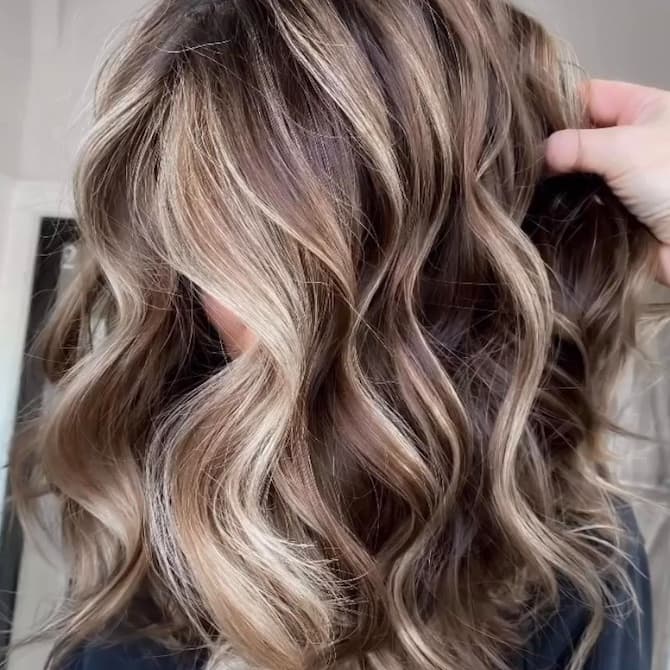
Dark brown base with ash blonde highlights creates a cool, neat look. The layered cut gives the wavy blowout room to move, and the middle part keeps the placement even on both sides. For thick, wavy hair this is a straightforward ask. It works best with cool tones and wavy texture. Tone the highlights every six to eight weeks to keep the ash from drifting warm.
Lighter blonde highlights create lighter effect on dark blonde hair
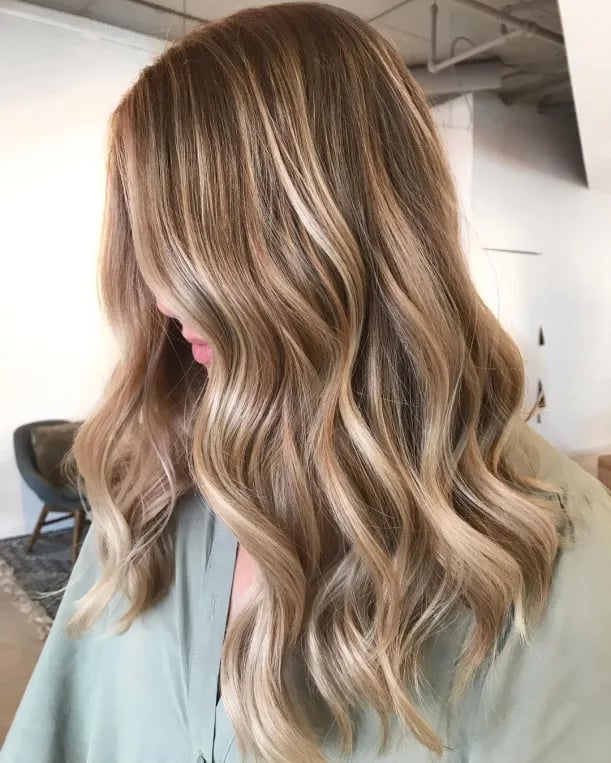
Lighter blonde highlights on a dark blonde base mimic what the sun does, just faster and more even. The waves and middle part let the lighter pieces catch light from both sides. Thick, wavy hair takes this well. It works best for those who prefer subtle, lighter highlights over bold ones. Ask your colorist for: dark blonde base with lighter blonde highlights, layered cut. A texturizing spray on damp waves gives you that lived-in finish without heat.
Platinum and ash blonde highlights on thick straight hair
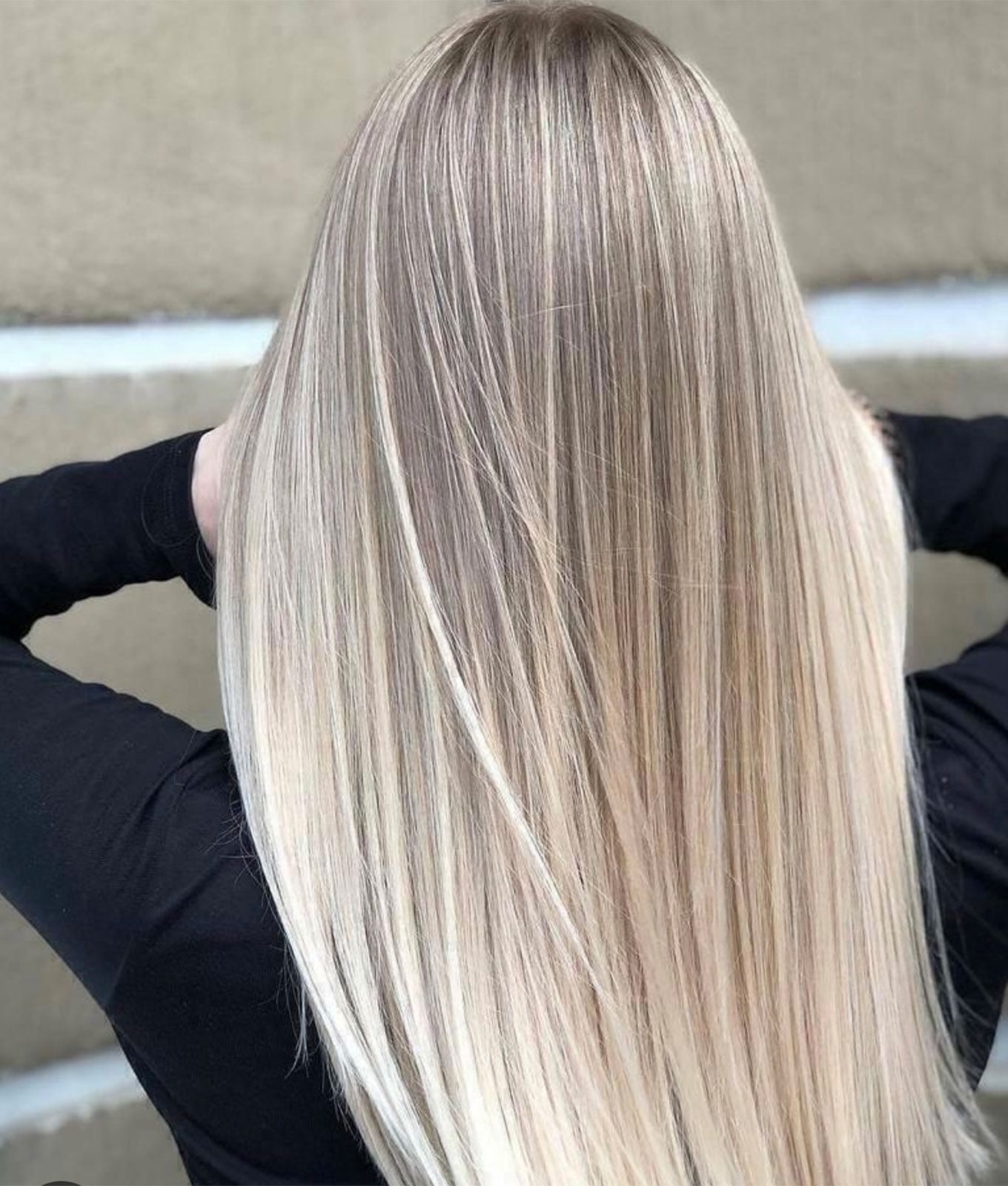
Ash blonde hair with finely woven platinum highlights looks bright but not brassy. The smooth blowout on thick, straight texture shows off the precision placement. Long layers keep the weight manageable and let the color sit evenly.
This is a commitment look. Thick, straight hair handles the multiple lightening sessions well. Skip it if you have fine or wavy hair, or prefer warmer tones.
Final Thoughts
You know your base shade, your texture, and your tolerance for a toning schedule. The rest is just matching the right technique to that reality.
- Fine hair: ask for baby lights or a money piece to avoid a stripe.
- Ten minutes in the morning: stick with lived-in balayage over foil highlights.
- Cool base that pulls brassy: schedule a purple shampoo into your weekly routine.
- Thick curly hair: request a balayage placement that lands mid-strand, not at the root.
Find your perfect highlight shade and placement.
