Cornrows come with a decision before the first section is even parted: do you want them for a week or for a month? The answer changes the tension, the thickness, and how much of your own hair shows. That is why Lovely Cornrows Hairstyles 2027 fill so many saved boards. They work for both camps, just differently.
You get 32 looks that run from a ten-minute scalp braid to a three-hour geometric map. Some suit fine hair; others need density to hold the pattern. The collection solves the real problem: finding a style that stays neat past day three without a full redo.
Neatly parted cornrows for a sleek, classic look
Uniform rows braided close to the scalp create a clean, deliberate line from the middle part back. Thick, coily black hair holds this shape without slipping, which makes the neat cornrows classic style a strong option for anyone wanting a neat finish that lasts. The tightness against the head means zero fuss during the day. Those who prefer braids with more lift or volume at the root may want a different style. Ask your stylist for: neatly parted cornrows, braided close to scalp. A silk bonnet at night keeps the edges from frizzing between washes.
Classic cornrows down the middle for thick, coily hair
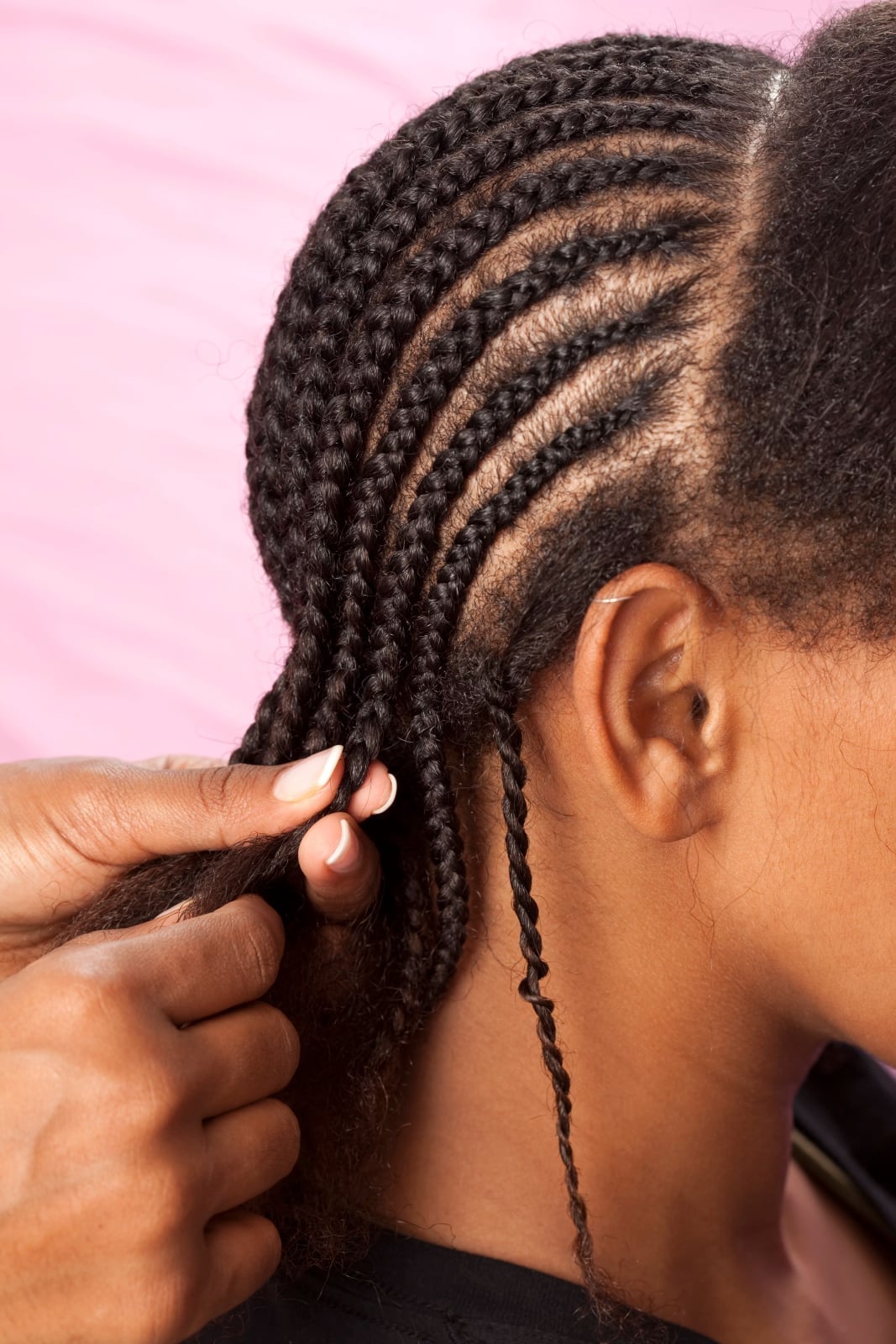
Wondering what to say for a clean, head-hugging set? Thick, coily hair braids flat against the scalp when parted straight down the middle, with the ends twisted off for a tidy finish. The tight braids stay put without puckering. This style skips extensions and intricate patterns for a simple, precise look. Scalp oiling once a week keeps the braids from looking dull.
Radiating cornrow pattern with laid edges
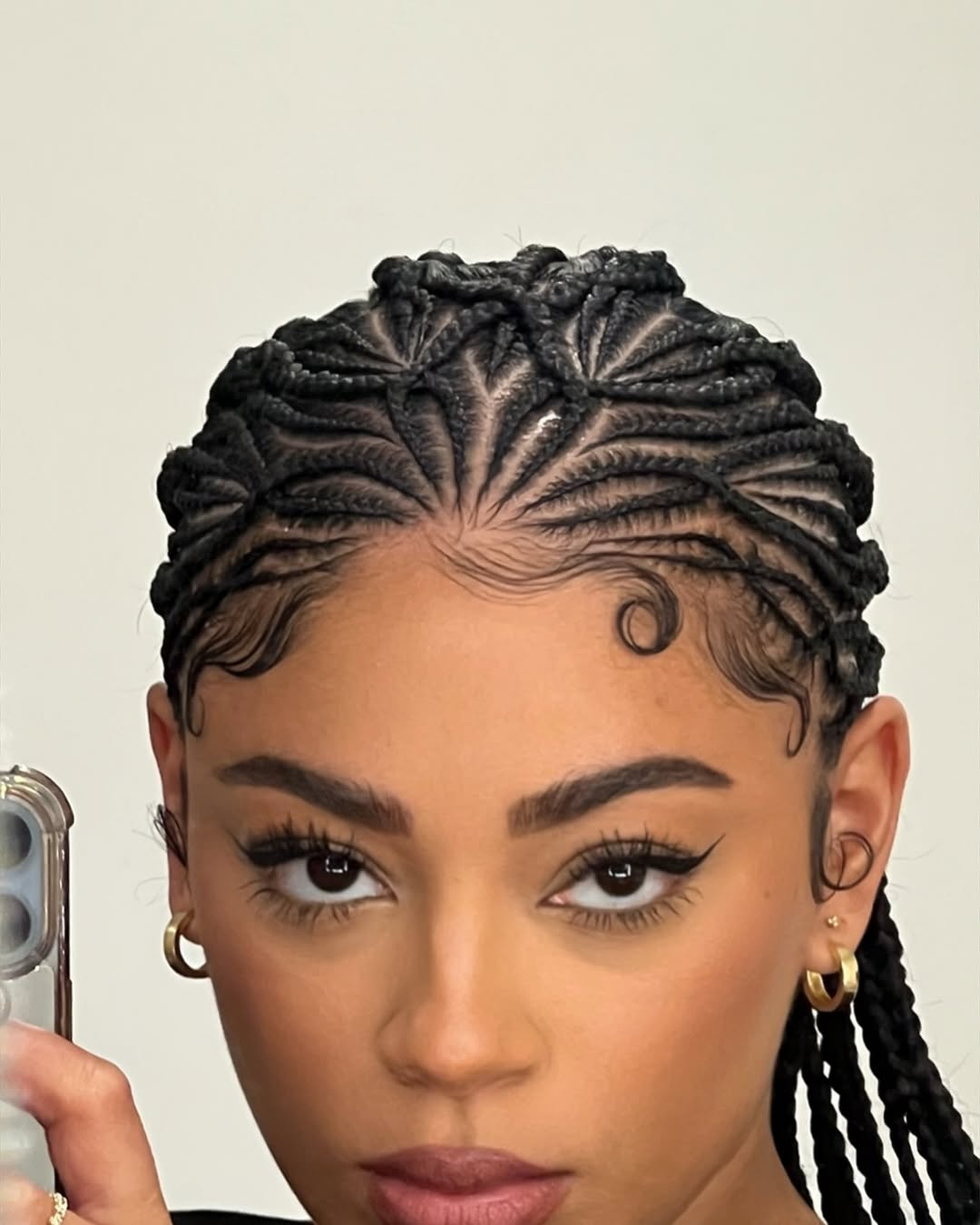
A centered parting sends the braids outward in even lines, with the edges swept into small swirls. The radiating pattern depends on precise sectioning from the crown forward. Thick hair holds the geometry cleanly. Ask your stylist for: radiating cornrows, centered parting, laid baby hairs. A light edge control gel brushed through each morning keeps the swirls intact.
Captivating swirled cornrows with laid baby hairs
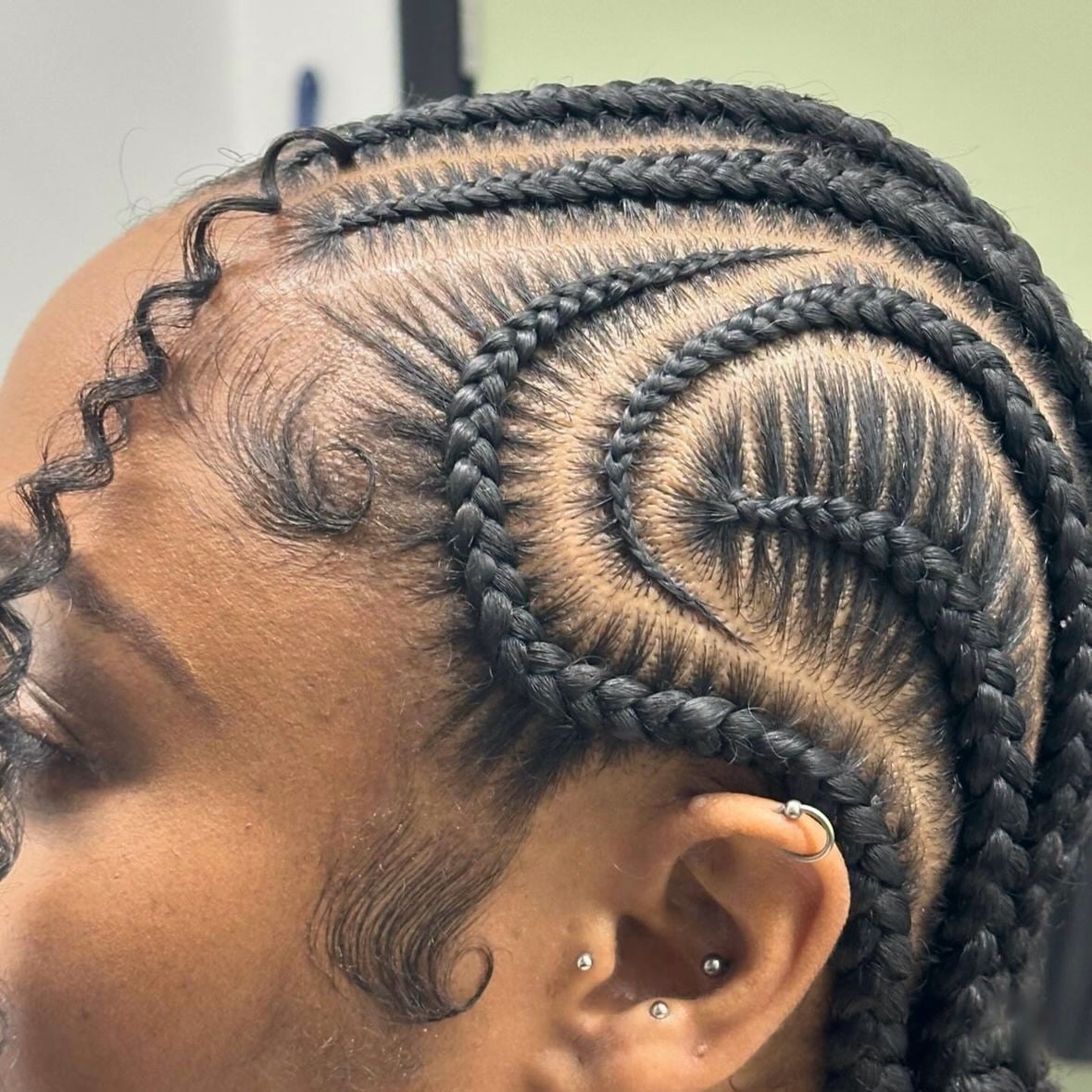
This design swaps straight-back rows for a curved, swirled layout across the scalp. Thick, coily black hair takes the bend well, and the laid baby hairs along the hairline give a neat frame. The effect is more fluid than a strict geometric pattern. Pass when you prefer simpler, straight-back cornrows without edge work. A soft boar brush resets the edges in seconds.
Geometric cornrow pattern on straight, thick hair
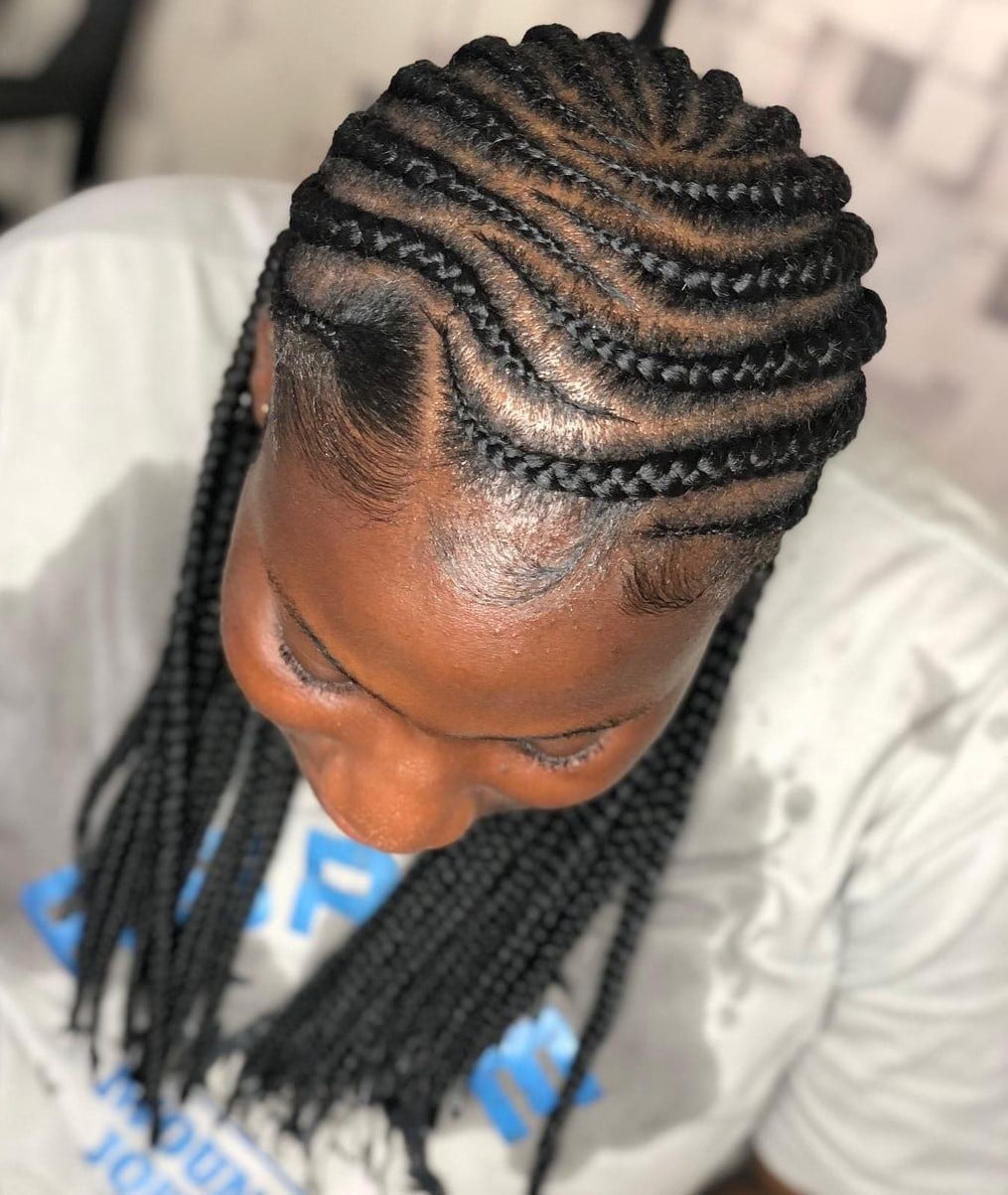
Thick, straight black hair makes the sharp angles of a geometric pattern read clearly. The braids sweep across the scalp in a diagonal line rather than straight back, which changes the visual weight. Straight texture holds the crisp edges better than coily hair does. The catch: strong coily texture may soften the lines and blur the design. Ask your stylist for: geometric cornrows, sweeping pattern, thick straight braids. A light moisture spray every few days keeps the braids from drying out.
Complex geometric braids frame the face
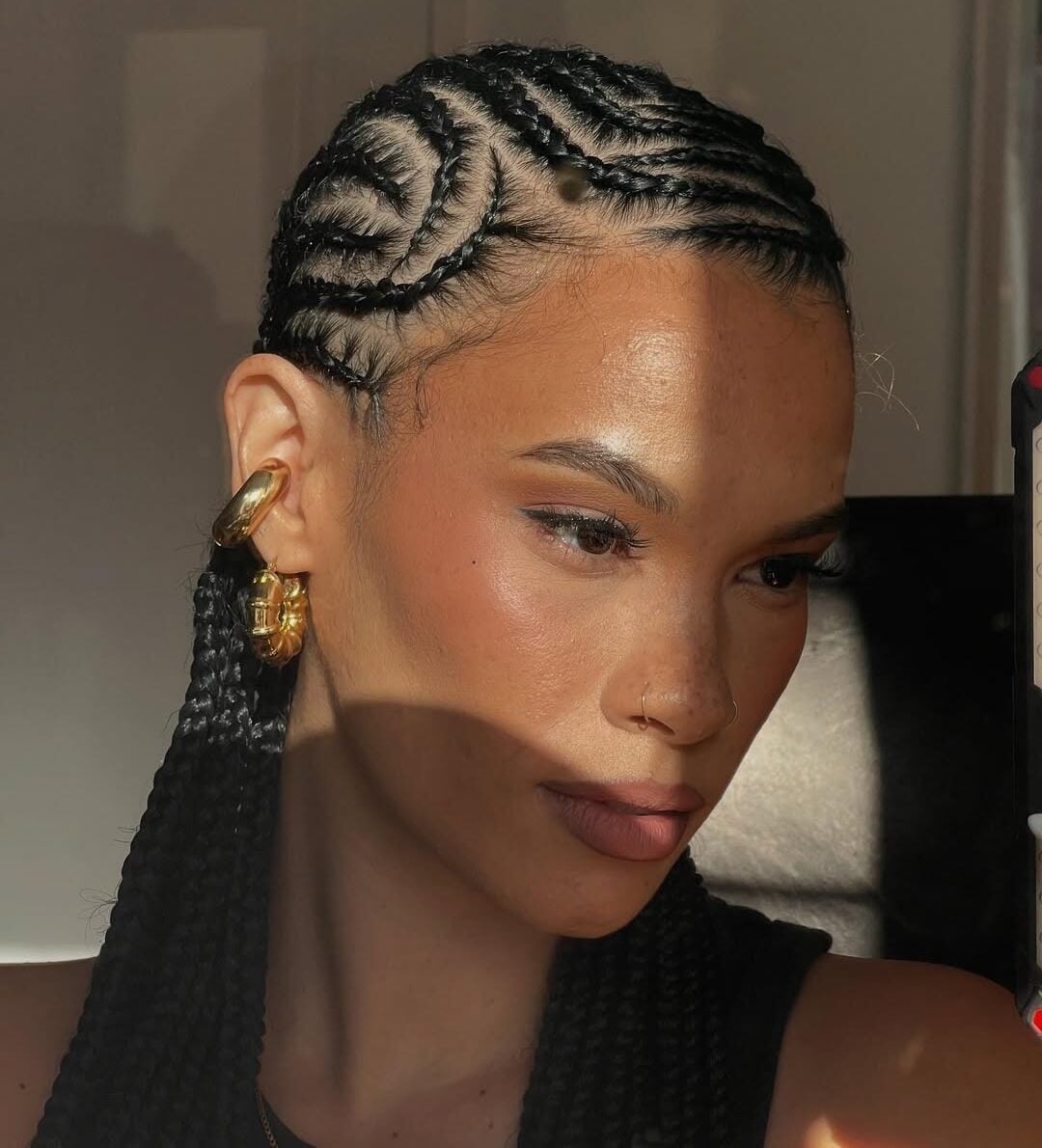
Where simpler straight-back rows are the everyday choice, this side-profile construction uses geometric lines. Thick black braids cut sharp angles across the scalp, then follow the head’s curve toward the ear. The hold is solid for two to three weeks before the roots need attention. It suits those who want angular braid patterns.
Intricate geometric patterns lead into thick braids
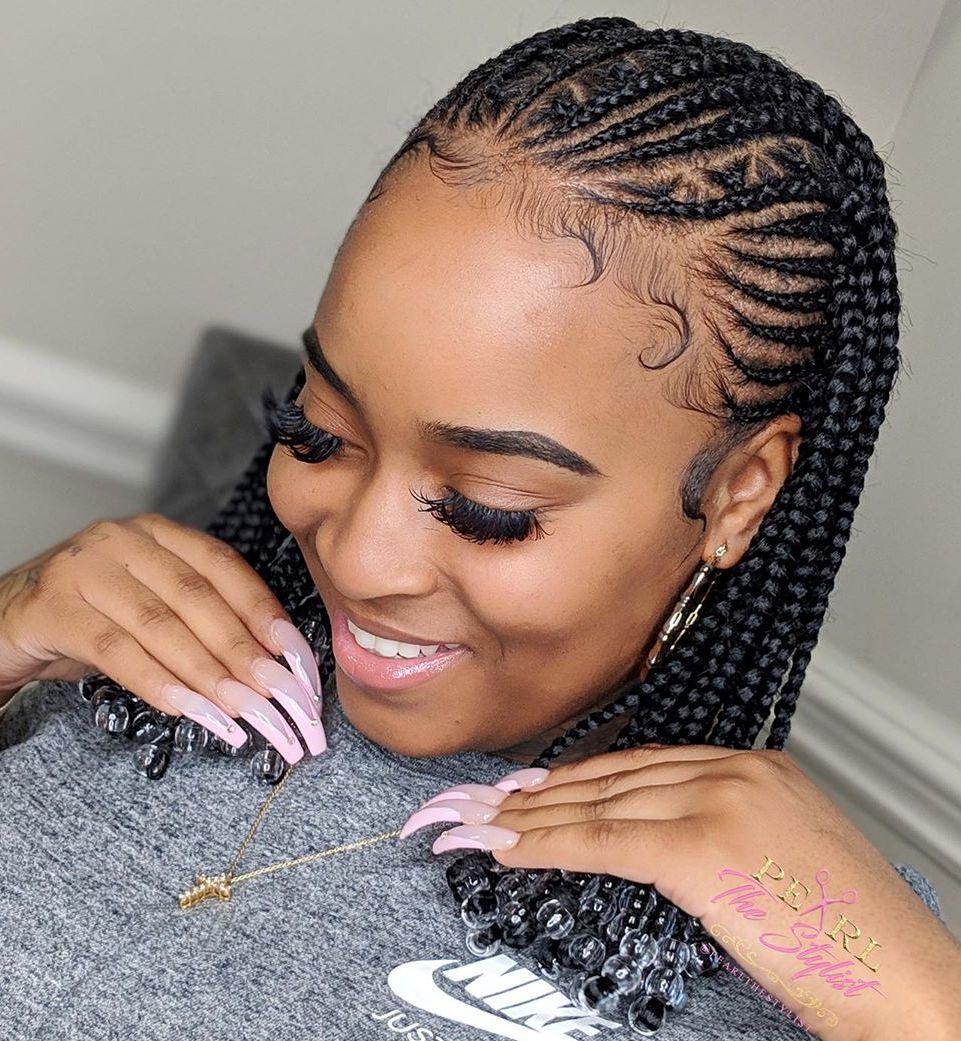
The middle parting here is not a dividing line. It is the spine of the design. From it, geometric cornrow patterns radiate outward, each angle meeting the next with no visible gap. Coily, thick texture holds every edge clean. Neatly laid edges finish the hairline. Ask your stylist for: geometric cornrows, middle part, laid edges. The hold stays crisp for about two weeks before the braids soften at the root.
Styled cornrows create a clean, defined look
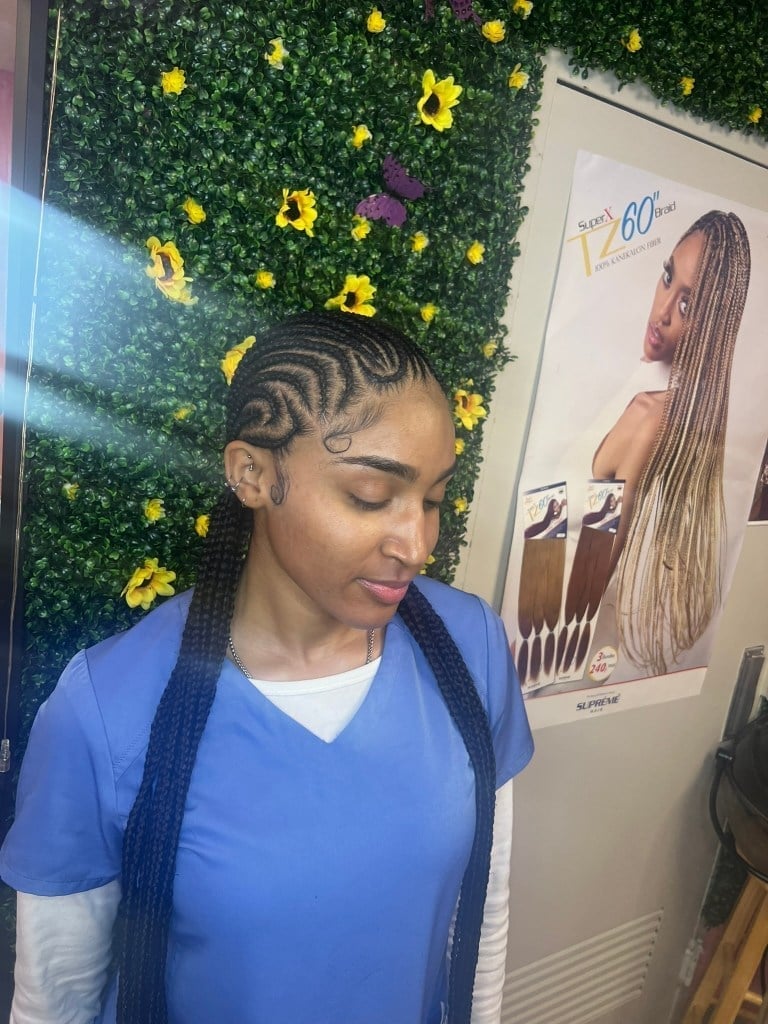
Thick straight braids drop from a geometric cornrow pattern that covers the entire scalp. The middle part splits the design cleanly, each side a mirror of the other. Black hair at this density holds the lines without frizz for a full two weeks. A satin bonnet prevents friction that can dull the braids’ finish.
V-shaped cornrow pattern with blonde highlights
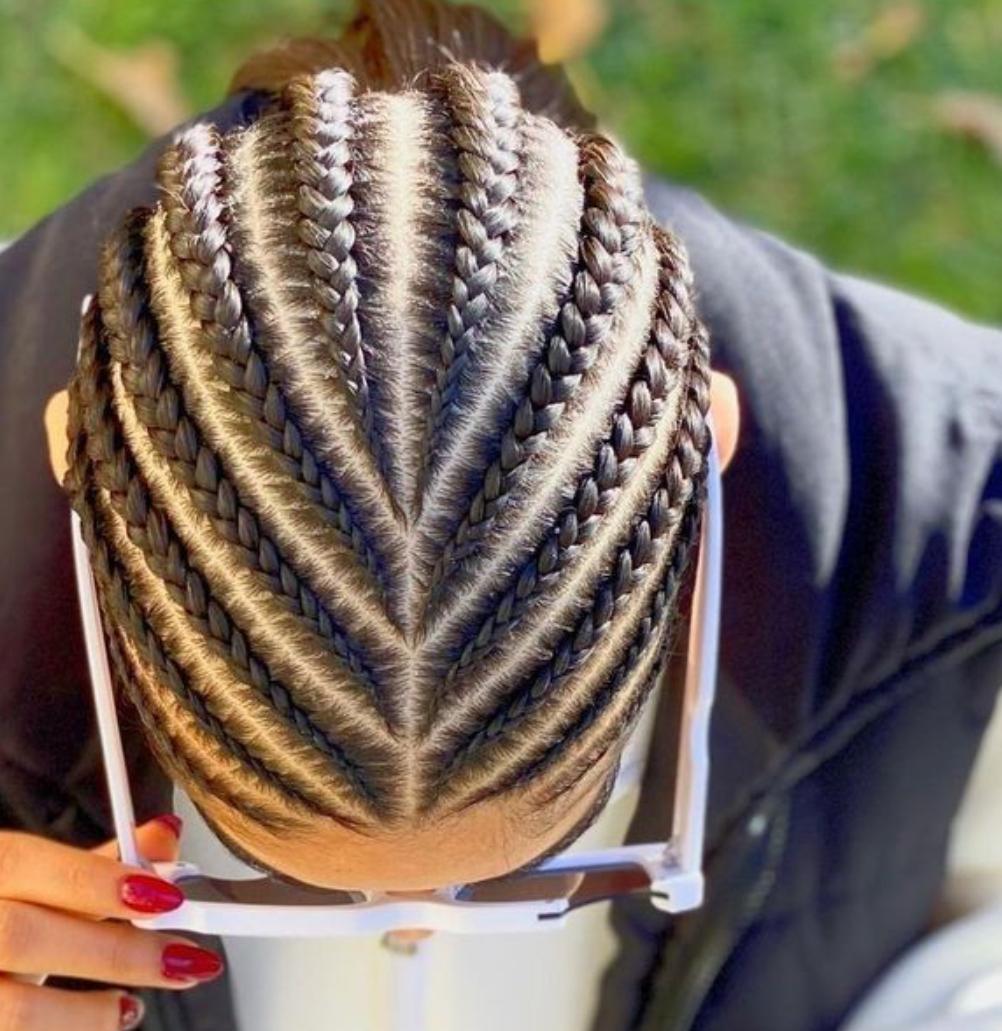
From the middle parting, cornrows angle back in a V-shape that widens toward the crown. Dark brown coily hair carries subtle blonde highlights, a trick that makes the pattern read even from a distance. Ask your colorist for: subtle blonde highlights on dark brown base. The hold on the braids runs about two weeks before the scalp needs retightening. Color-safe shampoo keeps the blonde from dulling into brass.
Cornrows with baby hair edges and blonde highlights
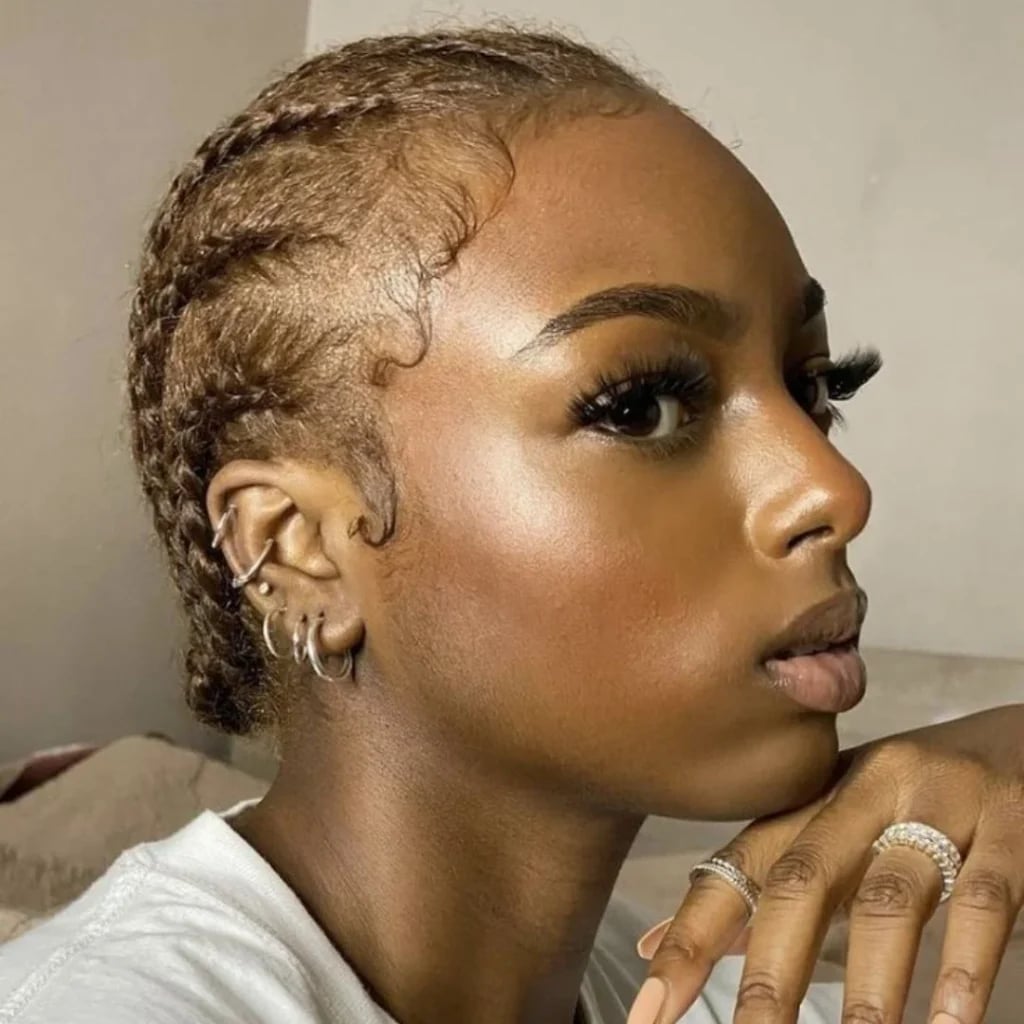
Neat cornrows stop around the ear, making this a shorter protective style with less weight. The light brown base gets lift from subtle blonde highlights woven through the braids. Delicate baby hairs are shaped along the hairline into soft arcs. Edges hold best when you refresh them each morning with a soft brush and a light product.
Two-tone cornrows transitioning into long braids
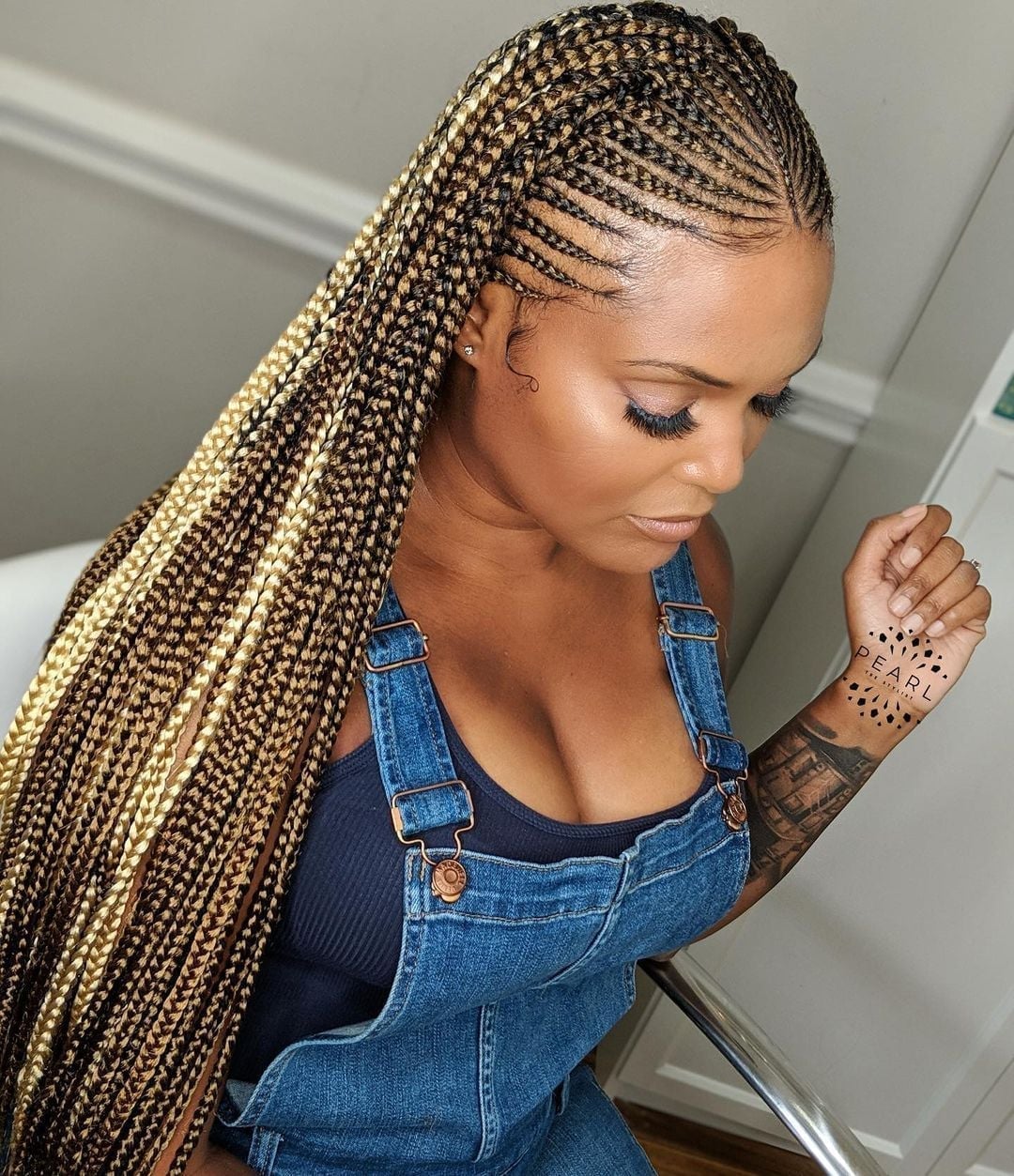
Dark brown and blonde side by side in the same cornrow changes the whole shape of the style. The middle part keeps the two tones balanced, so one side doesn’t read darker than the other. Ask your stylist for: two-tone cornrows, dark brown and blonde, long braids. Thick hair handles the transition from scalp braid to flowing length without the cornrows pulling loose at the nape. The whole point is the contrast. A color-protecting shampoo keeps the blonde from turning brassy around week three.
Long, thin braids with dark brown and blonde highlights
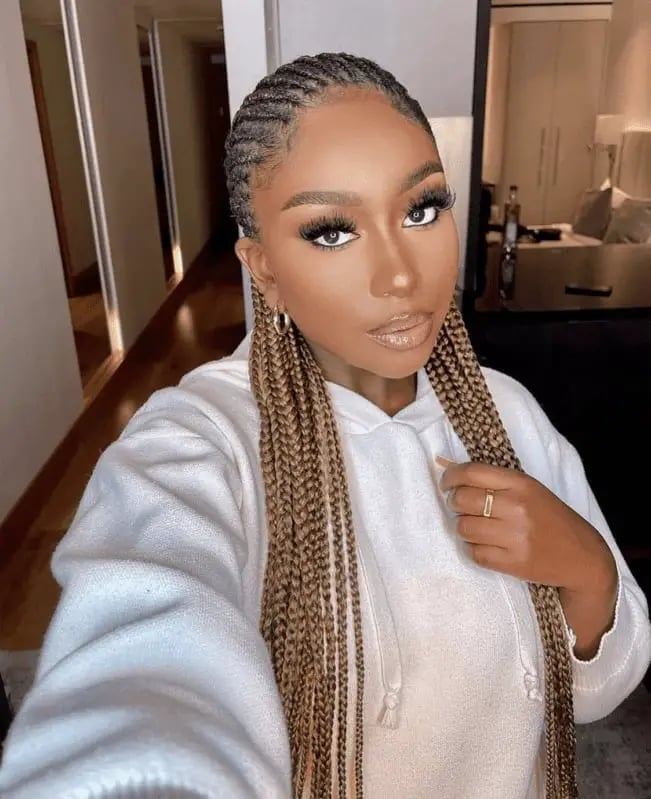
Does thin mean fragile? Not here. The cornrows at the root anchor each braid securely, and the middle part lets the dark brown and blonde highlights show as deliberate striping. Straight, thick hair holds this shape best, finer textures may not support the length without the braids tapering unevenly. It suits those who want a two tone look with fine braids.
Straight braids adorned with baby hair swirls
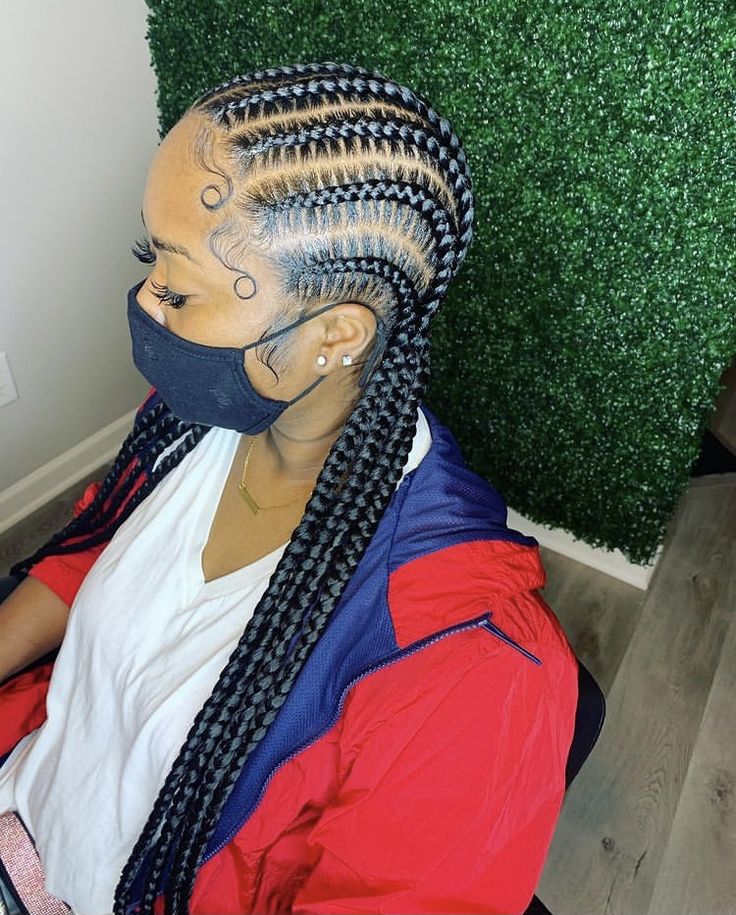
A centered part and black, straight cornrows create a clean canvas. The baby hair swirls along the hairline add a decorative edge that softens the look. Ask your stylist for: straight cornrows, centered parting, baby hair swirls. The swirls require a steady hand and a good edge control gel. This style is not ideal for those who dislike styling baby hairs or prefer a completely bare hairline.
Swirl pattern cornrows transitioning into thick braids
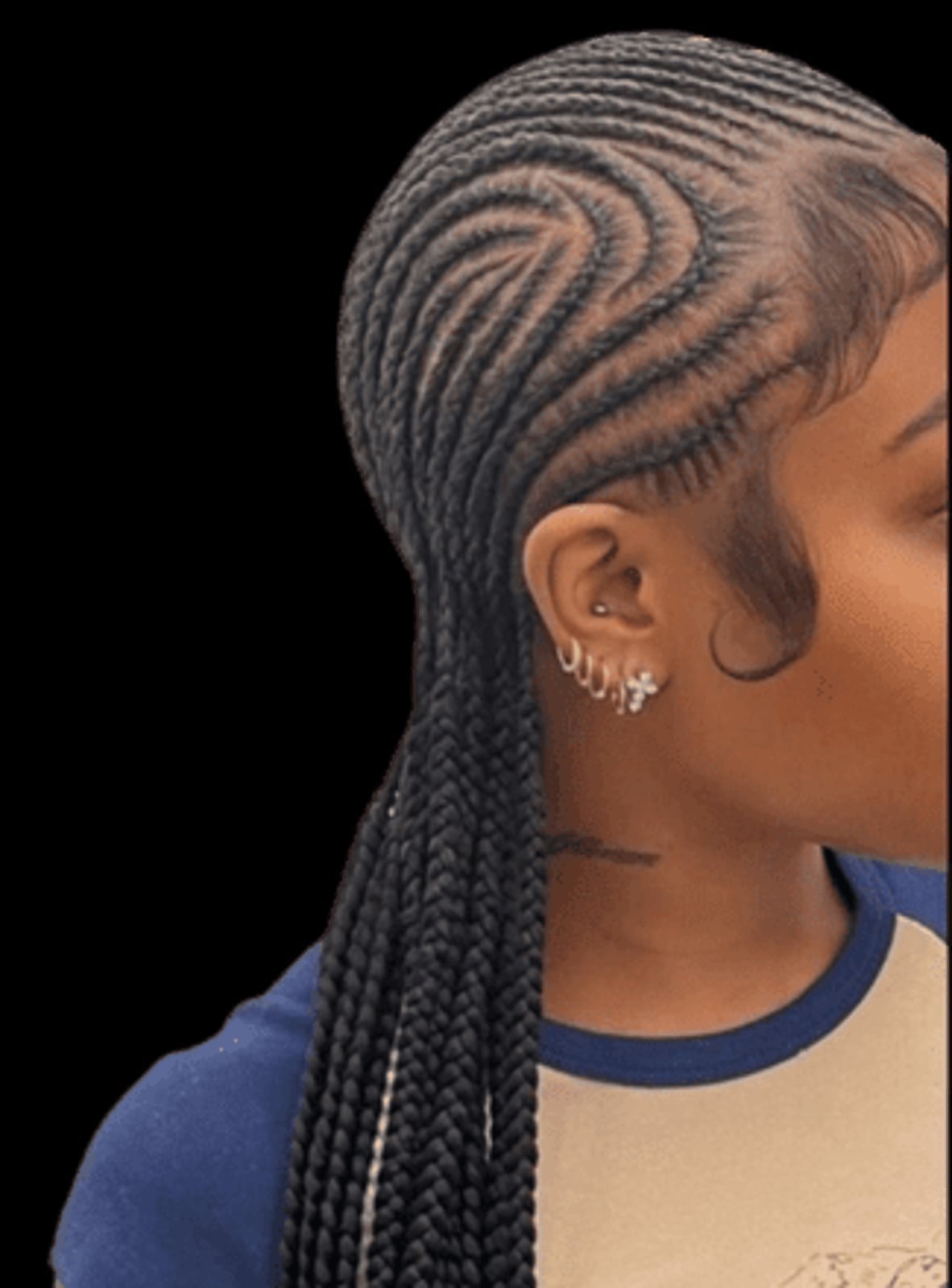
The swirl pattern on the side of the head creates movement before the braids even start. A middle part and laid baby hairs frame the face without competing with the swirl. Thick, straight hair holds the curved lines without them lifting. Skip it if you prefer uniform, straight-back cornrows. This design requires the stylist to map the pattern before the first braid.
Sleek braids feature artfully swirled baby hairs
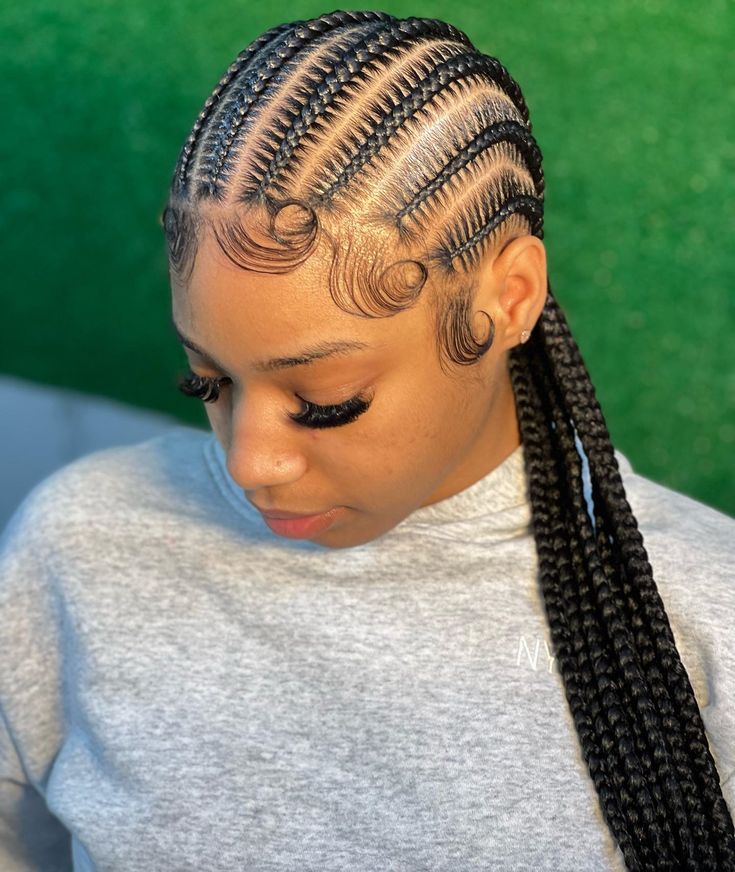
Cornrows braided tight from the forehead to the nape create a smooth base. The long, thick braids add weight, and the defined baby hair swirls along the hairline give the sleek finish a neat look. Ask your stylist for: sleek cornrows, long thick braids, swirled baby hairs. Thick, coily hair holds the edge swirls without them frizzing by midday. Choose this style for a bare hairline or a looser braid tension.
Precisely laid edges on tightly braided cornrows
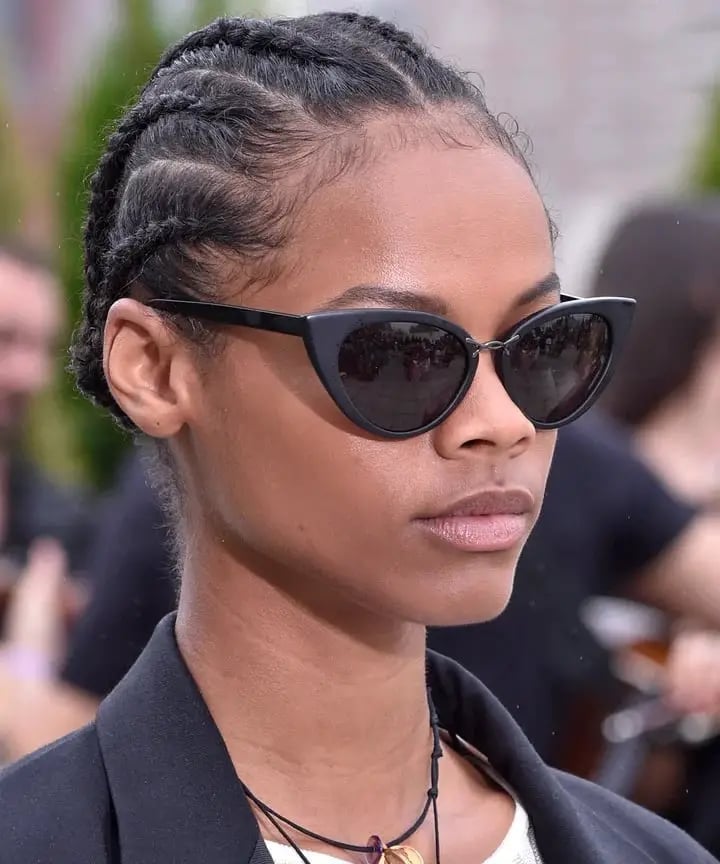
Coily, thick hair holds this kind of detail best, and the laid edges seal the deal. A softer hairline or a dislike for the daily edge control ritual might make this style less suitable. A soft brush and pomade keep the finish sharp each morning. That is the trade off for a look this defined.
Black braids end in decorative coiled details
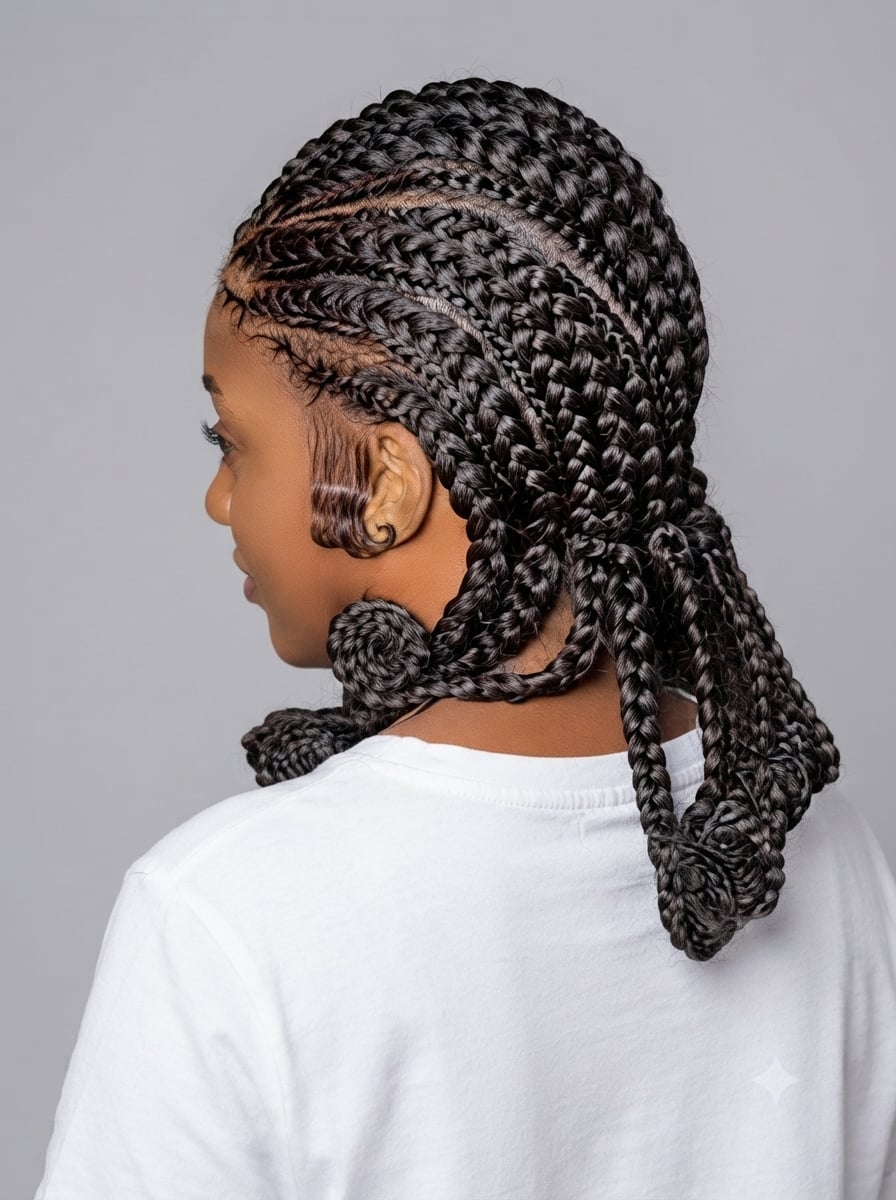
Cornrows transition into thick braids, and the braids end in coiled details. That final twist changes the whole silhouette. Thick, coily hair can support the weight of the ends without pulling at the roots. Pass when you prefer a uniform braid finish or a simpler line. Ask your stylist for: cornrows, thick braids, decorative coiled ends. The coils need moisture every few days to stay tight. A light leave-in does the job.
Braids paired with curly extensions and headband
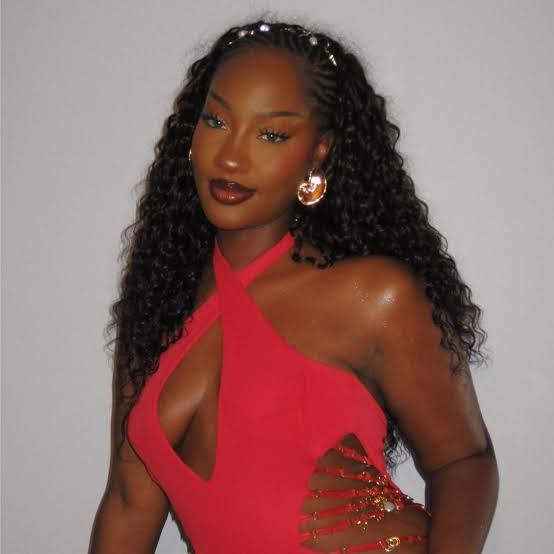
This works for thick, coily hair that can integrate extensions without strain. Not for anyone who wants a headband-free look or prefers to skip added length. The headband hides the extension attachment line, which is the real trick.
Loose curls cascade from sleek braids
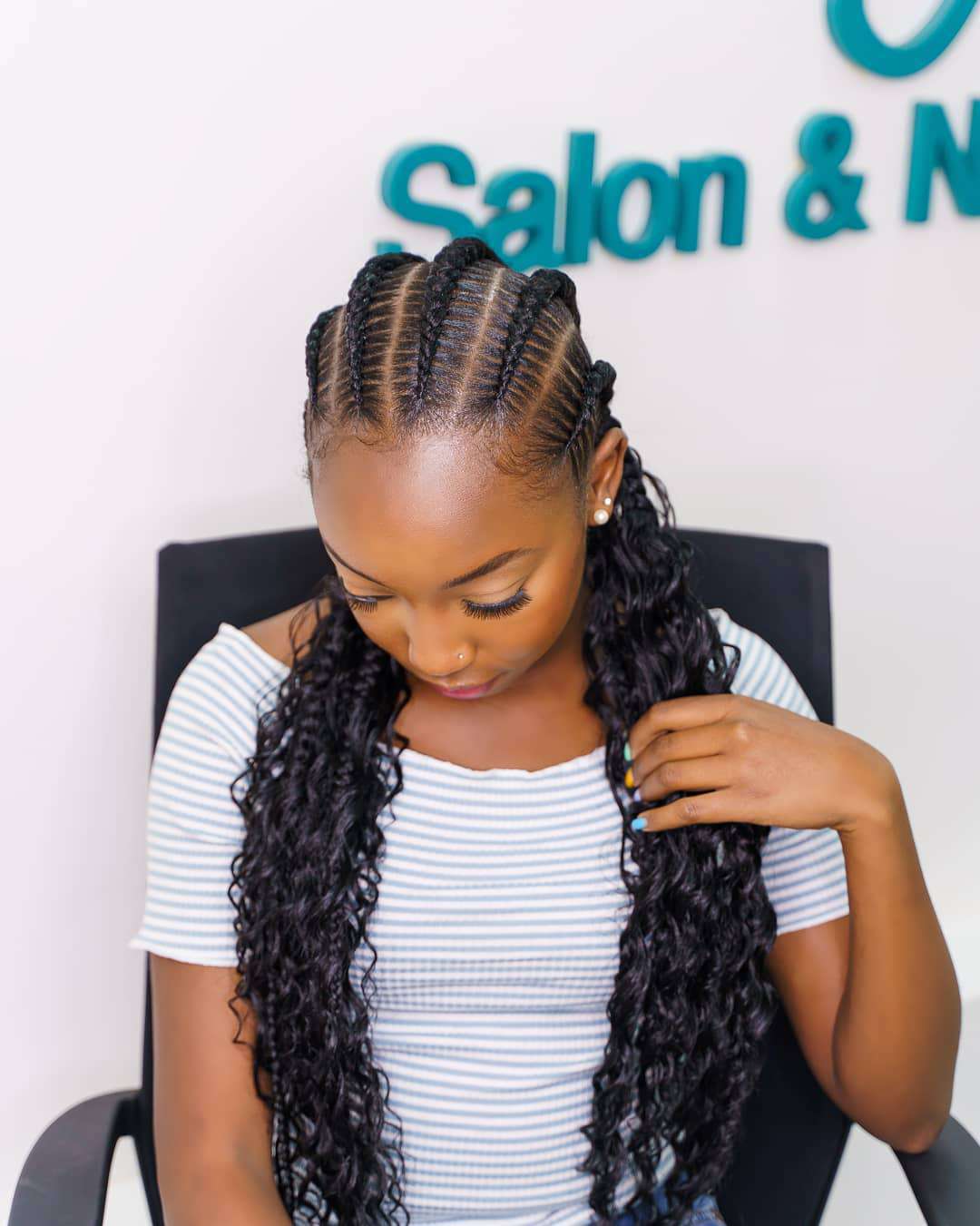
Neatly braided cornrows run from the forehead to the crown, then loose, wavy curls take over and fall past the mid-back. The shift from tight to loose creates a striking contrast. Thick hair carries this transition cleanly, and the wavy ends soften the overall shape. A single texture from root to tip is not the goal here. Ask your stylist for: cornrows, loose wavy curls, mid-back length. A curl cream on the ends keeps the wave pattern defined for days.
Ponytail with loose curls frames the face
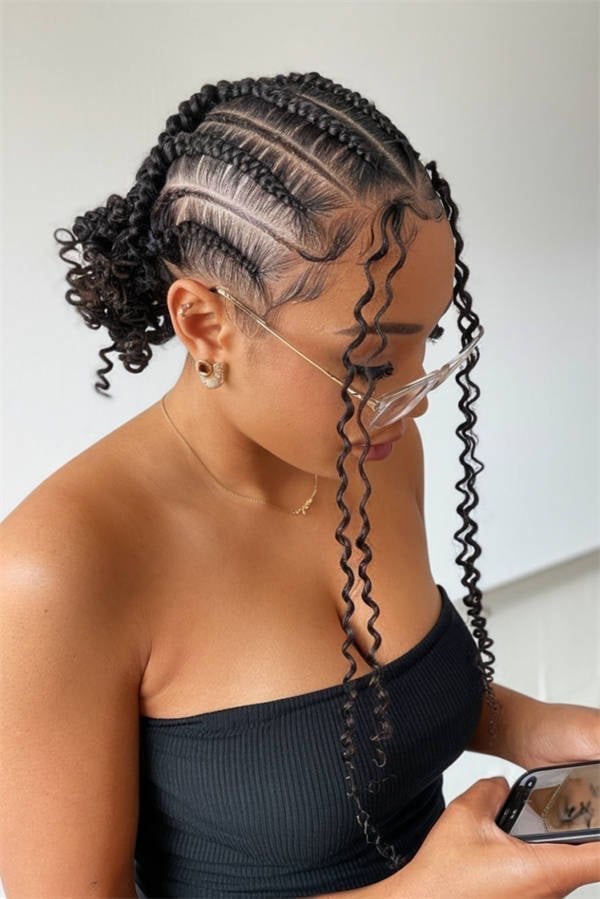
Neat cornrows feed into a braided ponytail, and loose, coily curls frame the face. The baby hairs are laid in waves, which adds a neat finish. Thick, coily hair holds the ponytail shape without slipping, and the face-framing curls break up the line. Not for anyone who dislikes styled baby hairs or wants a pulled-back-only silhouette. Edge control and a gentle hair tie keep everything in place through the day.
Braided ponytail has one curled tendril
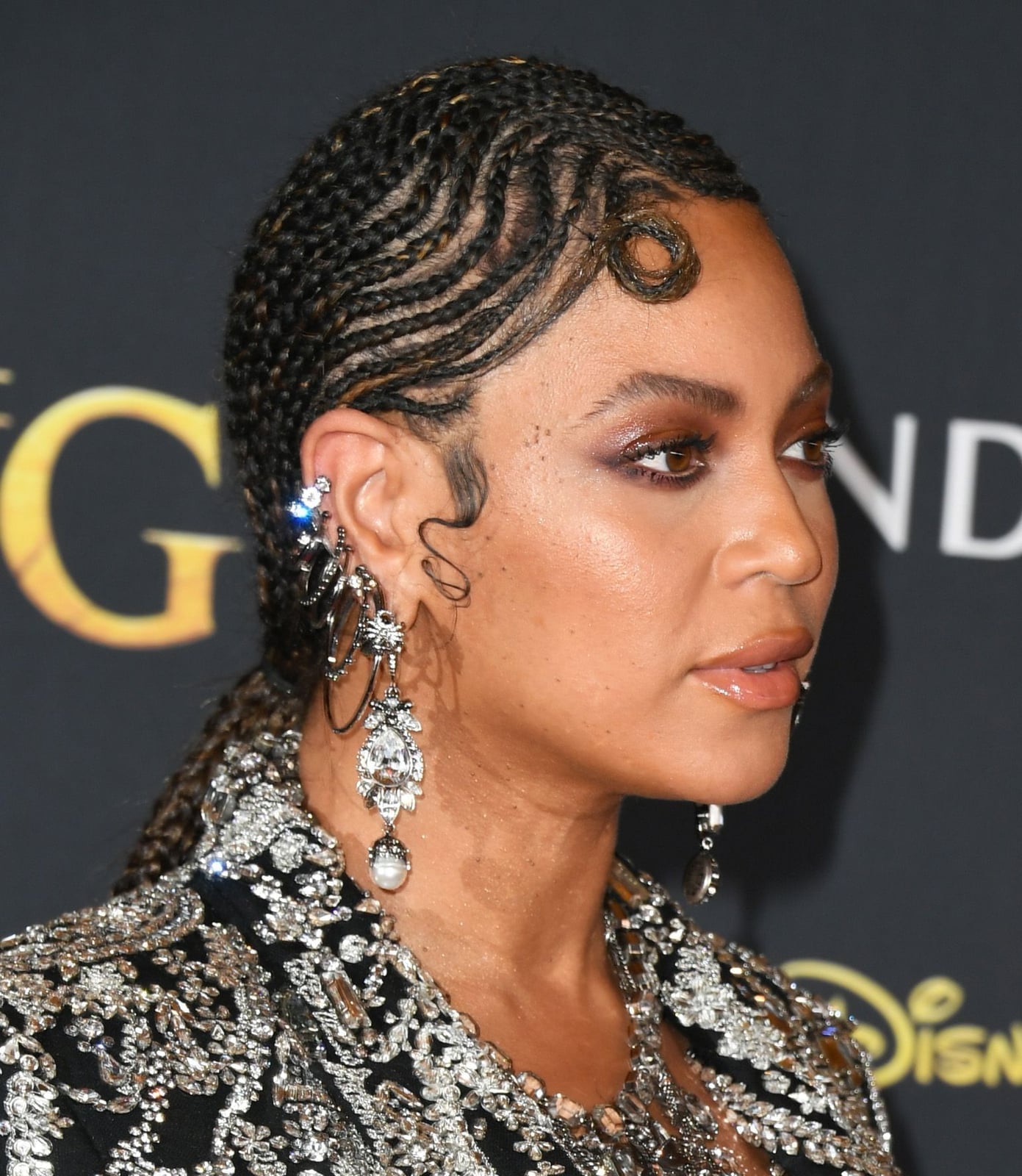
You see a ponytail with a middle part and think you know the whole story. Then the curled tendril at the temple changes the conversation. Thick, coily texture holds the intricate cornrow pattern and the subtle brown highlights that add dimension. The braided ponytail itself is substantial, a statement of its own. A clean, unadorned ponytail or a style where every piece matches may suit you better. Ask your stylist for: cornrows into ponytail, middle part, curled temple tendril.
Braided cornrows gathered into a high ponytail
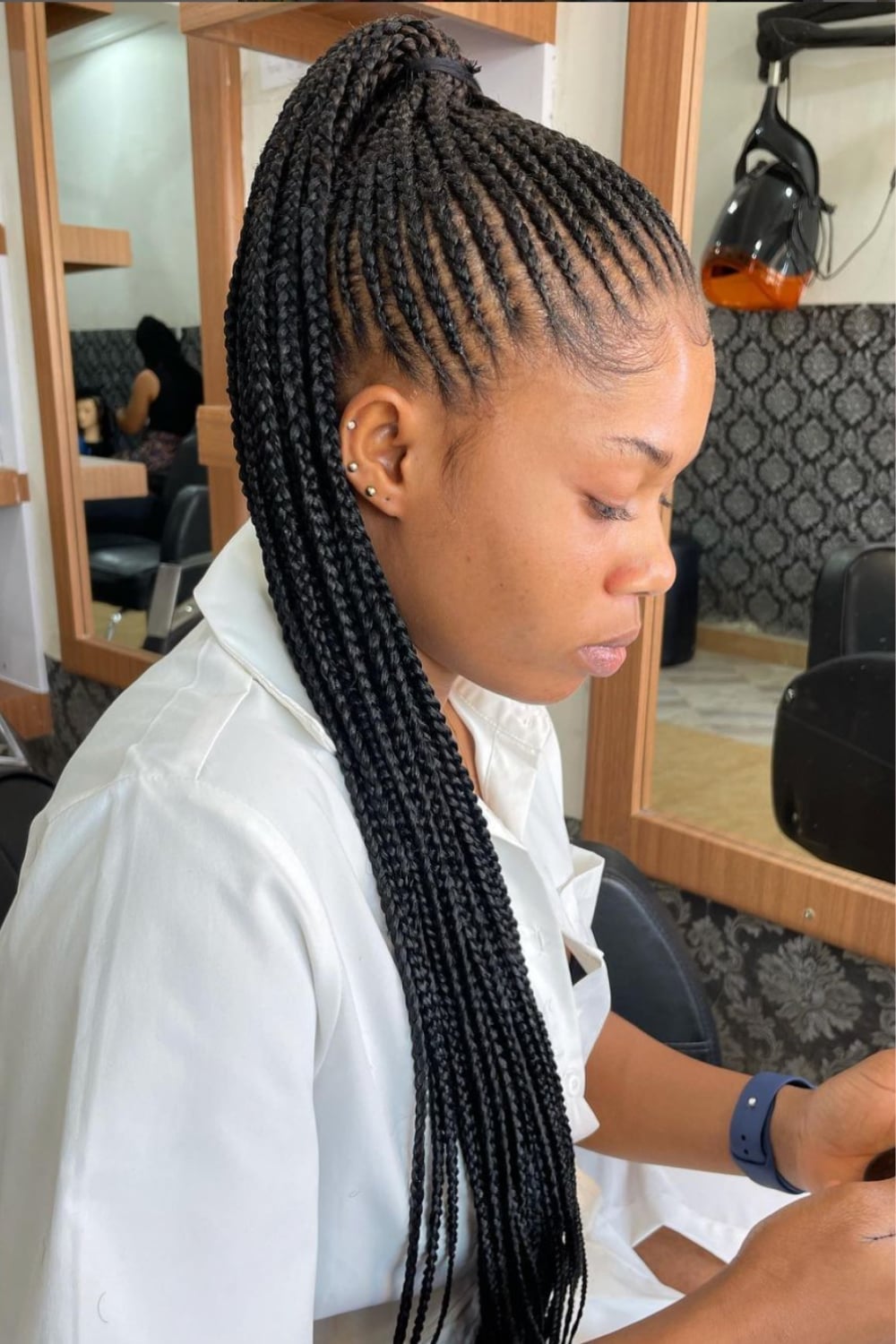
Neat, straight cornrows travel from the hairline to the crown, where every braid is gathered into a single high ponytail. The middle part keeps the design symmetrical and clean. Thick, straight hair provides the smooth base needed for this precision work. The ponytail drops with weight and uniformity, making the whole look look deliberate. A sturdy band that won’t snag braids keeps the ponytail secure through the day.
Defined braids styled into a sleek updo
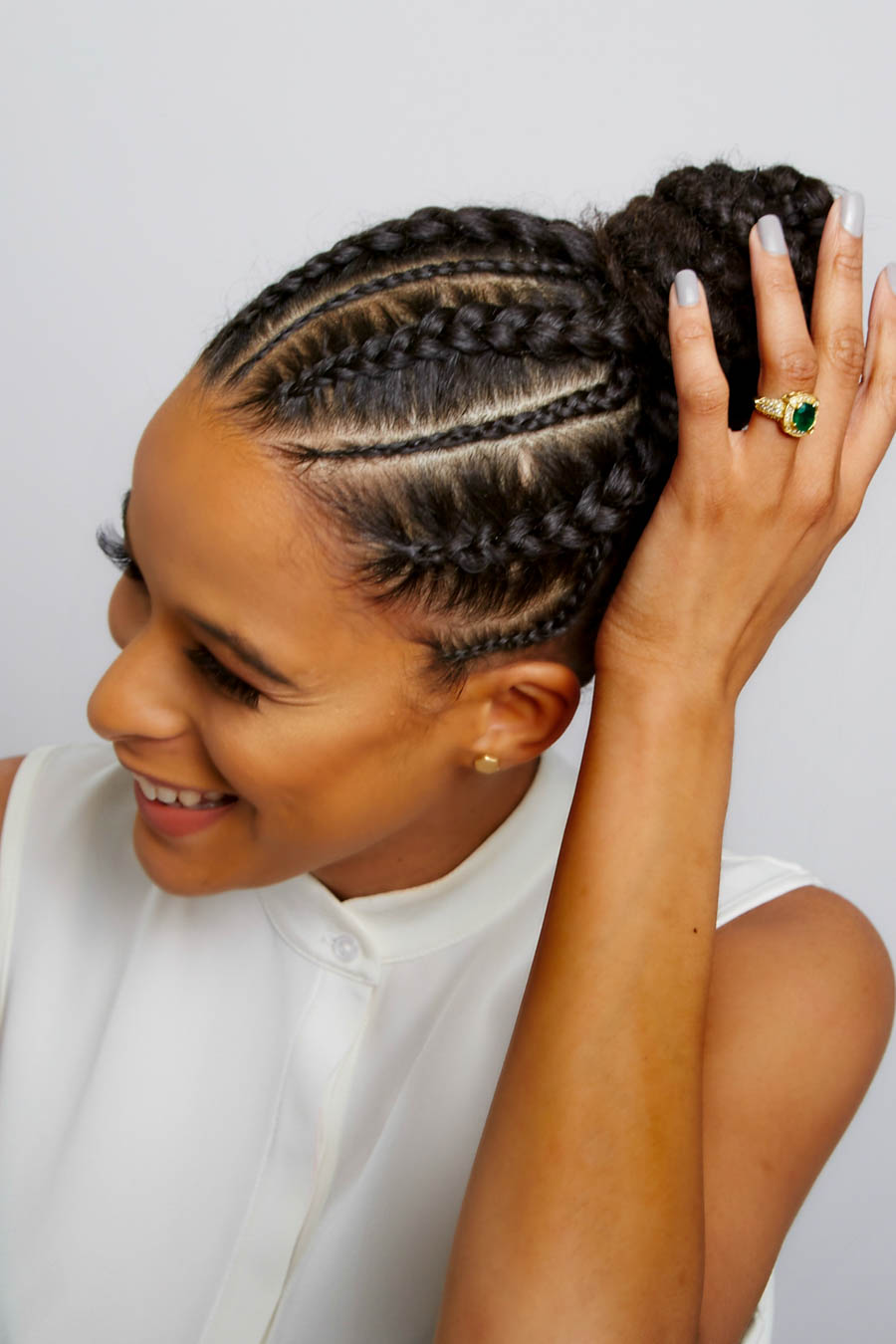
This is a style that requires a confident hand. Neatly defined cornrows, parted down the middle, are swept into a sleek updo that sits close to the head. The thick, coily texture is visible in every braid, and the updo keeps the neck clear and the silhouette clean. Not for anyone who prefers to wear their hair down or wants visible braid ends. Ask your stylist for: neat cornrows, middle part, sleek updo. Bobby pins that match your hair color help the finish stay invisible.
Grown-up updo with tightly braided cornrows
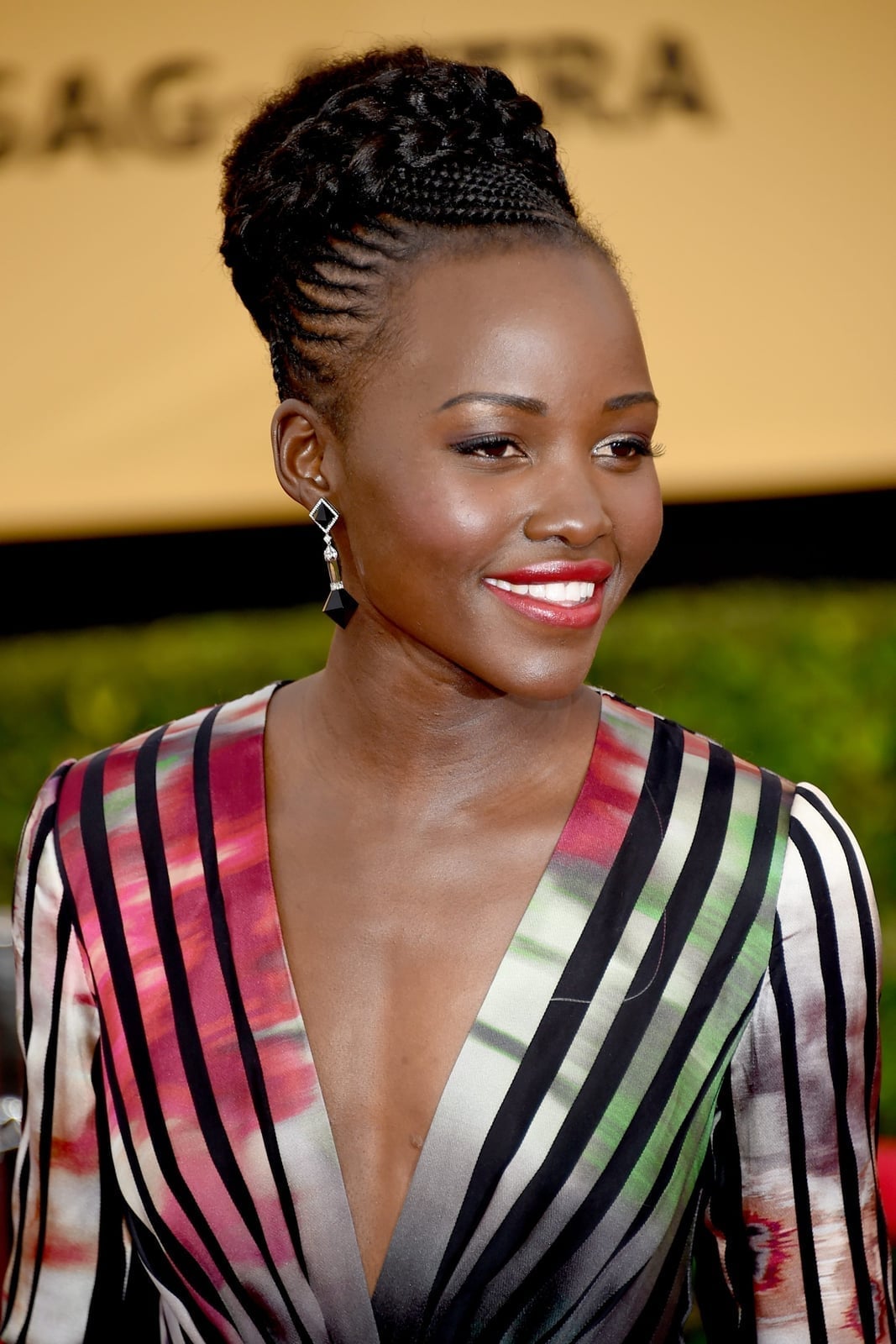
Tightly braided cornrows pull the hair away from the face and converge into a voluminous bun at the crown. The mistake people make is thinking any tight braid will hold that shape. It needs coily, thick texture to keep the bun full and the pattern crisp. The pull at the hairline is firm, so this works best when your edges are healthy enough to handle the tension.
Sleek cornrows to a neat braided bun
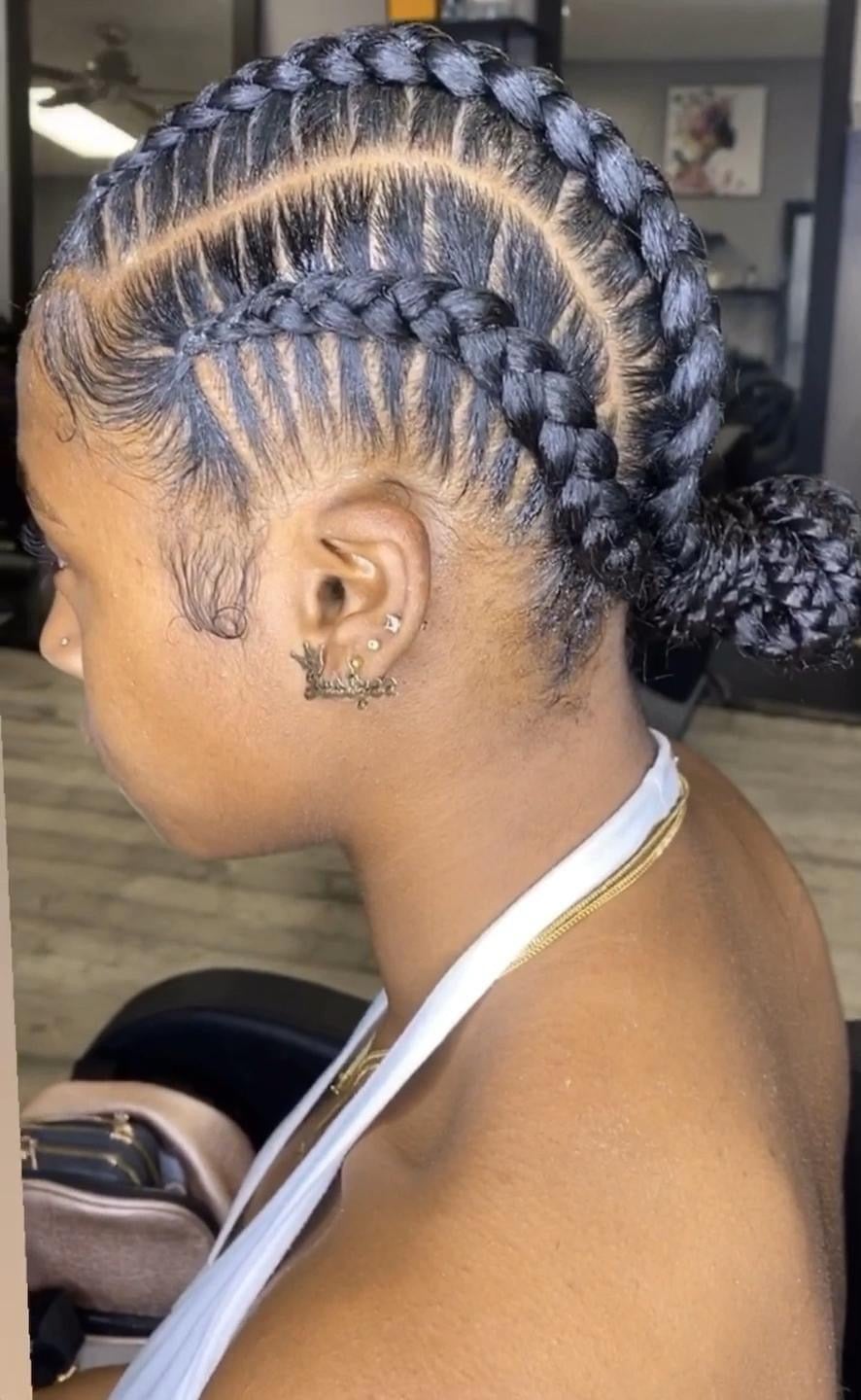
Sleek black cornrows with a middle part travel the full length of the scalp before gathering into a neat braided bun at the nape. The thick, coily texture gives the bun body without needing bulk. A light hold serum or hairspray keeps the bun smooth and flyaways at bay. Ask your stylist for: sleek cornrows, middle part, braided bun at nape.
Parted braids lead into a low bun
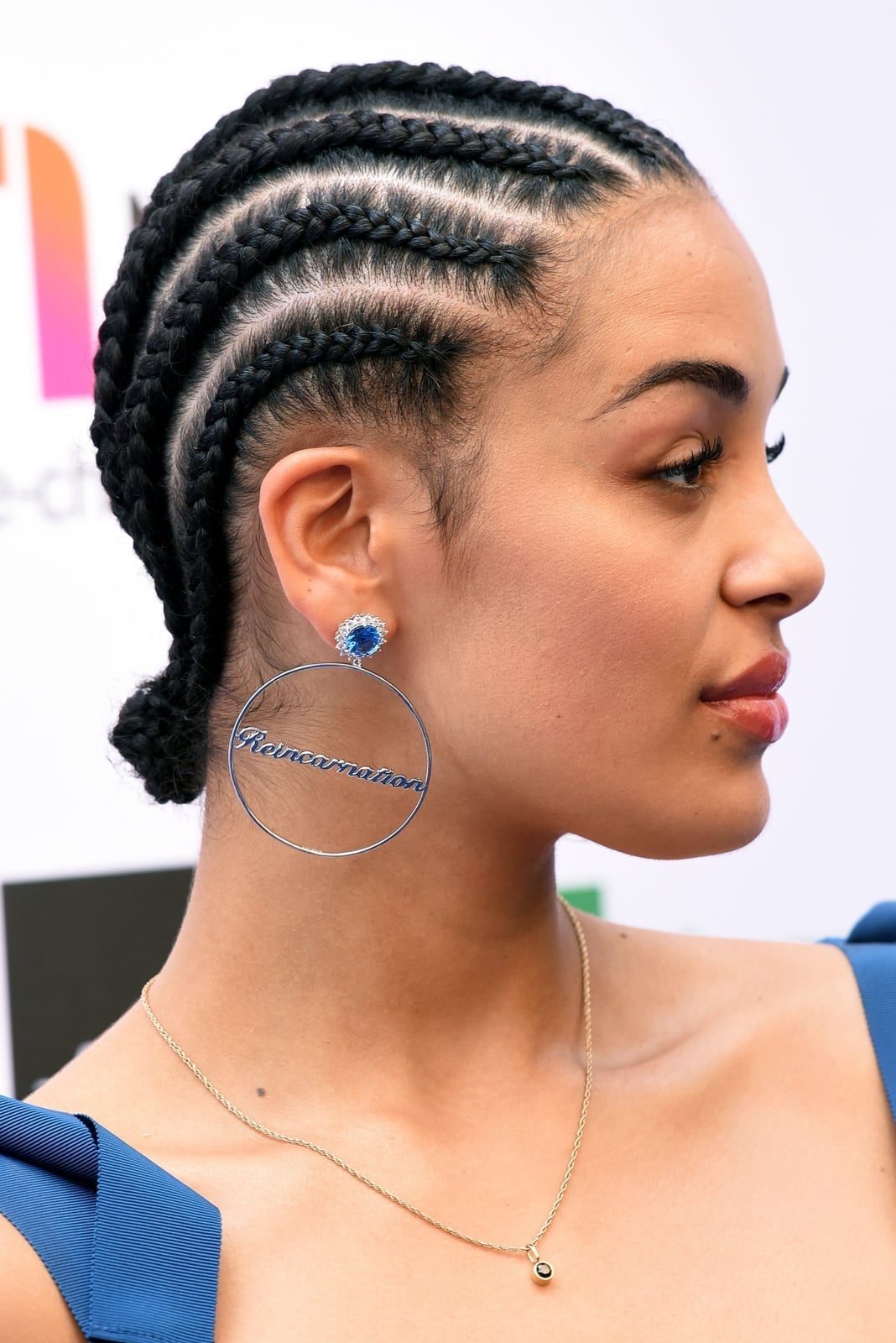
Between a high bun and a low one, the low version wins for polish without the pull. Neatly parted cornrows trace back from a middle part into a braided low bun at the nape, all in a deep black shade on thick, coily hair. The shape works for round and oval faces, and it holds through a workday without shifting. A higher bun gives more lift, and loose braids at the ends offer a different look. A satin scarf over the bun keeps the smoothness for the next day.
Classic cornrows into a sleek low bun
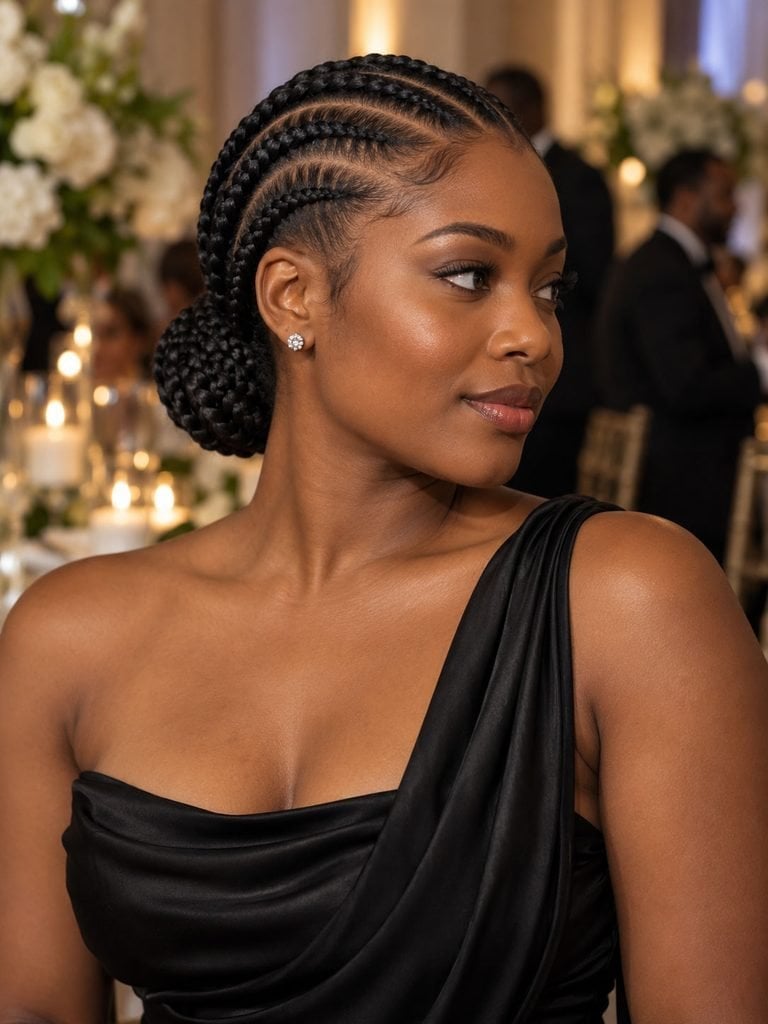
This version uses a middle part and neatly parted cornrows that feed into a sleek low bun at the nape. The coily, thick texture and black color keep the look refined for formal occasions. Compare it to the previous style. Both sit low, but this one leans sleeker. Ask your stylist for: neat cornrows, middle part, sleek low bun. A light serum on the bun controls flyaways without weighing the braids down.
Thick braided pigtails from cornrows
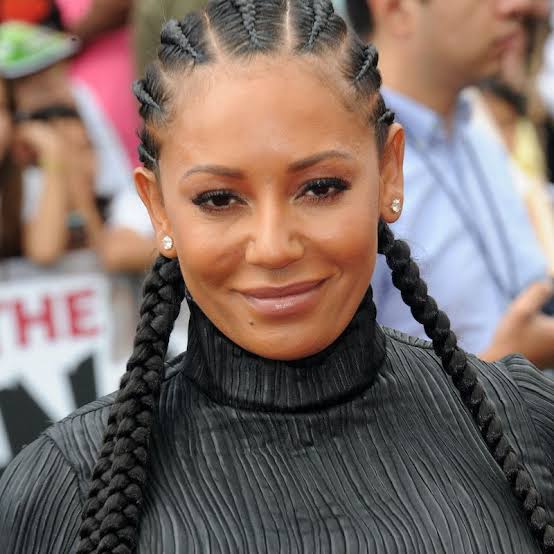
Two thick braids instead of one change the whole balance. Neat, tight cornrows run from the hairline to the nape, then divide into two thick braids from a middle part. The black color and thick texture give the braids a solid weight that does not feel flimsy. This is a salon-leaning technique because the parting and tension need precision. The braids should be secured evenly so one side does not pull tighter than the other.
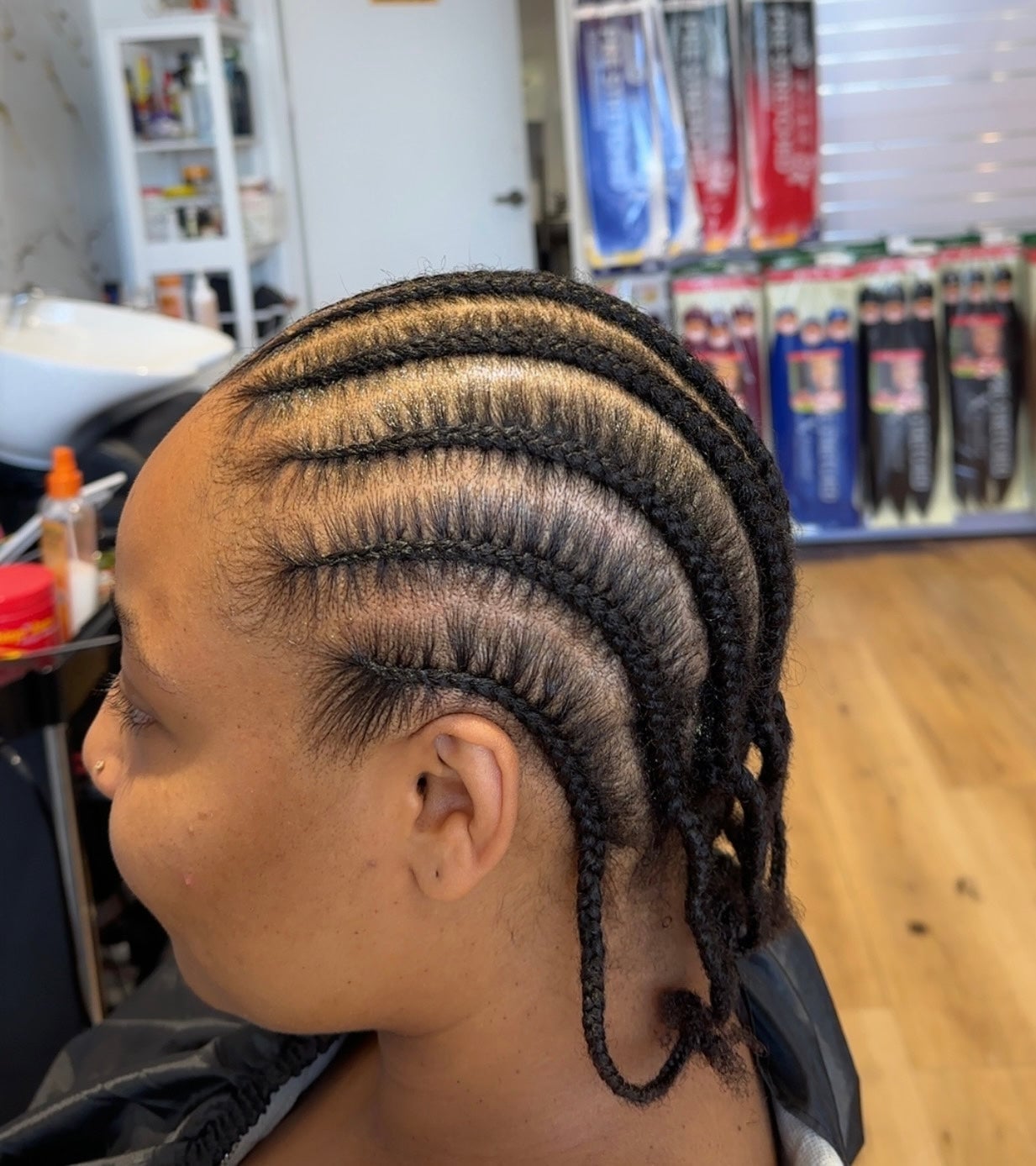
Sectioned braids transition into thick coils
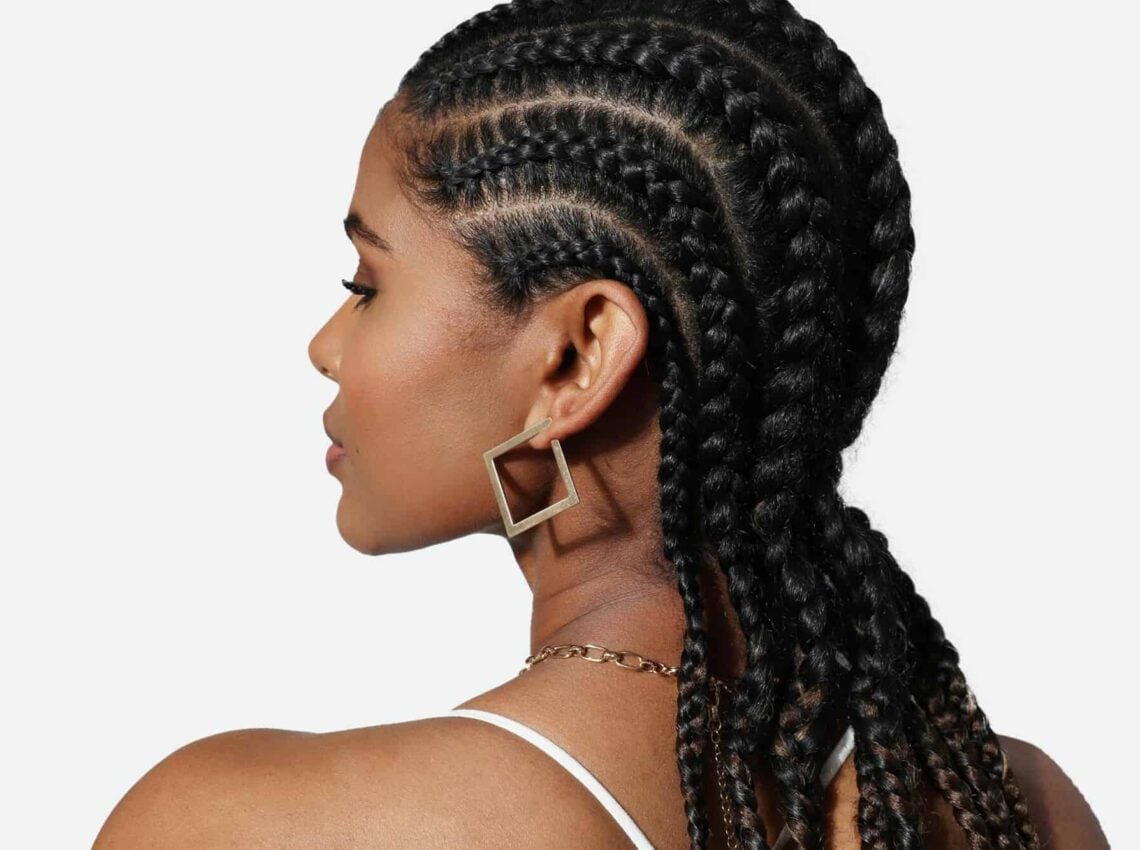
One-line assessment: this is a cornrow style that shifts texture as it travels down. Neatly sectioned cornrows at the scalp transition into thick, coily braids that continue past the nape. The color is black with subtle brown undertones, giving the braids a depth that flat black lacks. The side view shows the sectioning clearly, which matters for symmetry. Ask your stylist for: neatly sectioned cornrows, thick coily braids. Moisturizing the scalp and braids regularly keeps the hair healthy underneath.
Swirling cornrow pattern with laid edges, black
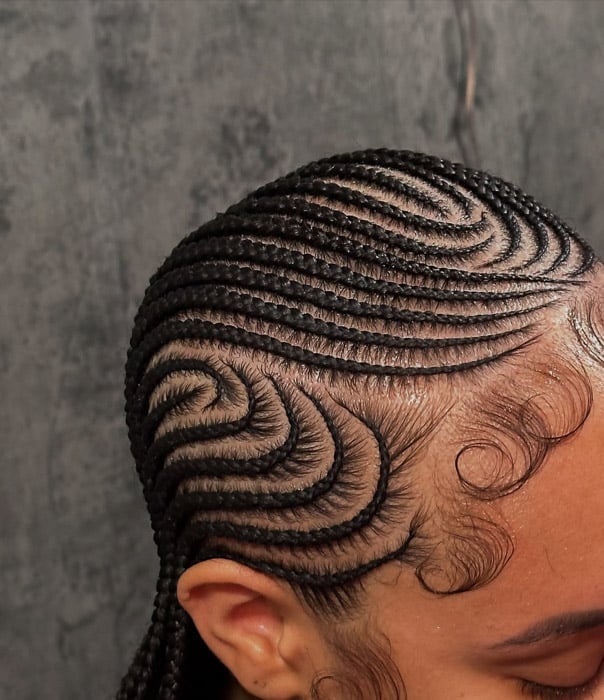
Edges this neat do not happen by accident. Intricate black cornrows form a swirling pattern across the scalp on coily, thick hair, with the edges laid into small curls for a neat finish. The side profile shows the pattern’s full curve. Skip it if you dislike styled baby hairs or prefer straight-back rows. A soft brush and a light hold gel maintain the edges through the day.
Cornrows pulled into a sleek, high ponytail
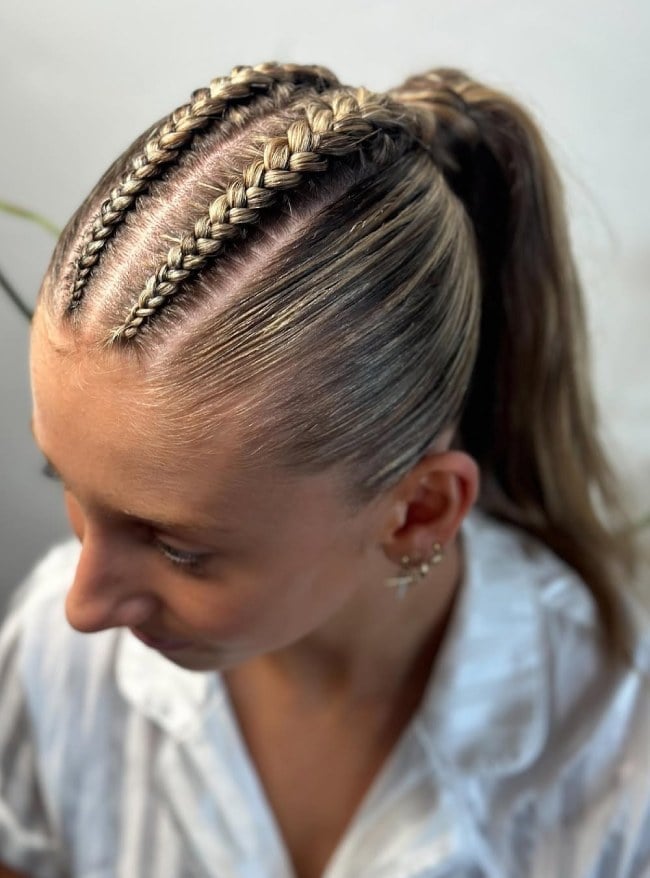
Neatly sectioned cornrows that travel into a high ponytail require precision from the first part. Dark blonde with lighter highlights keeps the braids from looking one solid block, so each row catches its own sliver of light. Straight, fine hair holds this shape best; thicker textures tend to lift at the nape. Tell your stylist: neat cornrows into high ponytail, dark blonde with highlights. A strong elastic at the base keeps the ponytail from listing by lunch.
Medium brown cornrows styled down the side
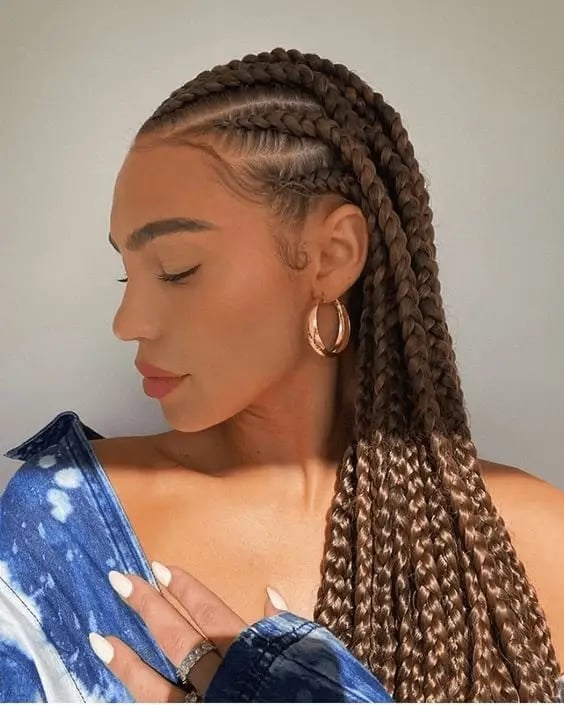
A side part changes everything about how cornrows sit. Medium brown keeps it subtle, no contrast, just a clean sweep of thick braids that fall past the ear. The braids themselves are chunky enough to read from across the room. Not for anyone who resents their part being visible all day; a middle part feels different. A satin scarf at night keeps the edges from lifting.
Final Thoughts
The choice comes down to how much pattern you want to live with and how often you are willing to re-braid. Pick by what fits your week.
- Quick morning routine: neat cornrows pulled into a bun or ponytail.
- Statement look: styles with extensions or intricate geometric patterns.
- Low manipulation: head-hugging rows with a silk bonnet at night.
- Growth stretch: braids with a loose, curly end that hides new growth.
Cornrows offer endless possibilities for style and protection.