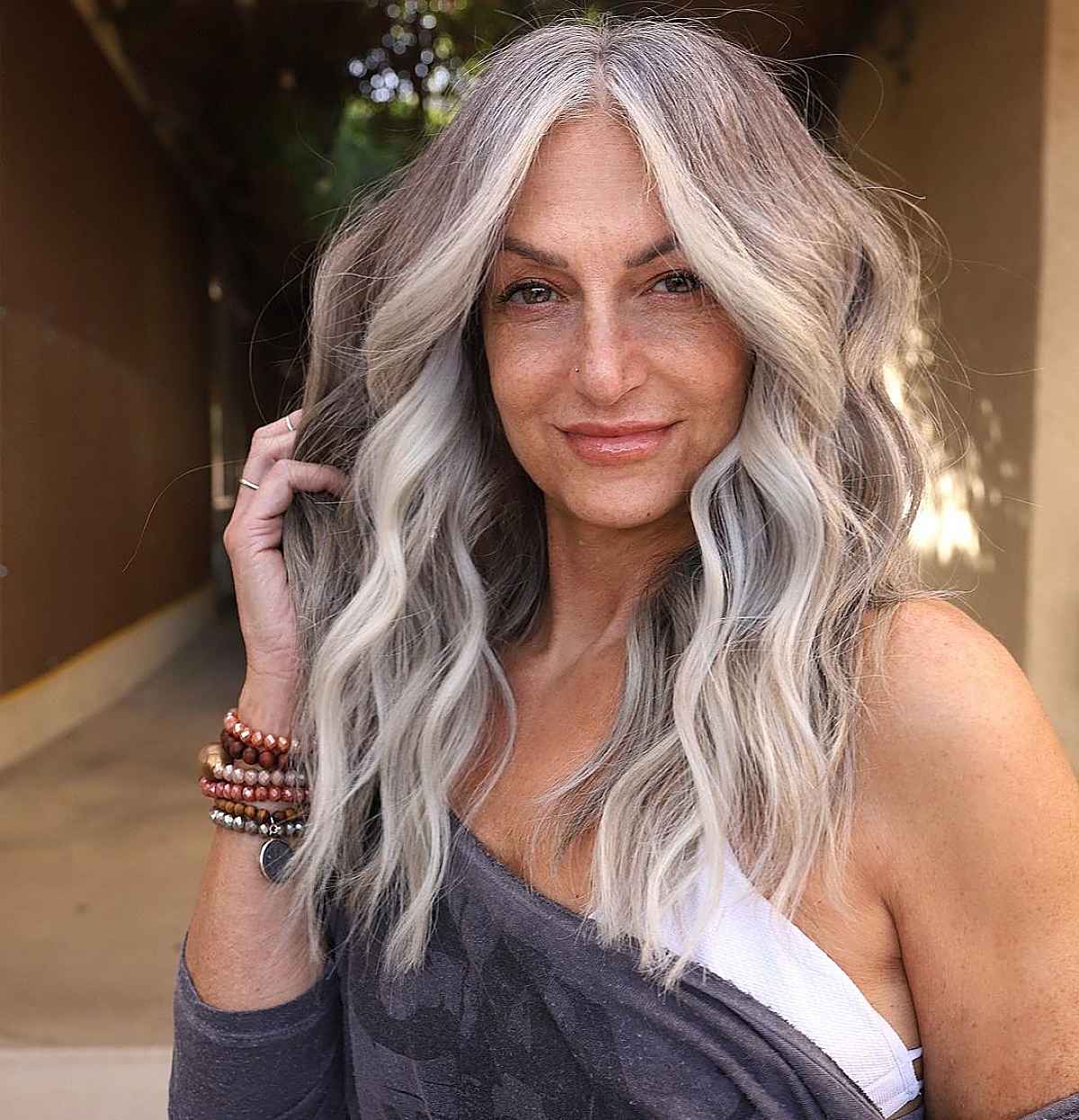
Roots are showing, but a full foil commitment feels like a Tuesday you don’t have. Partial highlights handle the grow-out line and the brightness question in one appointment, no dramatic base change required. The technique keeps the heaviest work around the face and the top layer, which is exactly where light hits anyway.
Which is why Beautiful Partial Highlights 2027 fill so many saved boards. They work on dark brown bases, warm blondes, and ash tones, across straight, wavy, and layered cuts. The collection runs 32 real examples, from subtle face-framing streaks to bolder color placements, so the decision comes down to your starting shade and how much toning you want to book.
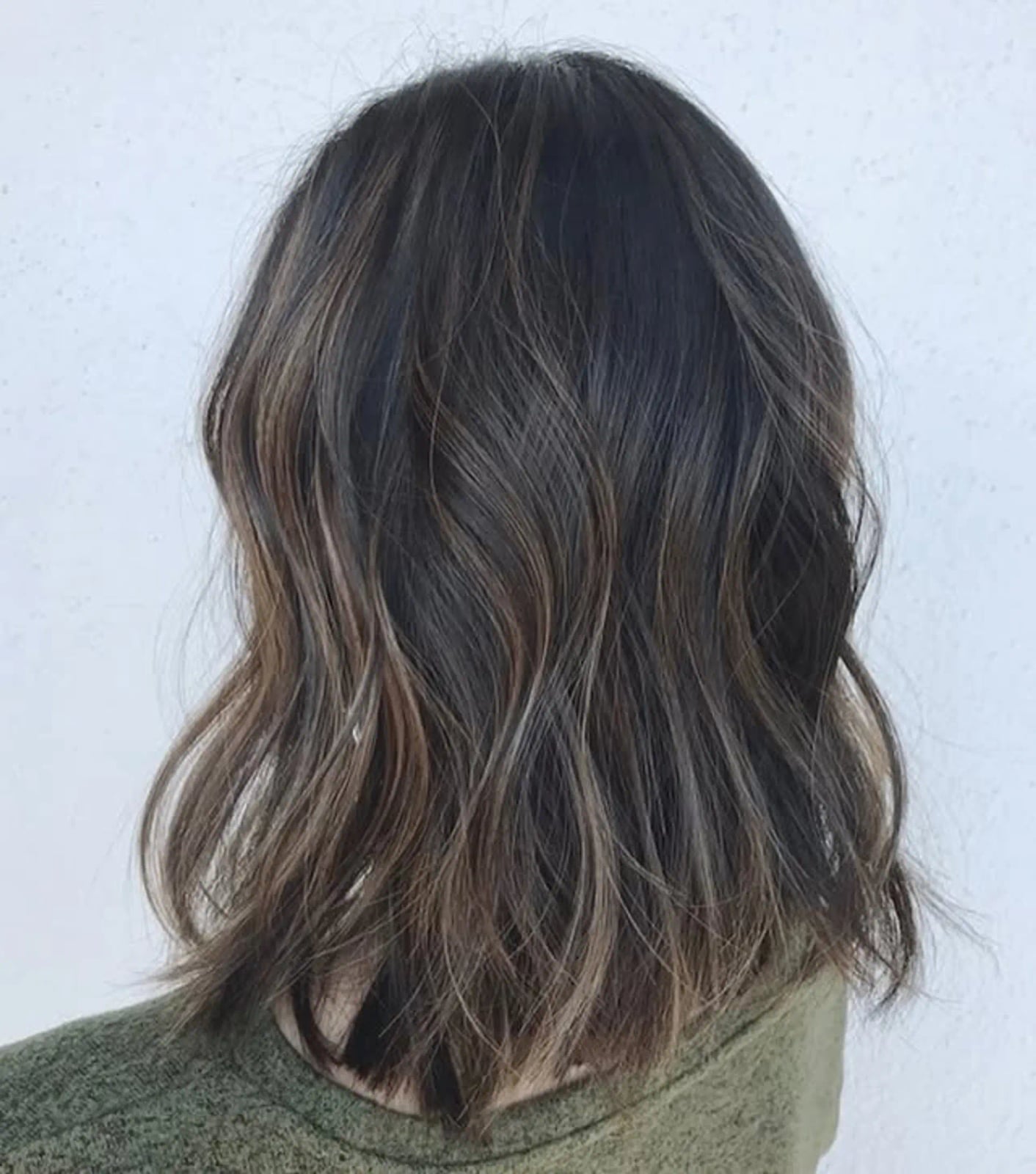
Caramel highlights on a dark brown base with wavy layers
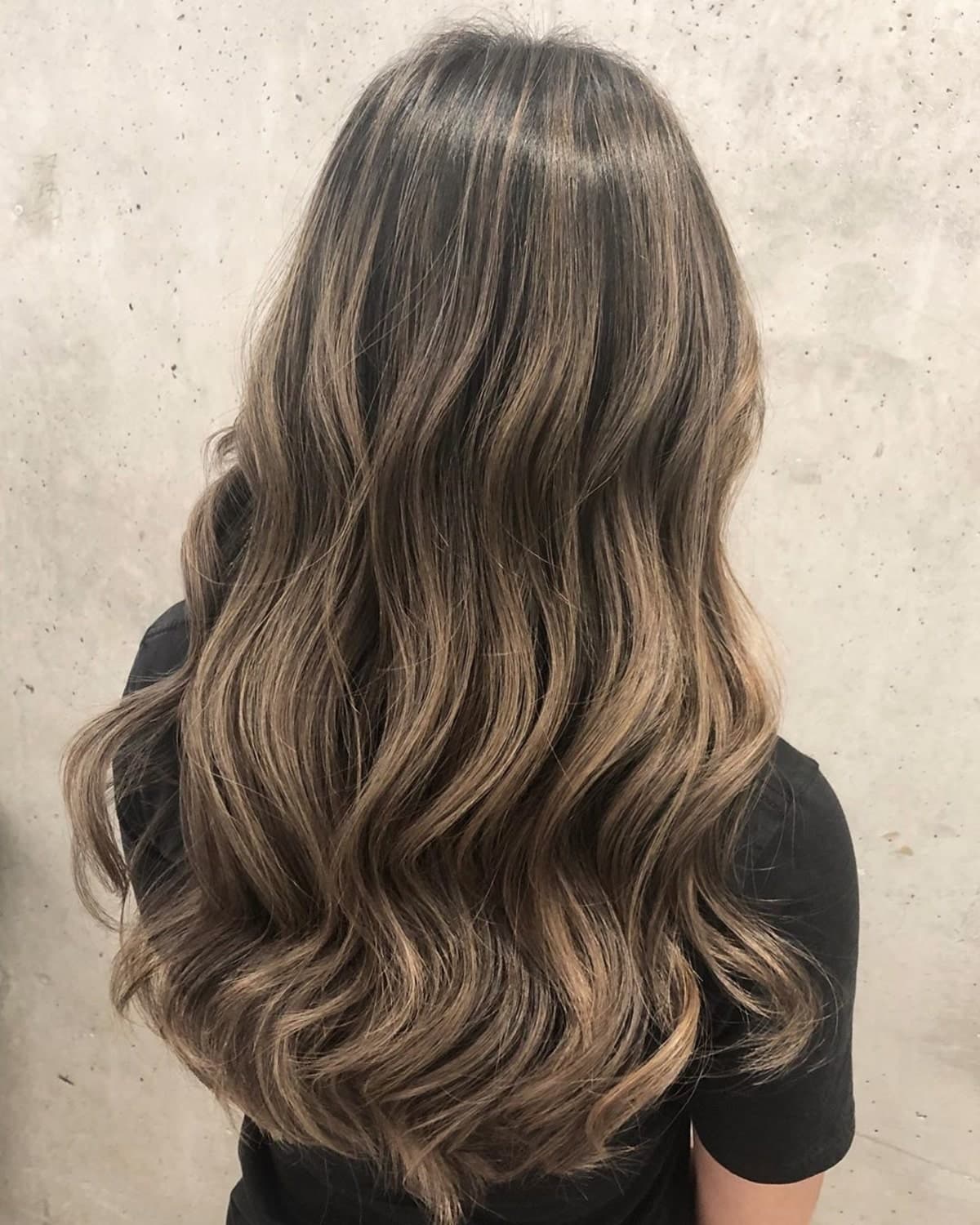
Dark brown base meets caramel highlights in a pattern that reads more deliberate than accidental. The back view shows the highlights spaced to catch light without turning stripey. Thick wavy texture carries the warmth naturally. Skip it if you keep your hair pin-straight and plan to stay that way. Ask your colorist for: dark brown base with subtle caramel partial highlights. The wavy blowout is the finishing move here, not an afterthought.
Two tones: dark brown base and ash blonde highlights
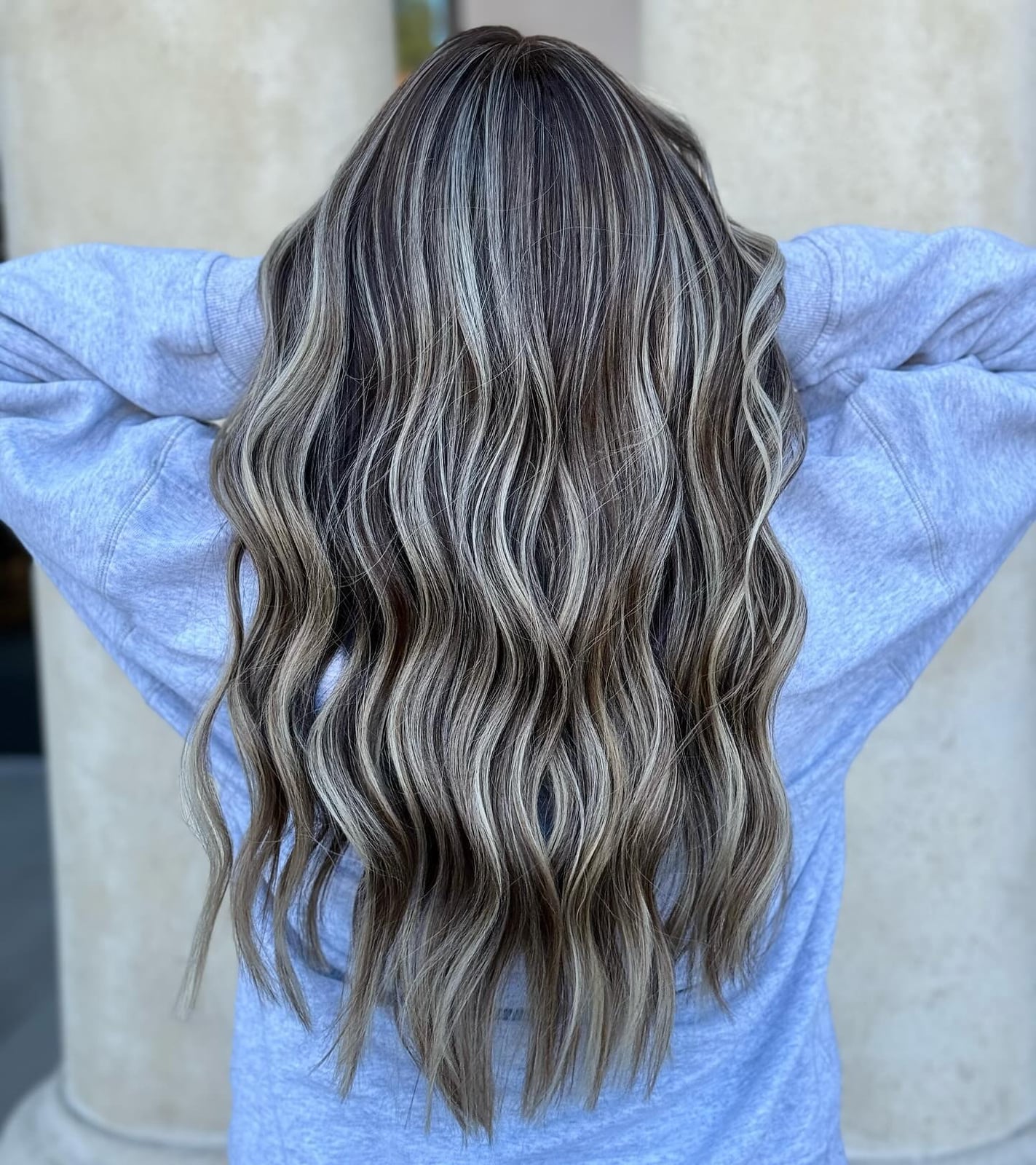
Ash blonde on dark brown reads cooler than caramel, so the question is temperature. This version suits fine, wavy hair that needs contrast without weight. Thick hair sometimes swallows the ash tone. Skip it if your instinct runs toward honey or gold. The loose waves let both tones sit visible. One tone does not dominate.
Root shadow blending into ash blonde highlights
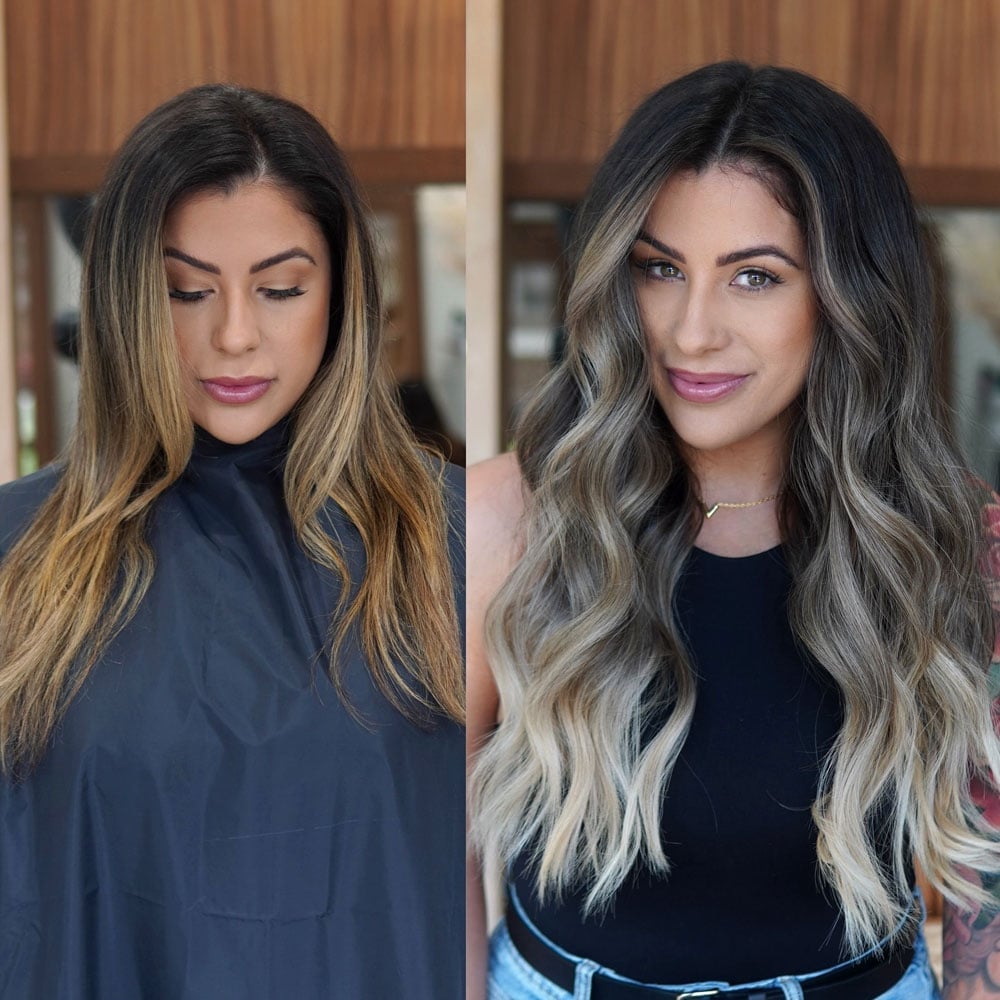
A root shadow that lives in the dark brown family keeps the grow-out honest. The ash blonde highlights start lower, so the top stays dense and the ends lift. Works best on thick, wavy hair that can hold the shape without product. Pass when your hair is fine and you dislike any visible root. Tell your colorist: dark brown base with root shadow and ash blonde highlights. Touch-ups land around every twelve weeks.
Caramel highlights and waves on a layered cut
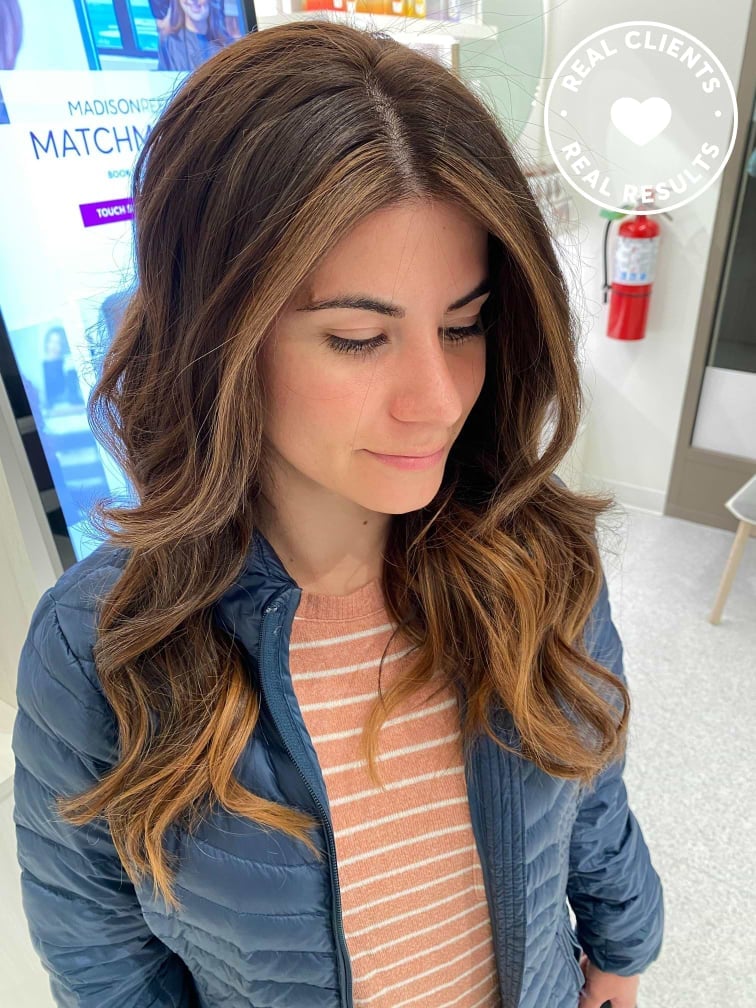
To make caramel highlights look integrated rather than added on, start with a layered cut that lets the waves stack. A middle part keeps the face open. Fine, wavy hair at collarbone length or longer holds the shape best. This style works against a straight, sleek finish. The wavy blowout does the arranging for you.
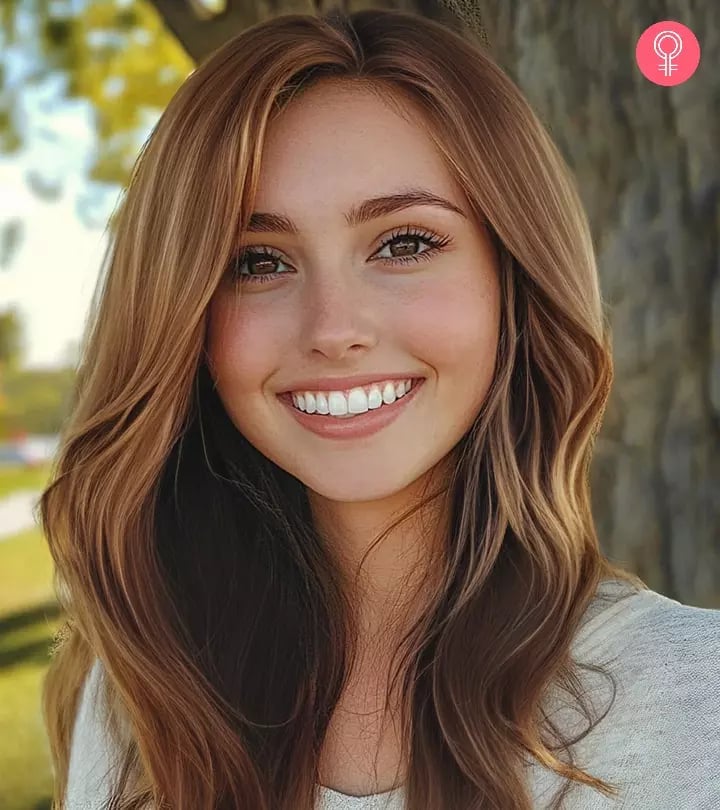
A warmer take on copper with blonde highlights
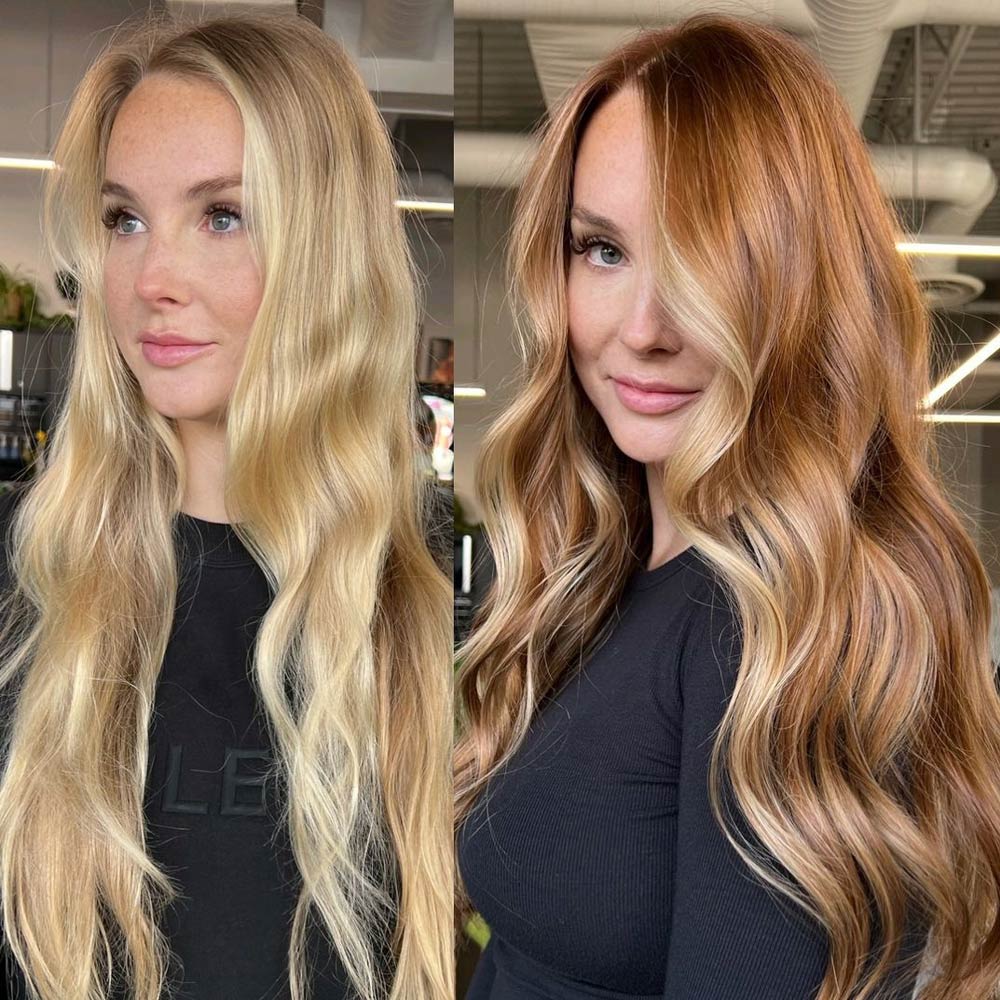
Copper this warm reads more tomato than penny. The blonde highlights lift it from solid to dimensional. Side parting breaks up the symmetry, which helps when the color is this bold. Thick, wavy texture keeps the blend from looking flat. The real drawback: copper fades fast, and blonde on copper shows every shift. Ask your colorist for: warm copper base with lighter blonde highlights. Plan for a salon visit every six to ten weeks.
Lighter blonde face-framing highlights on dark blonde
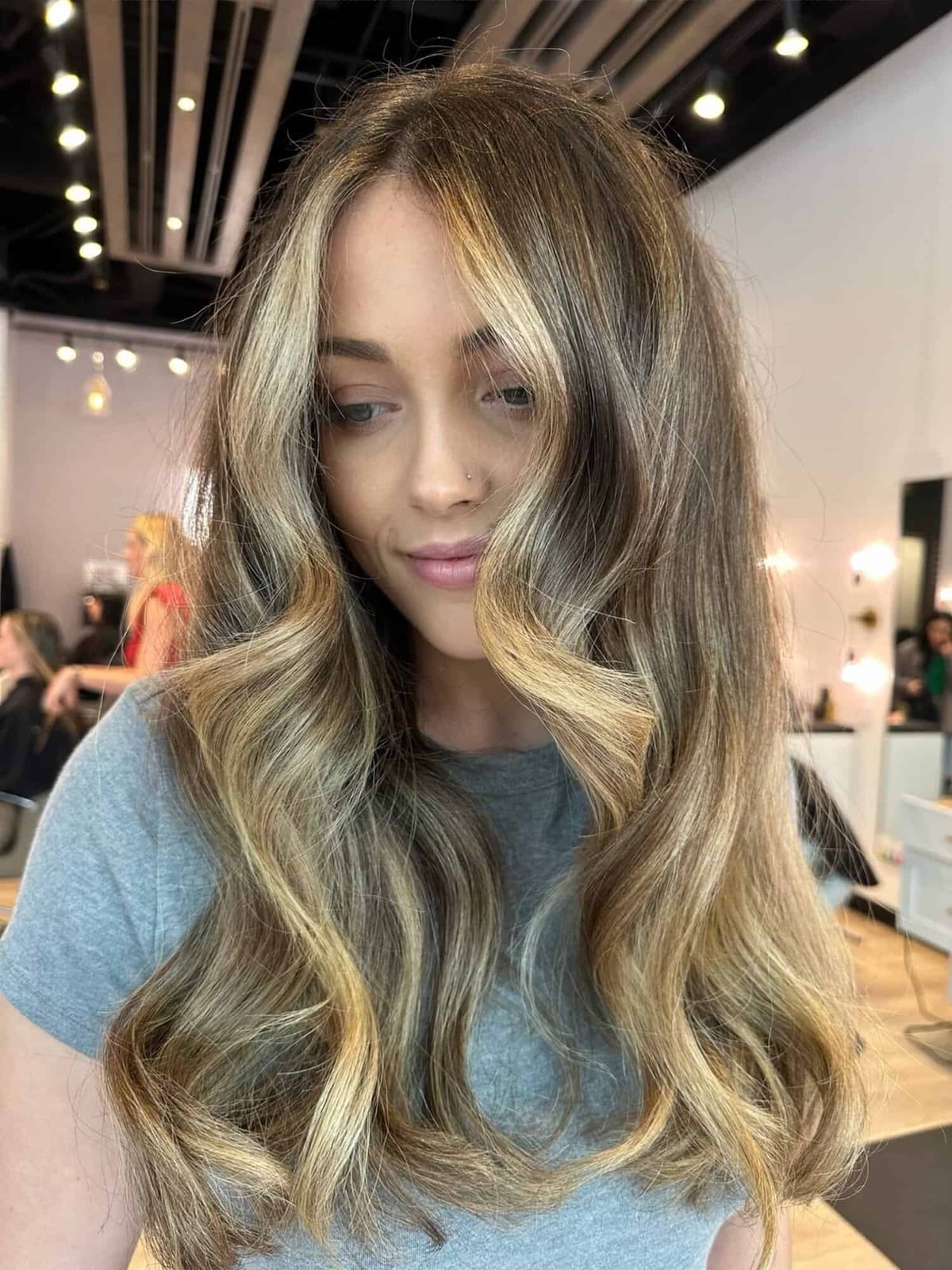
Face-framing lighter pieces on a dark blonde base create a lifted effect without a full head of highlights. The front sections get the most light, which brightens the face. Fine, wavy texture at collarbone length or longer lets the blend look natural rather than stripey. A blowout or air-dried waves keep the finish soft. Touch-ups land around the eight to twelve week mark, depending on how fast your roots show.
Golden highlights on a warm blonde base
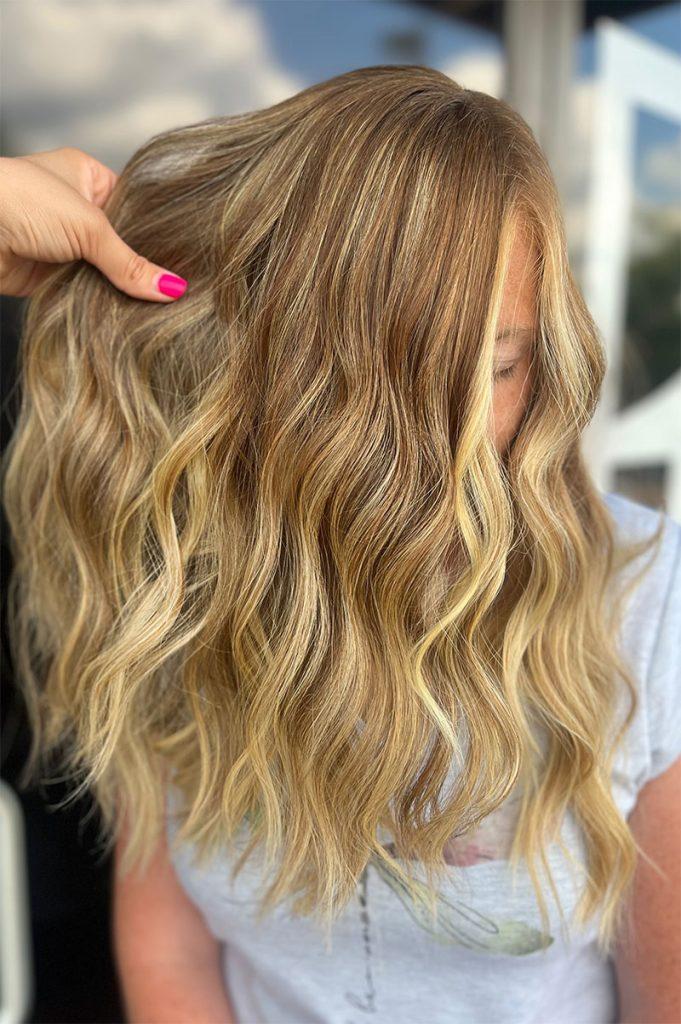
Golden streaks on a warm blonde base read like summer held over. The middle part and soft waves spread the color evenly from root to end, so no section feels heavier than another. Fine, wavy hair that lands past the collarbone carries the lighter effect best. Not for cooler blonde lovers. The warmth here is deliberate and unapologetic. Vacation hair that does not require a plane ticket.
Beige streaks on a dark brown lob
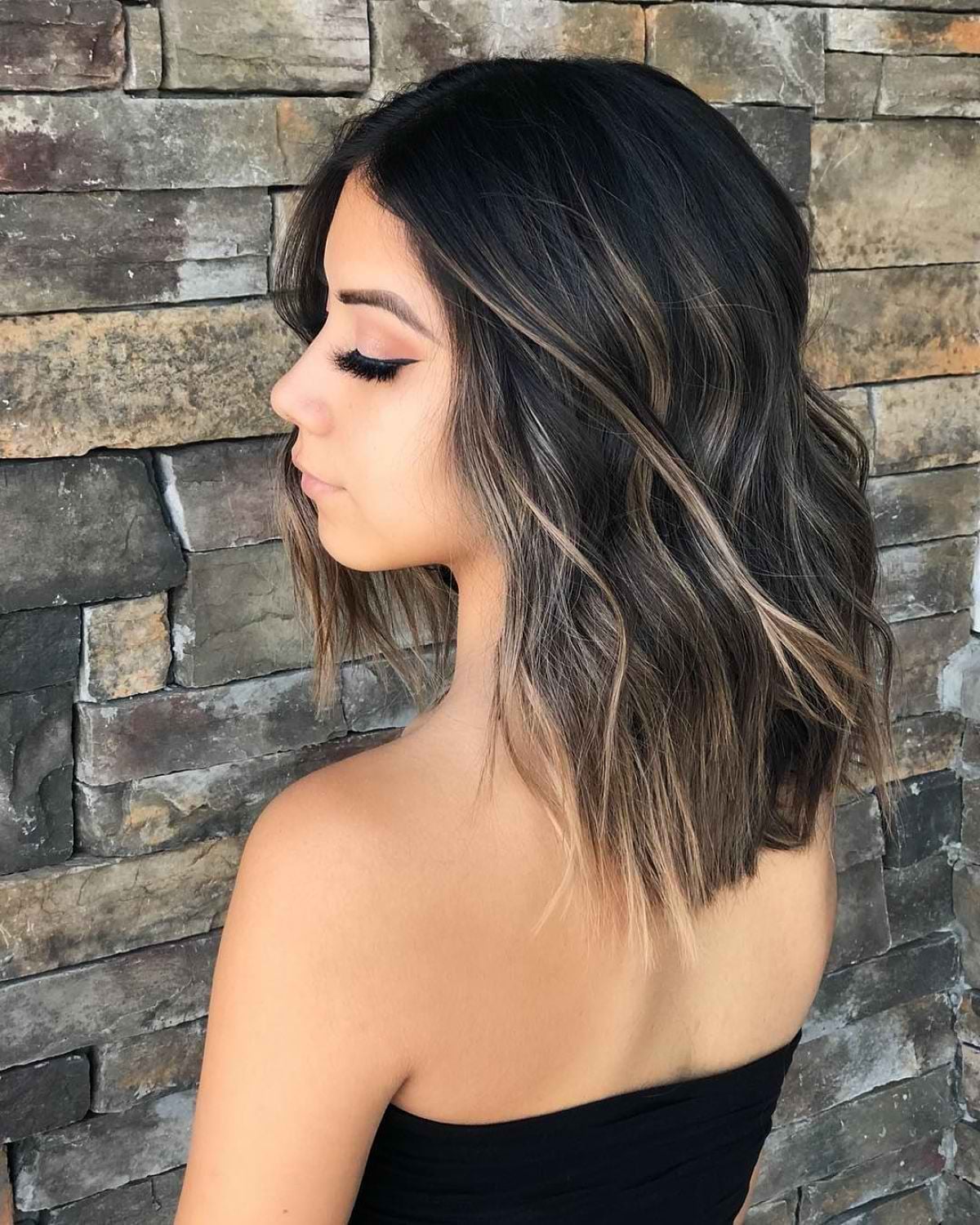
Beige on dark brown is a quieter contrast than caramel or blonde. The lob keeps the color close to the face, so the streaks look deliberate rather than accidental. A side part and wavy blowout soften the line between base and highlight. This is a salon-only job: getting beige to lift cleanly from dark brown without turning brassy takes a colorist who knows their formulas. DIY at home risks mud. Fine, wavy texture at jaw length or longer gives the lob enough weight to swing.
Dimensional ash blonde highlights on dark blonde layers
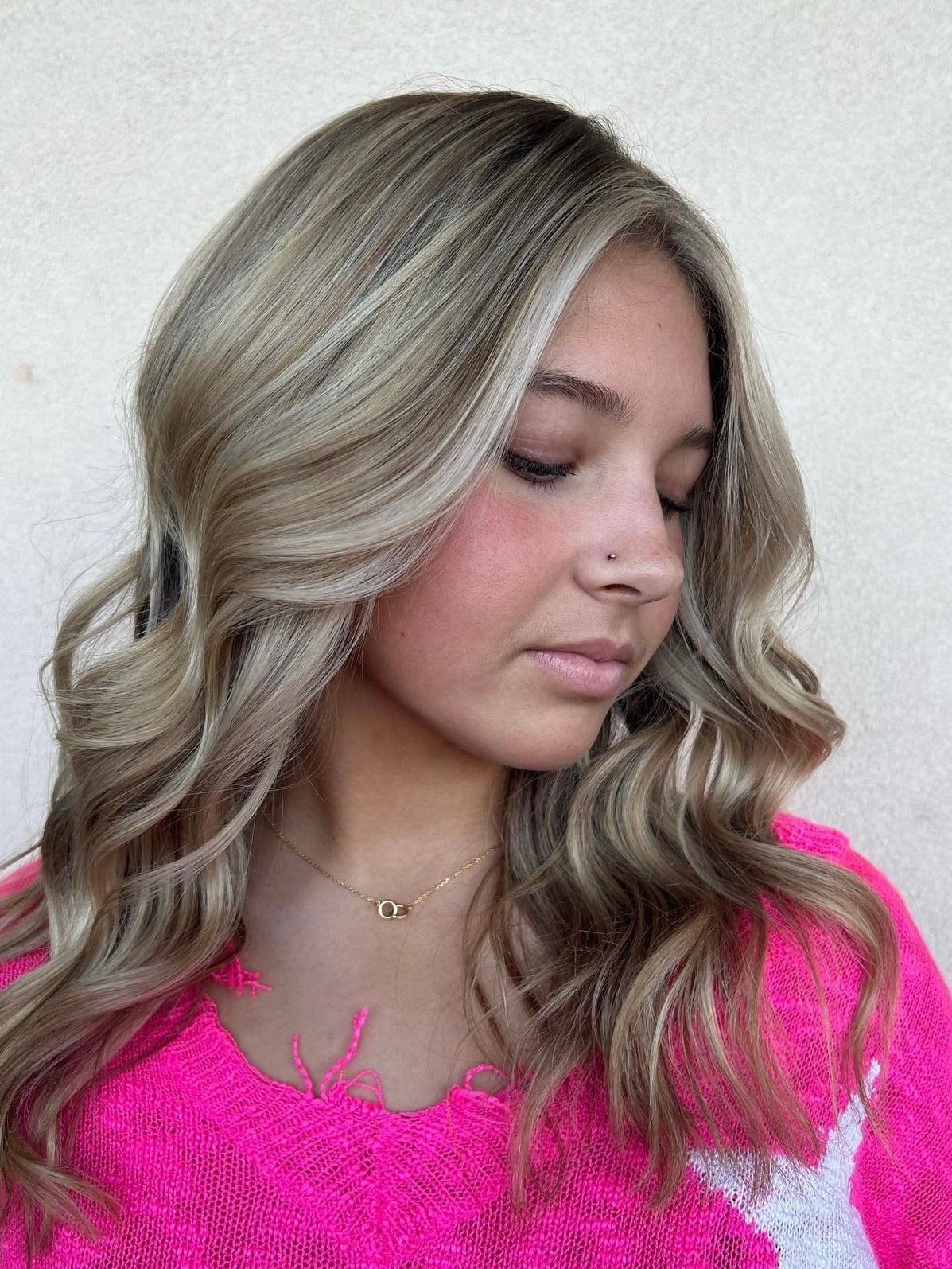
Ash blonde on dark blonde sounds straightforward until the tone goes flat. The mistake is asking for ash without specifying a level, too pale and the contrast looks dusty, too dark and the dimension disappears. Layers cut through the weight so the highlights register as separate strands, not a solid block. Fine, wavy hair suits this best. Straight hair can make ash tones read muddy instead of cool. Skip it if you prefer warmth at the ends.
Blonde streaks add brightness to dark brown waves
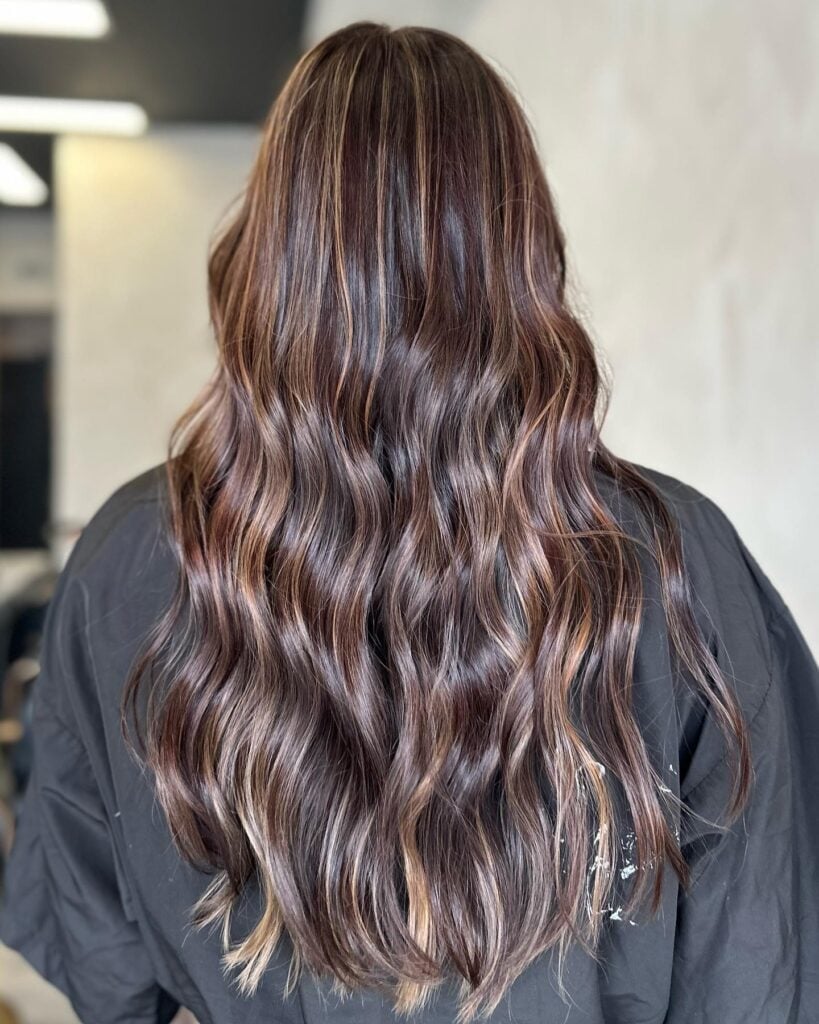
Blonde streaks on a dark brown base work best when they stay subtle. The back view here shows the highlights concentrated through the midsection and ends, leaving the root area darker for a lived-in grow-out. Thick, wavy texture hides the line where color stops. A wavy blowout is the easiest styling route, the bends scatter the light so each streak looks a separate piece. Touch-ups land around eight to twelve weeks.
Soft, dimensional waves with partial blonde highlights
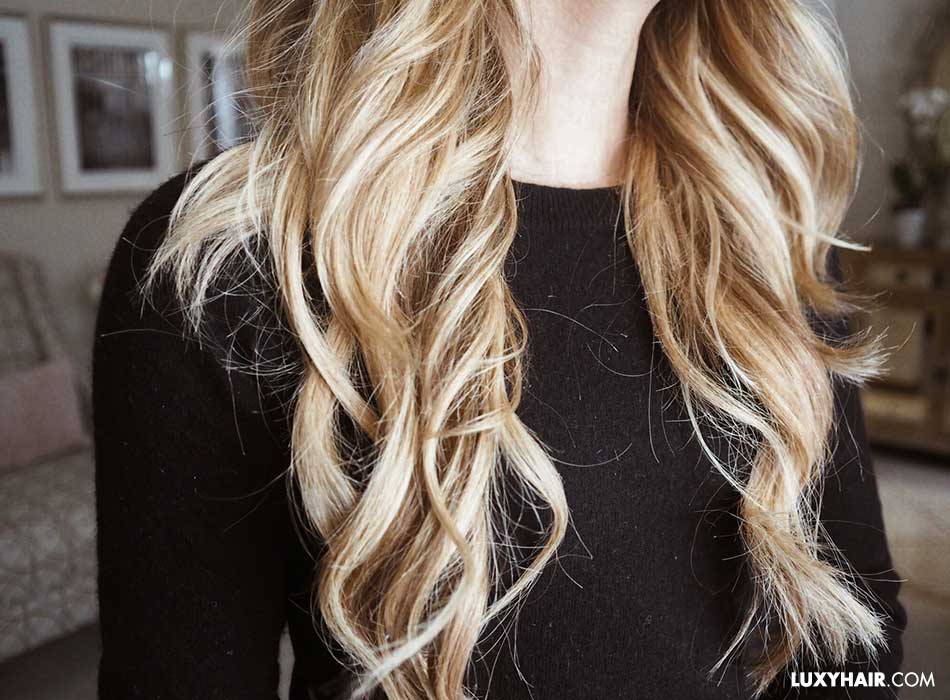
Loose waves on a dark blonde base show one continuous color until the light shifts. The partial blonde highlights are woven through at irregular intervals, so no two sections reflect the same brightness. Fine, wavy texture works in your favor here: the finer strands take the lighter pieces without looking chunky. The wave pattern does the blending for you. Ask your colorist for: dark blonde base with subtle partial blonde highlights, loose waves. A middle part keeps the distribution even. The highlights are spaced to create dimension, which is the difference between a salon job and a home kit.
Wavy hair that lands at least at the collarbone holds the shape best. The fine texture lets the blonde sit on the surface without overpowering the base. A darker base that stays uniform from root to end is a different look. The soft contrast here relies on the base being close enough to the highlight that no single strand jumps out.
Blue peekaboo streaks add a bold statement
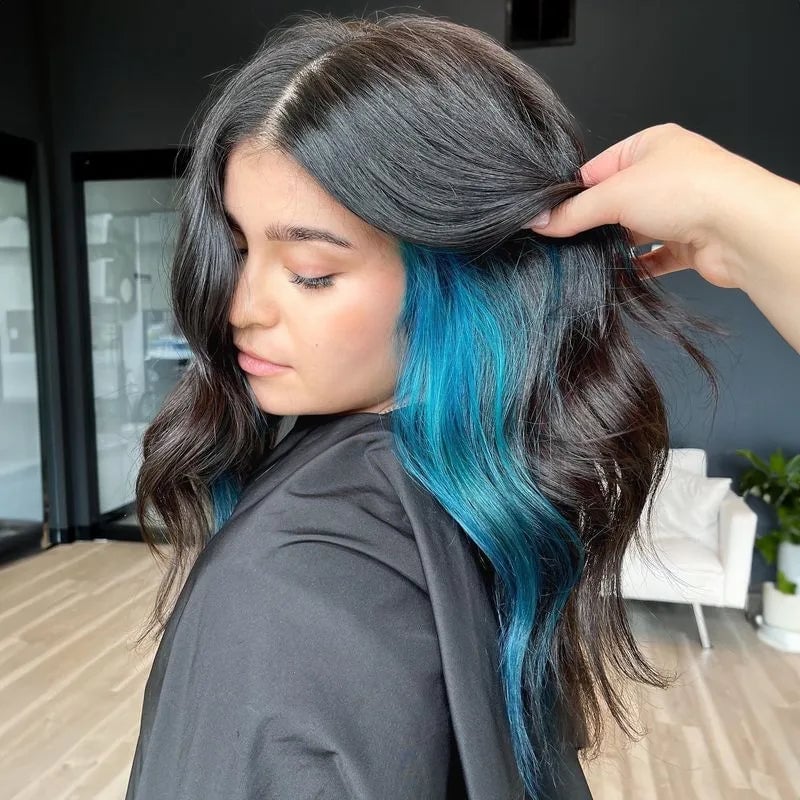
How do you add blue without committing to an all-over color? You tuck it beneath the top layer. Dark brown base with bright blue partial highlights placed around the face. The waves pull the blue to the surface when the hair moves. Thick, wavy hair at least jaw length suits this best. The weight keeps the blue from disappearing. Not for you if you prefer natural hair colors or a subtle look. Precision matters here; the blue sections need to be thin and spaced.
Caramel highlights on straight, fine hair
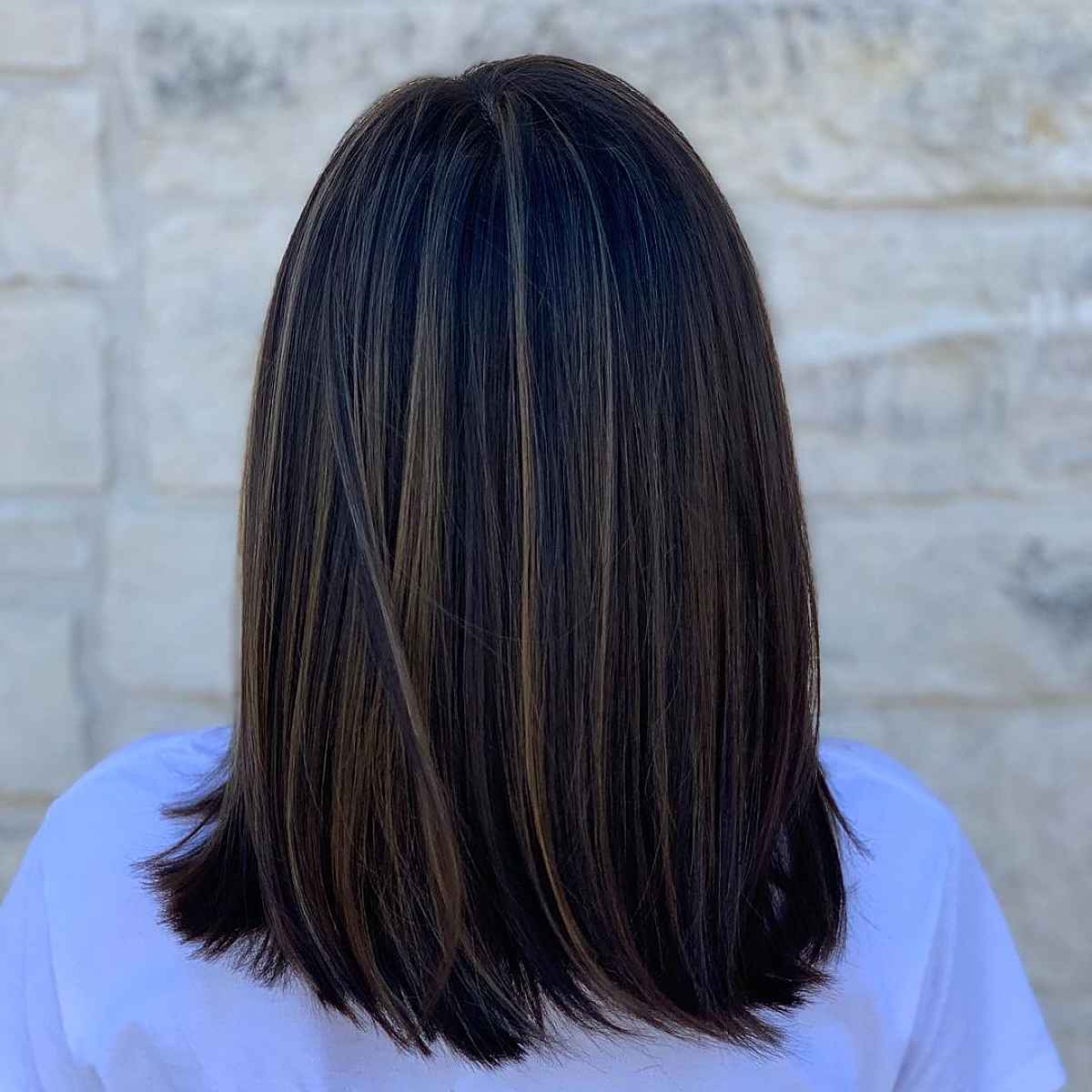
Caramel highlights on a dark brown base read warmer than blonde highlights. The difference shows most on straight, fine hair. The caramel sits closer to the natural shade, so the contrast is soft, not stark. Fine hair needs fine highlights, chunky sections would look blocky. A layered cut helps the caramel catch light at different angles. Not recommended if you have very thick or wavy hair; the caramel can get lost. Tell your colorist: dark brown base with fine caramel partial highlights, layered cut, straight blowout.
Auburn streaks on dark brown wavy layers
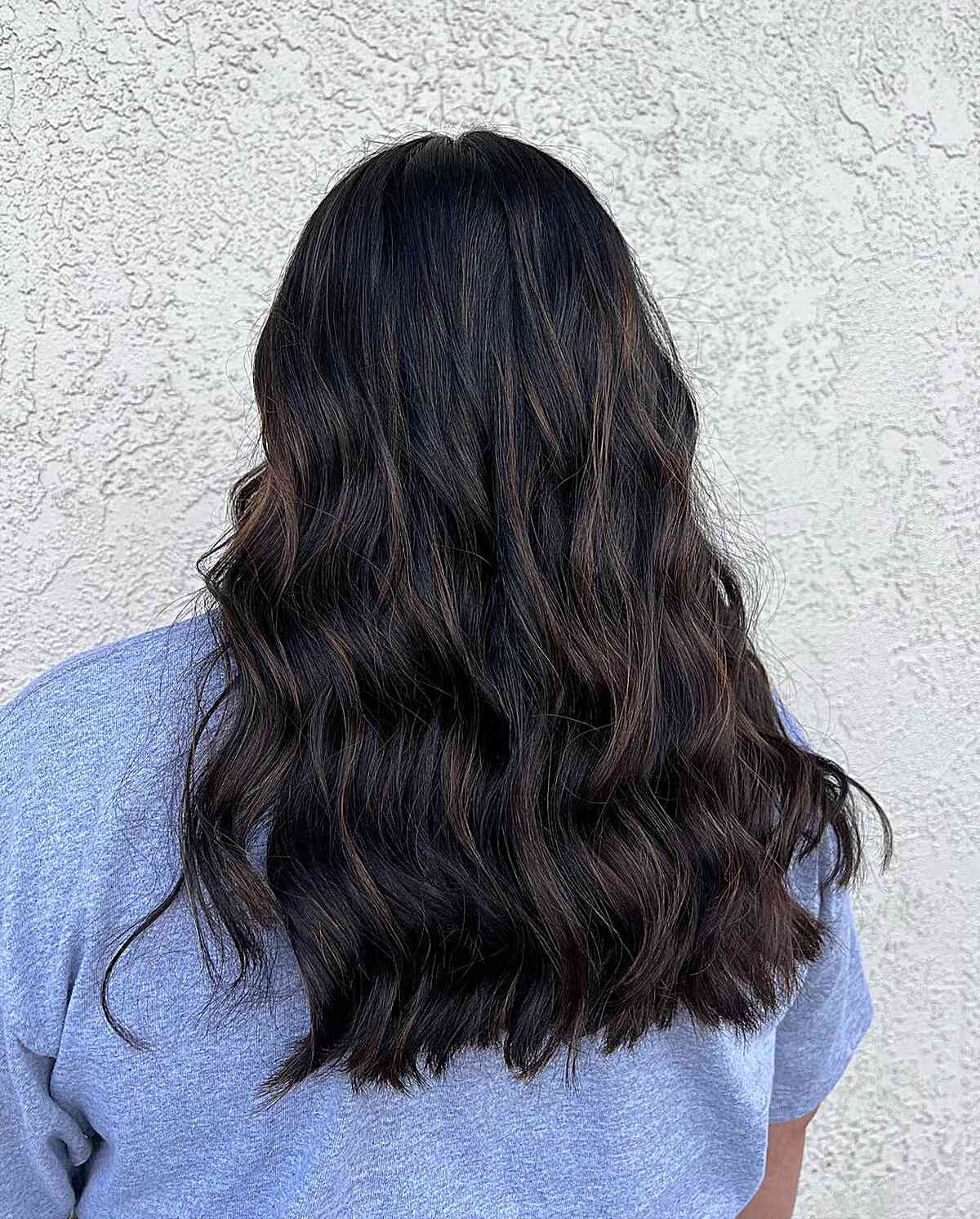
Auburn on dark brown is a slow fade, not a sudden shift. The auburn registers as a warm shimmer on the surface. Thick, wavy hair holds the color longer than fine hair because the cuticle is denser. A middle parting lets the auburn show evenly on both sides. The wavy blowout pulls the auburn streaks toward the ends, where they lighten slightly. A trim every six to eight weeks keeps the layers from growing heavy. The auburn will fade to a warm brown after about ten washes; a color-depositing conditioner can stretch the time between toning appointments.
They will place the auburn through the mid-lengths and ends, leaving the root area dark. Not for you if you prefer cooler tones or straight hair.
Caramel and blonde highlights on a dark brown lob
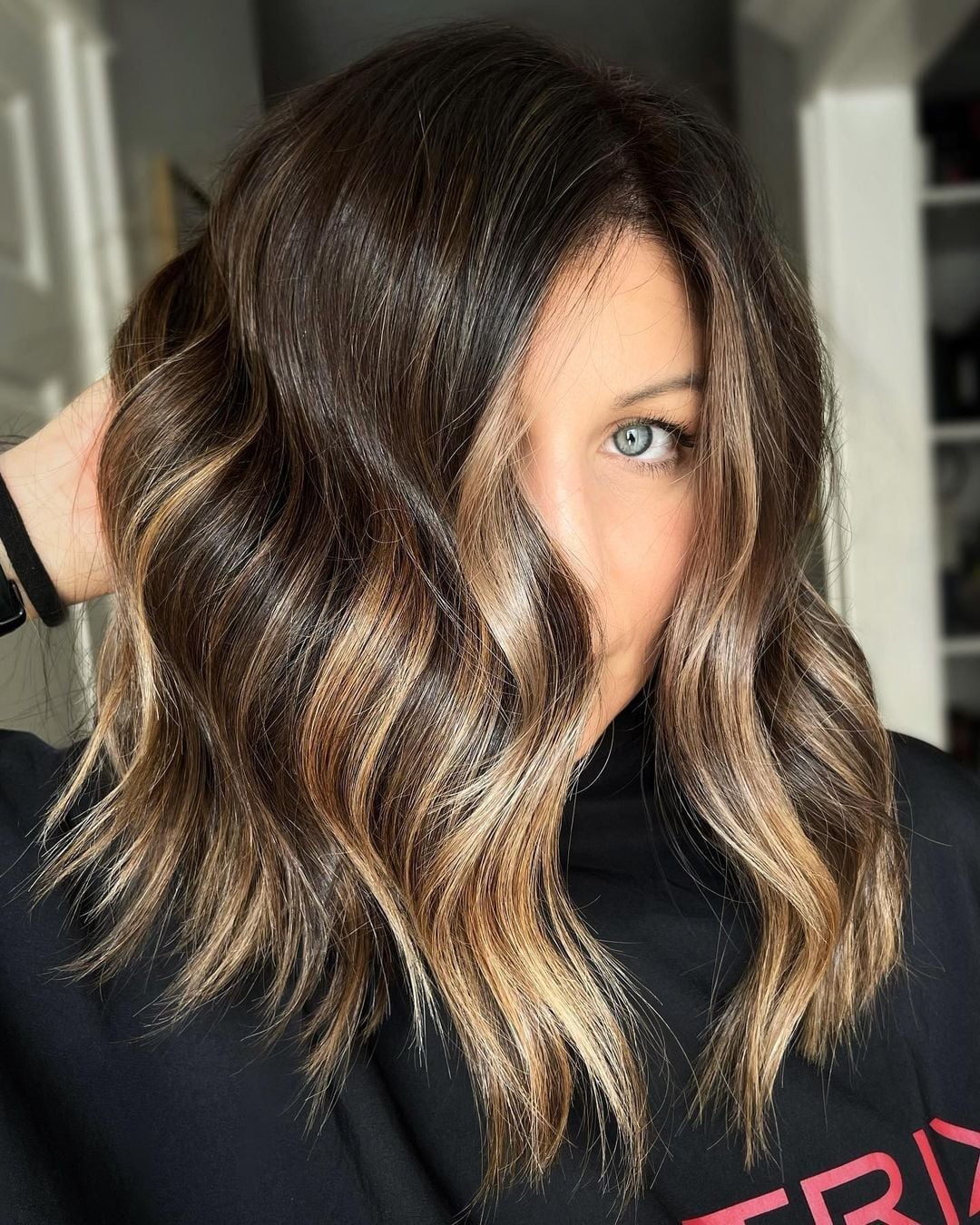
Two highlight tones on one lob means the colorist has to map where each tone lands. Caramel sits closer to the root, blonde lightens the ends. The lob cut keeps the color concentrated, no long lengths to dilute the effect. Thick, wavy hair carries the dual tones without them muddying together. The highlights wrap around the face and through the mid-lengths, leaving the back darker. A single highlight tone or longer hair is a different look. Tell your colorist: dark brown lob with caramel and blonde partial highlights, face-framing. A soft blowout or waves work well; touch-ups needed every 8-12 weeks.
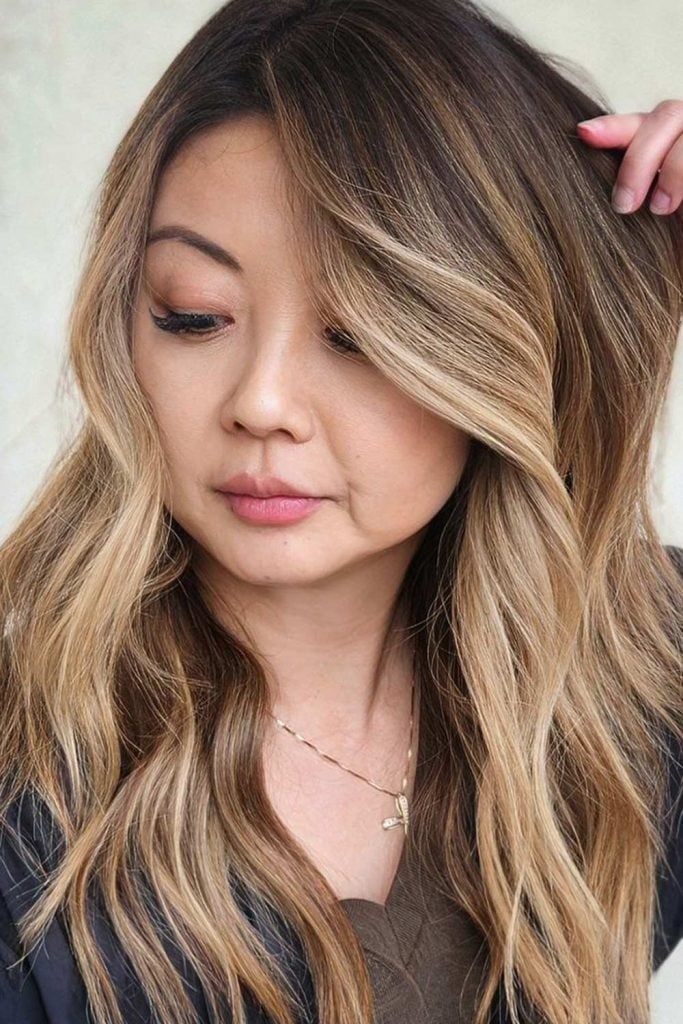
Face-framing caramel highlights on dark blonde with side swept
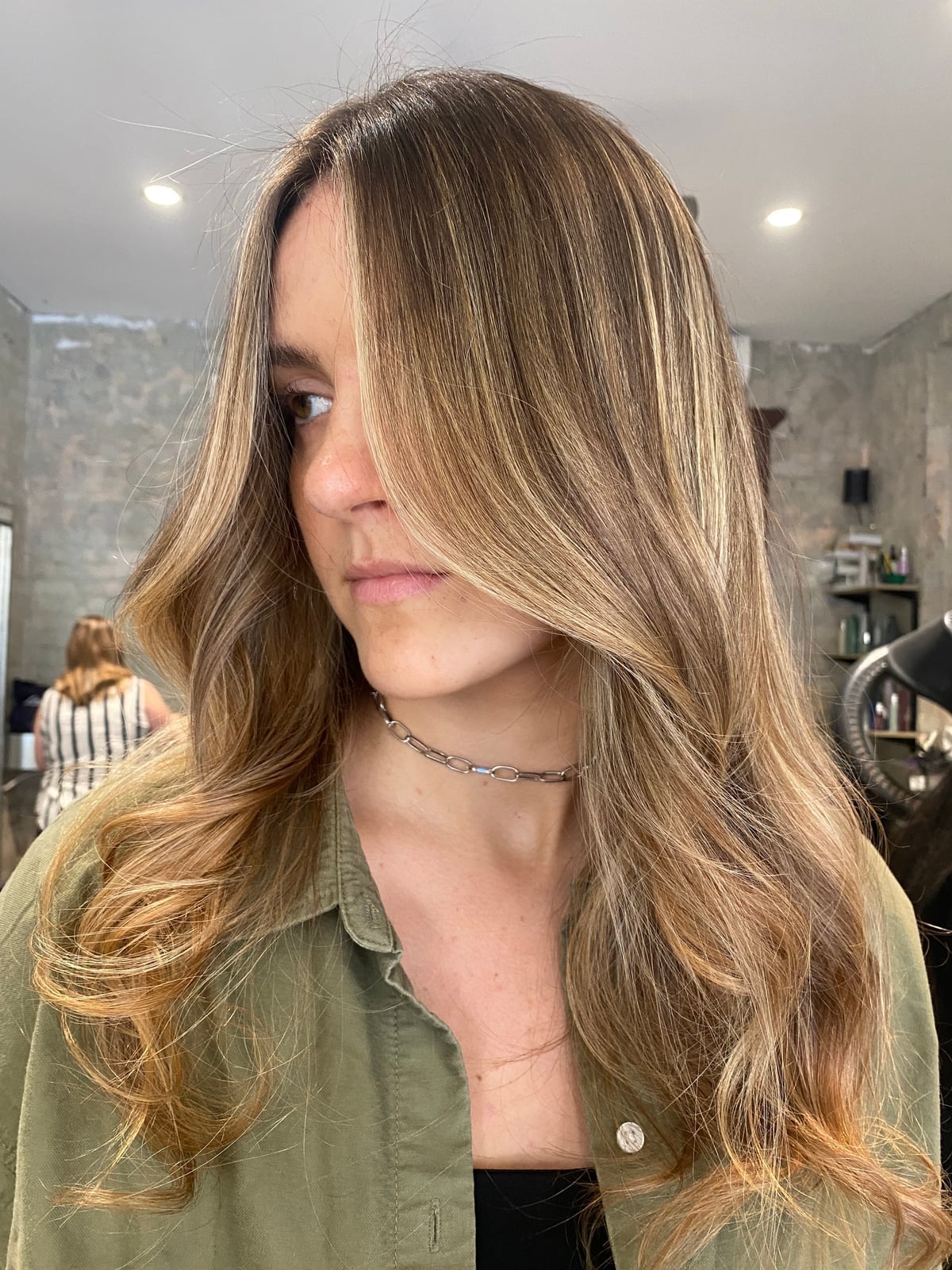
Side-swept bangs and a side parting direct attention exactly where the caramel lives. Dark blonde stays the anchor, so the lighter pieces appear deliberate. The wavy, fine texture shows the shift in tone without needing highlights everywhere. It works best with bangs and a lighter base.
Lighter effect with blonde highlights on dark brown
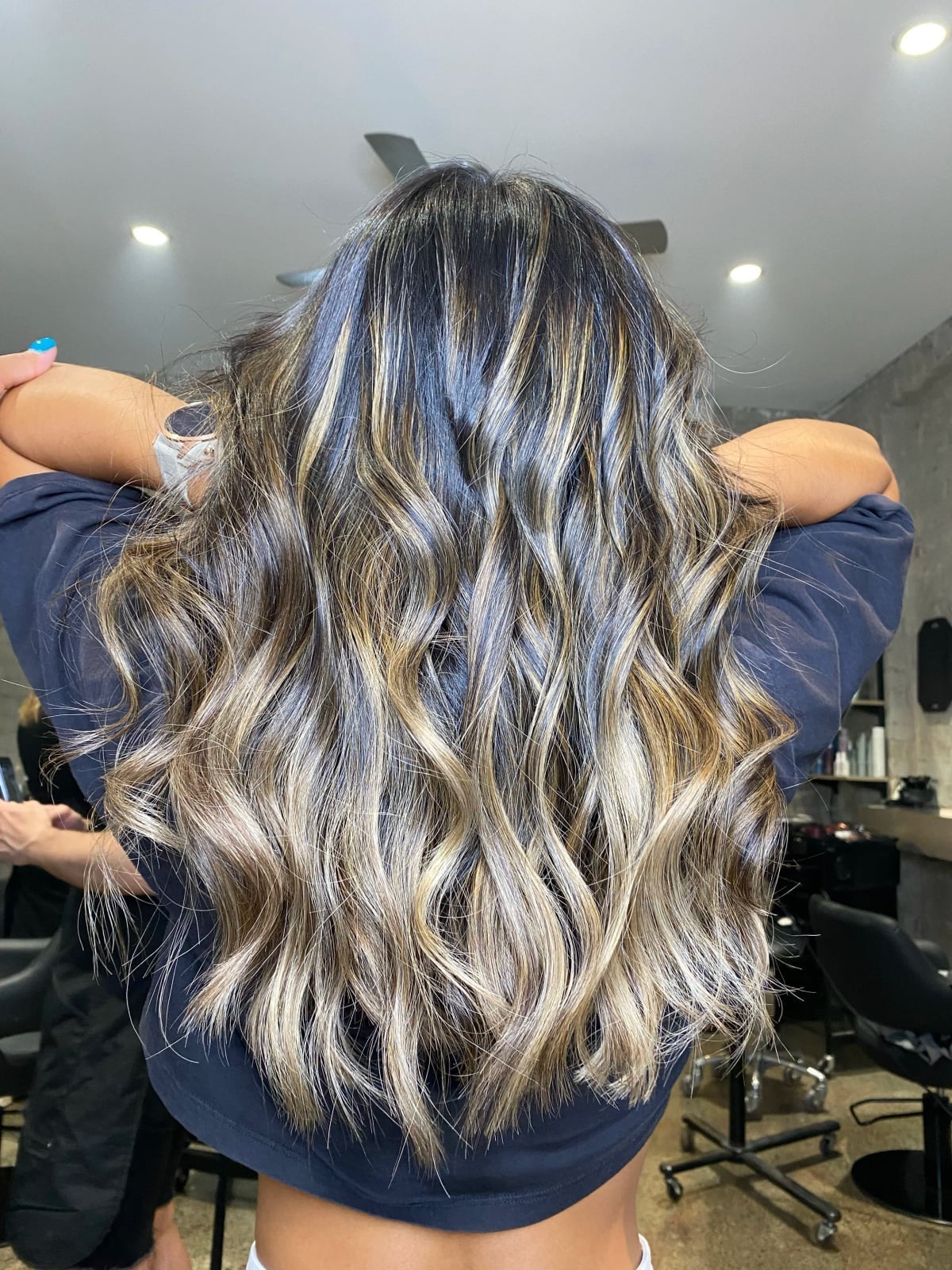
Dark brown with blonde highlights brings summer to January. The contrast works because the base stays deep and the lighter pieces stay concentrated, not scattered everywhere. Thick, wavy texture gives the blonde something to grab onto. It suits casual settings and days when you want the hair to be the focal point. Choose a lighter base or very subtle highlights for a different look.
Face-framing lighter blonde highlights on dark blonde, close-up take
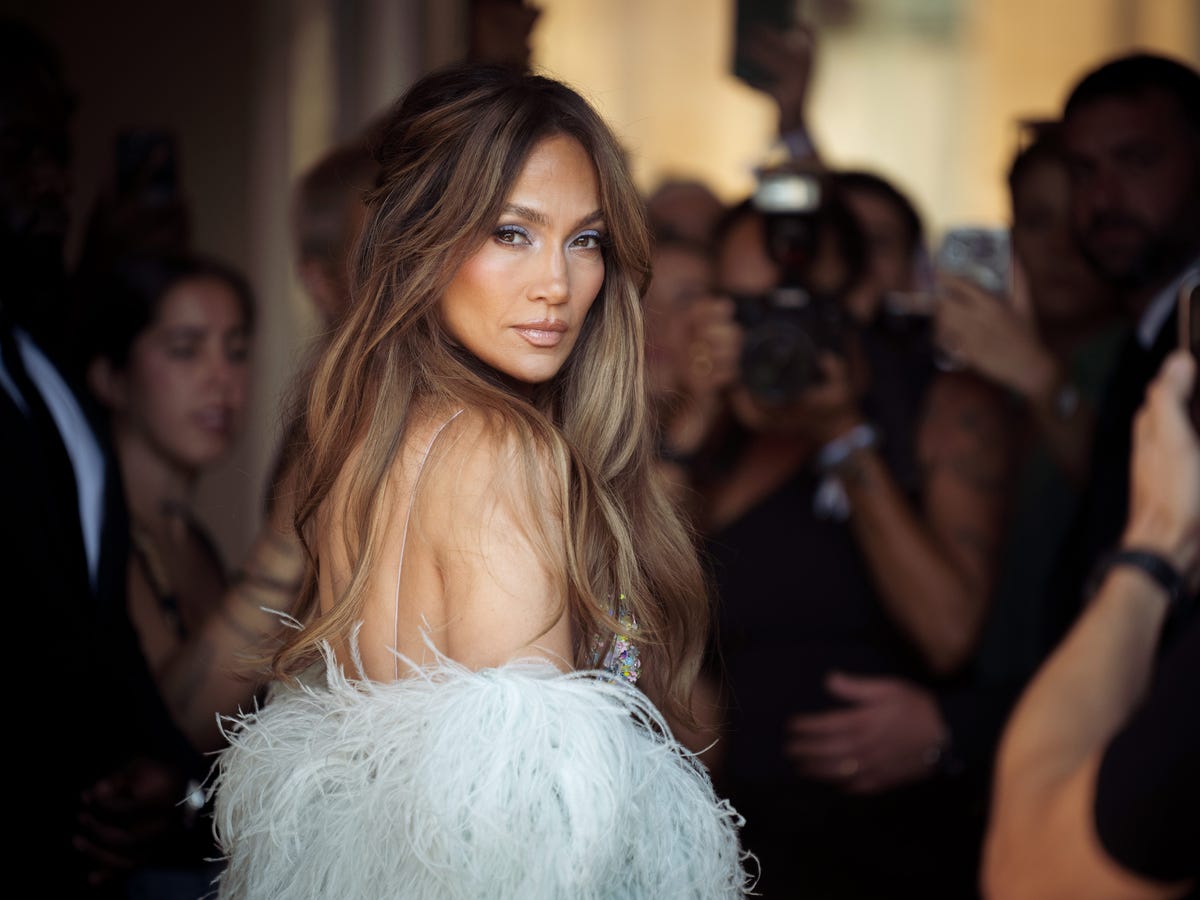
Close up, the blended technique becomes obvious. Dark blonde fades into lighter blonde at the front without a hard line anywhere. The air-dried wavy texture makes the gradation feel natural rather than salon-perfect. That is the whole trick: the highlights follow the hair’s own movement, not a foil pattern.
Blended blonde highlights on an angled bob
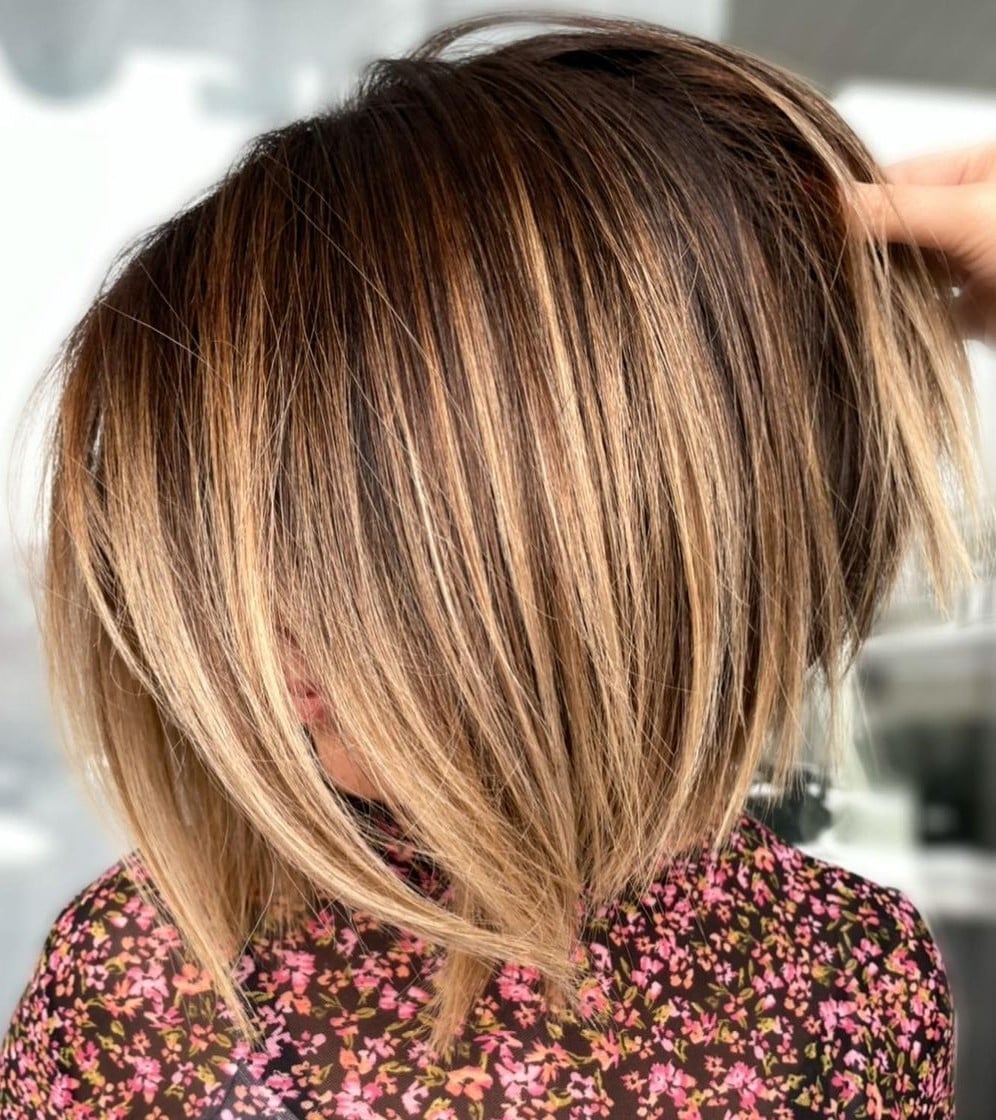
An angled bob with blonde highlights looks nothing like a full highlight on the same cut. The dark brown base stays visible at the root, so the lightness looks an accent, not a commitment. Fine, straight texture keeps the line crisp. This is a salon-only request. The precise blending required means a DIY attempt will end up patchy.
Tell your colorist: dark brown base with blended blonde partial highlights, angled bob. A smooth blowout plays up the geometry.
Ash blonde highlights adding dimension to dark brown layers
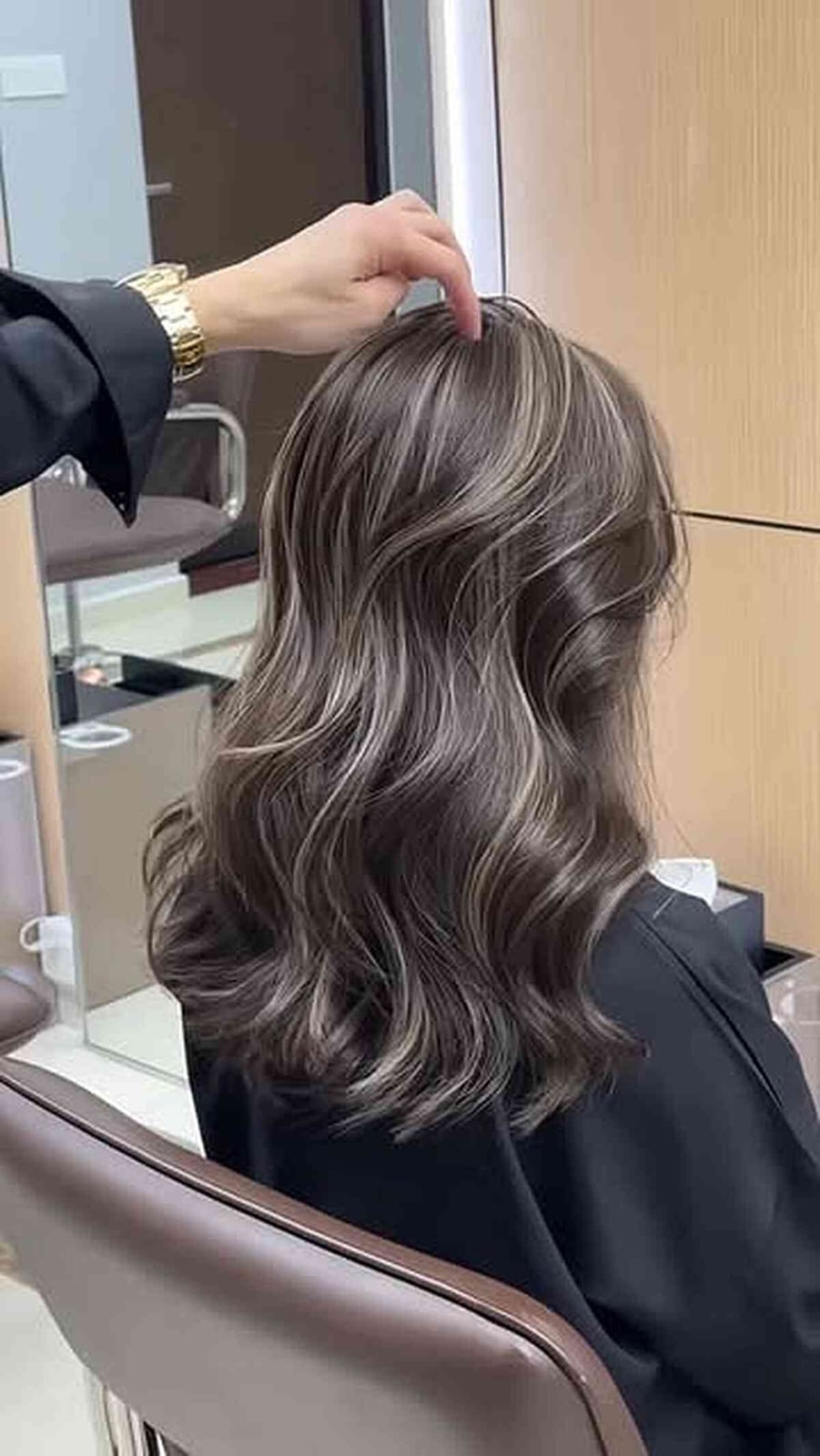
Soft layers and ash blonde highlights create a contrast that works best when the base stays dark enough to ground the cooler tone. The mistake is letting the ash go too pale too fast. Fine, wavy texture handles the shift well because the wave breaks up any line of demarcation. The catch: ash can look muddy if the base has warmth. A gloss every eight weeks keeps the cool tone clean.
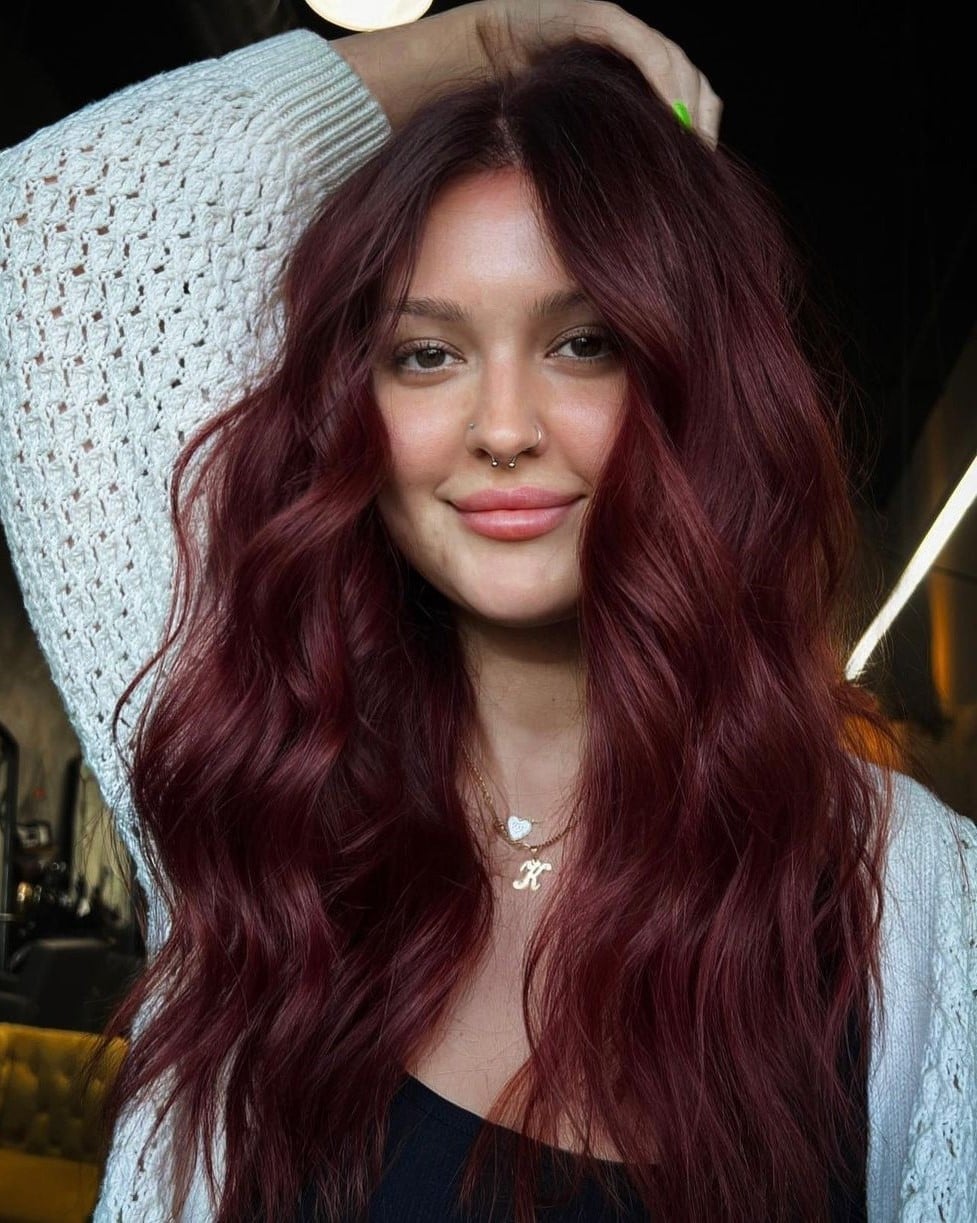
Red streaks are the standout feature
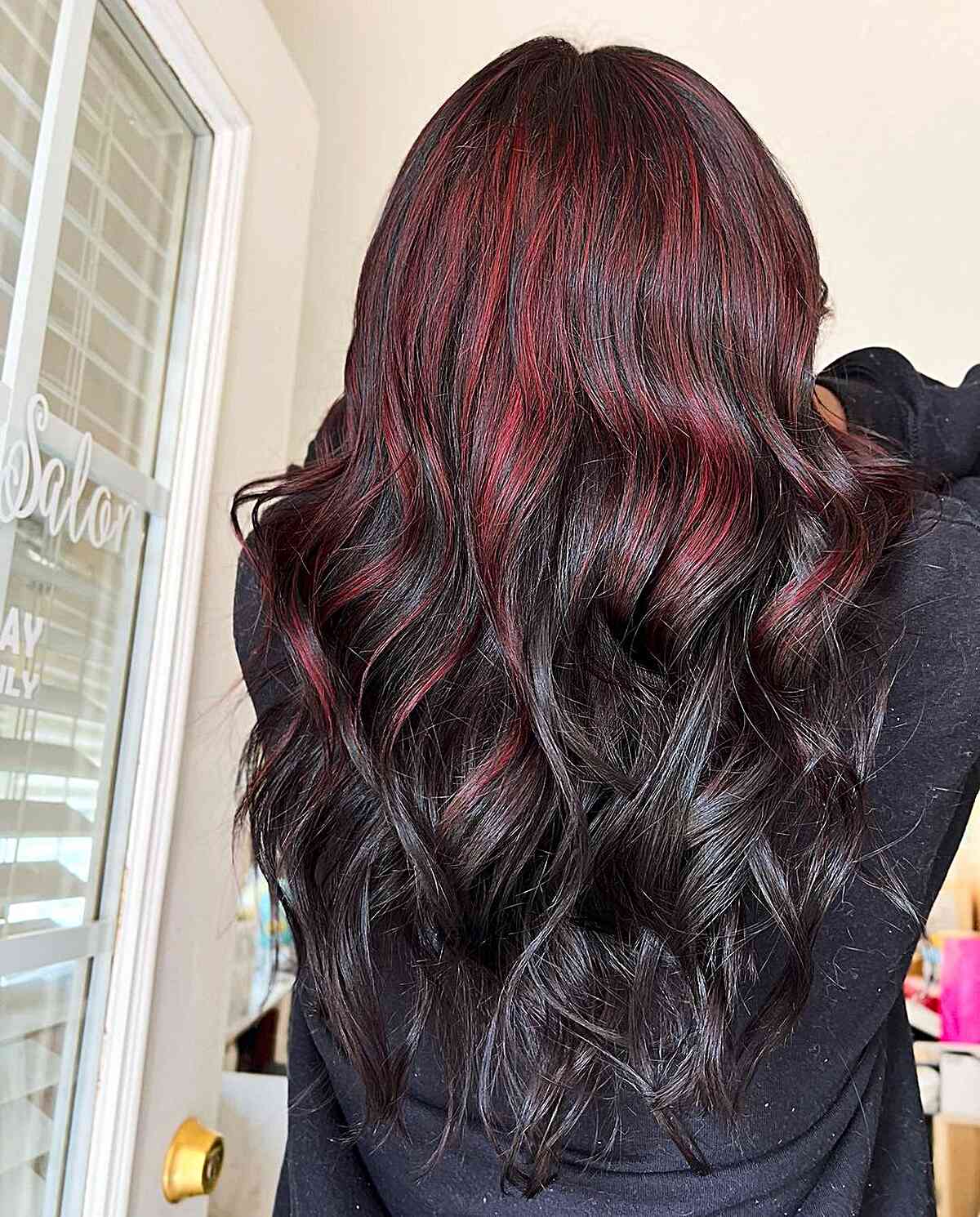
Color placement matters more than the shade itself. Thick, wavy hair in a dark brown base gets deep red partial highlights woven through the mid-lengths and ends, never at the root. The red streaks land on every other section, thick enough to stand out, spaced enough that the base stays dominant. It works best for those who want a bold contrast rather than a monochrome look. Wavy texture gives the red streaks space to catch light between the dark sections. The tone stays cool, almost wine-adjacent, not tomato. Ask your colorist for: dark brown base with deep red partial highlights, wavy styling.
Face-framing blonde highlights on a dark brown base
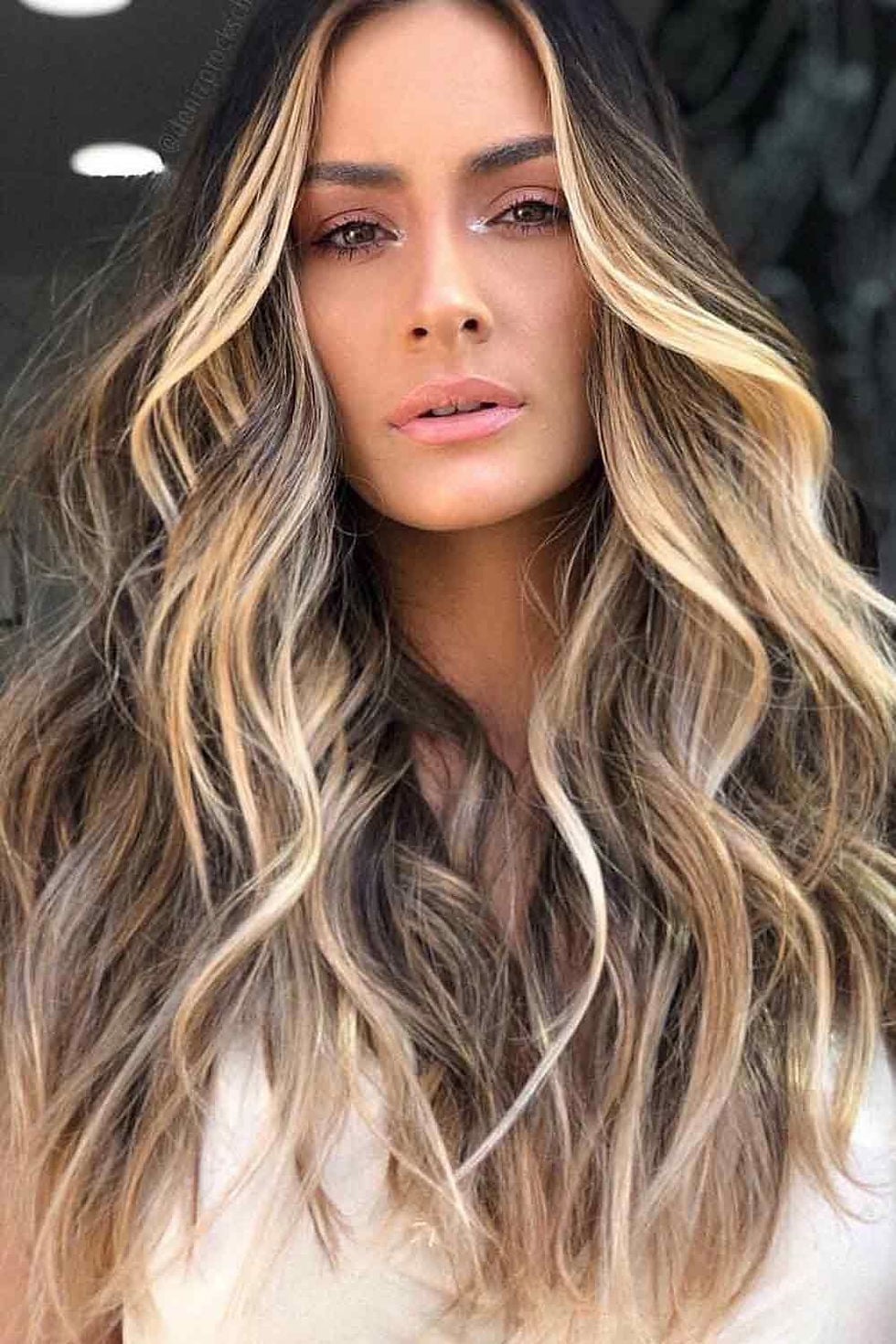
Thick, wavy hair in a dark brown base gets blonde partial highlights placed from the temple down through the front sections. The rest of the hair stays dark, which keeps the contrast high and the salon time manageable. The blonde tone leans warm, close to honey, and the face-framing placement draws attention forward without lightening the back. Wavy texture softens the line between dark and light.
Ash blonde highlights on collarbone-length layers
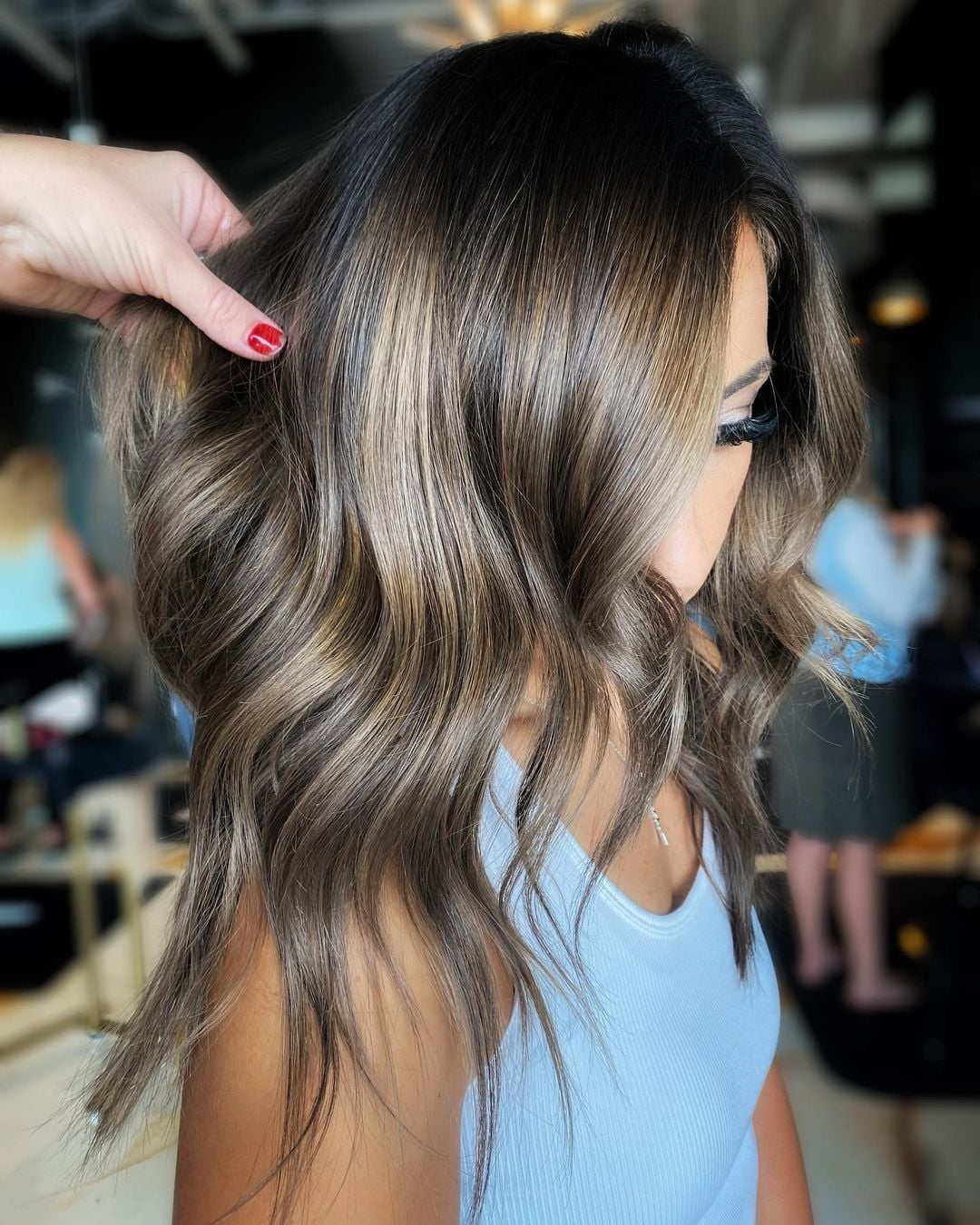
This is a salon-level technique, not a weekend box job. Fine, wavy hair at collarbone length in a dark brown base gets ash blonde partial highlights blended through the layers. The ash tone sits cool, almost silver in certain light, and the dark base keeps it from washing out. Choose warmer highlights if you prefer them or plan to wear hair straight for weeks. The layers stop the highlights from pooling at one spot. Tell your colorist: dark brown base with ash blonde partial highlights, collarbone layers. The blowout matters more than the cut here. A soft wave opens up the color.
Blonde balayage transition on a dark brown base
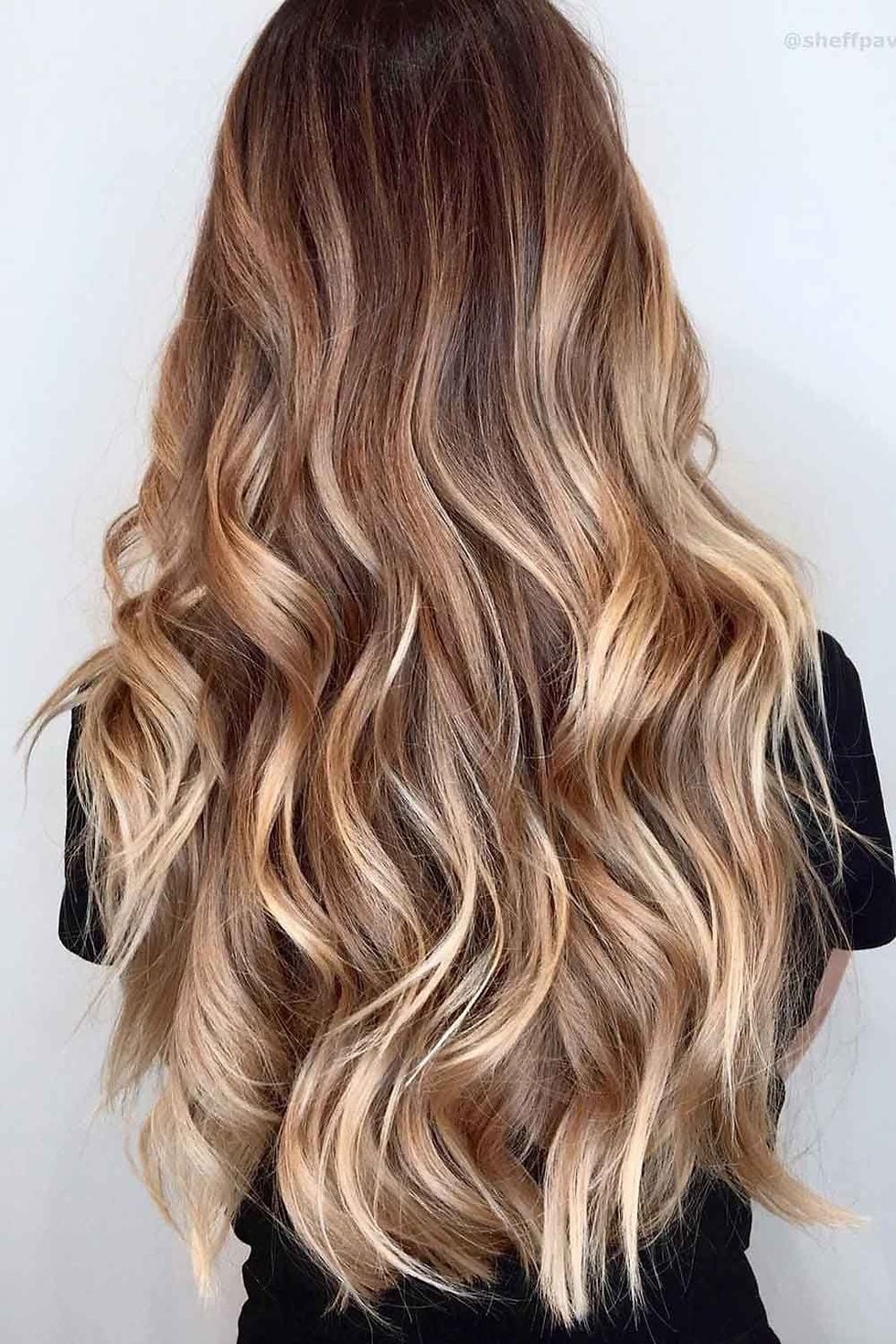
Balayage versus full highlights. Thick, wavy hair in a dark brown base transitions into a blonde balayage. The color starts darker at the root and gets lighter toward the ends, with no obvious line. It suits a noticeable color change and wavy hair. The blonde tone goes warm, close to golden, and the wave pattern helps the balayage blend naturally. Wavy texture supports the gradient effect.
Face-framing highlights adding striking contrast
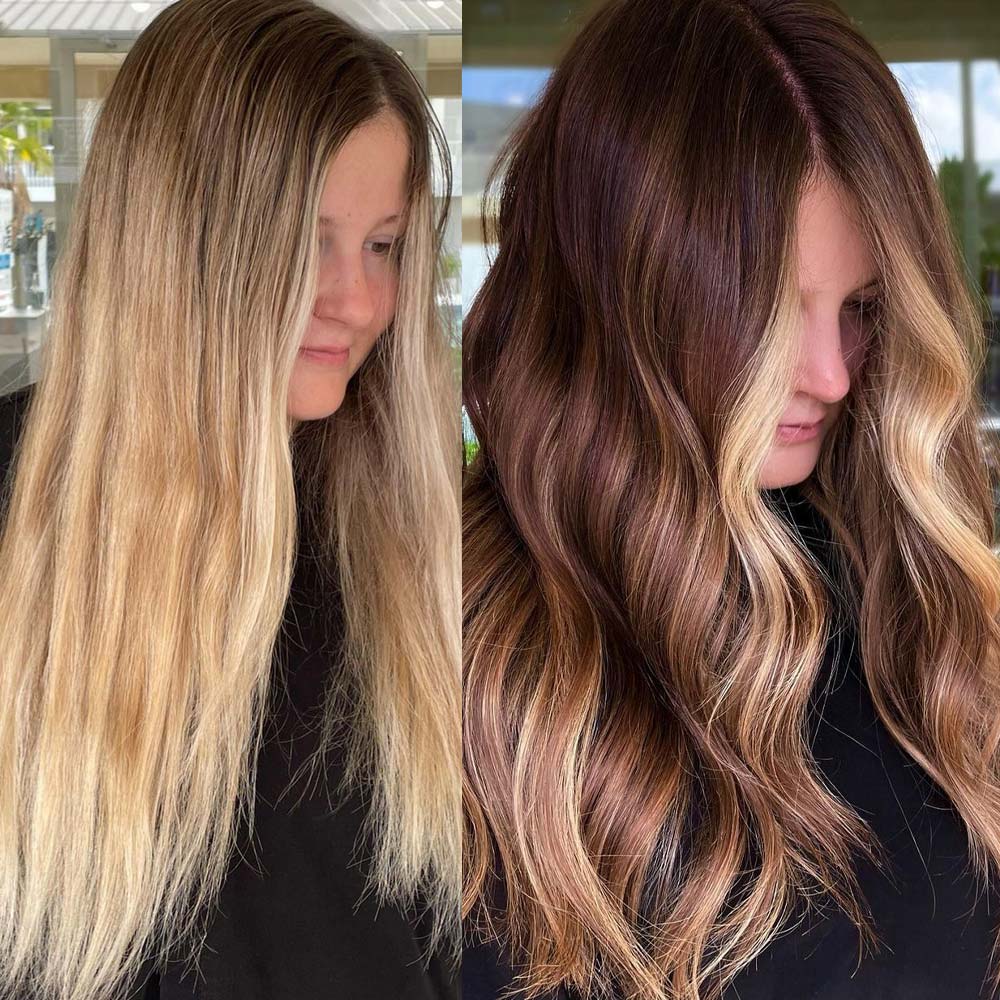
A dark brown base creates a strong backdrop. Thick, wavy hair features caramel and blonde partial highlights concentrated around the face. The front sections lift several shades lighter than the rest, creating a strong contrast. The back stays dark brown. Wavy texture keeps the line between colors soft. It works best with a darker base color. The tone is warm, almost honeyed. Ask your colorist for: dark brown base with caramel and blonde partial highlights, face-framing.
Golden blonde partial highlights on a layered cut
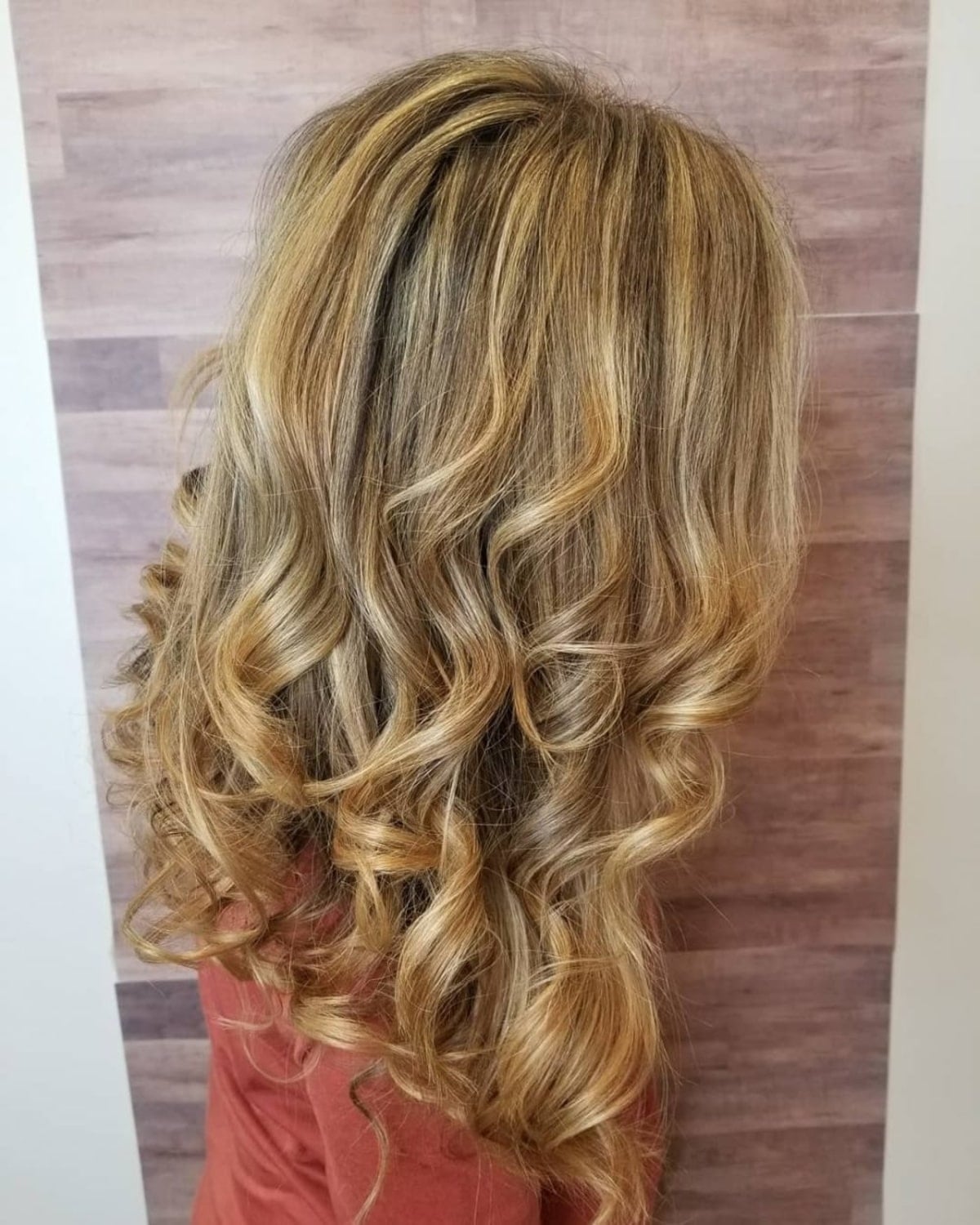
Partial highlights need a starting point that won’t fight them. A blonde base with golden blonde partial highlights looks one continuous shade, not two separate ideas. The layered cut lets each wave catch a different piece of light. Thick, wavy hair holds the shape best. The weight of the texture keeps the layers from collapsing. A voluminous blowout is the finish that makes the technique visible. Quickest way to make the investment count.
Lighter face-framing highlights on dark brown
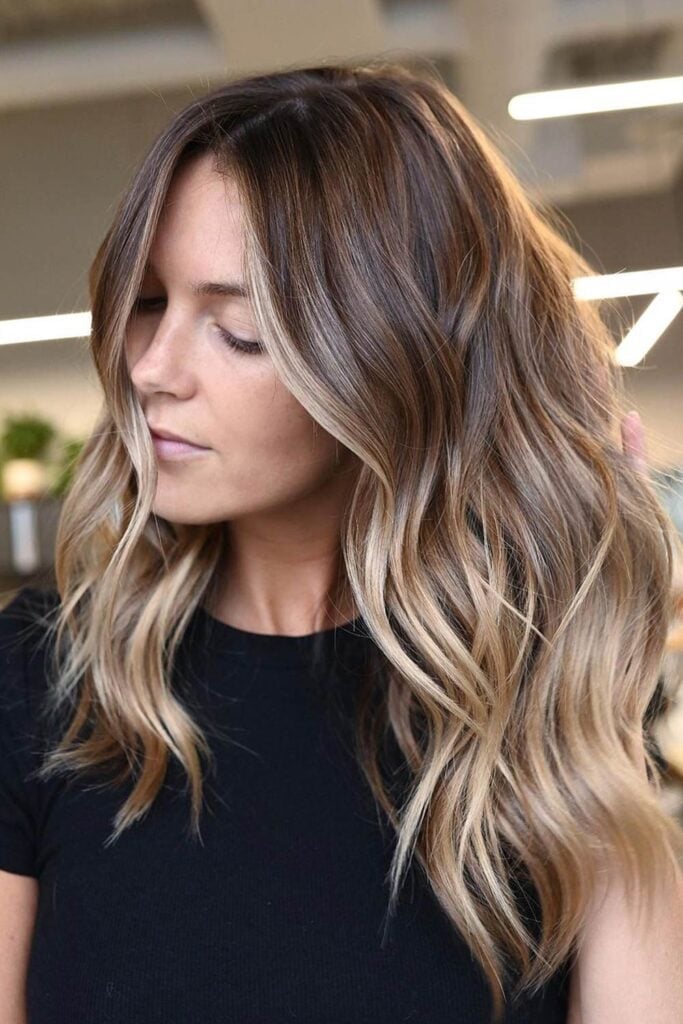
Full-head highlights can feel like too much commitment. Face-framing blonde highlights on a dark brown base give the same brightness without redoing everything behind your ears. The layers keep the transition soft, and the wavy texture pushes the lighter pieces forward. Fine hair benefits from the contrast. The dark base adds weight, the blonde adds lift. Not for you if you want highlights throughout. This one stays where you can see it.
Ash blonde highlights on a layered cut, wavy
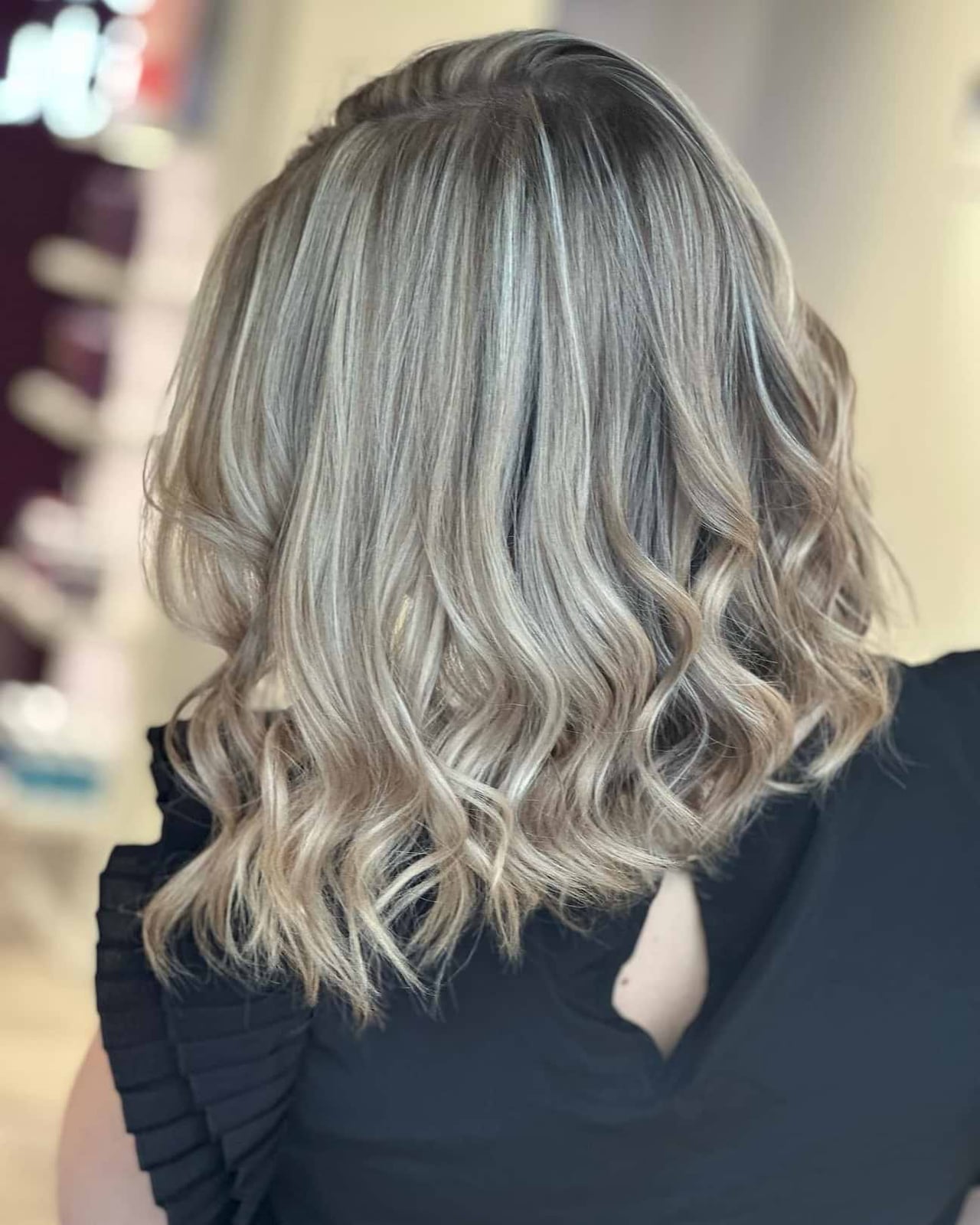
Ash blonde highlights on a layered cut are a winter decision. The cooler tone looks deliberate under overcast light, and the loose waves keep it from looking flat. Fine, wavy hair takes the lighter ash pieces without the base disappearing. The middle part helps the dimension read evenly on both sides. A wavy blowout and a purple shampoo rotation keep the tone from warming up by week six.
Striking ash blonde highlights on a dark brown base, close-up take
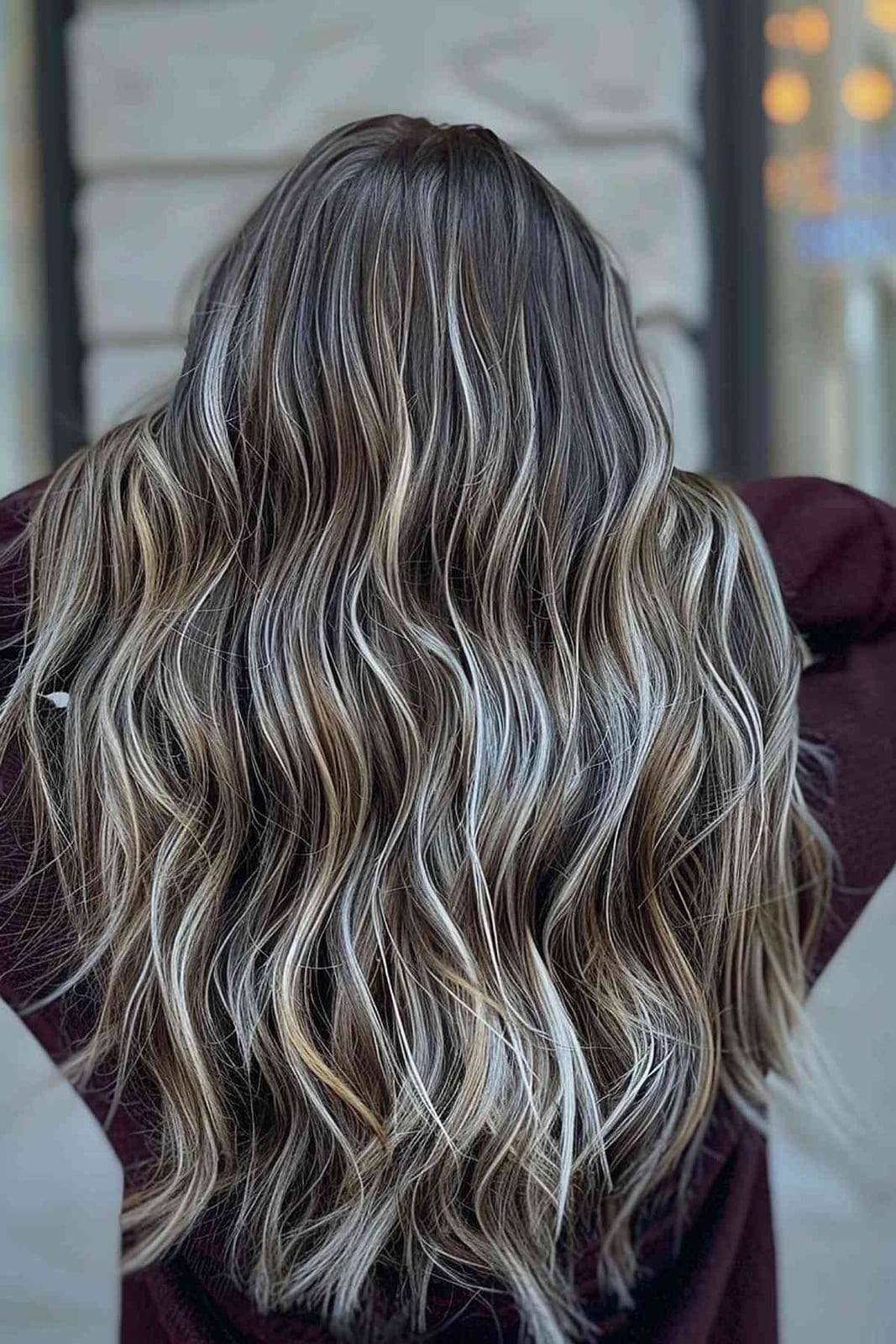
Contrast is the point here. A dark brown base against striking ash blonde highlights creates a division that looks intentional, not accidental. The wavy texture prevents the two tones from sitting in separate blocks. They weave instead of stack. Thick hair carries the weight of both shades without the dark overwhelming the light. Tell your colorist: dark brown base with striking ash blonde partial highlights, wavy styling. The technique takes time. The result lasts through the grow-out.
Ash blonde face-framing highlights on dark blonde, wavy
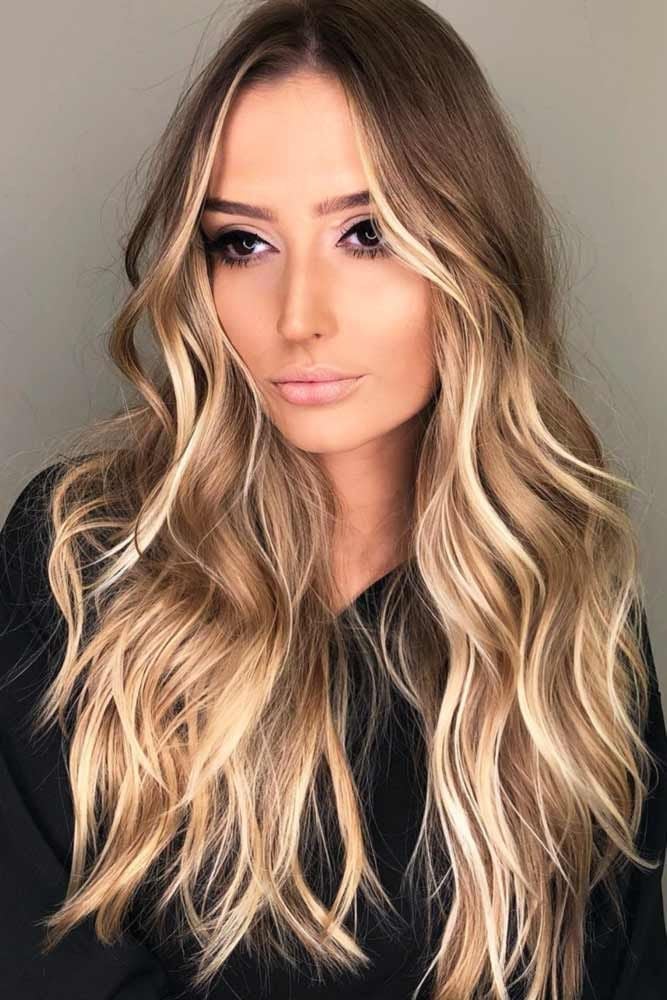
Dark blonde is an underrated base for ash blonde highlights. The two tones are close enough to blend naturally but different enough to look intentional. Face-framing placement keeps the brightness where it matters most, around the jaw and cheekbones. Fine, wavy hair takes the lighter pieces without the weight disappearing. A salon does this one. The subtle blending requires a steady hand and a good eye.
Face-framing blonde highlights on dark brown, office-safe version
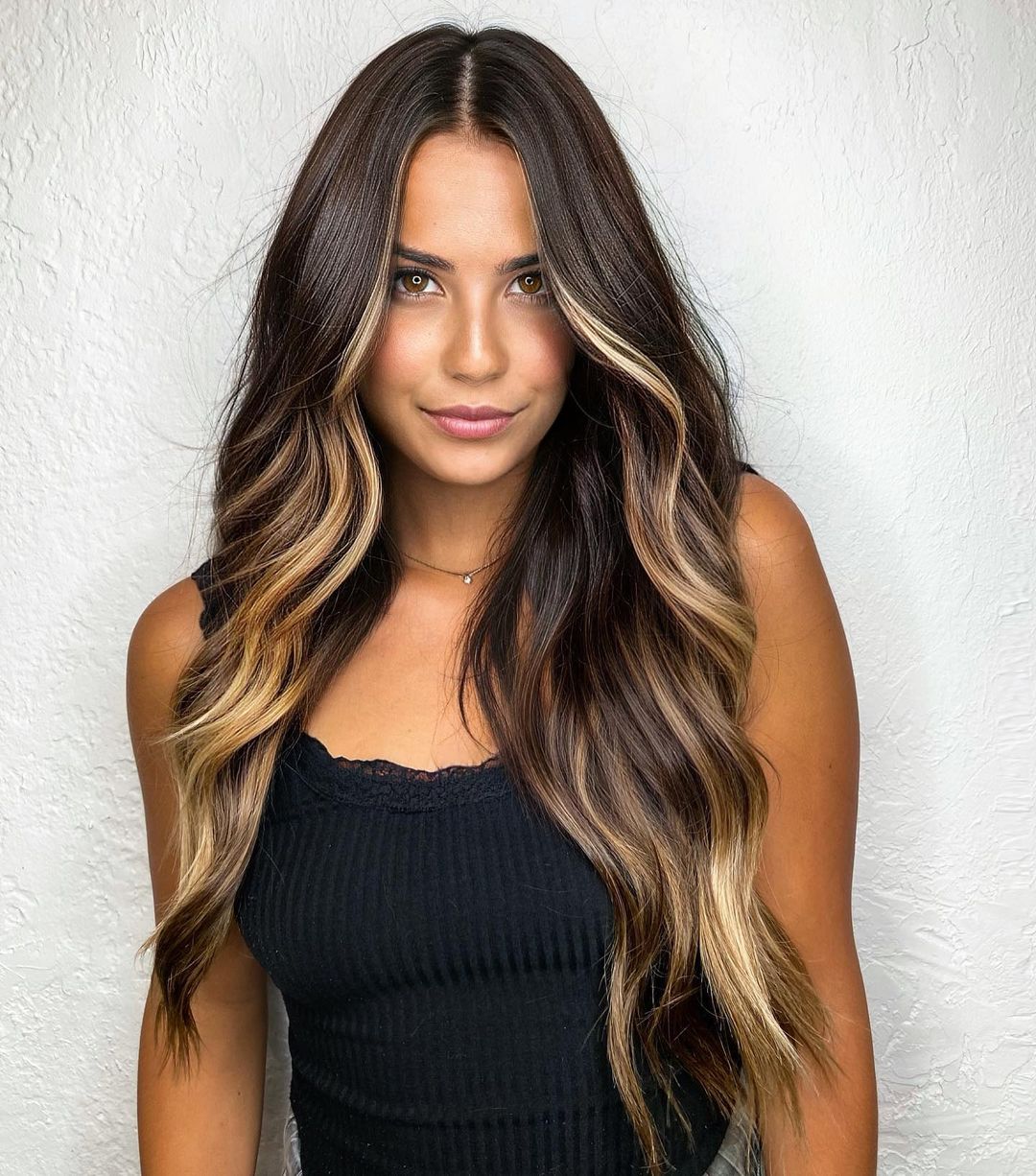
The mistake is letting the blonde creep too far back. Dark brown base with blonde highlights placed only around the face keeps the look professional while still looking deliberate. Thick, wavy texture carries the lighter pieces forward, so they create contrast when you turn your head. The layers help the transition stay soft. The real drawback: the blonde needs regular toning to stay bright against the dark base, or it pulls brassy by week six. This style is for highlights concentrated at the front, not throughout the whole head.
Dimensional contrast with blonde highlights on dark brown
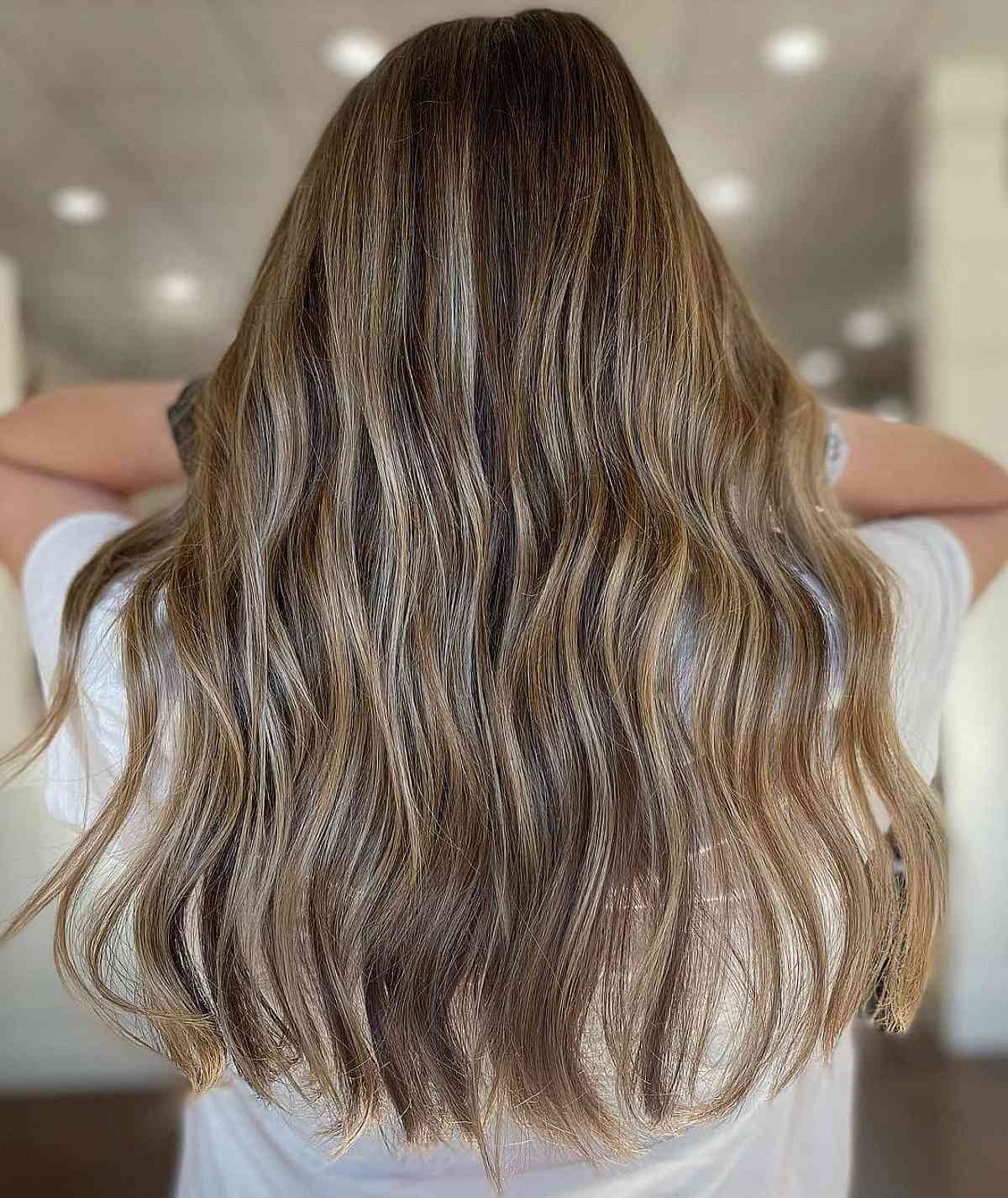
Technically, this is a study in contrast. The dark brown base sits deep, and the blonde strands are woven through at irregular intervals, so no two sections read the same way. The highlights hit mostly on the surface layers, which means the darker hair underneath keeps the overall weight. Wavy, thick hair carries this kind of placement well because the texture breaks up the lines between shades.
The technique relies on spacing: the blonde pieces are placed far enough apart that the dark base stays dominant. Up close, you see the individual lighter strands; from a few feet away, the hair looks brown with a soft glow. Tell your colorist: dark brown base with subtle blonde partial highlights, air-dried waves. Air-dried waves work well for the finish, since heat styling would flatten the contrast into one tone. The darker base means root touch-ups land around every eight to ten weeks.
Final Thoughts
Pick by your starting point and your willingness to sit for toner every eight weeks.
- Dark brown base: caramel or auburn streaks keep warmth without a full-lighten lift.
- Cool-toned hair: ash blonde highlights need a purple shampoo and a gloss every third appointment.
- Fine texture: partial highlights add visual density; skip heavy foil tension.
- Minimal maintenance: face-framing pieces only, no root shadow required.
Partial highlights give the lift without the full-commitment timeline.