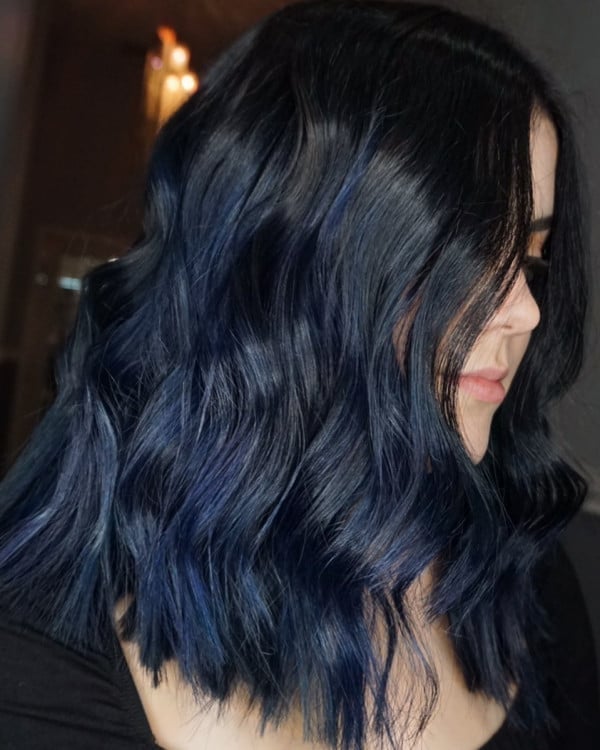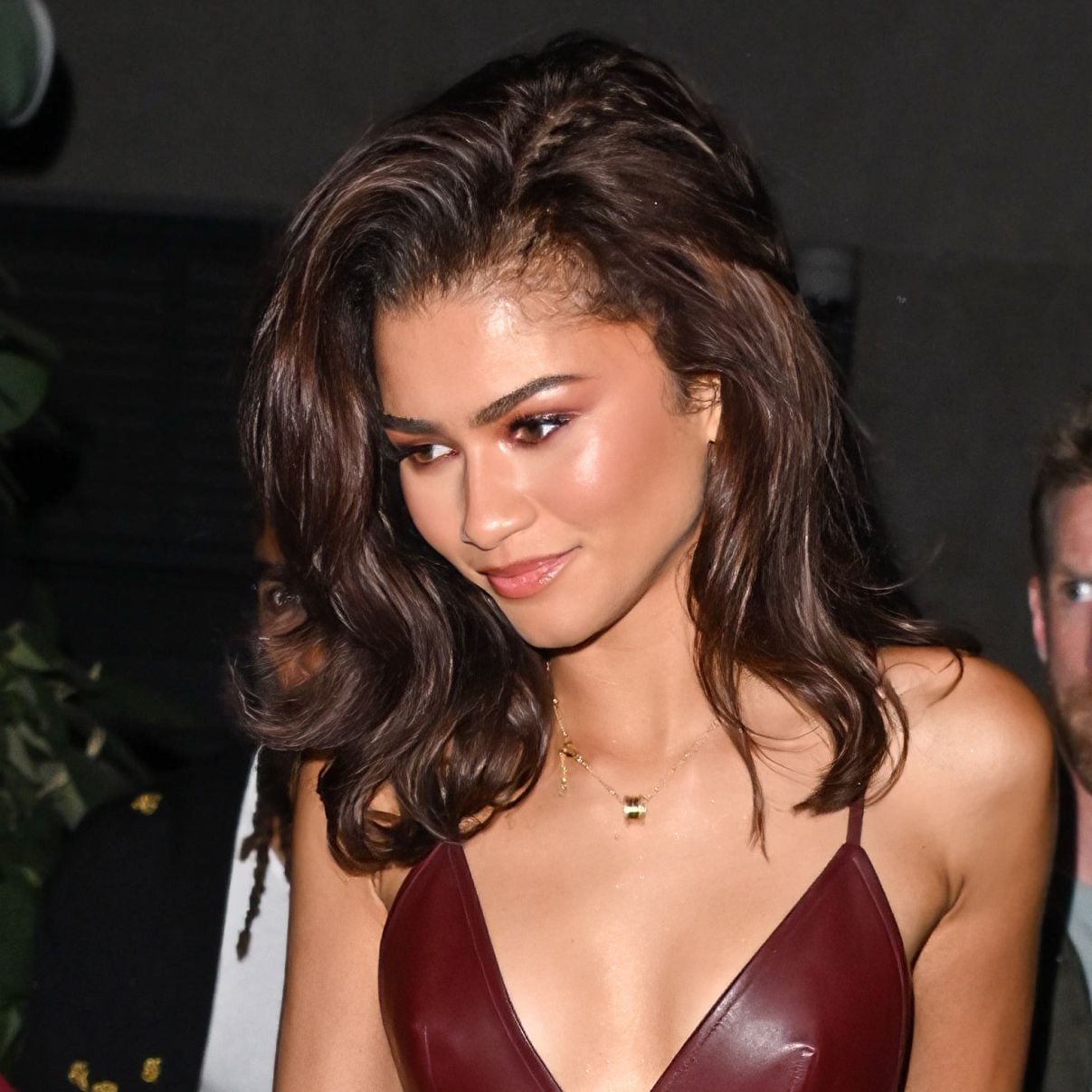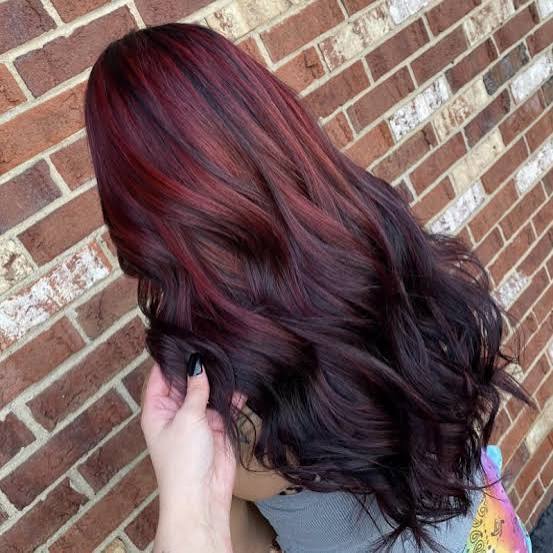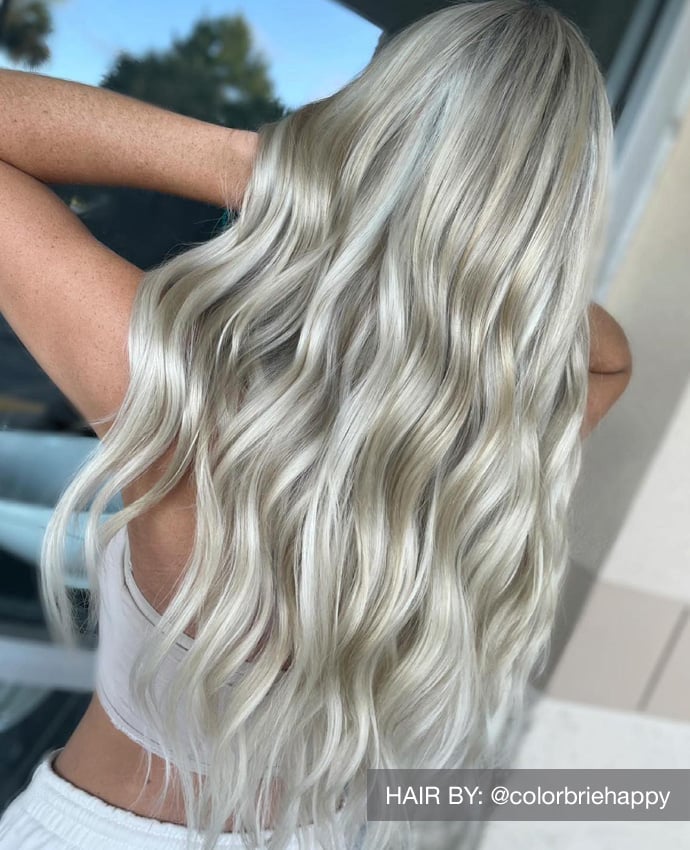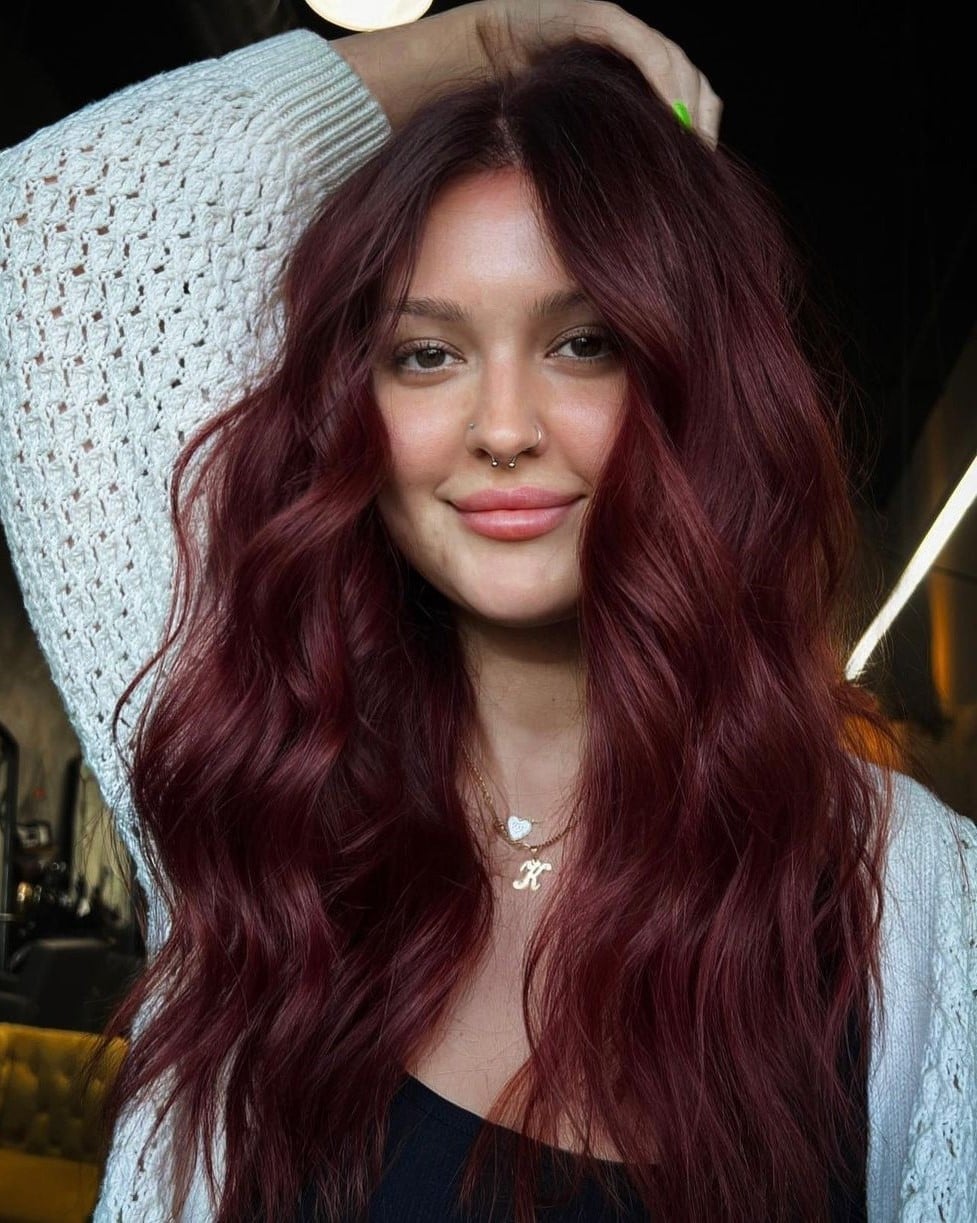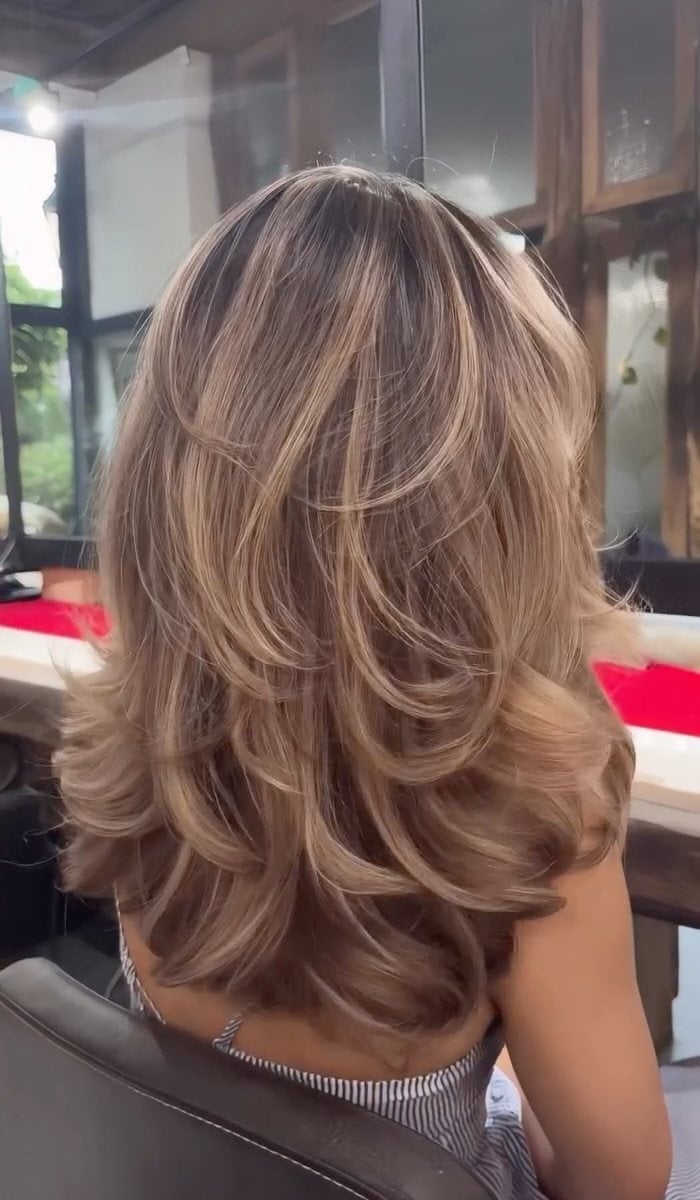
The consultation starts with the usual question: how much lighter do you want to go? Brown hair balayage answers it with a soft gradient instead of a hard line. The grow-out stays blurry, and a fringe suddenly feels possible again.
You get 33 options that span low-maintenance caramel blends to ashier tones that need a toner refresh every few weeks. Each one works on a different base shade, texture, and cut length. That is why Elegant Brown Hair Balayage Ideas 2027 fill so many saved boards. The hard part is picking which caramel or blonde placement fits your morning routine, not whether the color will flop.
Subtle blonde balayage on elegant brown hair with face-framing layers
Face-framing layers catch the light before the rest of the hair does. A brown base with subtle blonde balayage keeps that contrast soft rather than stark, so the color looks a single blended piece. Thick, wavy texture holds the shape of a blowout without fighting it. Ask your colorist for: subtle blonde balayage, face-framing layers. Layers need a trim every eight to ten weeks to keep the framing precise. One pass of a round brush is all the styling this cut asks for.
Dramatic blonde face-framing highlights on dark brown hair
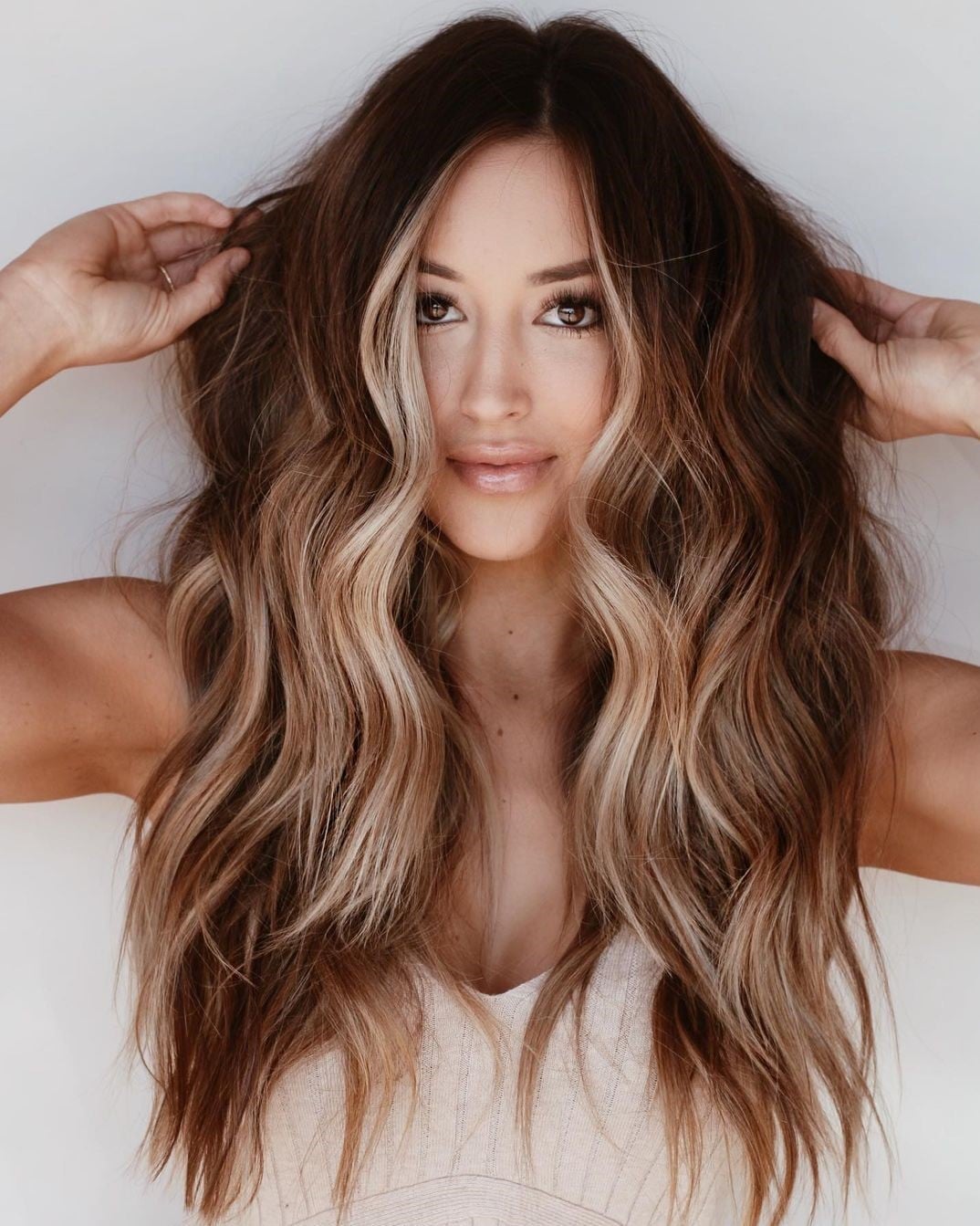
This one sits opposite the subtle version. A dark brown base with striking blonde balayage places the contrast right where you see it first: around the face. The middle part lets those lighter strands fall evenly on both sides. Thick, wavy hair gives the color room to look deliberate, not accidental. The catch: this asks for a precise hand at the bowl, so skip it if you prefer a low-contrast grow-out. Loose waves are the default styling here.
Subtle caramel balayage on dark brown hair
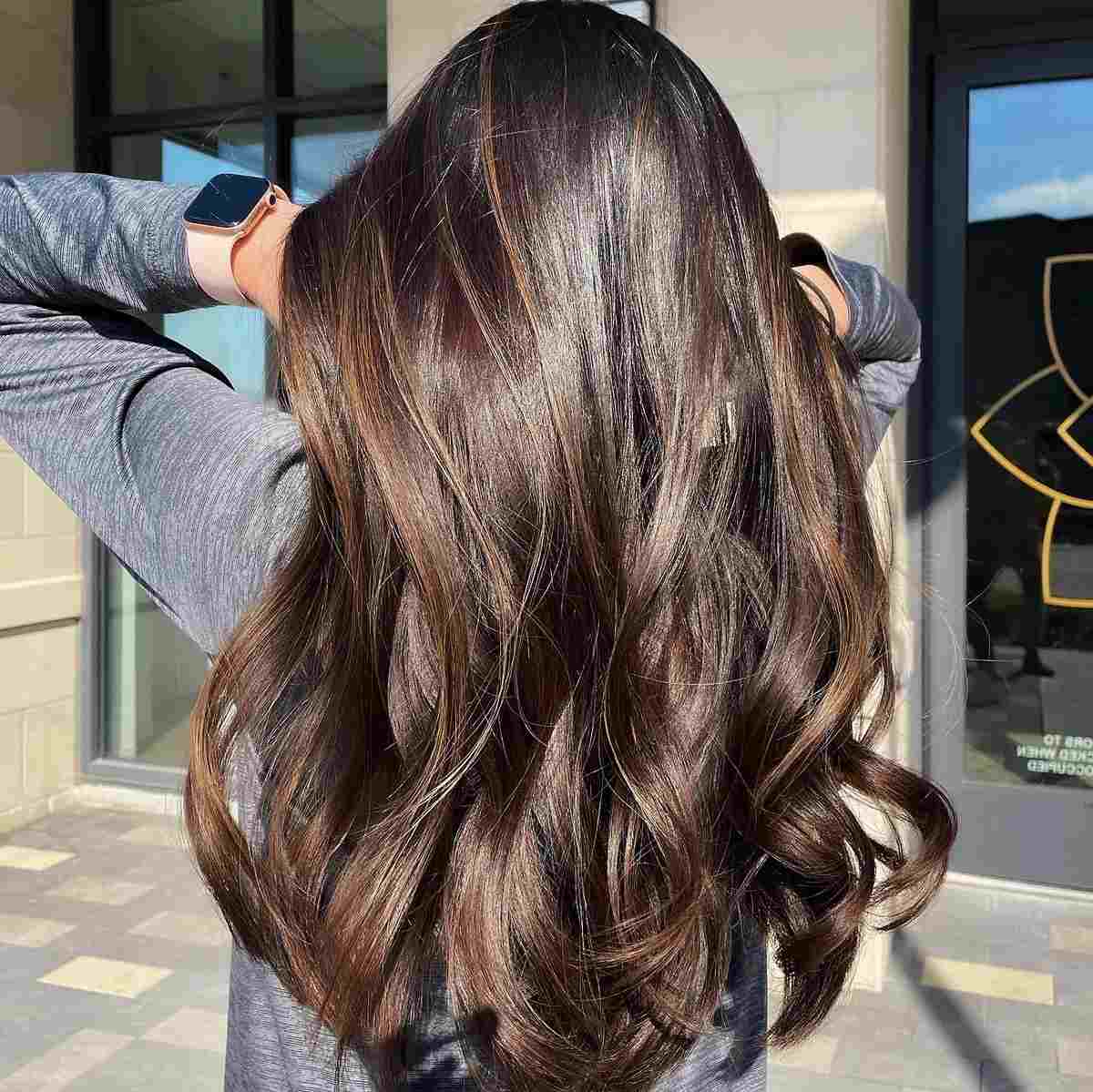
How do you get warmth without going blonde? A dark brown base with subtle caramel balayage. The technique places the caramel low and light, so the dark root stays intact. Thick, wavy texture carries the two tones without them blending into mud. Ask your colorist for: dark brown base, subtle caramel balayage. Not for anyone who wants a cooler, ashier result. A gloss at the chair keeps the caramel from pulling brassy between visits.
Wavy layered cut with natural caramel balayage blend
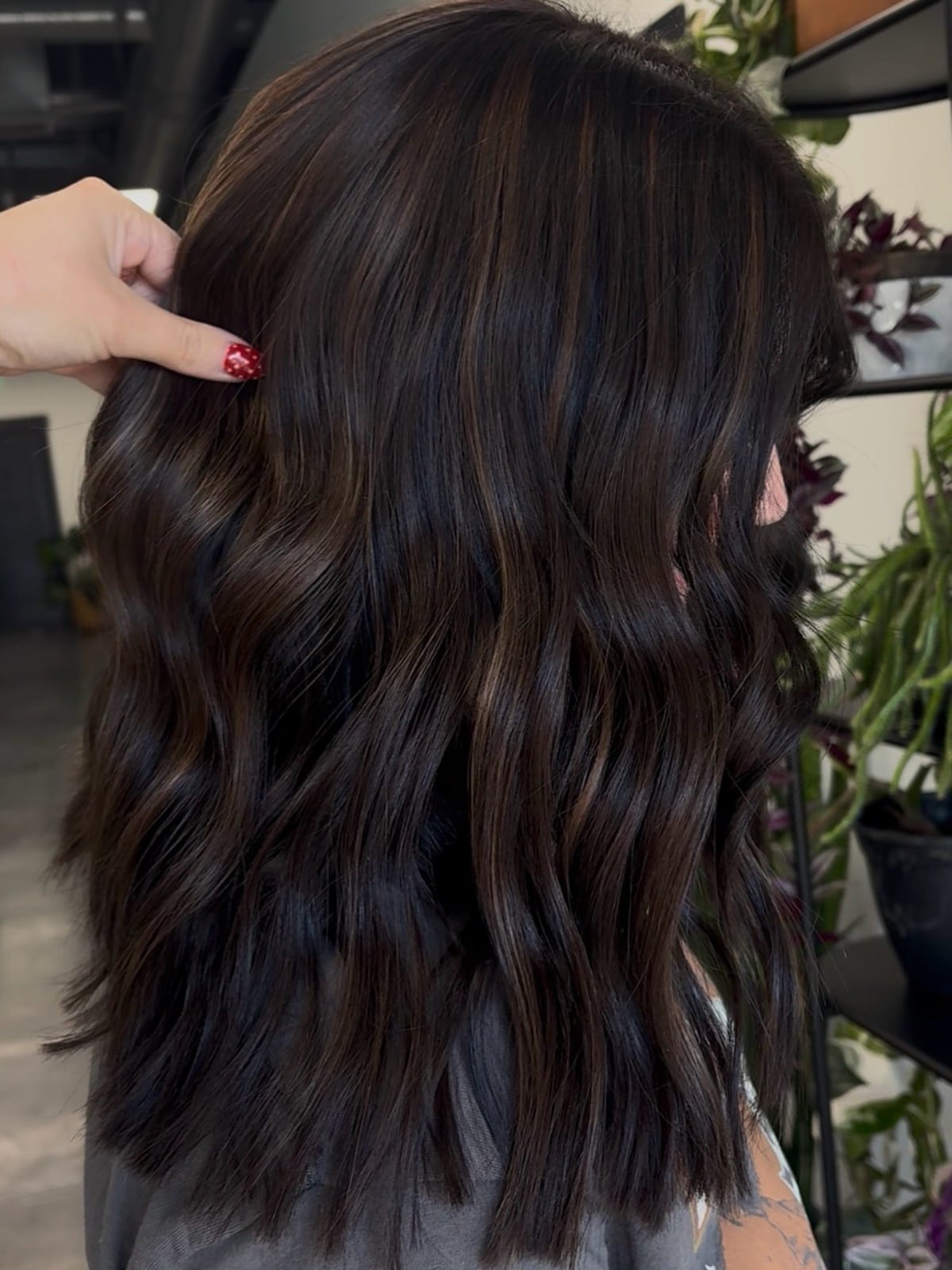
Soft layers and a middle part create symmetry from a side view. A dark brown base with subtle caramel balayage runs through the lengths, not just the ends. The wavy texture is thick enough to show each layer’s shape separately. Pass when your hair is very fine and won’t support the weight of layered waves. A trim every six weeks keeps the layers from collapsing into one shape.
Soft caramel balayage highlights on dark brown hair
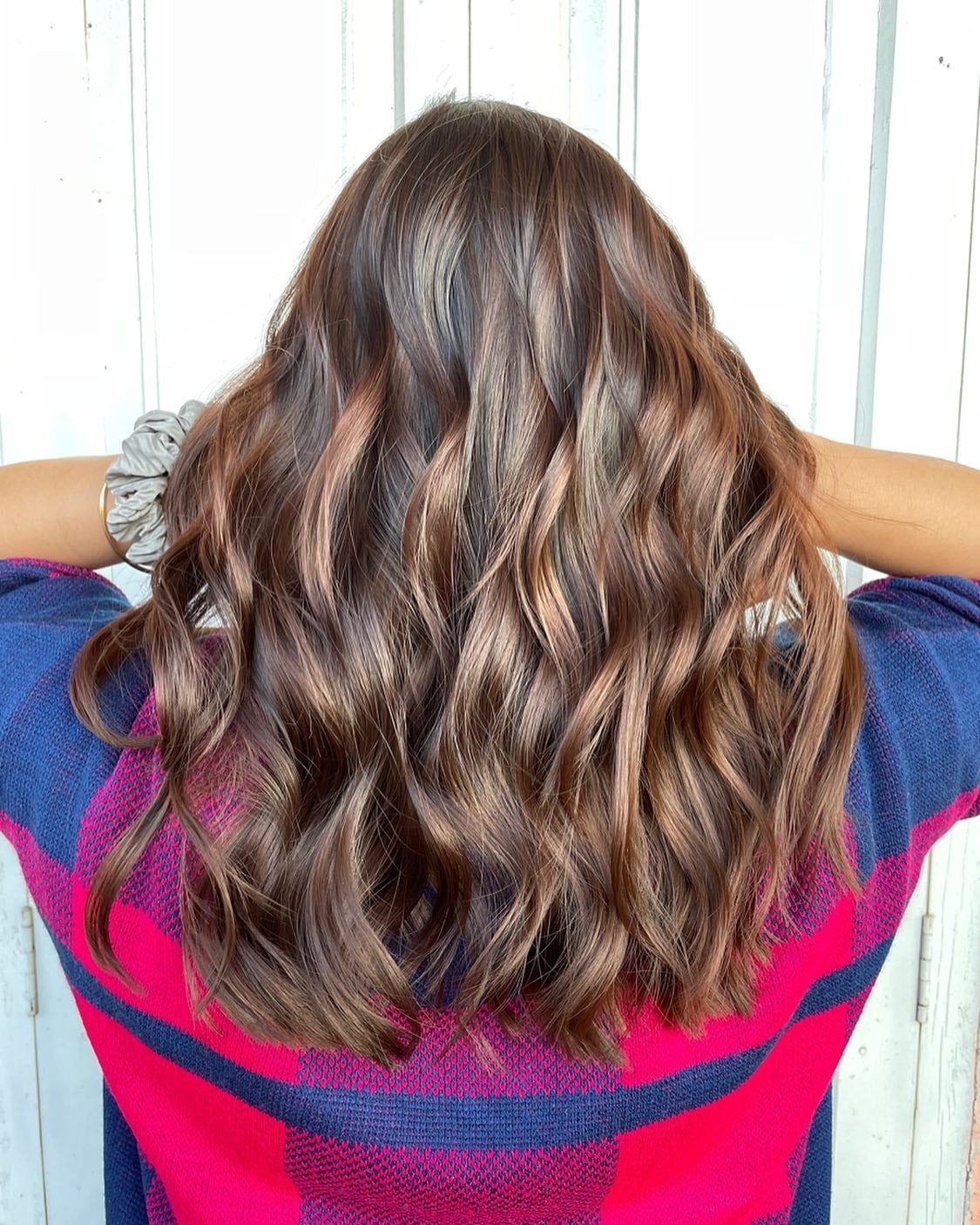
Waves give a back view its depth. A dark brown base with soft caramel balayage highlights creates a lighter effect without the high-maintenance root line. The balayage technique keeps the lighter pieces sparse enough that the base still looks brown. Thick, wavy texture multiplies the dimension. Ask your colorist for: dark brown base, soft caramel balayage highlights. Skip it if you prefer cooler, ashy tones. A salon application is the only way to get this natural blend.
Natural caramel balayage strands for a grown-up blend
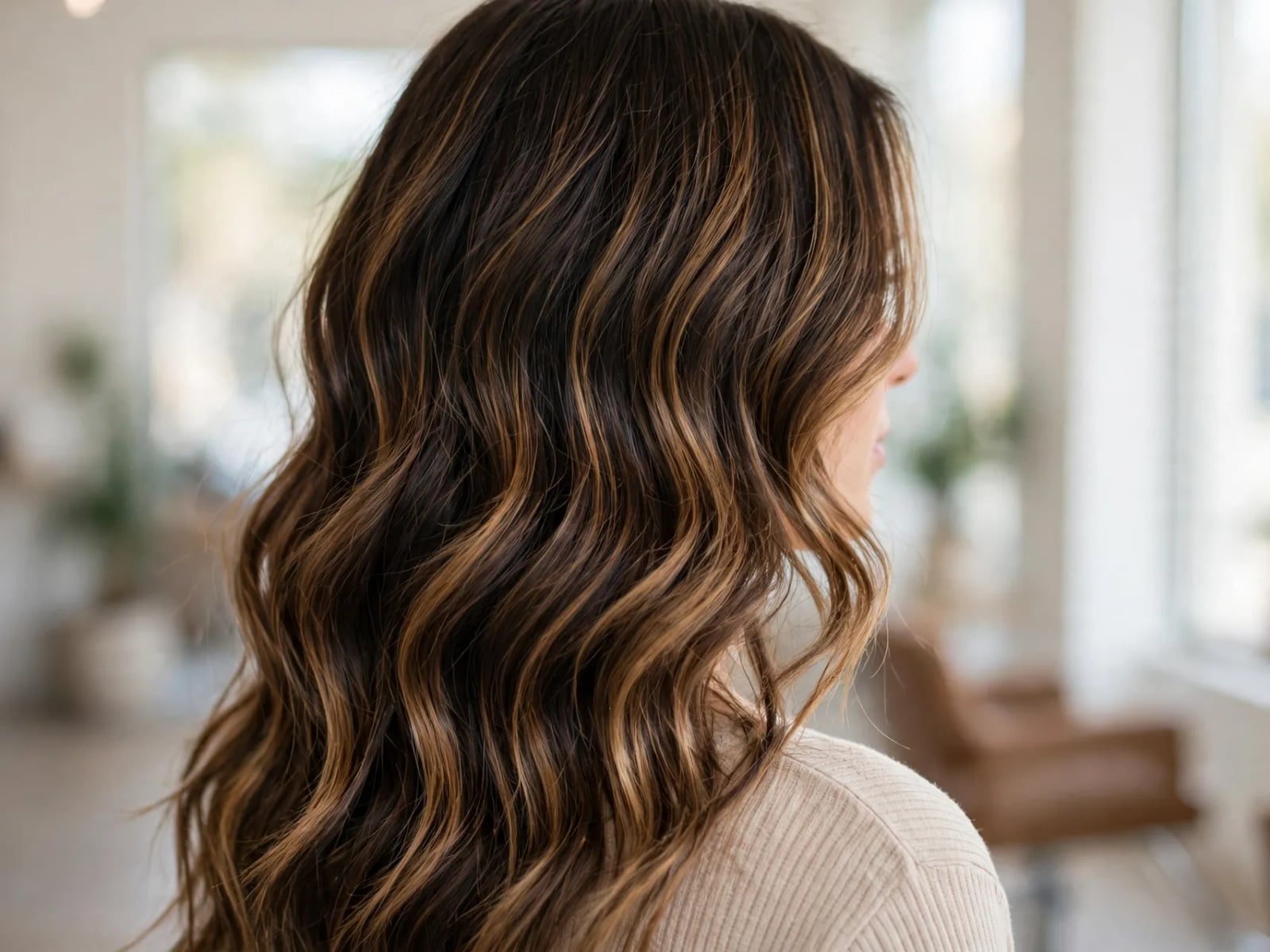
Thick wavy hair carries a caramel balayage better than most textures. The dark brown base keeps roots low-maintenance while the lighter strands add warmth. Soft waves make the blend look deliberate. Caramel balayage on this density avoids looking sparse. Ash tones or a very bold contrast are better choices for other preferences.
Balayage highlights on dark brown hair with wavy blowout
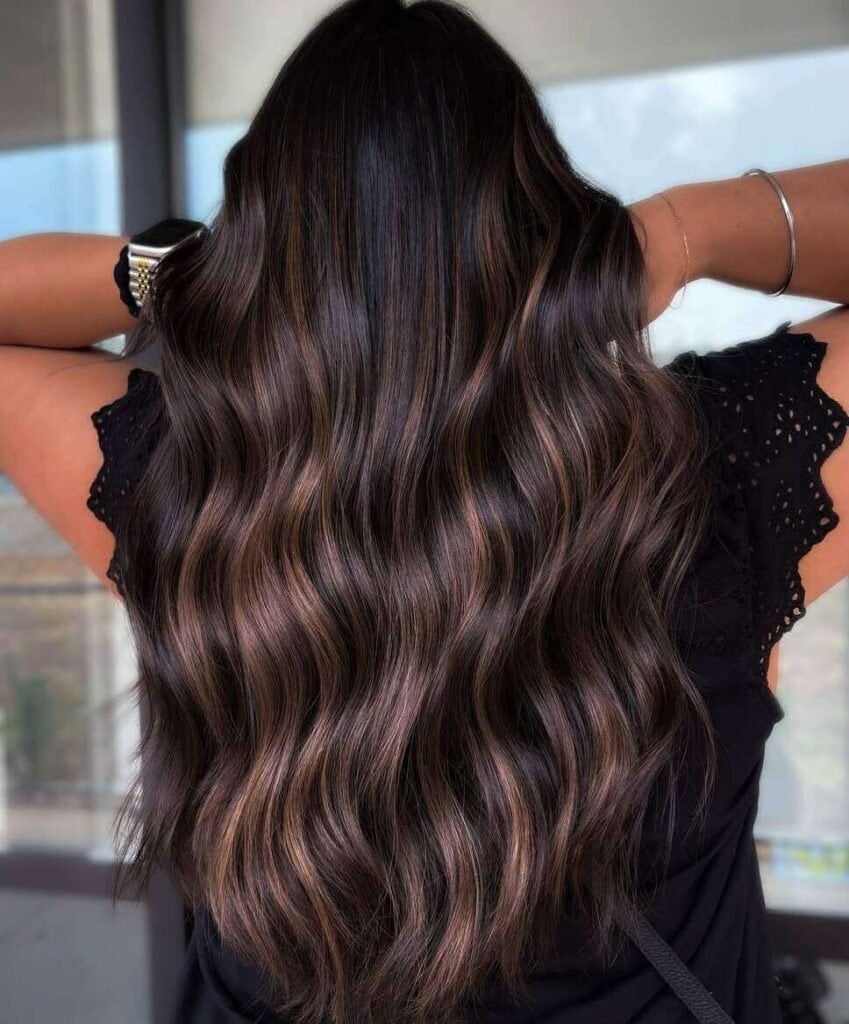
A wavy blowout differs from air-dried waves in one key way: volume at the crown. The dark brown base with subtle caramel balayage gains lift that a flat wave cannot offer. Thick texture holds the shape for a full day. This finish requires layered hair. A salon-leaning application ensures the caramel sits where it should.
Face-framing blonde streaks on dark brown balayage
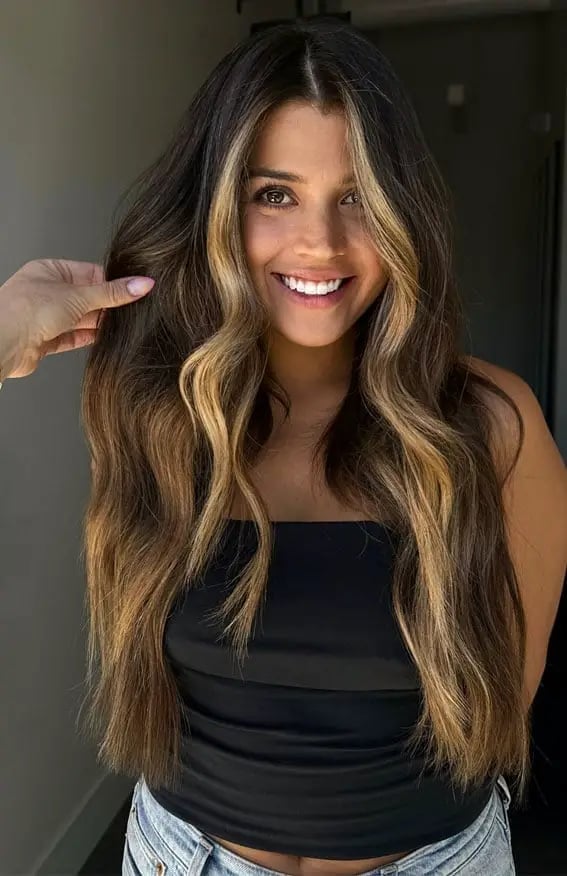
A middle part splits the face-framing blonde highlights evenly. The dark brown base stays deep at the roots while the lighter pieces wrap around the jaw. Thick wavy texture keeps the contrast from feeling severe. Layers help the blonde sections fall forward. Tell your colorist: dark brown base, face-framing blonde balayage.
Caramel balayage on dark brown hair with wavy blowout, layers
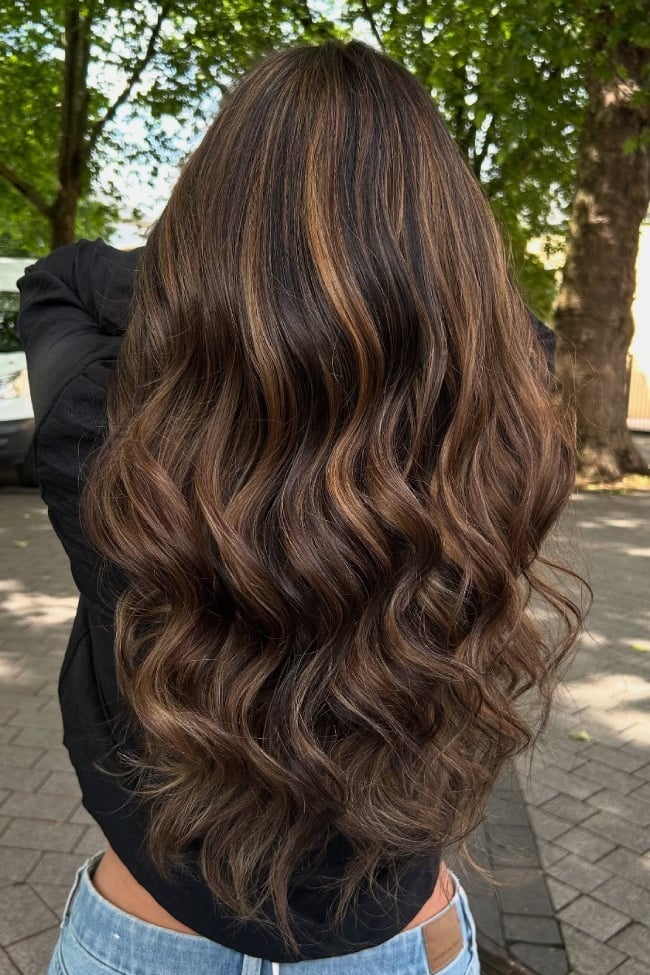
How do you get a wavy blowout that lasts past noon? Layers. The dark brown base with caramel balayage highlights needs that internal weight release to hold volume. Thick wavy texture takes well to a round brush and a medium heat setting. The caramel lands mostly on the mid-lengths and ends.
Smooth balayage transition for a lighter brown look
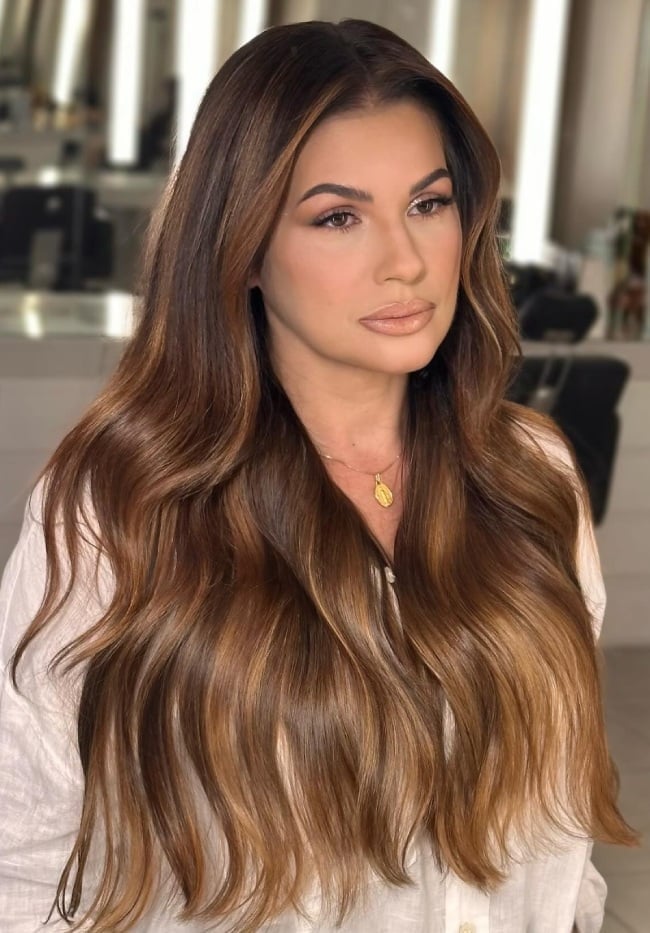
A smooth balayage transition versus a chunkier highlight pattern: the first grows out softer. Dark brown base with caramel balayage creates a gradient that starts closer to the ear and deepens toward the ends. Thick wavy texture hides the line of demarcation entirely. The lighter tones land on the ends for a bright finish. Choose this for a high contrast look or cooler tones.
Caramel balayage enhancing waves on dark brown hair
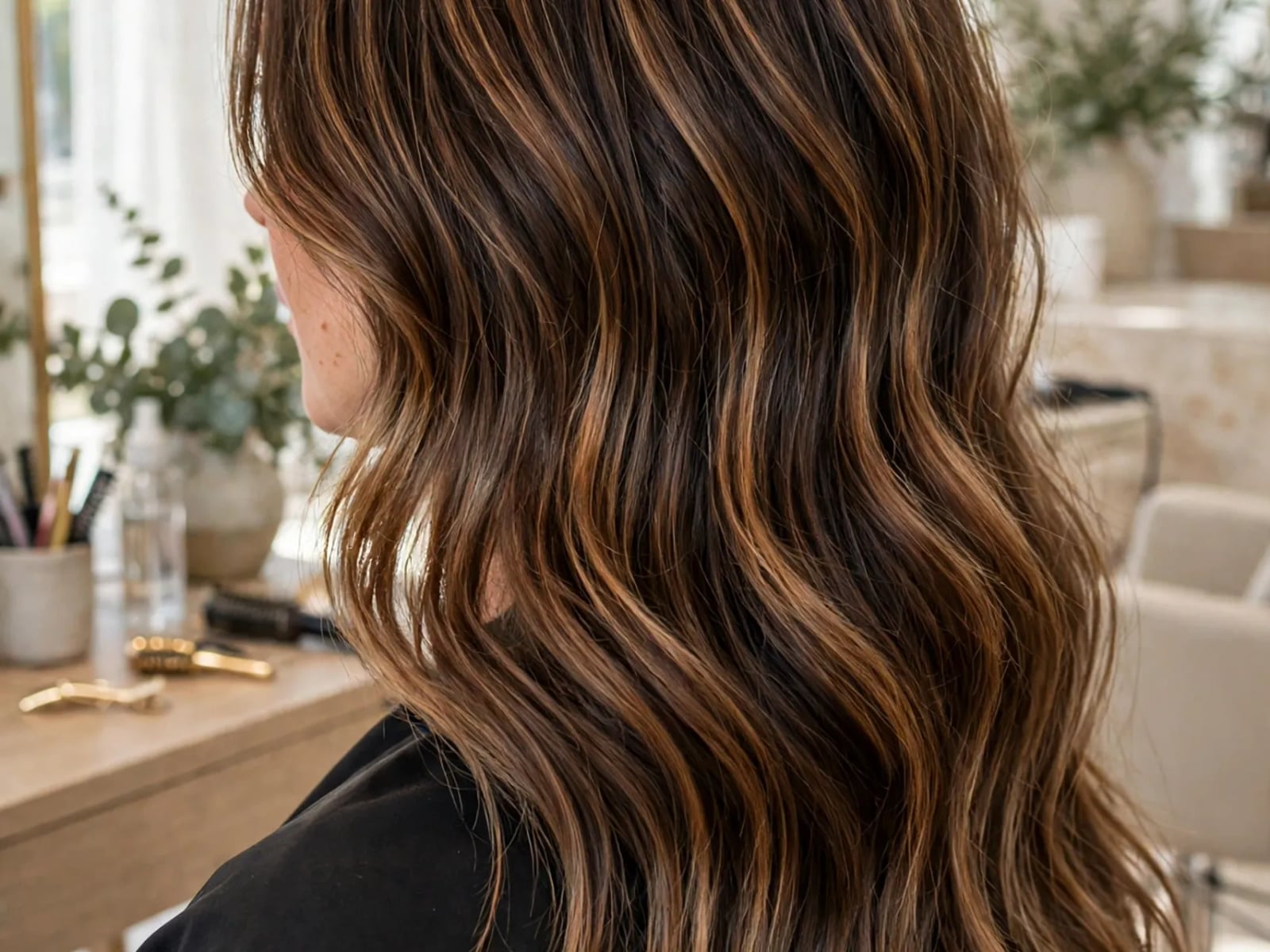
Dark brown hair gets a warm lift from caramel balayage placed to catch every wave. The technique keeps the color concentrated on the mid-lengths and ends, so the root stays deep while the lighter pieces wrap around the curve of each wave. Thick wavy hair holds this shape best. The caramel tone is a natural extension of the base, not a separate layer. Straight texture or cooler tones require a different technique. The side profile shows how the balayage follows the wave pattern. Ask your colorist for: dark brown base, smooth caramel balayage, waves. The result is a color that moves with the hair, not against it.
Subtle ash brown balayage on dark brown hair
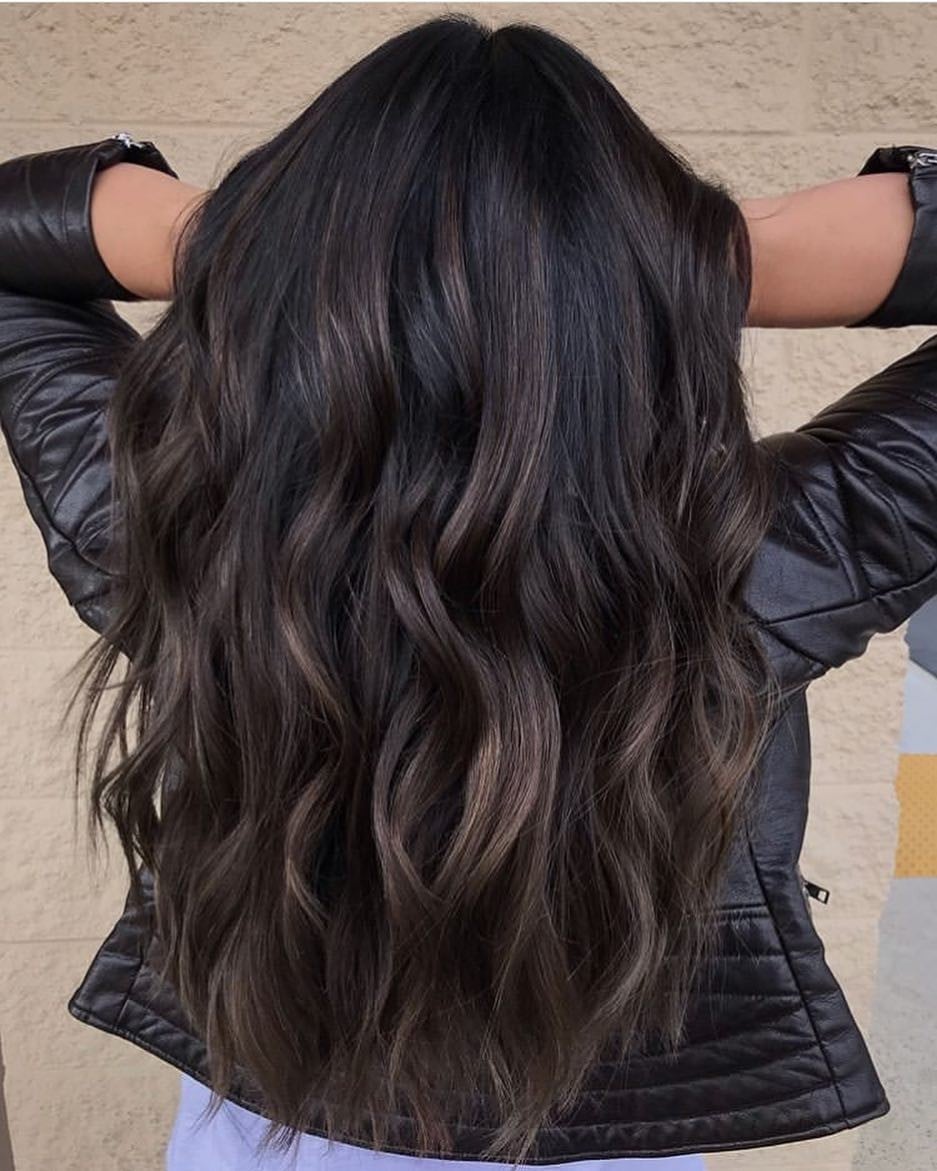
The back view reveals the design clearly: a dark brown base with ash brown balayage that stays close to the natural depth. Thick wavy hair gives the color room to create a soft transition. The ash tone works because it does not lift the base too far; it sits right at the edge of cool brown. It suits those who prefer cool tones and have neutral undertones. The waves add movement without disturbing the blend. Salon-leaning application keeps the transition smooth.
Natural lighter ash brown balayage on dark brown hair
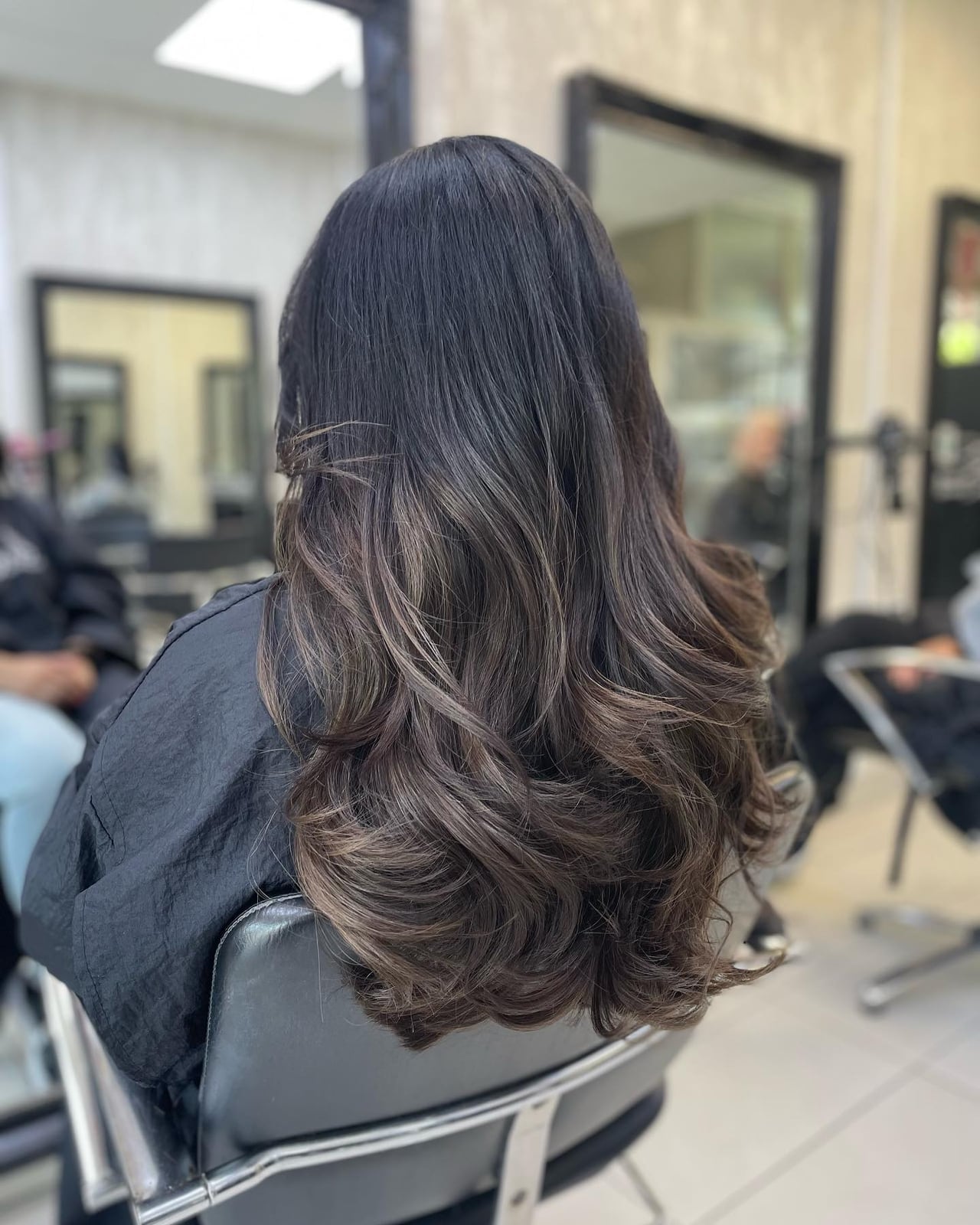
A dark brown base with ash brown balayage requires hair with some wave to carry the lighter pieces. The back view shows the color graduating from deep at the root to a soft ash tone at the ends, creating a lighter effect without warmth. Thick wavy hair provides enough surface area for the balayage to look natural. Warm tones or a high-contrast look are not part of this style. The loose waves are not tightly styled; they allow the color to show. Ask your colorist for: dark brown base, ash brown balayage, loose waves. Salon application is necessary to keep the ash tone even.
Soft caramel highlights on medium brown hair, wavy
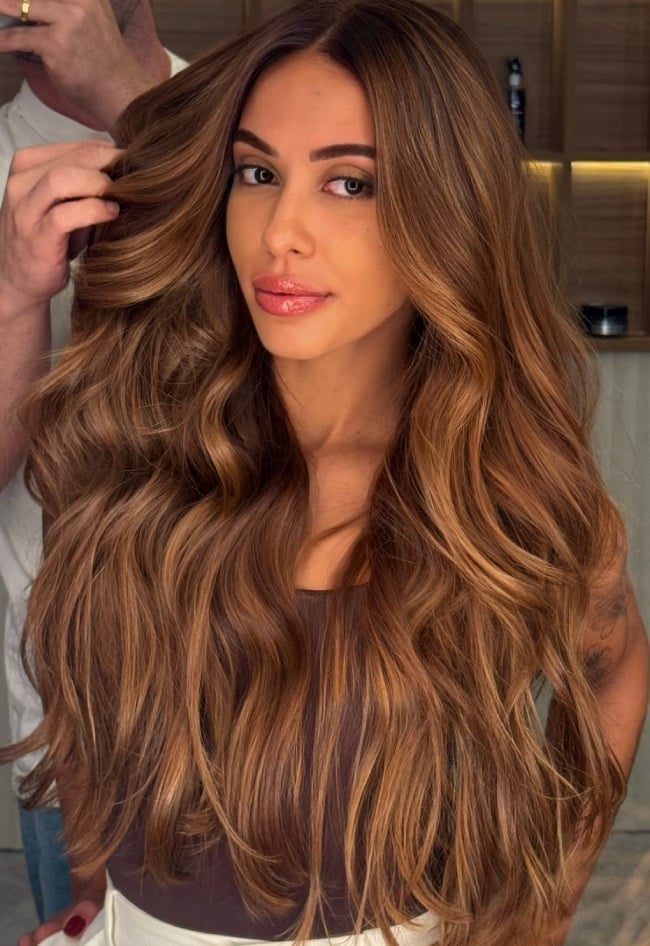
Medium brown hair with soft caramel highlights sits between a full balayage and a traditional highlight. The caramel pieces add warmth without overwhelming the base. Thick wavy hair starting at least at the collarbone gives the layers room to show the lighter tones. The middle part and front framing reveal how the color wraps around the face without a heavy concentration at the root. A darker base or cooler tones would change the effect. The blowout adds volume that makes the caramel look like a natural reflection.
Sandy blonde highlights add lighter effect
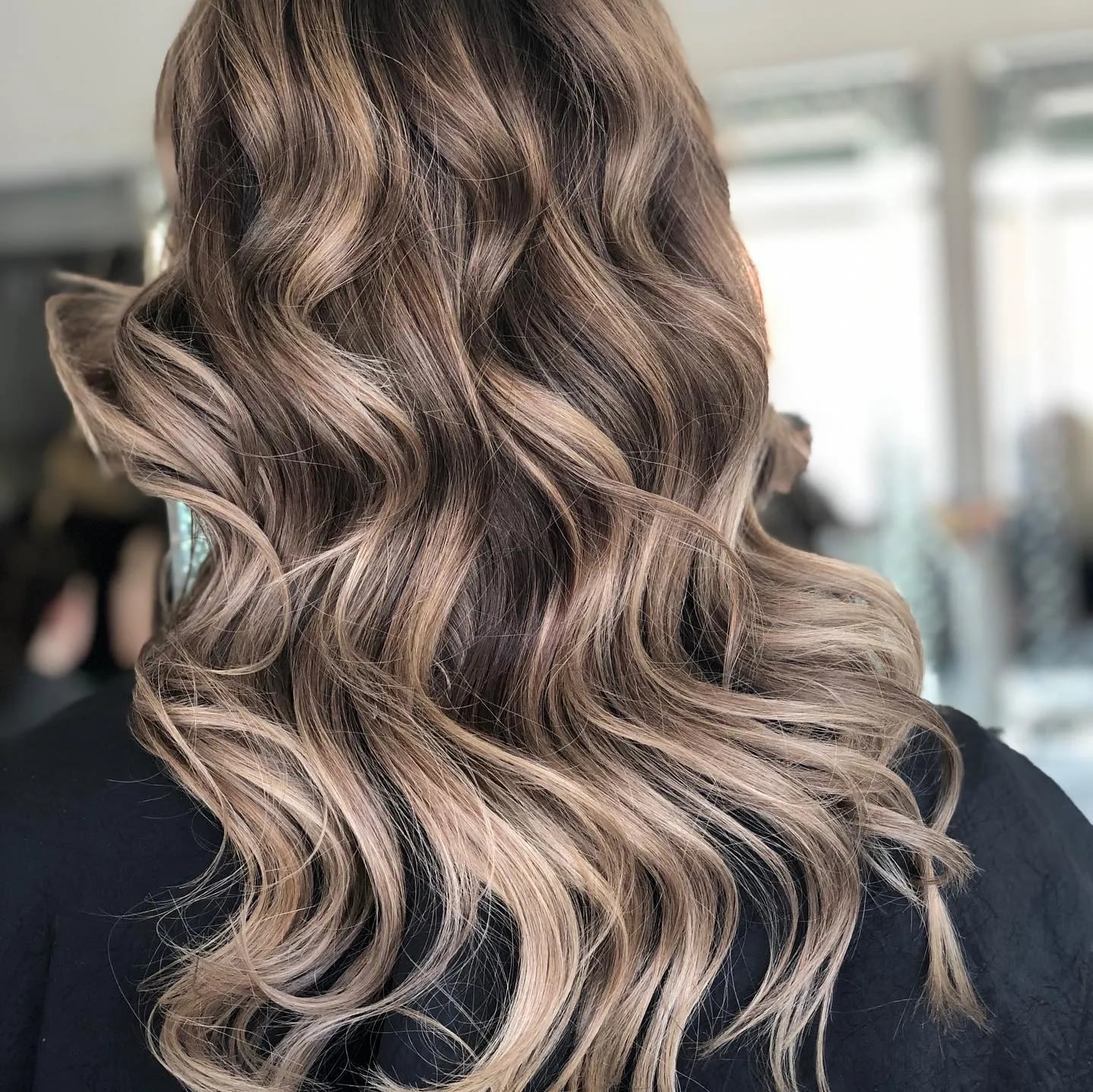
Rich brown base meets sandy blonde highlights in a blend that stays soft all the way through. The lighter tones concentrate on the mid-lengths and ends, so the root grows out without a harsh line. Thick wavy hair starting at least at the collarbone gives the color enough length to transition gradually. The side view shows how the blonde pieces weave through the layers without dominating the brown. The wavy blowout keeps the blend looking lived-in. Ask your colorist for: rich brown base, sandy blonde balayage highlights. Low-maintenance blend.
Balayage highlights adding warmth to dark brown hair
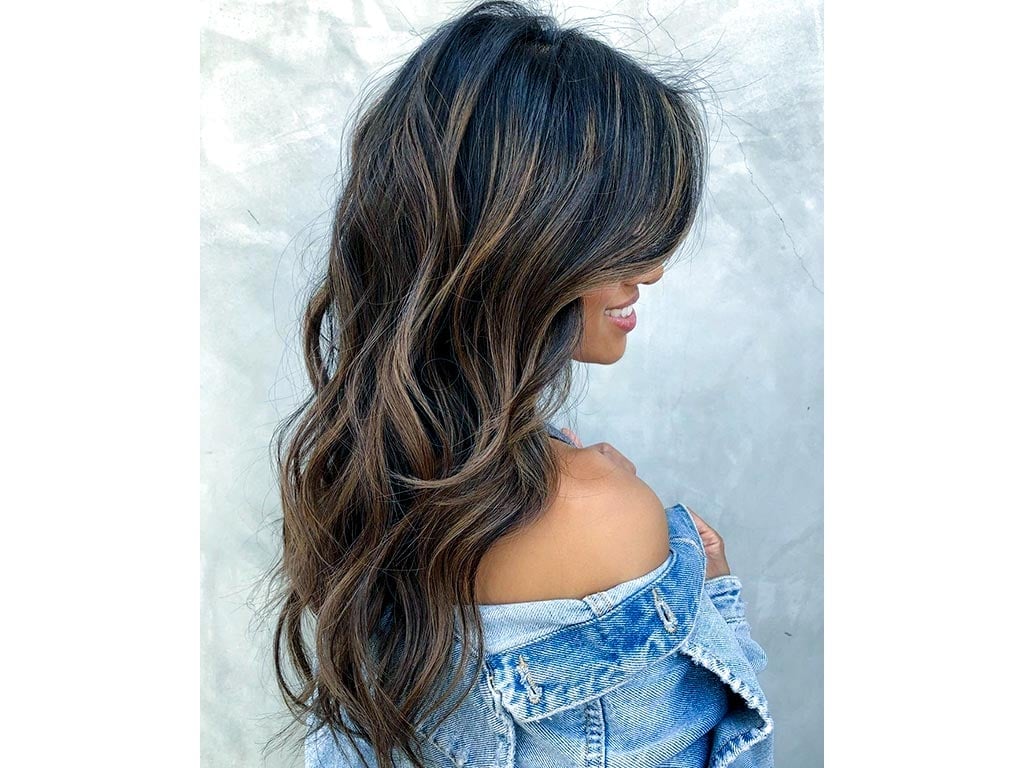
You want warmth without going full copper. That is where this dark brown base with subtle caramel balayage sits: a side view that shows the balayage highlights sweeping through thick wavy hair. The caramel tones lift the brown just enough to catch the light, but they stay soft, never brassy. It works with most face shapes because the loose waves carry the color evenly. Skip it if you prefer cooler tones or a low-contrast effect that stays close to the root. The salon-leaning application is what keeps the blend natural, so plan for a longer appointment.
Caramel balayage highlights on dark brown layered cut
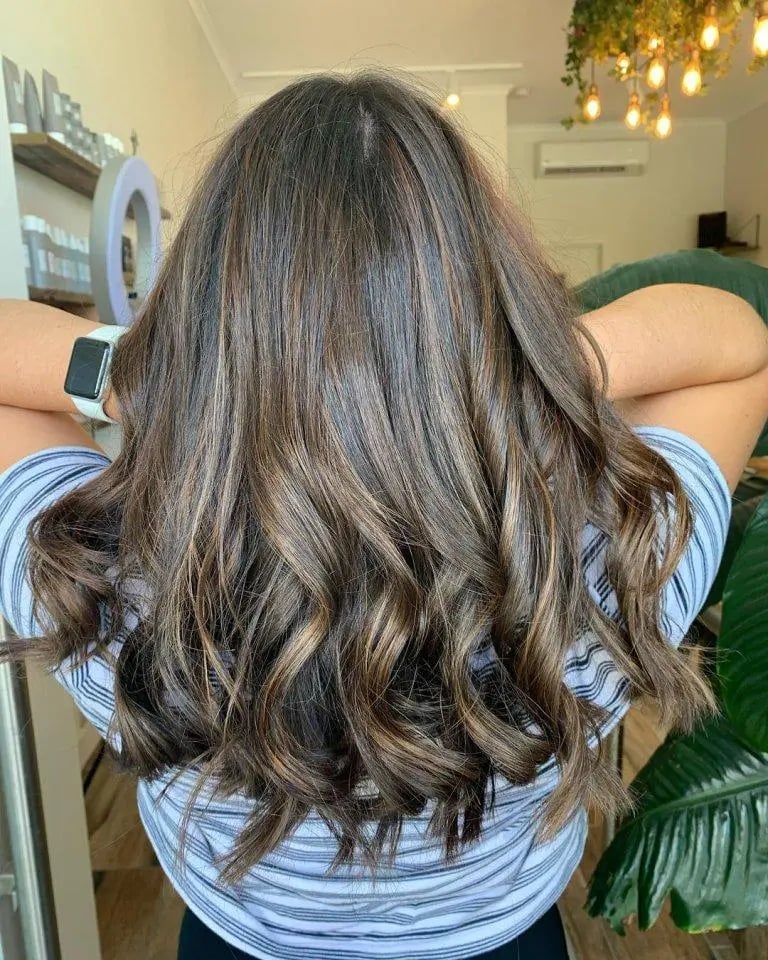
Layers and balayage share the same job here: they both create movement. A back view reveals dark brown balayage with caramel highlights that land on each layer, so the color shifts as the hair falls. This is a middle part with a blowout, no bangs, thick wavy texture doing the work. It works with most face shapes, especially when the layers soften the jaw. Not for anyone who keeps their hair straight all day, because the caramel reads best in motion. Tell your colorist: dark brown base, caramel balayage highlights, layered cut.
Contrasting ash blonde balayage on dark brown hair
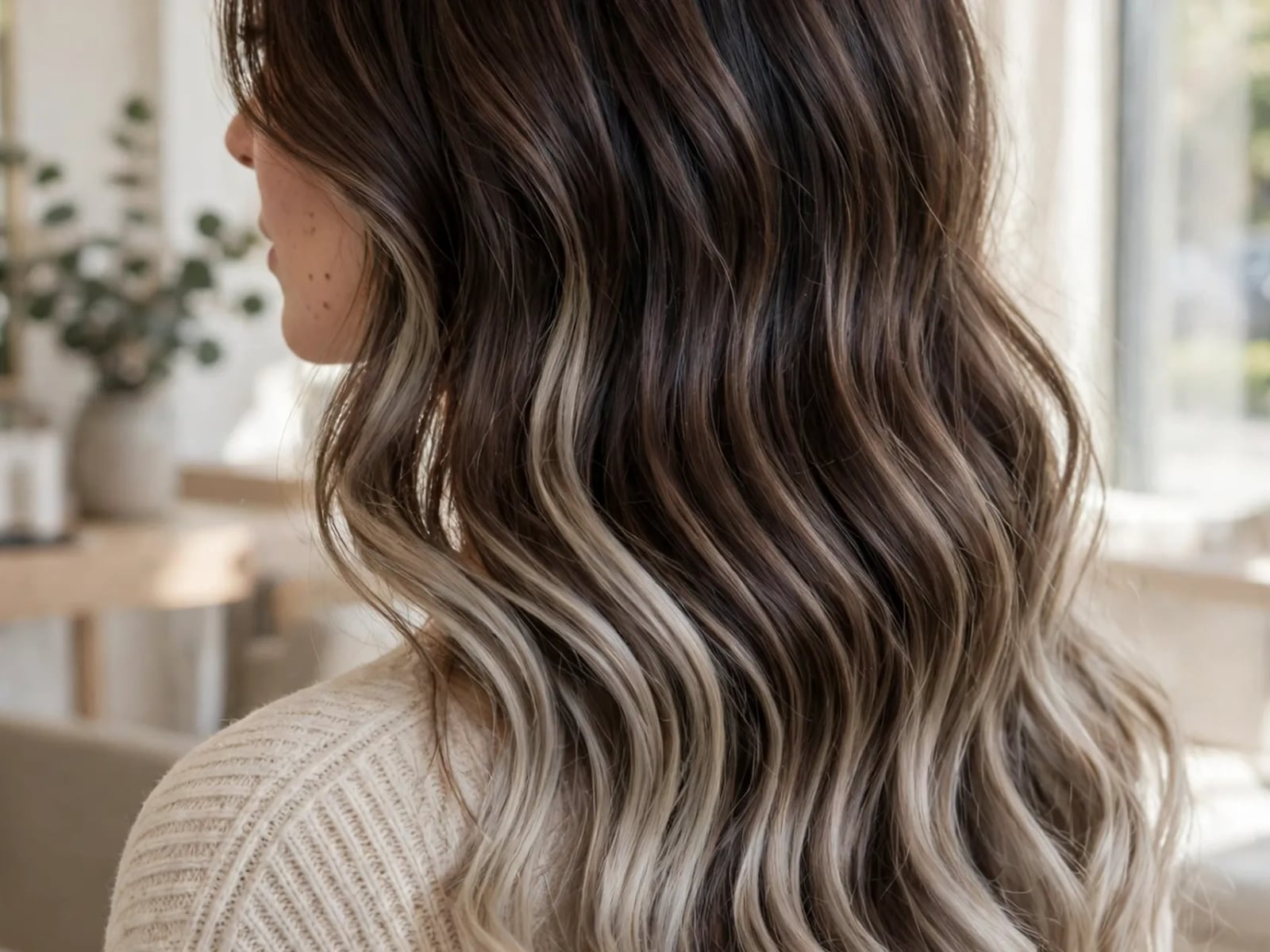
Cool against dark creates a different kind of dimension. This is a dark brown base with ash blonde balayage, and the contrast reads clearly in a side profile: the loose waves separate the tones so neither one gets lost. Thick wavy hair carries the ash well, and the effect works with most face shapes because the lighter pieces sit away from the face. Pass when you prefer warm tones or a subtle blend that fades into the root. Salon precision is non-negotiable for keeping ash from turning muddy.
Smooth dark brown to ash blonde balayage transition
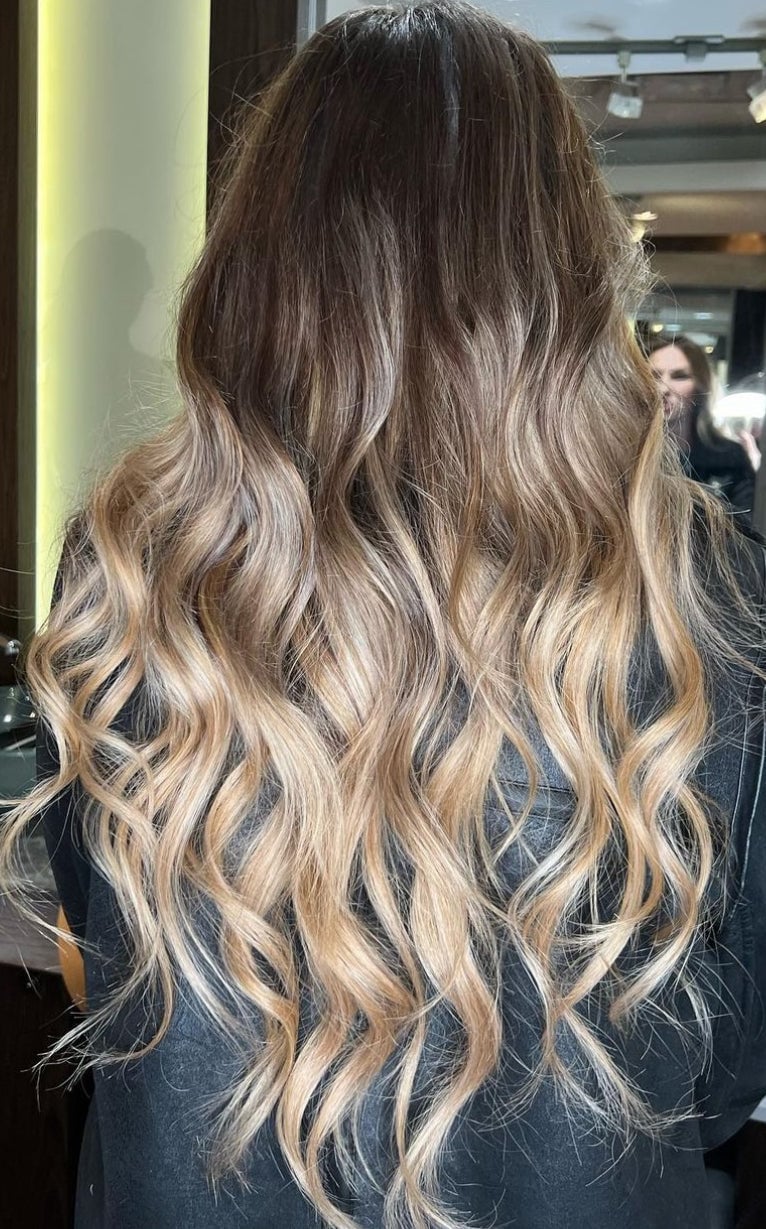
The back view tells the whole story: a dark brown base that graduates into ash blonde ends with no hard line. The smooth blend is what makes this work, because the lighter tones sit concentrated at the ends while the roots stay rich. Loose waves on thick wavy hair emphasize the gradient, and the ash tone keeps the blonde from going yellow. It works with most face shapes, but skip it if you prefer a more uniform color or warmer caramel tones. Tell your colorist: dark brown to ash blonde balayage, smooth blend. The careful blending requires a salon-leaning hand.
Caramel tones balayage on dark brown layered hair
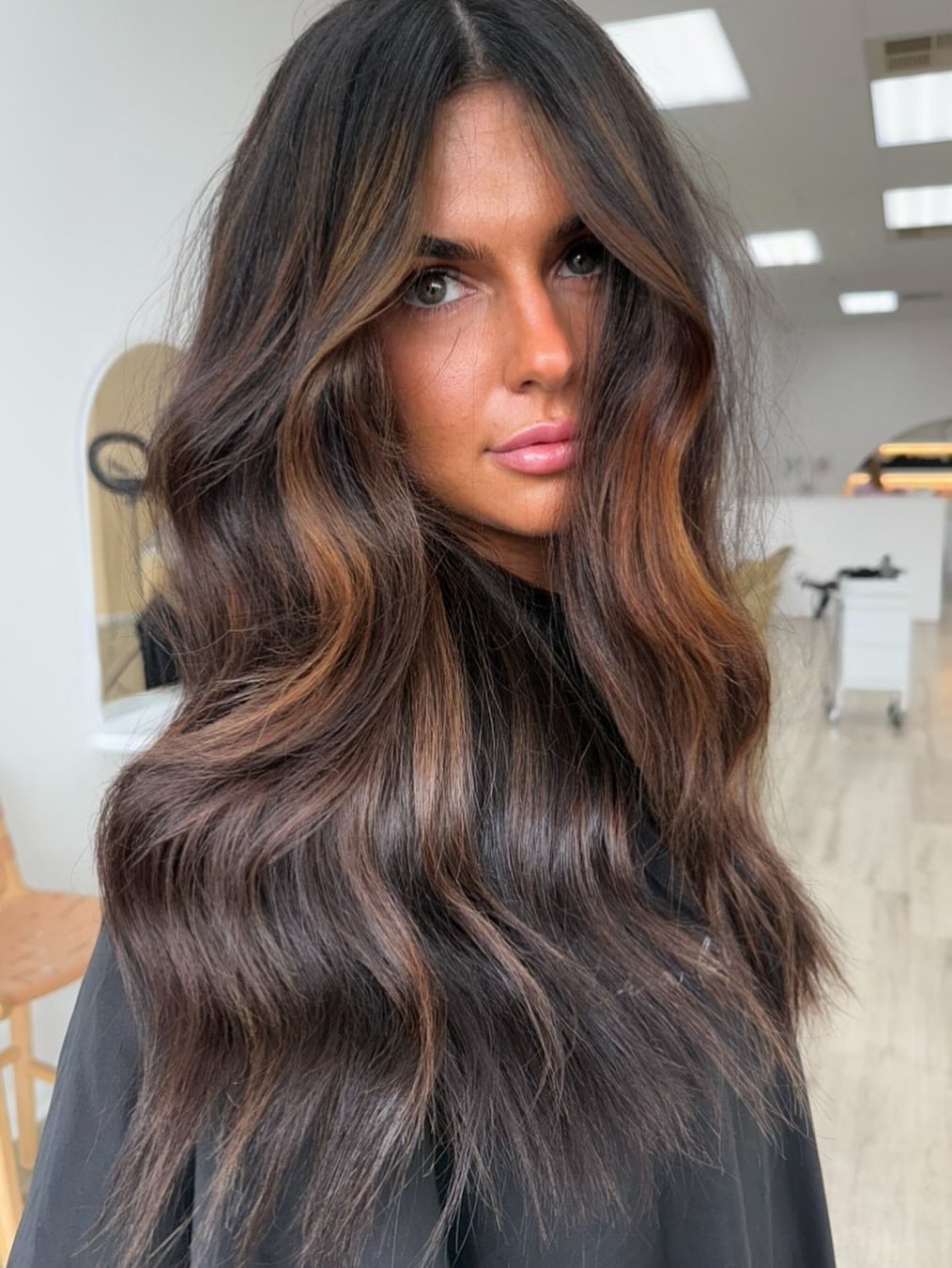
Layers need a balayage that moves with them. A front view with a middle part shows dark brown balayage with caramel tones placed through the layers, so the color lifts and falls with the wave pattern. Thick wavy hair holds the blowout shape, and the caramel strands add warmth without overpowering the base. This works with most face shapes, especially round or oval, because the vertical color lines elongate. The catch: skip it if you prefer cooler tones or a straighter texture that hides the layering.
Grown-up ash blonde balayage on dark brown hair, wavy
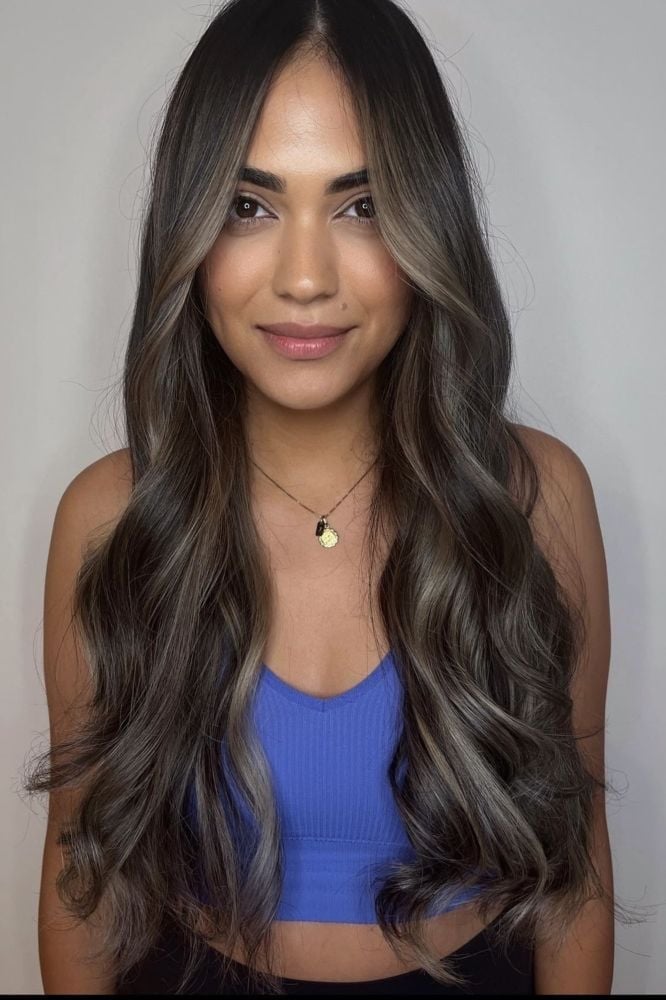
Compared to a caramel blend, ash reads cooler and sharper. Fine wavy hair carries the contrast well, and the middle part keeps it balanced. The dark brown base does not fight the ash tone; it lets the lighter strands sit on top without bleeding. Blowout styling pushes the wave pattern into uniform S-curves, which is how you get that clean movement. A gloss every six weeks keeps the ash from turning muddy, and a trim every eight keeps the layers from collapsing. Skip it if you prefer warm tones or have very thick hair that may not show fine texture well.
Grown-up ash blonde balayage on layered brown hair
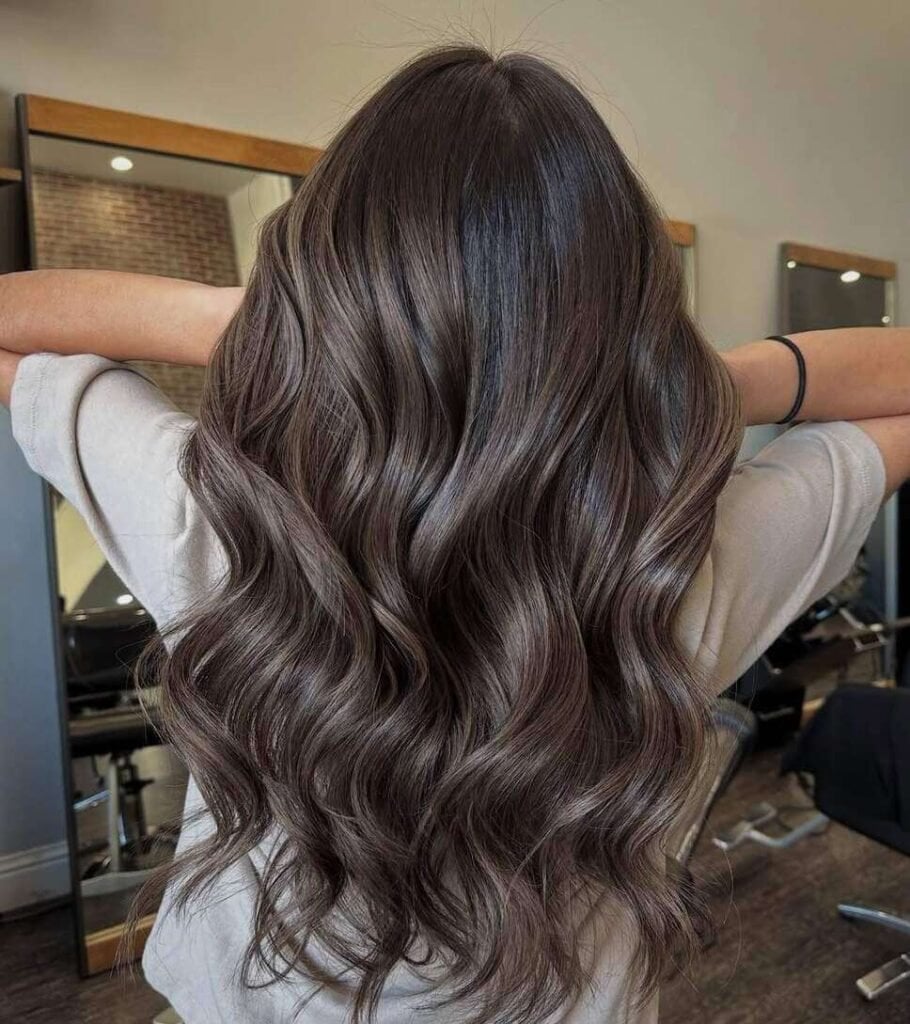
This is a back-view design built for density. Thick wavy hair needs the depth of a dark base so the ash blonde strands do not get swallowed. The layers do the heavy lifting here: they shorten the visual weight at the ends and let each wave turn separately. The balayage placement stays subtle, keeping the root solid while the ends lift just enough to catch a cooler tone. A round brush during the blowout keeps the wave direction consistent. Ask your stylist for: dark brown base, subtle ash blonde balayage, layered cut.
Natural-looking caramel balayage on dark brown hair
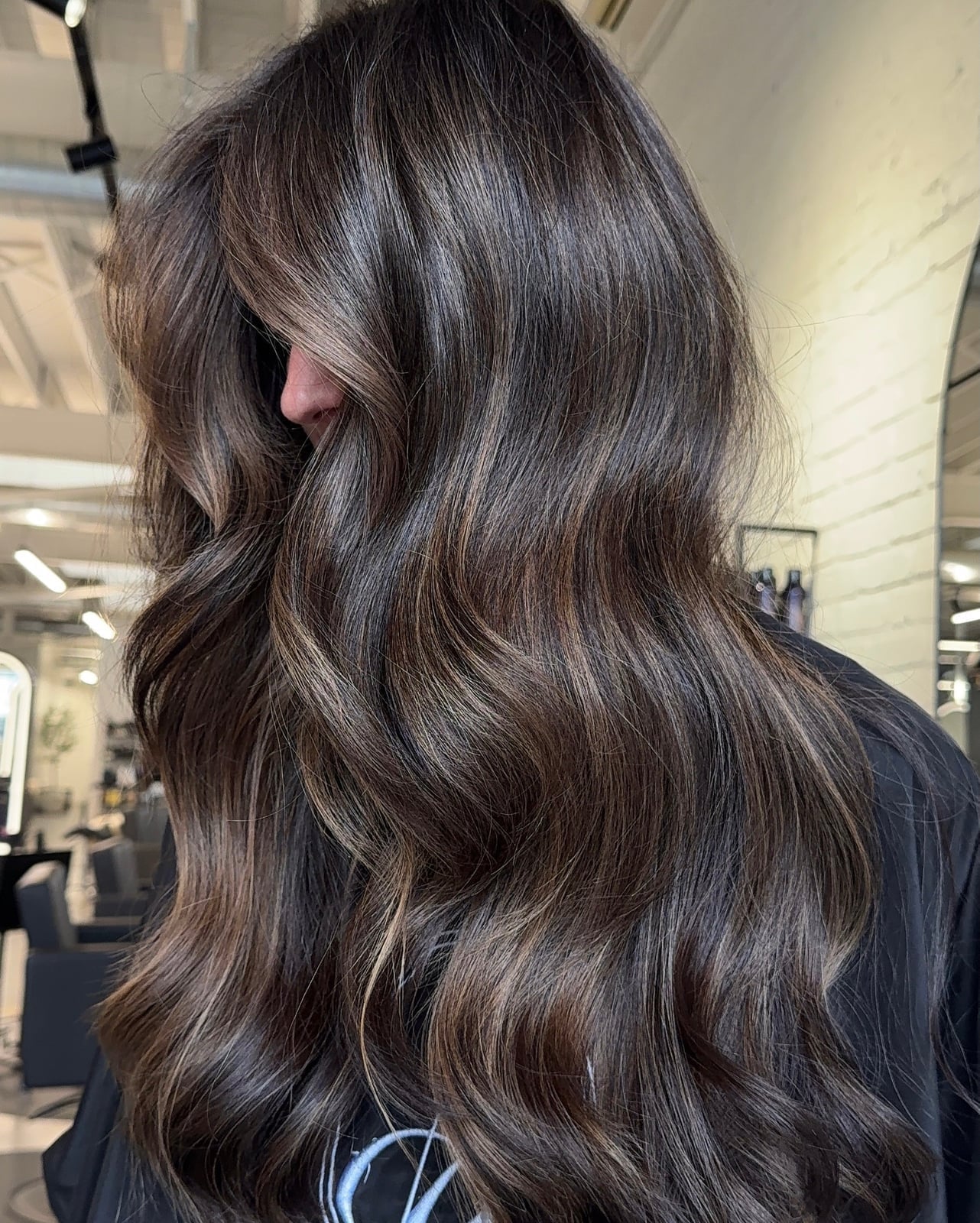
The dark brown base is the anchor here, and the caramel sits just a shade or two lighter. Thick wavy texture helps the transition look natural because the wave bends break up any hard lines. The side profile shows the color wrapping around the front sections, not just the ends.
Curtain bangs with caramel balayage on medium brown hair
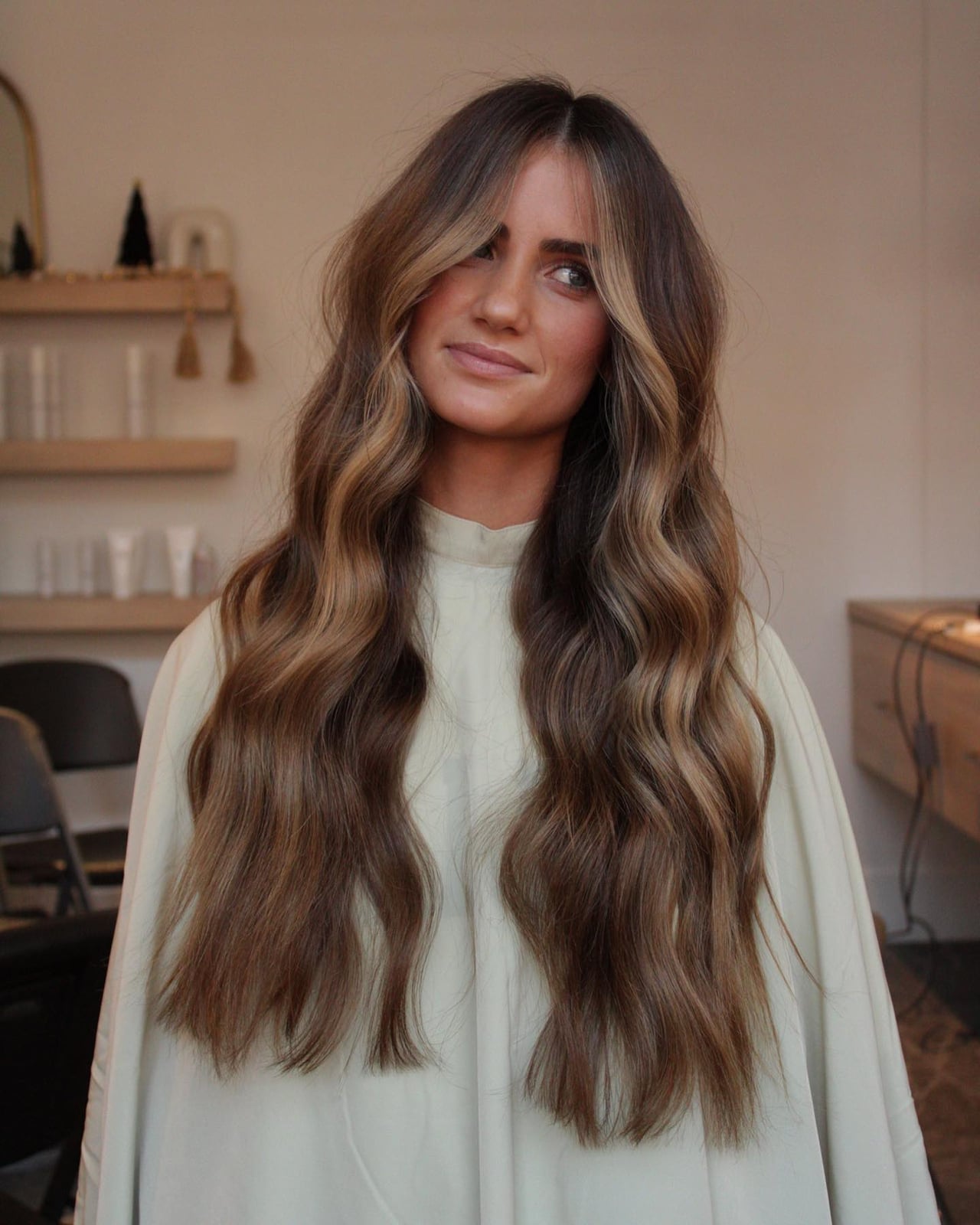
Curtain bangs pull the caramel balayage forward, so the color lives at the same visual level as the face. Fine wavy hair at collarbone length or longer holds the shape without the bangs going flat. The medium brown base keeps the contrast soft, closer to a warm highlight than a separate color zone. A blowout with a round brush sets the curtain bangs into their natural sweep. Skip if you dislike bangs or prefer a blunt cut.
Ash blonde balayage on dark brown hair with blowout, layers
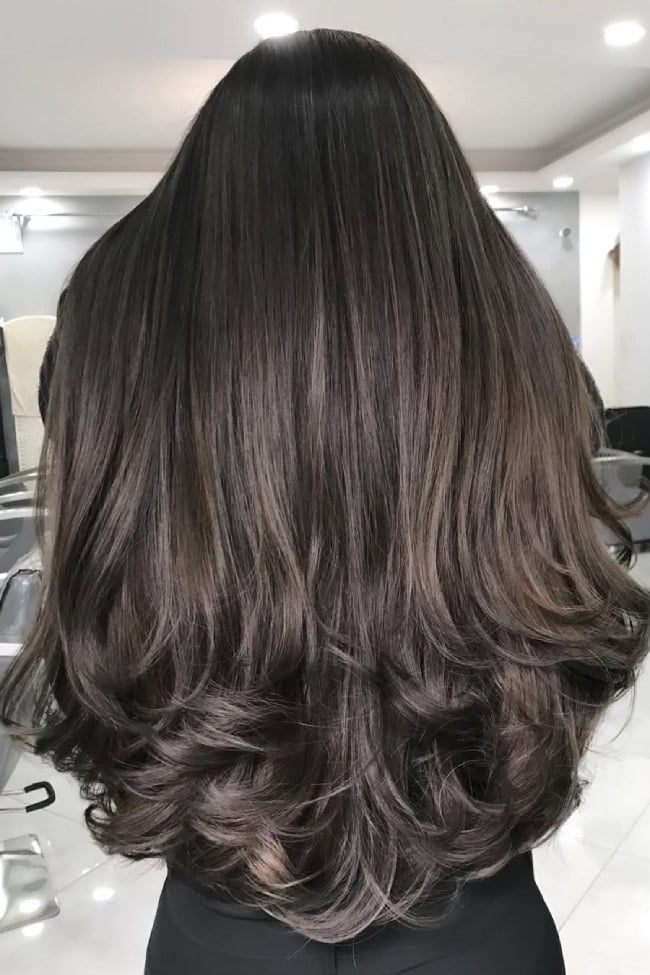
The technique here is root-to-mid fade with the ash blonde concentrated at the ends and a few strands pulling through the mid-lengths. Thick wavy hair takes the lighter pieces well because the wave breaks up any stripe effect. Layers shorten the bottom weight and expose more of the balayage, which is why the color looks dimensional from the back. A blowout adds the polish, smoothing the wave into a uniform C-shape. Ask your stylist for: dark brown base, subtle ash blonde balayage.
Smooth balayage transition to warm caramel on brown hair
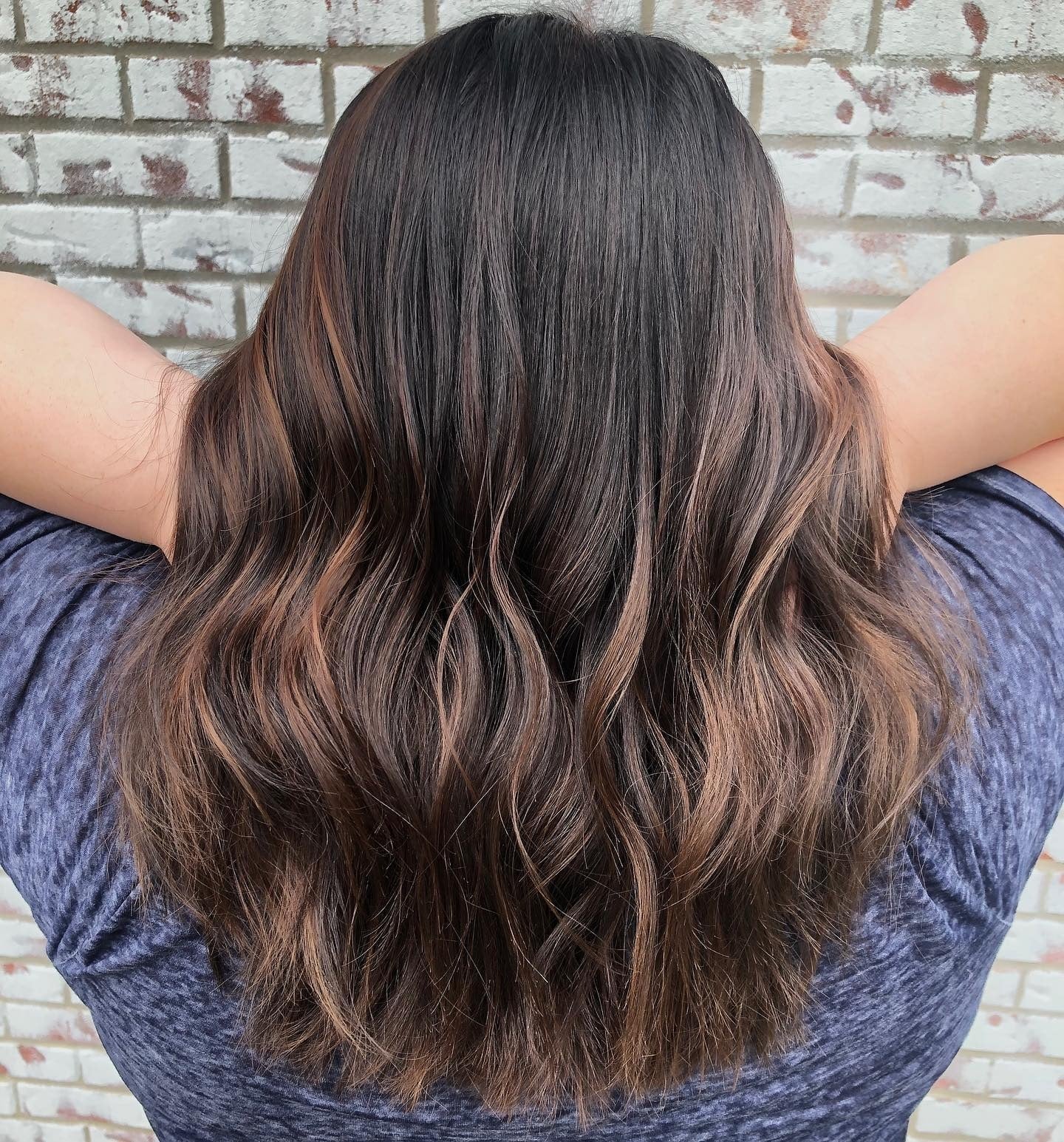
Fine hair needs a color transition that doesn’t fight its natural movement. A dark brown base with a warm caramel balayage transition works because the lighter tones sit in the wavy texture, not against it. The middle part and air-dried finish keep the look low-effort. It suits those who want a smooth blend.
Caramel-toned balayage highlights on dark brown hair, wavy
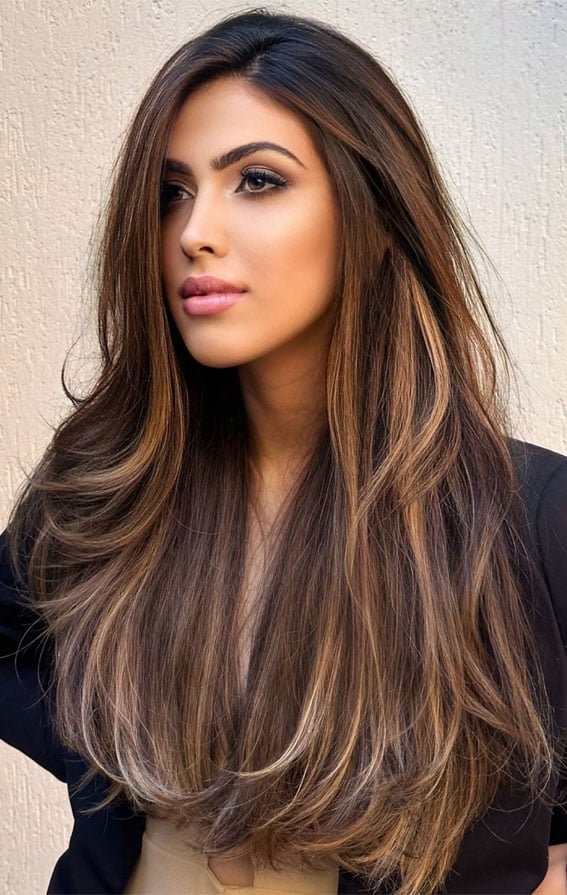
A dark brown base meets caramel-toned balayage highlights that start mid-length and run to the ends. The freehand application keeps the line soft, so thick wavy hair looks deliberate, not streaky. A blowout smooths the waves without flattening the dimension. The blend stays subtle enough that grow-out looks intentional.
Blonde balayage for a lighter brown look
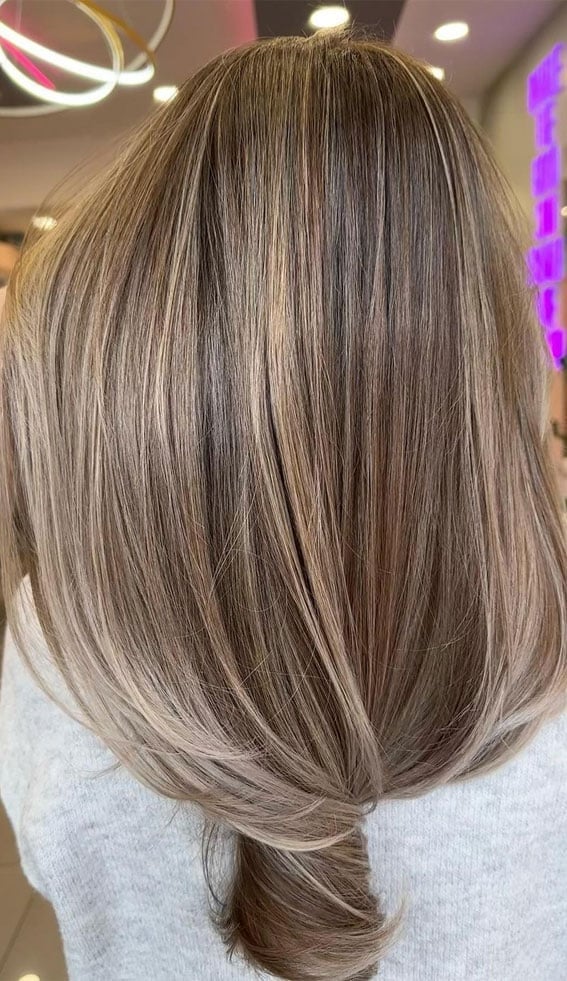
Blonde balayage on a brown base takes about two and a half hours in the chair. The payoff is a soft transition from darker roots to lighter ends, which means the line moves down as it grows. Fine wavy texture holds the movement without extra product. A gentle blowout is enough to show the dimension. It works best for those who want a subtle, blended result.
Caramel balayage with side-swept bangs on dark brown hair
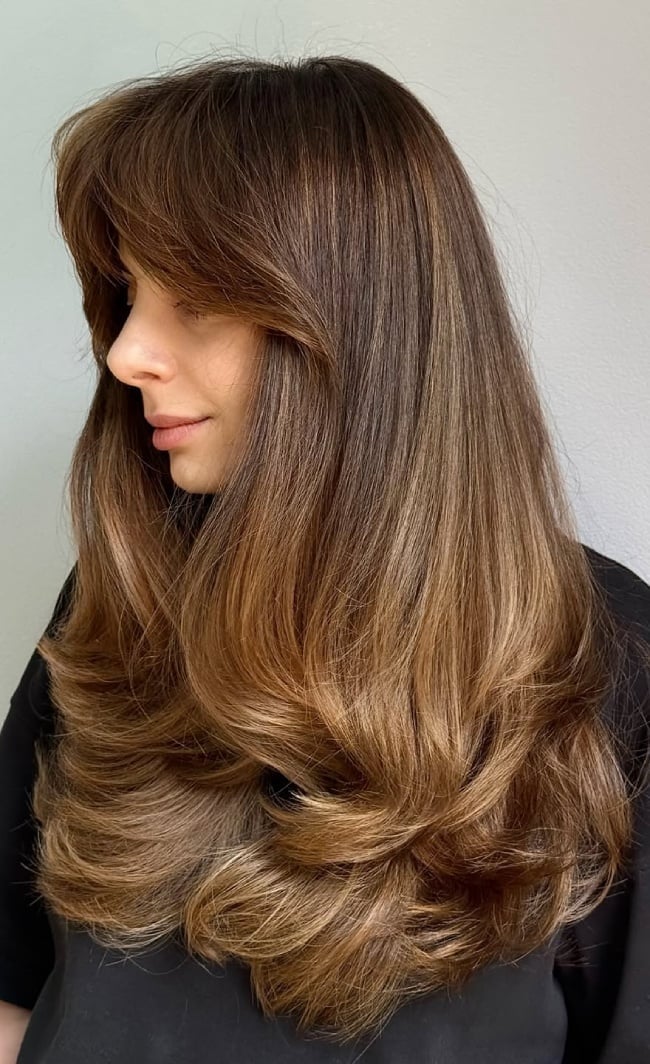
Side-swept bangs and caramel balayage on dark brown hair work because the lighter pieces hit the front of the cut. Thick wavy texture takes a blowout well, which is what you want when the bangs need to sweep instead of droop. Layers keep the weight from pulling the shape flat.
Smooth balayage transition to warm caramel on thick hair, wavy
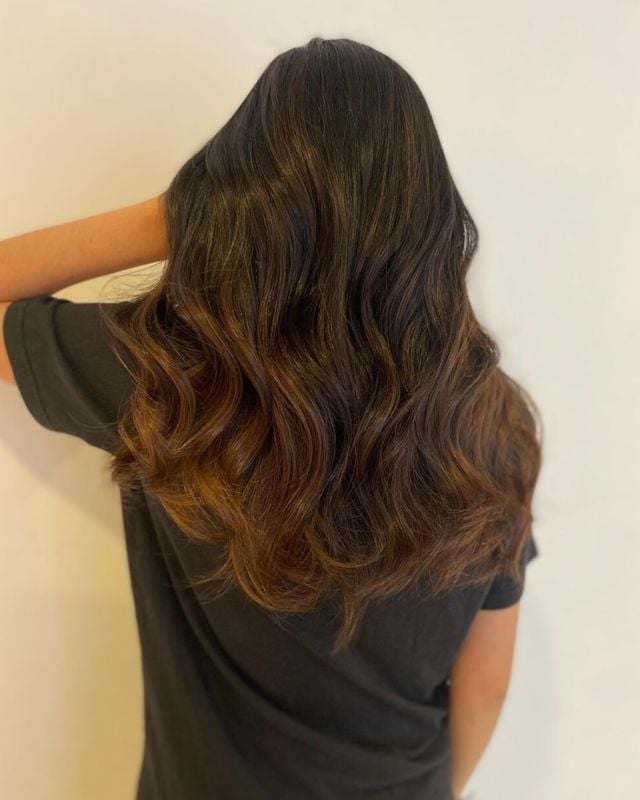
Thick hair needs a transition that doesn’t create a solid line. Tell your colorist: dark brown base, warm caramel balayage. The lighter shades sit in the mid-lengths and ends, so the waves catch the caramel without a hard root. The blend looks natural because the darker base stays dominant near the scalp. It works best for those who want a soft, lighter effect rather than a sharp contrast.
Smooth caramel balayage strands on dark brown hair
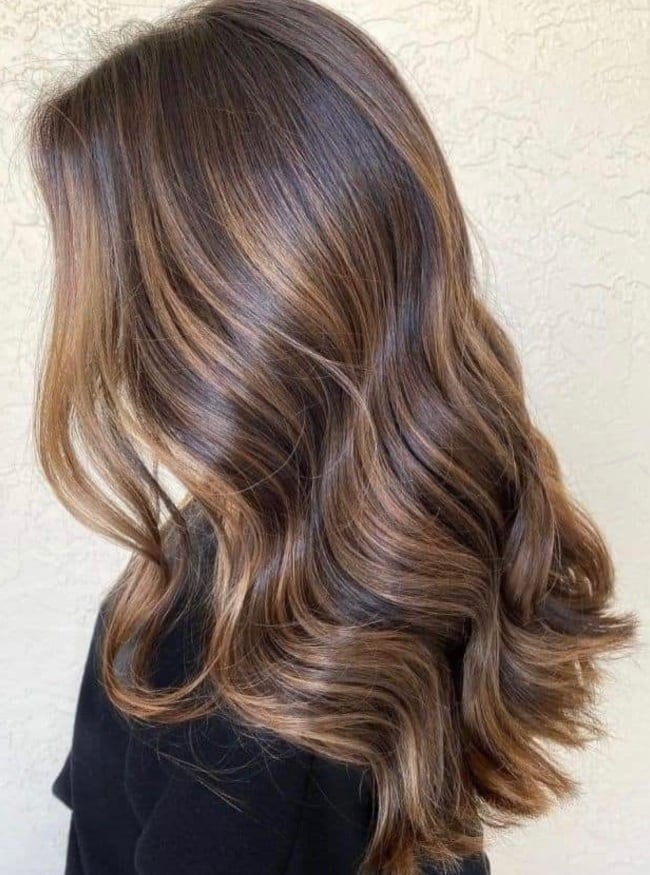
Thick wavy hair needs a balayage that moves with the wave, not against it. A dark brown base with caramel balayage strands placed through the mid-lengths creates warmth that follows the curve of each wave. The middle part and side framing let the lighter pieces wrap around the face without falling into a solid block. Layers shorten the visual weight at the ends, so the blowout holds its shape past lunch. This balayage blends from root to tip for a smooth finish.
Subtle caramel balayage highlights on dark brown hair with loose waves
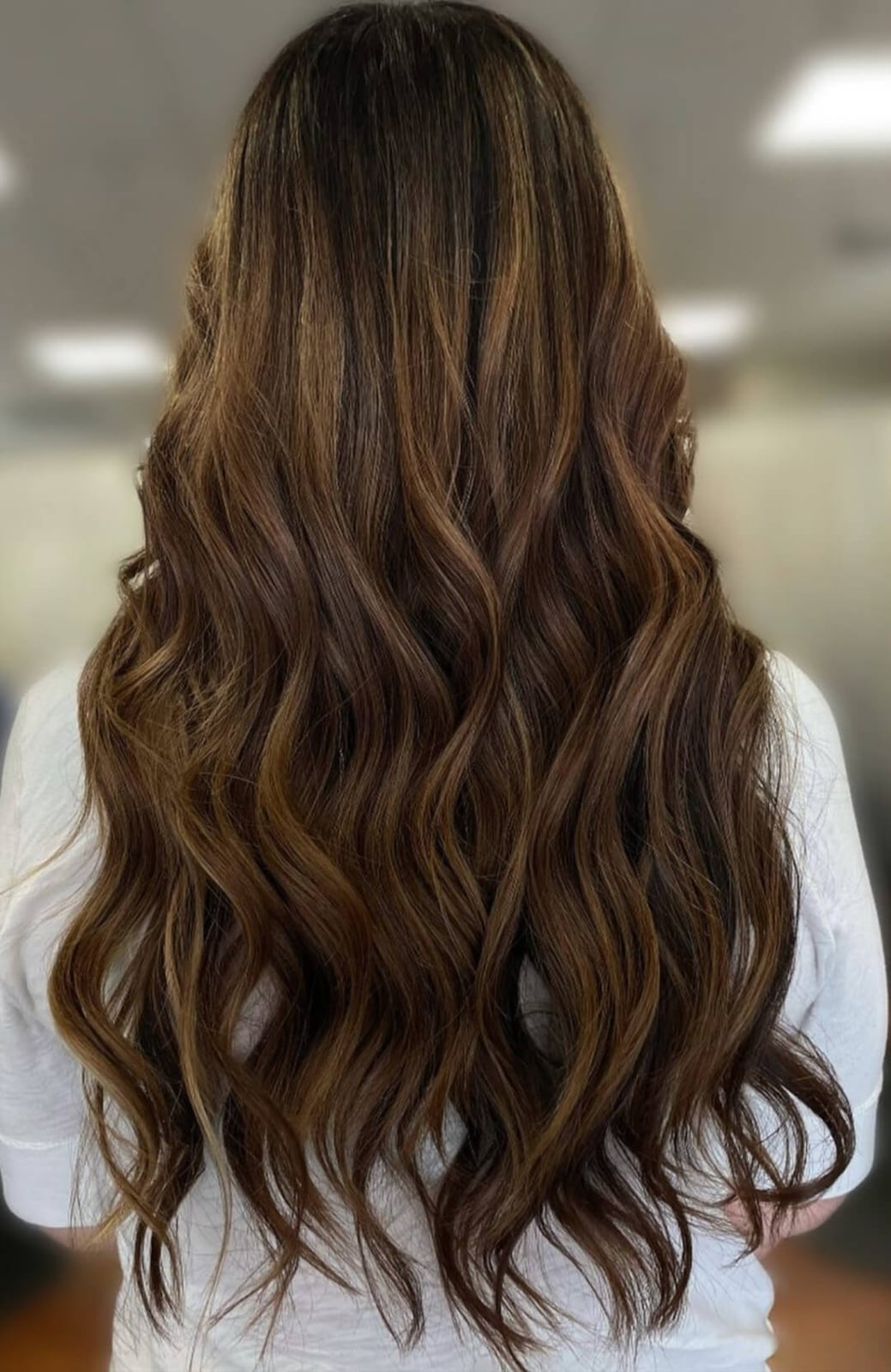
A back view tells you one thing clearly: the color sits on the mid-lengths and ends, not the root. Dark brown with subtle caramel balayage highlights means the darker base stays dominant near the scalp while the lighter pieces add warmth at the wave peaks. Thick wavy texture carries the two tones without them bleeding into a single shade. Loose waves soften the transition further, so the line between brown and caramel looks a gradient rather than a hard edge. A salon application ensures the pattern stays natural.
Lighter balayage effect on brown hair with caramel tones
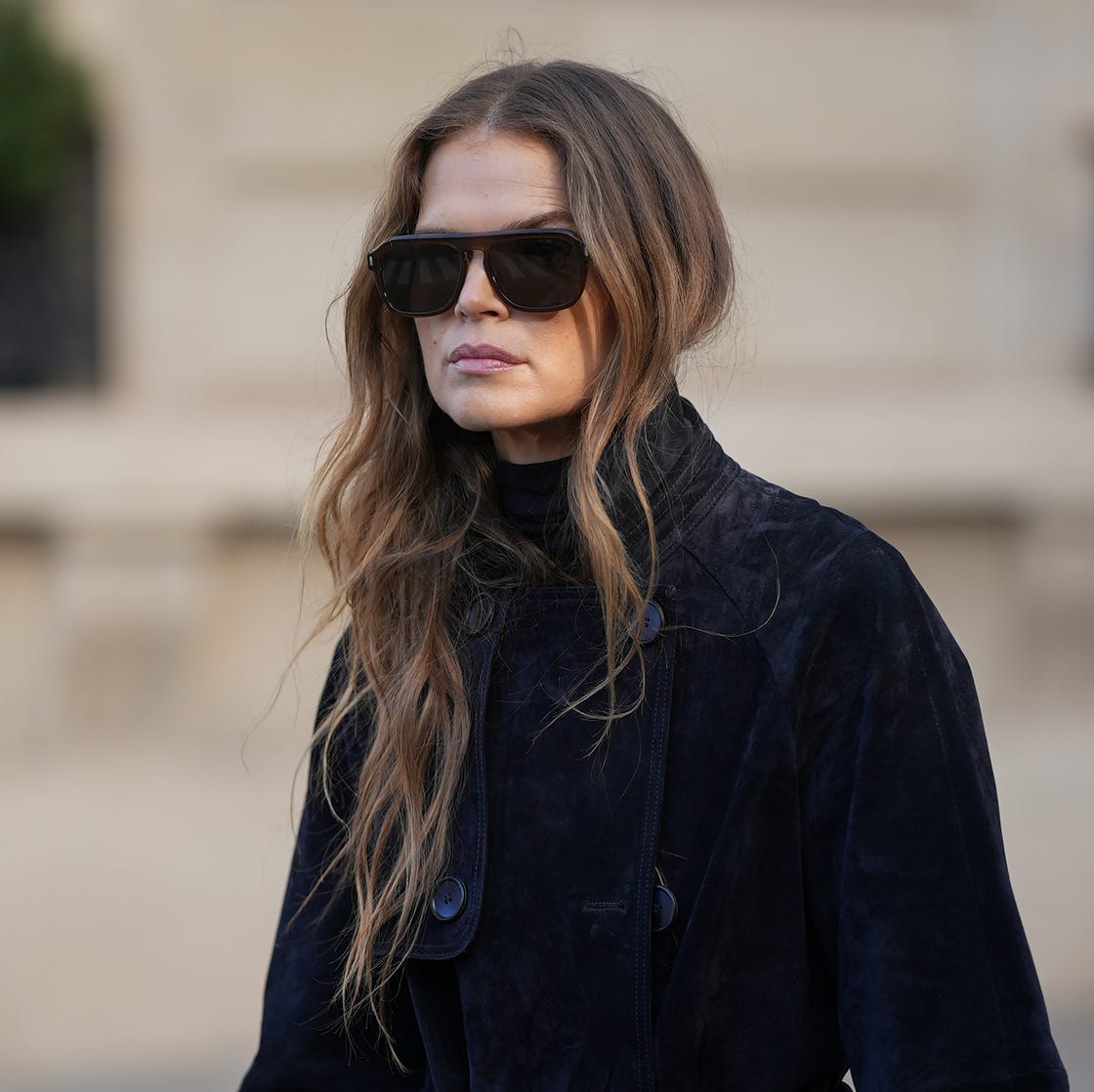
Air-dried texture changes the way balayage reads. A brown base with caramel tones placed through the lengths creates a lighter effect that does not need a blowout to look finished. The middle part and subtle layers let the lighter strands fall forward naturally. Fine wavy hair carries the caramel without the color feeling heavy. Tell your colorist: brown base, caramel balayage tones. The result is a low-effort finish that gets softer each time you wash it.
Final Thoughts
Pick the balayage by how much time you want to spend on it.
- Low-maintenance caramel: schedule a gloss every 8 weeks.
- Ash or blonde tones: plan for a toner refresh at week 6.
- Fine hair: keep the light pieces mid-shaft to ends for density.
- Wavy texture: let the balayage follow the wave pattern for natural dimension.
Find the brown balayage that fits your schedule and your base.