

You’re scrolling through saved photos, trying to decide between ash and honey tones, wondering if curtain bangs will actually work with your fine texture. The grow-out line is the real test, and a well-placed balayage buys you months of good hair days without a root emergency.
Which is why Striking Blonde Balayage 2027 fill so many saved boards, 34 options that range from low-maintenance root shadows to high-contrast platinum ends. They work for straight, wavy, or curly textures and every face shape, so you can pick what fits your actual morning routine.
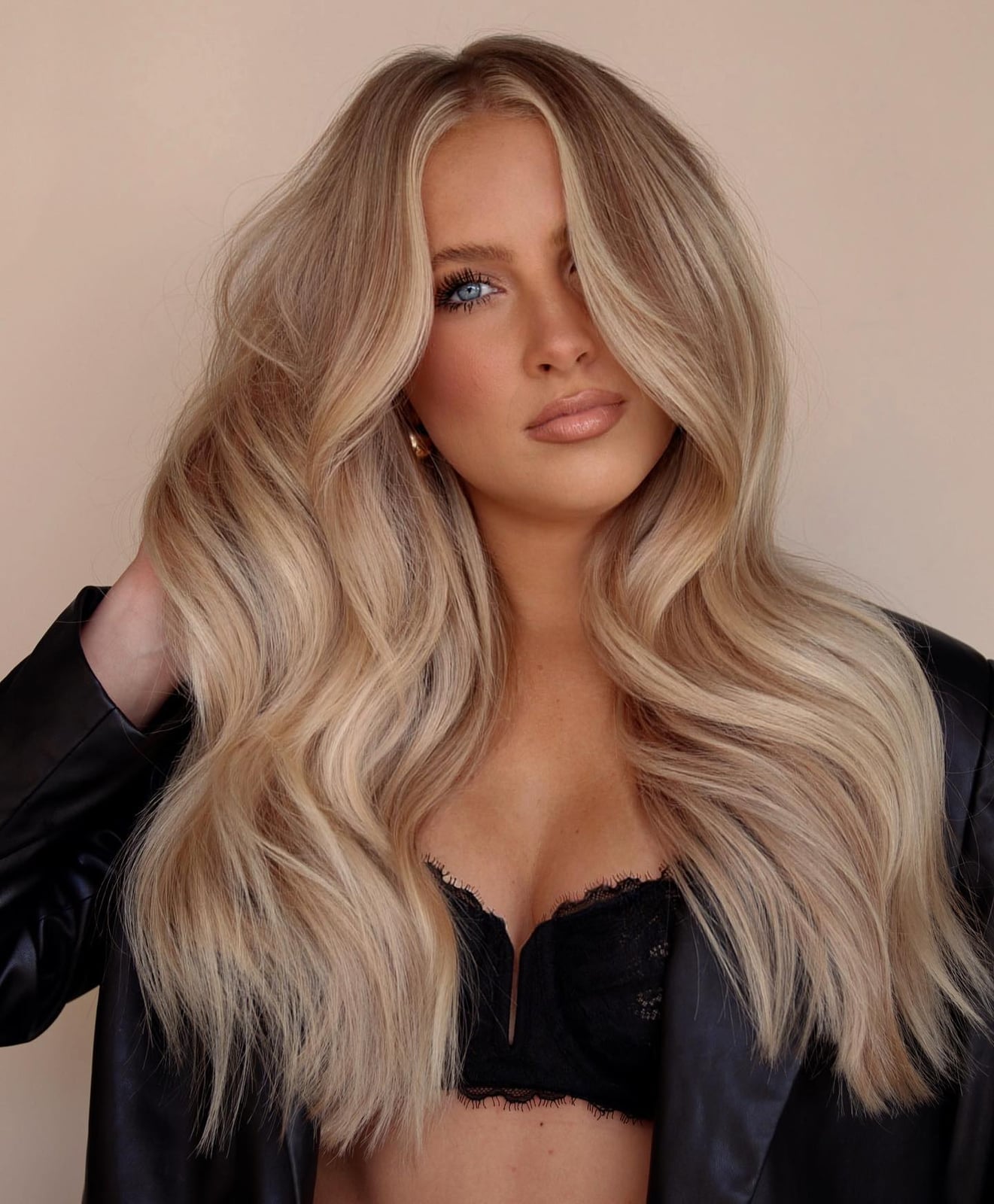
Ash blonde balayage with soft face-framing layers
Side part, loose blowout, thick wavy texture. The formula here is deliberate. Ash blonde balayage lands lighter around the face and darker through the rest, so the contrast looks depth, not stripes. Face-framing layers do the heavy lifting: they shorten the visual weight of thick hair and let the ash tone catch light differently on each wave. Suits anyone with hair past collarbone length who likes volume that stays put. Tell your colorist: ash blonde balayage, face-framing layers, loose blowout. A round brush and a few minutes of cool air at the roots keep the lift alive until the next wash.
Dark blonde balayage with ash-toned highlights
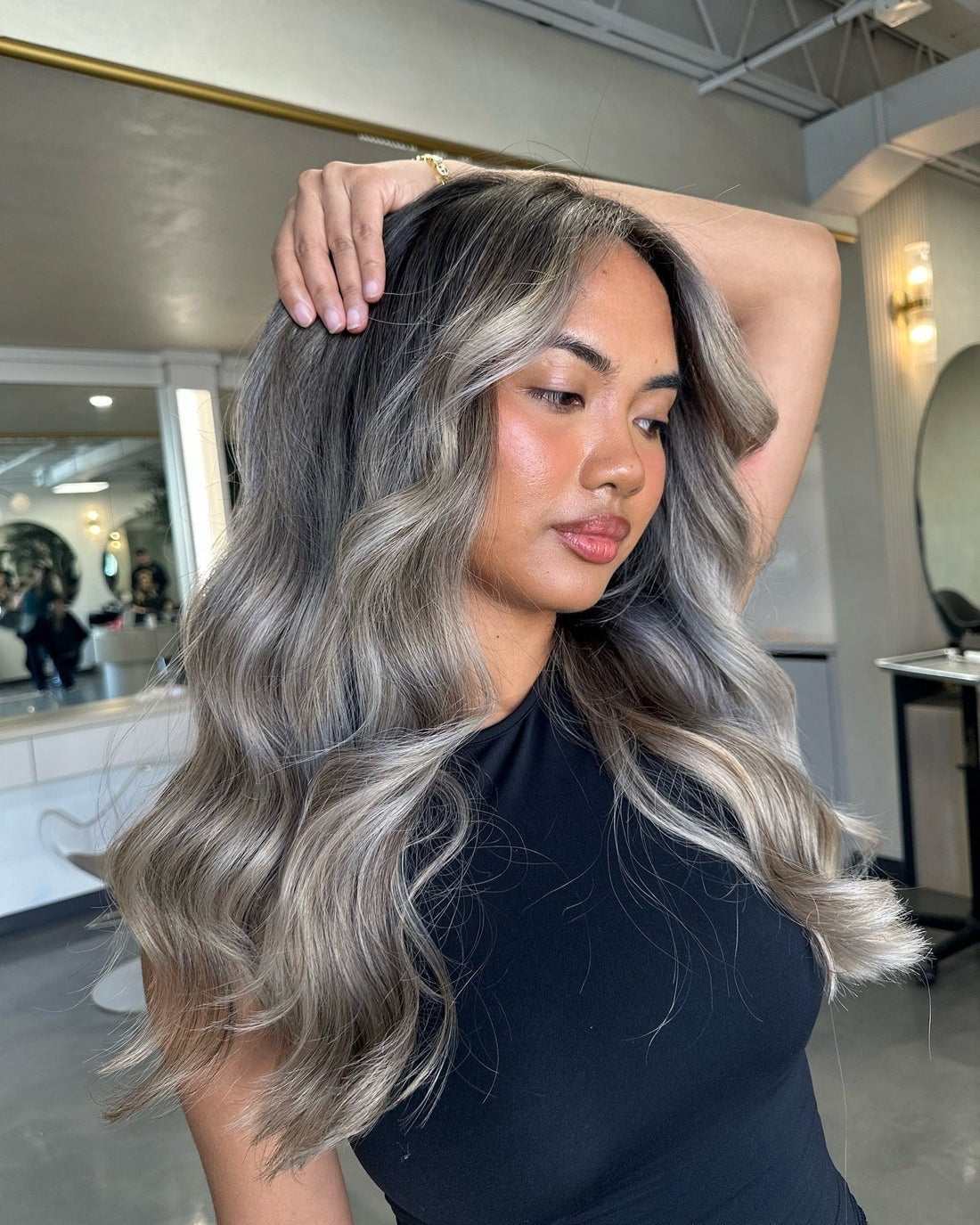
Dark blonde base with ash-toned highlights sits a step warmer than full ash blonde but cooler than honey. The difference matters: ash tones mute brassiness on natural dark blonde, while a true ash base can pull gray on warmer skin. This version keeps the depth low and the highlights subtle. Loose waves and subtle layers let the blend look dimension, not streaks. Works for any length, but thick wavy hair shows the transition best.
Dimension with lighter blonde highlights on dark blonde
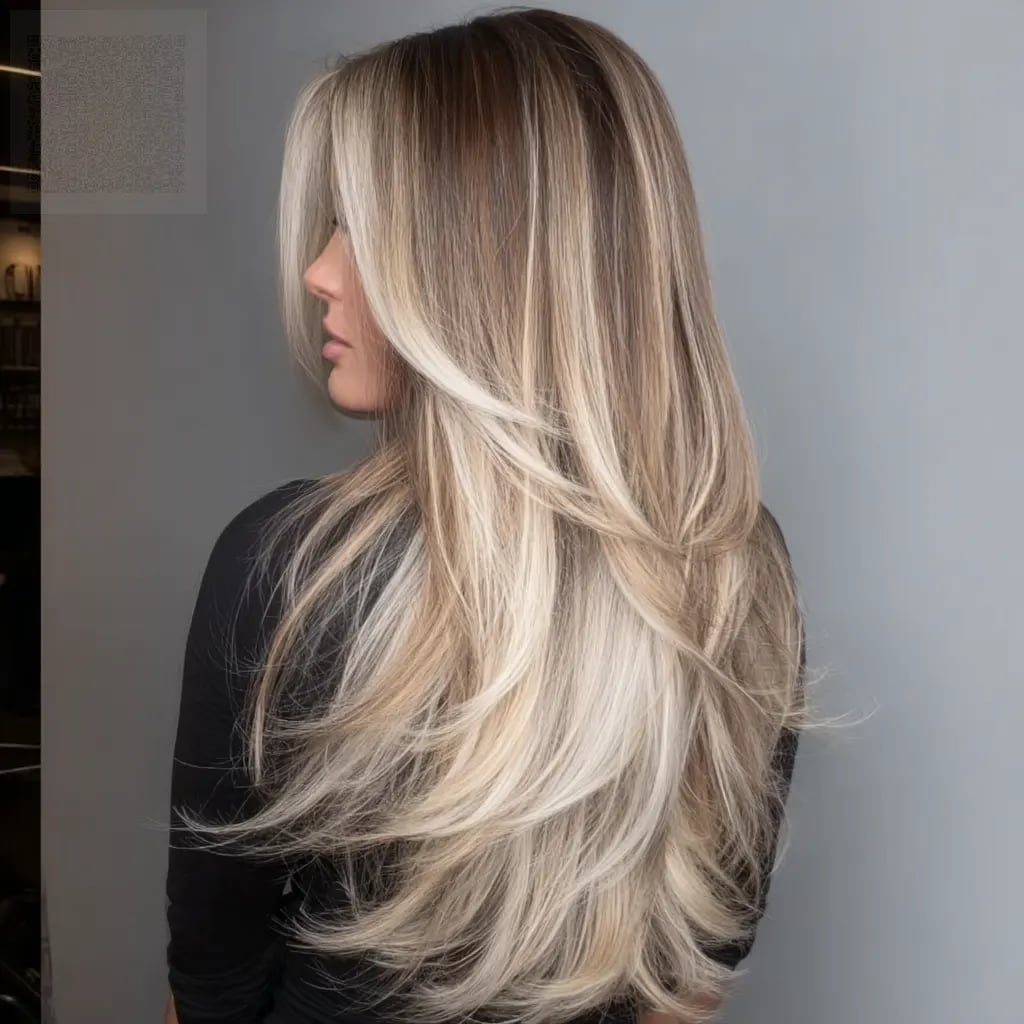
Curtain bangs on a dark blonde base with lighter blonde highlights, does this suit a round face or a long one? The answer is both, with a catch. The face-framing layers and side part create width at the cheekbone, which balances a long face, while the curtain bangs soften a square jaw. The lighter highlights sit mostly around the front pieces, so the dimension is placed for a deliberate effect. A voluminous blowout and long layered cuts complete the shape. A DIY blow-dry with a round brush shapes the bangs; trim the rest every six to eight weeks.
Lighter effect for a modern blonde balayage
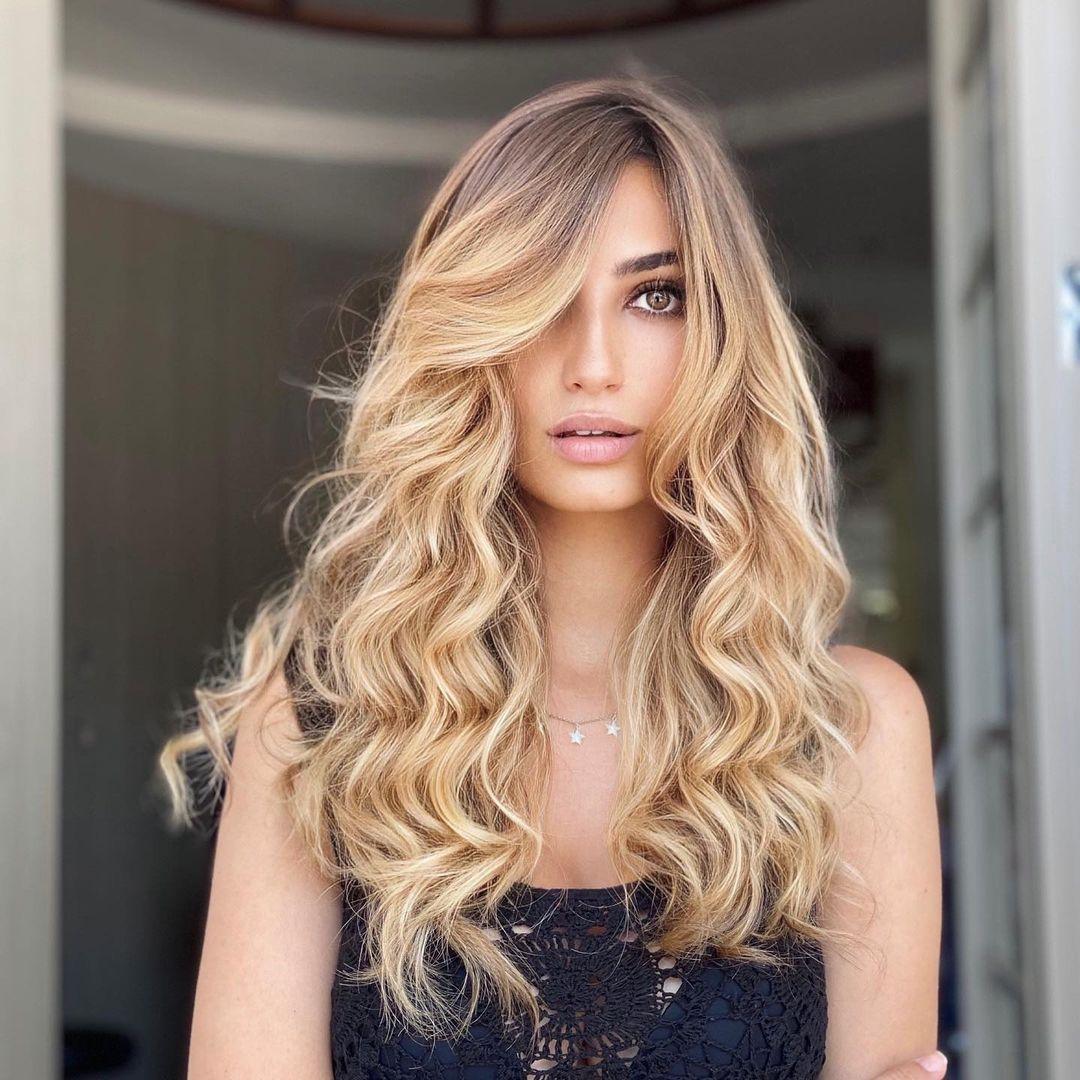
Side-swept bangs and pieces around the face turn a standard balayage into a lighter effect. The dark blonde base stays darker at the crown, and the lighter blonde highlights hit the front sections and ends, exactly where the sun would hit. Wavy, thick texture and a side part push the color forward, so the lighter pieces frame the face instead of hiding in the back. Tell your colorist: dark blonde base, balayage highlights, face-framing pieces, side-swept bangs. The bangs need a quick flat-iron touch-up most mornings, but the rest of the color grows out soft.
Cool-toned strands with a natural root shadow
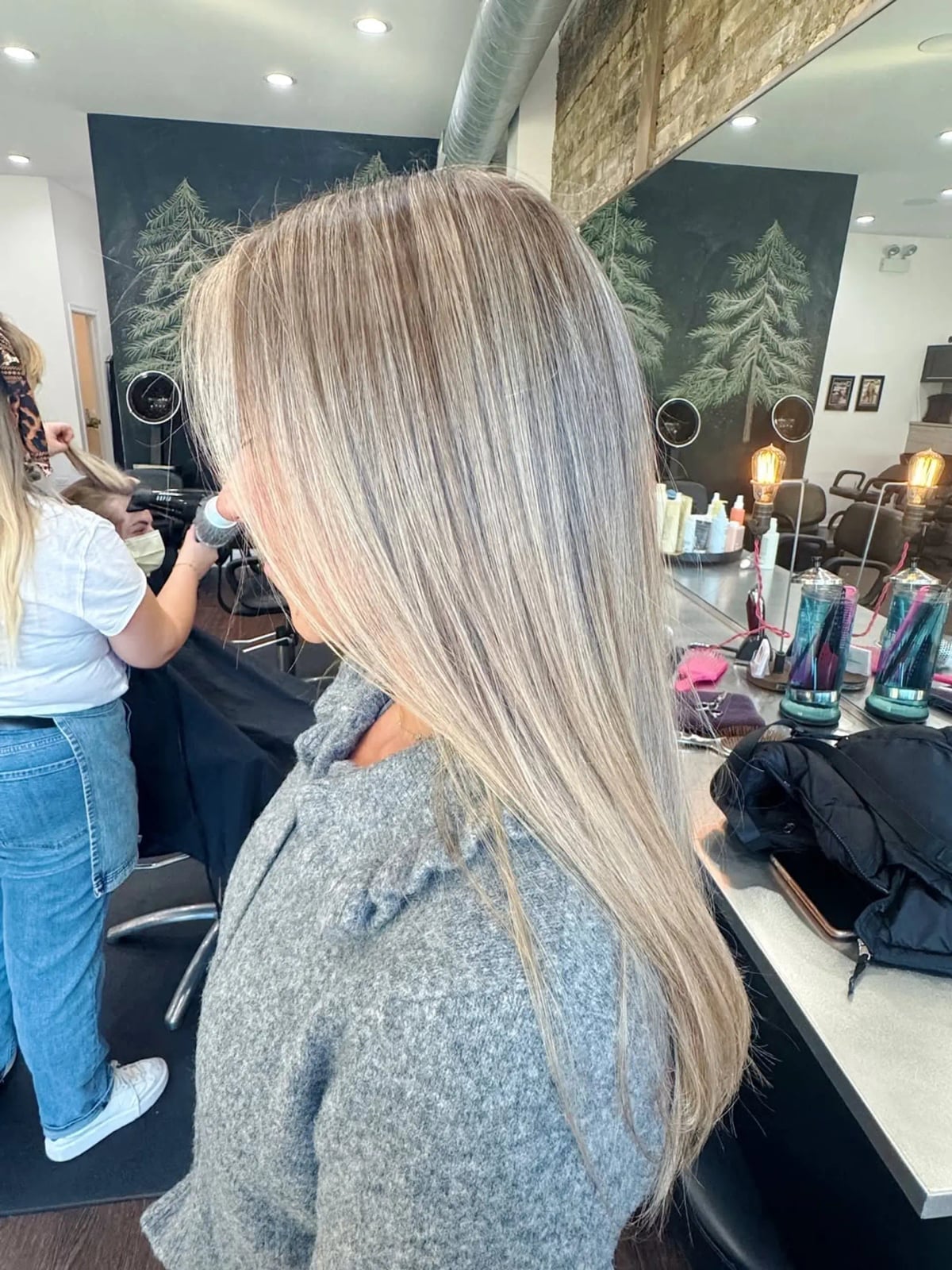
A natural root shadow and cool-toned strands. The technique here is about preserving contrast without a hard line. The root shadow stays darker for about two inches, then shifts into ash blonde balayage through the ends. Middle part and straight fine texture show the soft blend best, because there is no wave to hide the transition. Suits fine hair that needs dimension without weight. A flat iron and a heat protectant keep the straight finish sleek between washes.
Platinum highlights woven through the base
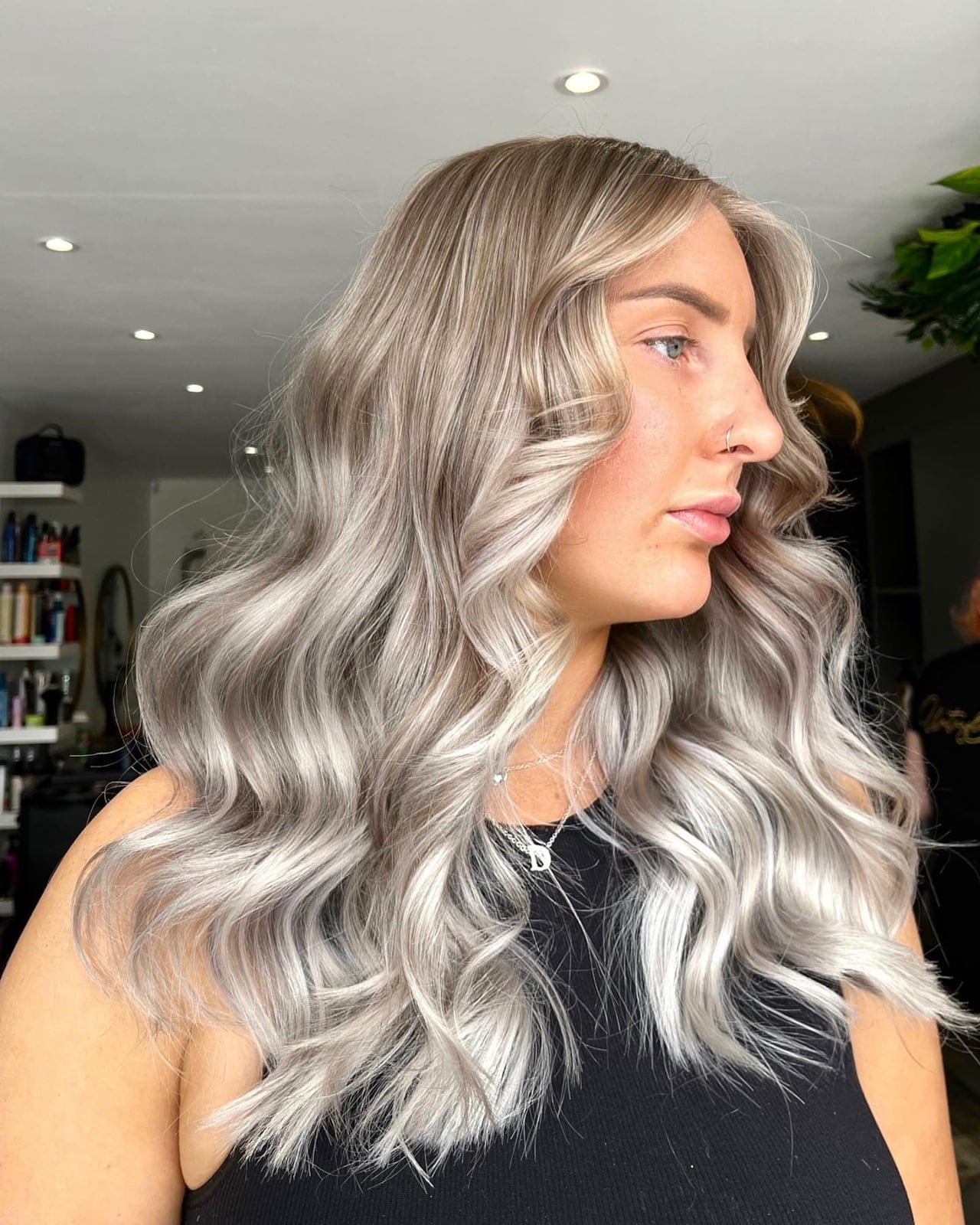
Two weeks after the chair, those platinum highlights start telling the truth. Fine, wavy hair takes the lightness best. The ash blonde balayage sits on the surface without sinking into density. Waves from a large barrel curling iron hold about three days before the texture relaxes. A trim at week seven keeps the soft layers from splitting. The contrast here is deliberate, not subtle. The roots need a gloss every five weeks to keep the ash tone from veering yellow.
Ash blonde balayage with darker roots and waves
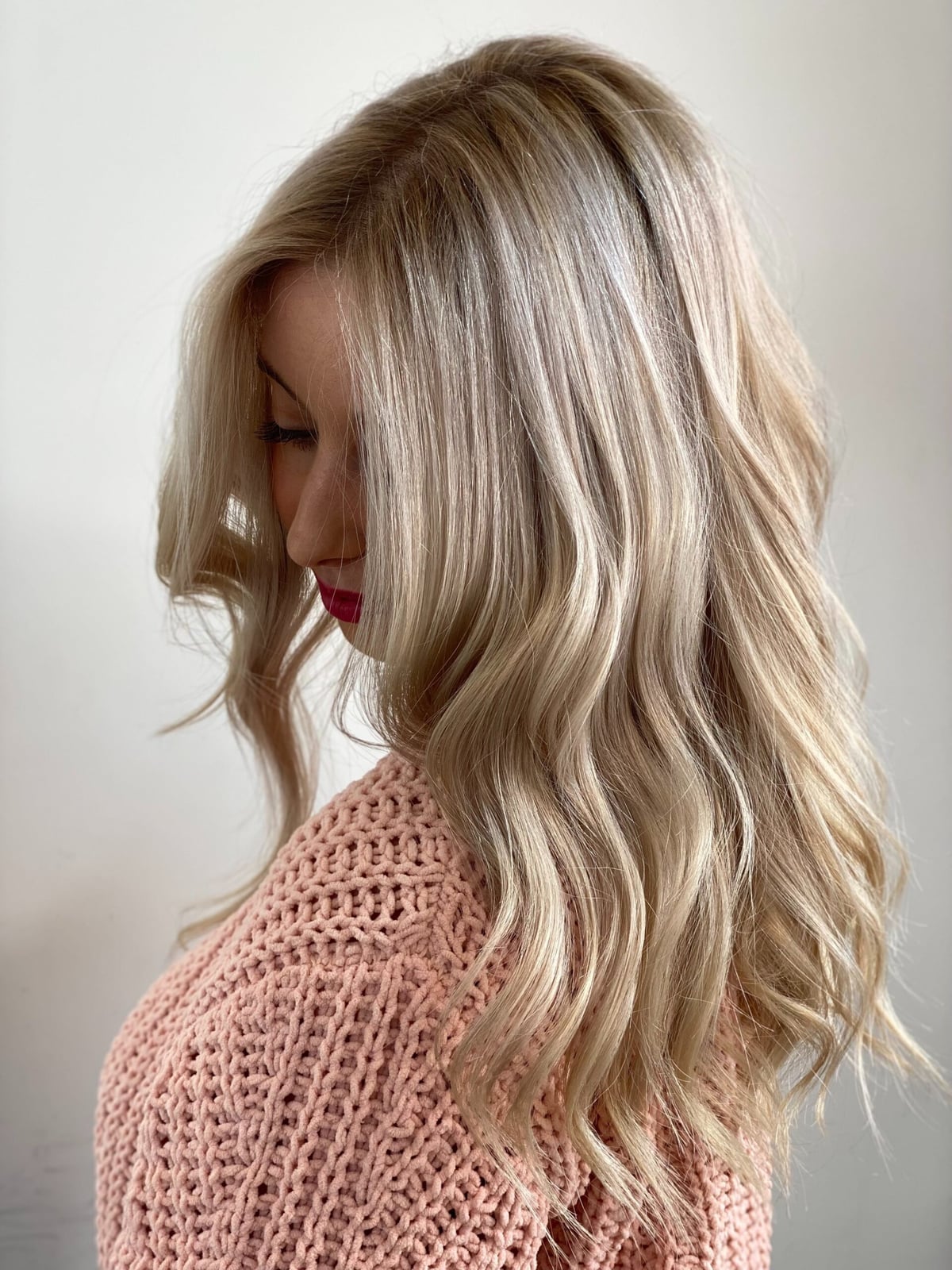
Against a solid blonde color, this ash blonde balayage with darker roots looks like a planned choice, not a grow-out. The root shadow sits dark enough to look deliberate while the ash tone cools the mid-lengths. Fine, wavy hair gets the most mileage. The subtle layers keep the weight off the ends. The middle part splits the color evenly, so one side never looks brighter than the other. A solid blonde would need toning at week four; this version buys you two extra weeks before the chair.
Wavy layers with a natural root shadow
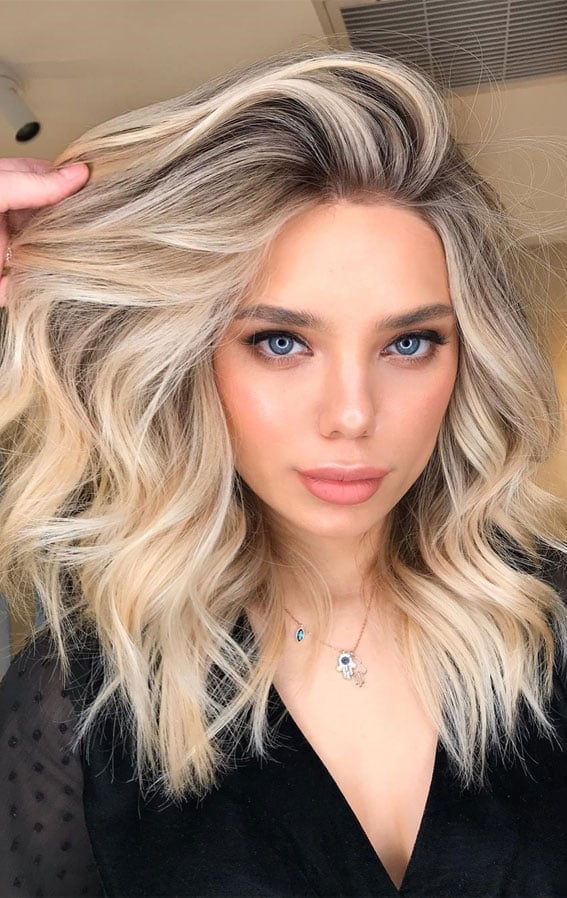
What people get wrong with a natural root shadow: they let it grow too long. The ash blonde balayage with dark roots works because the wavy layers keep the transition soft. Fine, wavy hair benefits from the face-framing shape, but the middle parting only flatters oval and heart shapes. The catch: straight styling flattens the dimension. A wavy blowout is non-negotiable here. Skip the look if you prefer a bright blonde without root definition. That is a different appointment.
Dark blonde balayage with ash blonde highlights, close-up take
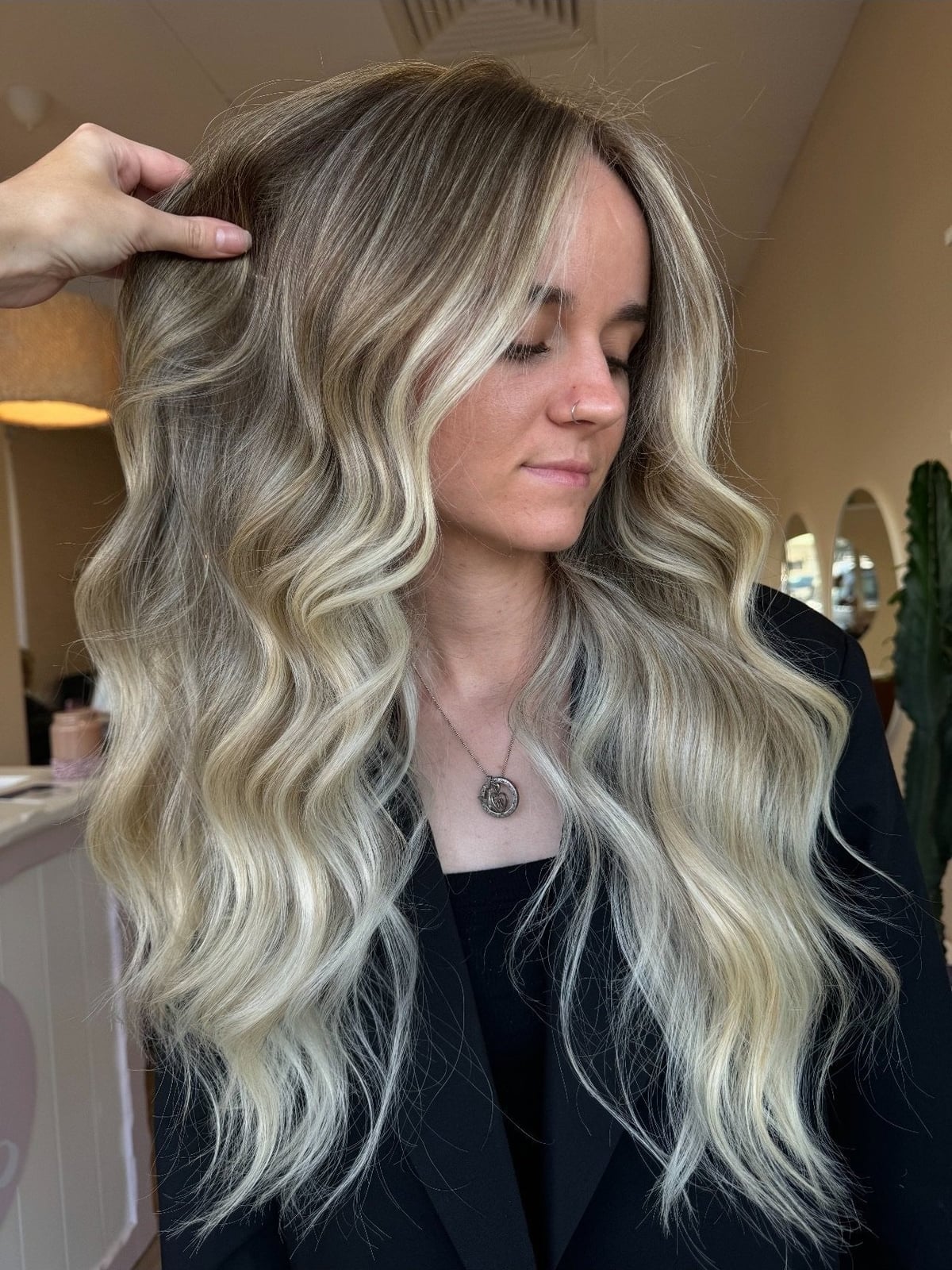
Between a warm caramel balayage and this dark blonde base with ash blonde highlights, the difference is tone. Caramel reads warm; ash reads smoky. The soft waves carry the ash blonde highlights through the mid-lengths, so the color does not pool at the ends. Fine, wavy hair shows the contrast cleanly. A warm caramel suits olive undertones better; this ash version works for those who want cooler reflection without platinum commitment. Either way, the subtle layers keep the movement visible.
Bright blonde highlights on a dark brown base
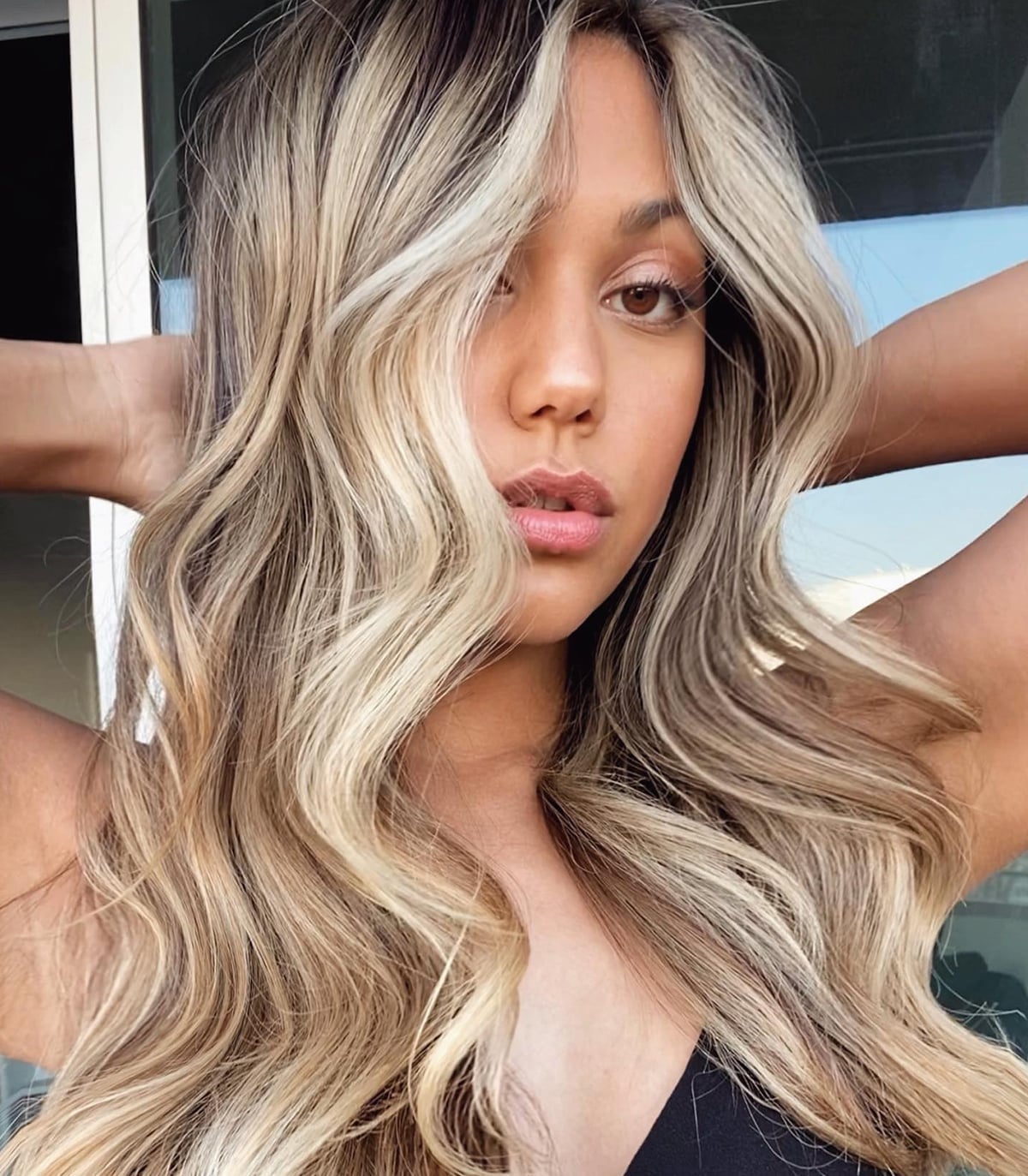
Bright blonde pieces concentrated around the face do the heavy lifting here. The dark brown base stays deep while the balayage lifts the front sections to a lighter effect. Thick, wavy hair carries the contrast without losing the base color. The loose waves fan the blonde strands outward, so the dimension reads from every angle. A subtle transition would miss this impact. Face-framing pieces demand a trim every six weeks to keep the shape sharp against the darker base.
Lived-in effect with side-swept bangs
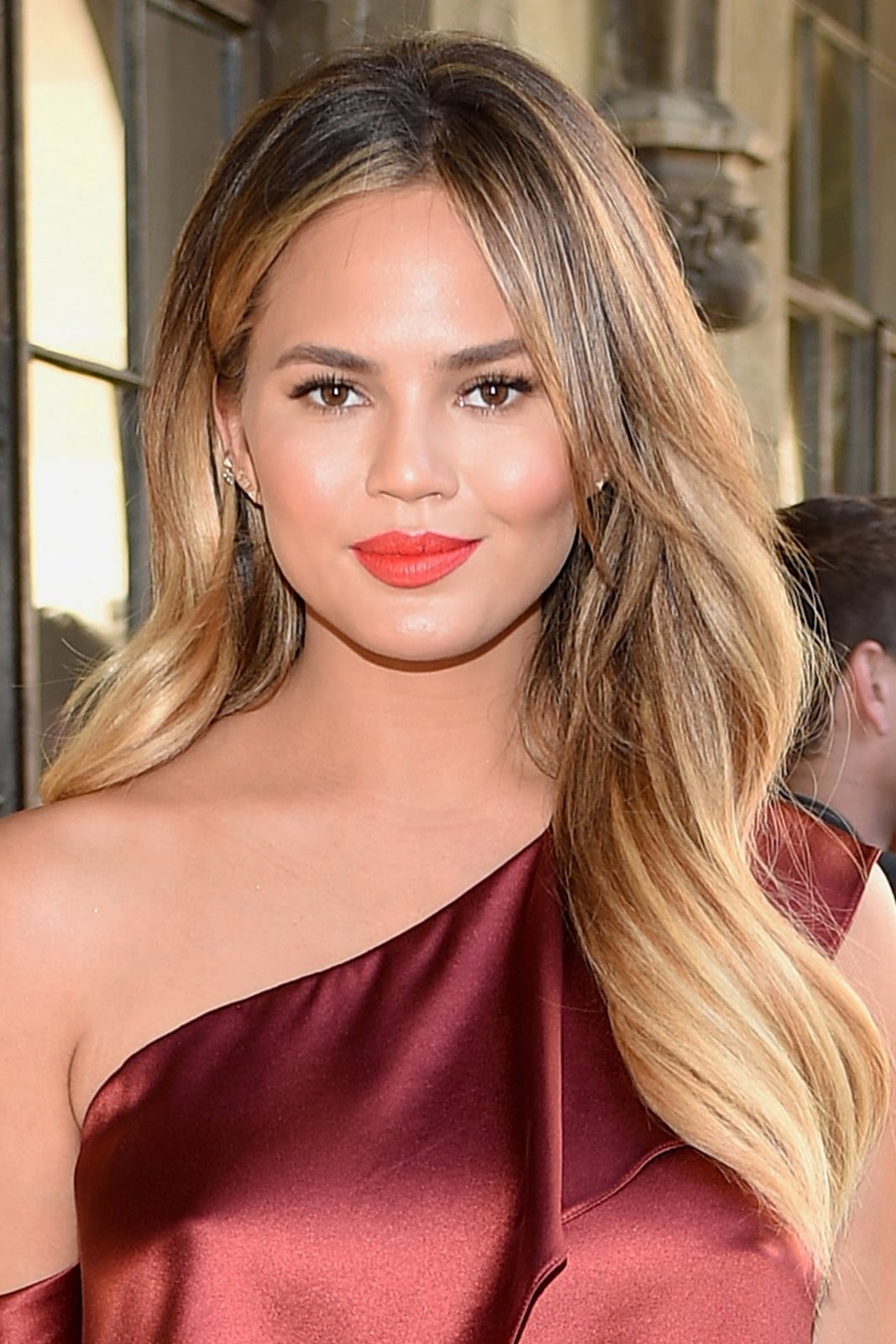
Side-swept bangs change the geometry of any balayage. Here the dark blonde base gets lighter balayage highlights that stay concentrated around the face, so the fringe looks part of the color design rather than an afterthought. Soft layers through the rest keep the thick, wavy texture from turning heavy. Tell your colorist: dark blonde base, lighter balayage highlights, soft layers, side-swept bangs. The lived-in effect means you can let the waves go slightly undone, dry shampoo on day two actually improves the texture.
Ash blonde balayage with shorter front sections
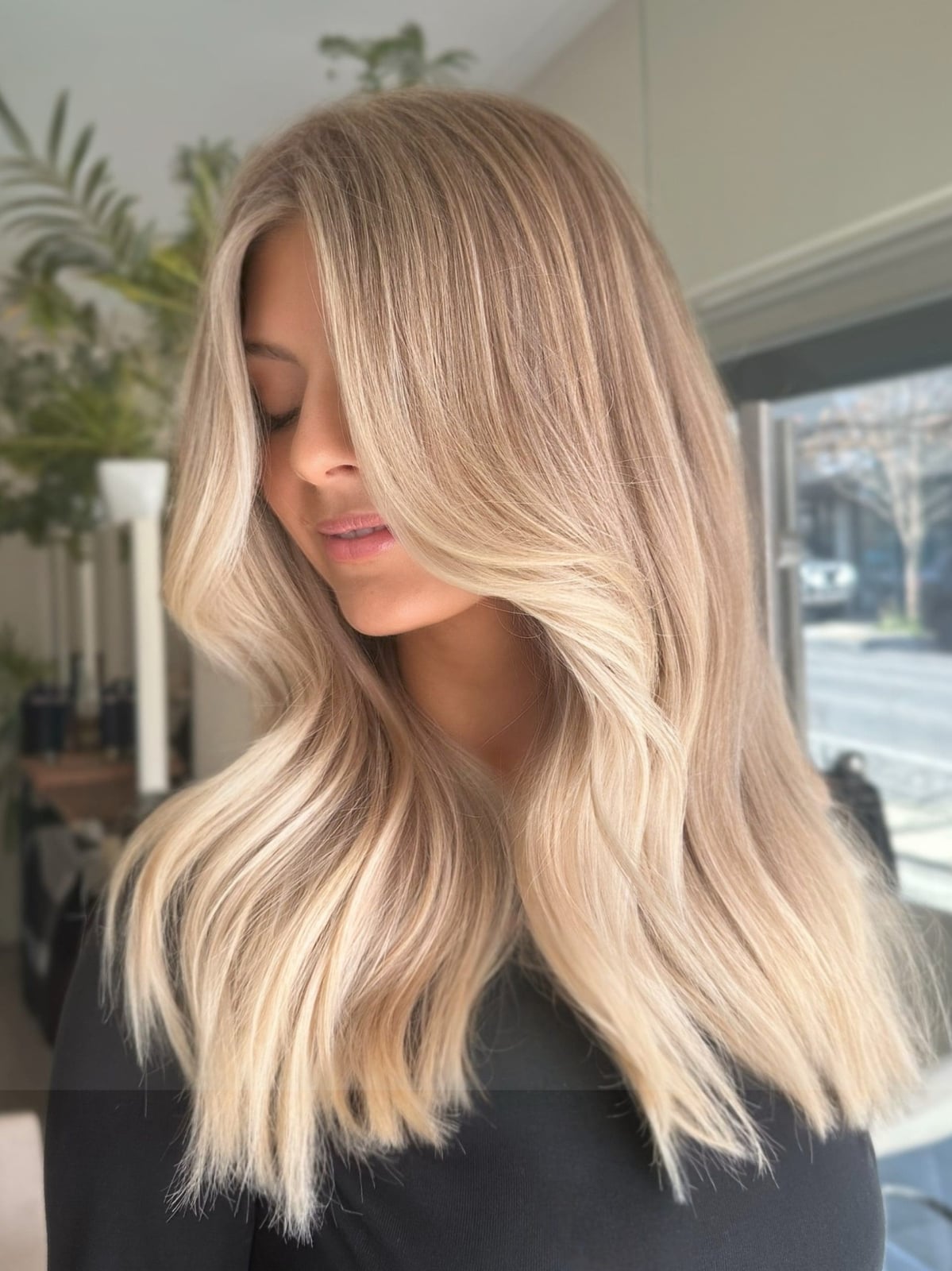
Shorter front sections mean the color lands higher on the face than a standard balayage. With fine, wavy texture, the ash blonde balayage needs a loose blowout to hold shape, flat ironing kills the soft transition from darker base to lighter ends. Skip it if you prefer longer, uniform lengths or have thick hair that may not show the face-framing highlights.
Warm honey tones blended through layers
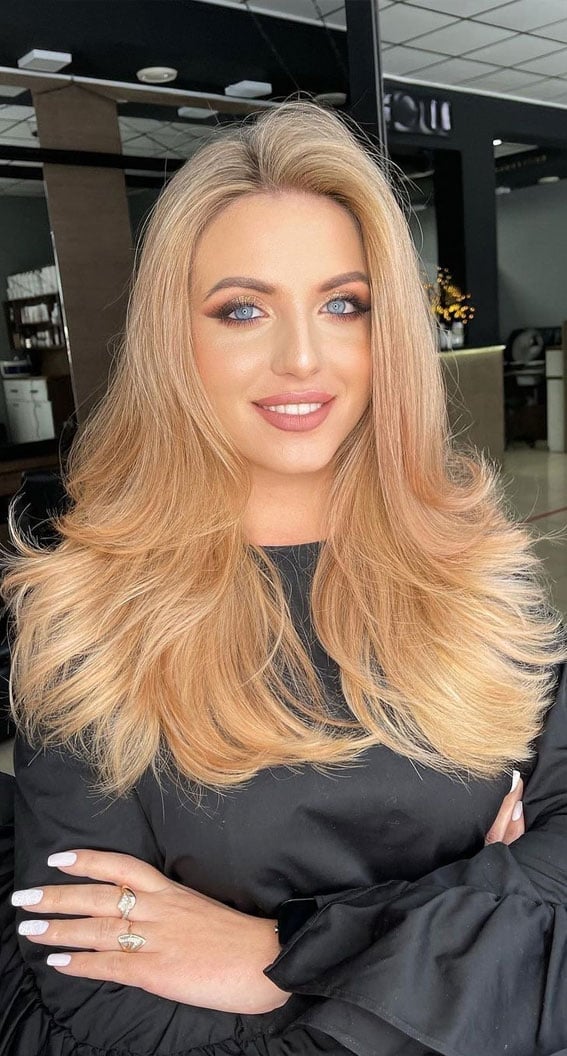
The middle part here does the work a side part usually handles. Warm honey tones sit on the surface of each layer, so the blonde looks sun-warmed. Thick, wavy texture gives the voluminous blowout its lift, fine hair would need a smaller round brush and more product to match this body. Face-framing pieces are cut to hit just below the jaw, pulling the warm color forward without shortening the overall length.
Striking contrast with light blonde ends
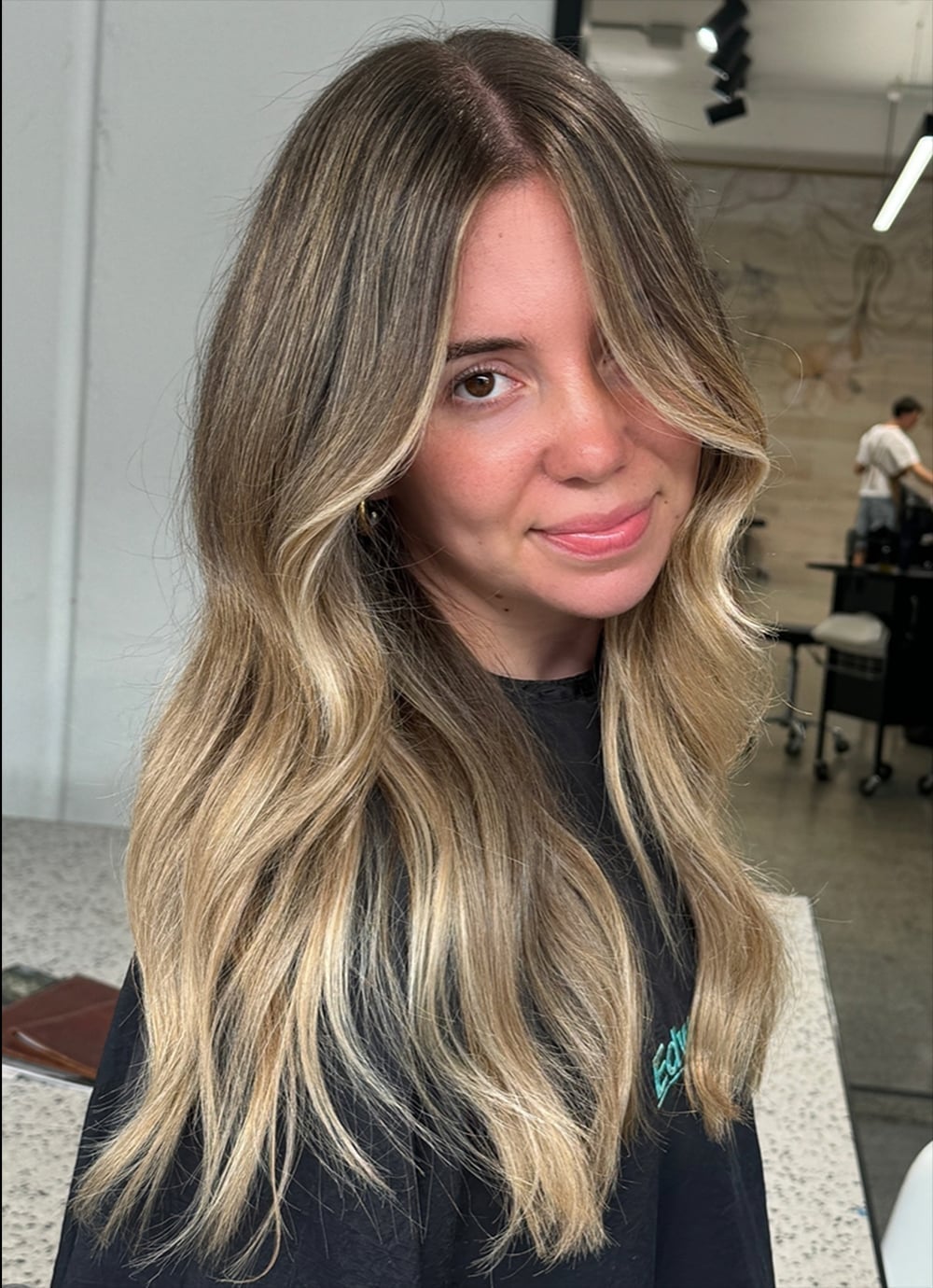
Most balayage blurs the line between base and highlight. This one draws it. The dark blonde base stays dense through the crown and mid-lengths, then releases into vibrant light blonde ends across the last few inches. Long layers keep the thick, wavy texture from clumping at the transition point. It is not a subtle grow-out. The contrast is the point. A middle part and voluminous blowout let the light blonde ends look a deliberate frame, not an accident of fading. Ask your colorist to do: dark blonde base, vibrant light blonde ends, balayage.
Ash blonde balayage with natural blonde blend
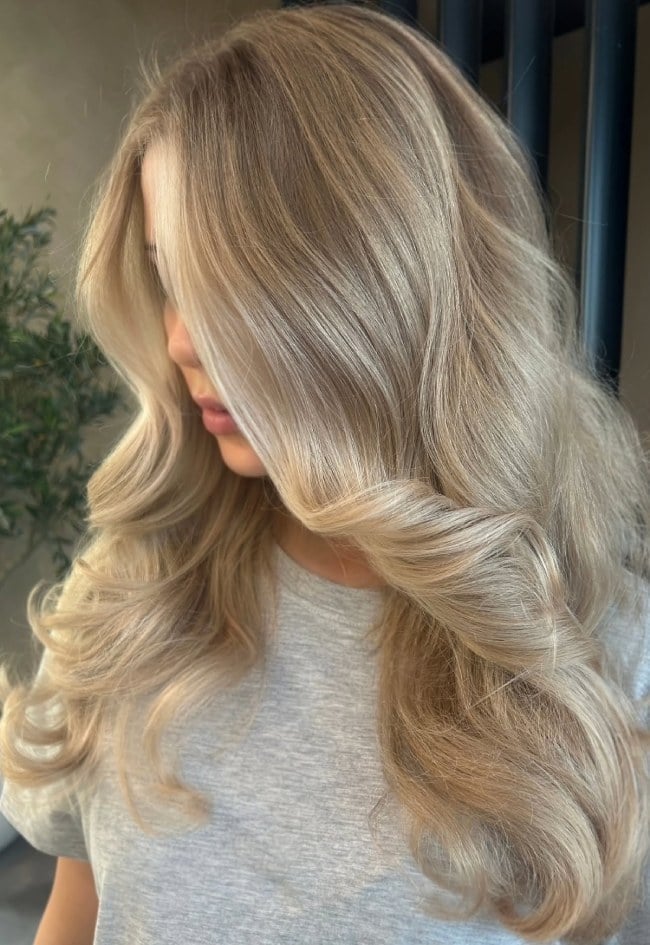
An ash blonde balayage that looks natural requires the base to stay dark enough. Here the thicker, wavy texture lets the color move, straight hair would show every transition as a stripe. Face-framing layers and a side parting direct the lighter pieces toward the front, which is where most people want the brightness anyway. A DIY gloss at home can shift the ash tone warmer if it starts looking too silver by week four. It works best with wavy or thick hair rather than straight hair or a high-contrast balayage.
Volume and movement with curtain bangs
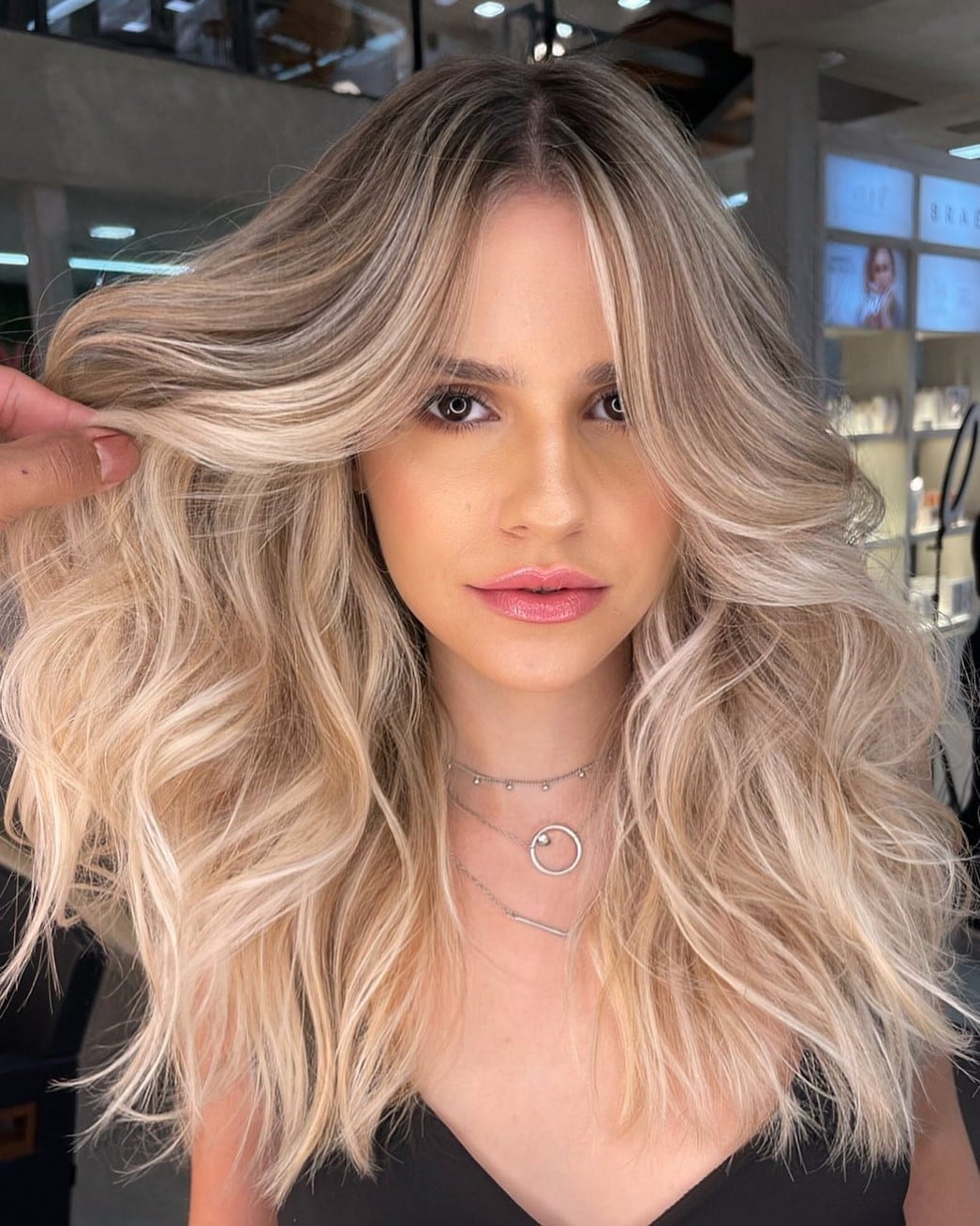
Fine, wavy hair and curtain bangs make a logical pair. The fringe lifts at the brow, the rest gains swing. Ash blonde balayage keeps the root dark and lets the ends fade lighter, so grow-out stays softer than a solid bleach line. A blowout with a round brush on the bangs takes about eight minutes.
Salon-leaning appearance with darker roots
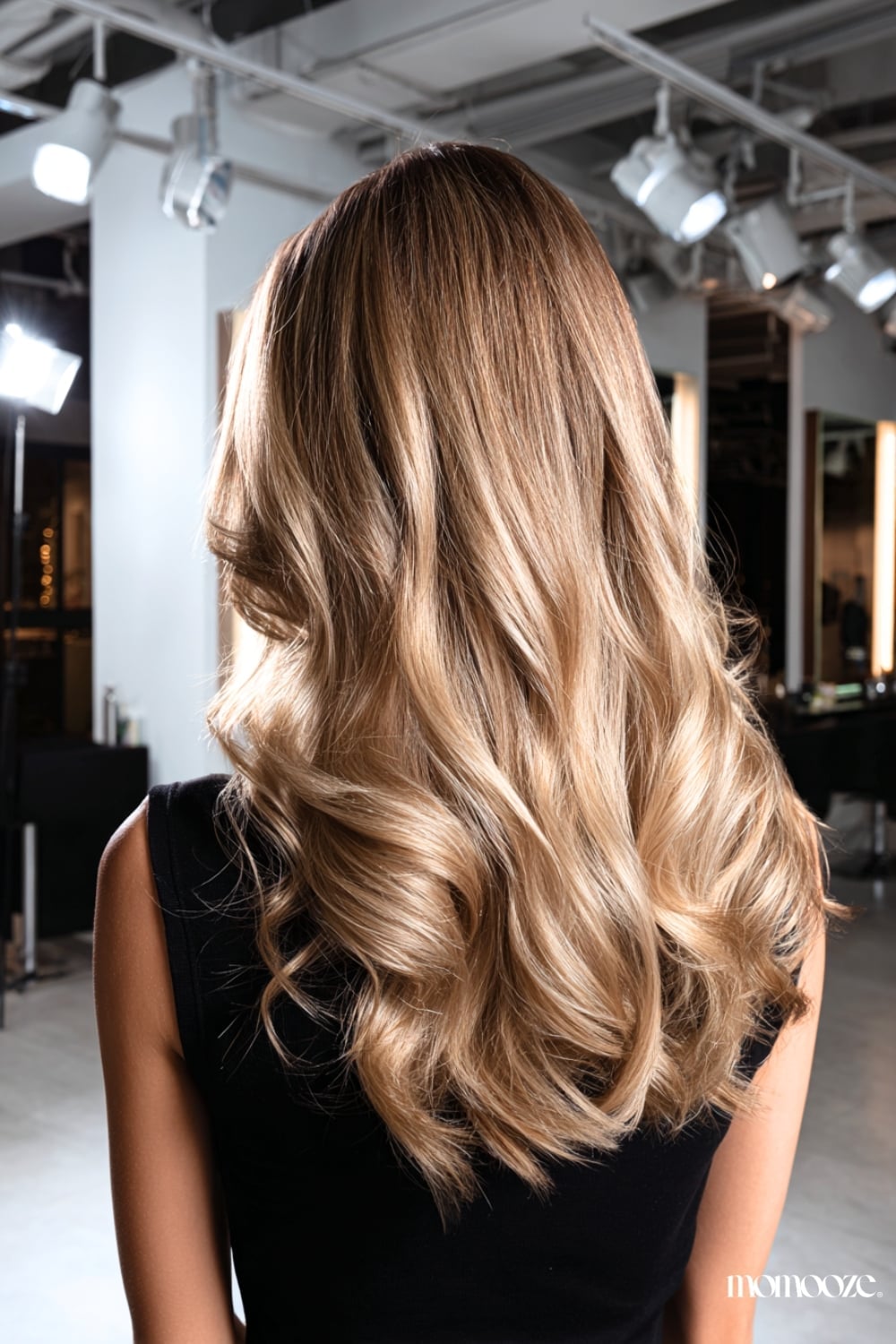
What looks expensive here is the transition. Warm blonde balayage with darker roots avoids the hard line that screams grown-out highlights; the blend starts an inch down and shifts gradually. Loose waves on thick hair keep the shape from falling flat by noon. The catch: this effect relies on the base tone matching your natural level within two shades. Too dark and the warmth looks brassy instead of deliberate.
Soft waves hold longer when you rough-dry to 80% before sectioning.
Neat yet easy appearance with curtain bangs
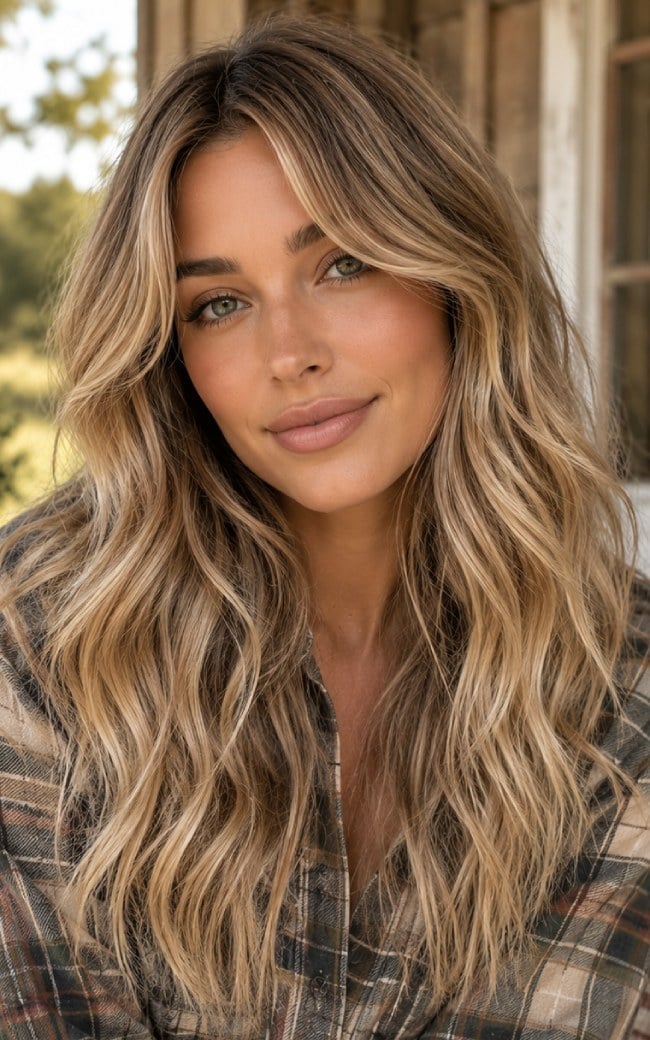
Compared to a blunt fringe, curtain bangs on a dark blonde base with lighter blonde highlights feel lower commitment. They sweep to the sides instead of sitting across the forehead. The balayage technique places the lighter pieces where the layers hit, so the wave pattern does the blending. Mention to your colorist: dark blonde base, lighter blonde highlights, curtain bangs. Thick, wavy hair holds the shape best; fine textures may need a small-barrel iron on the front sections to keep the swoop visible past hour three.
Textured look with a lighter effect, wavy
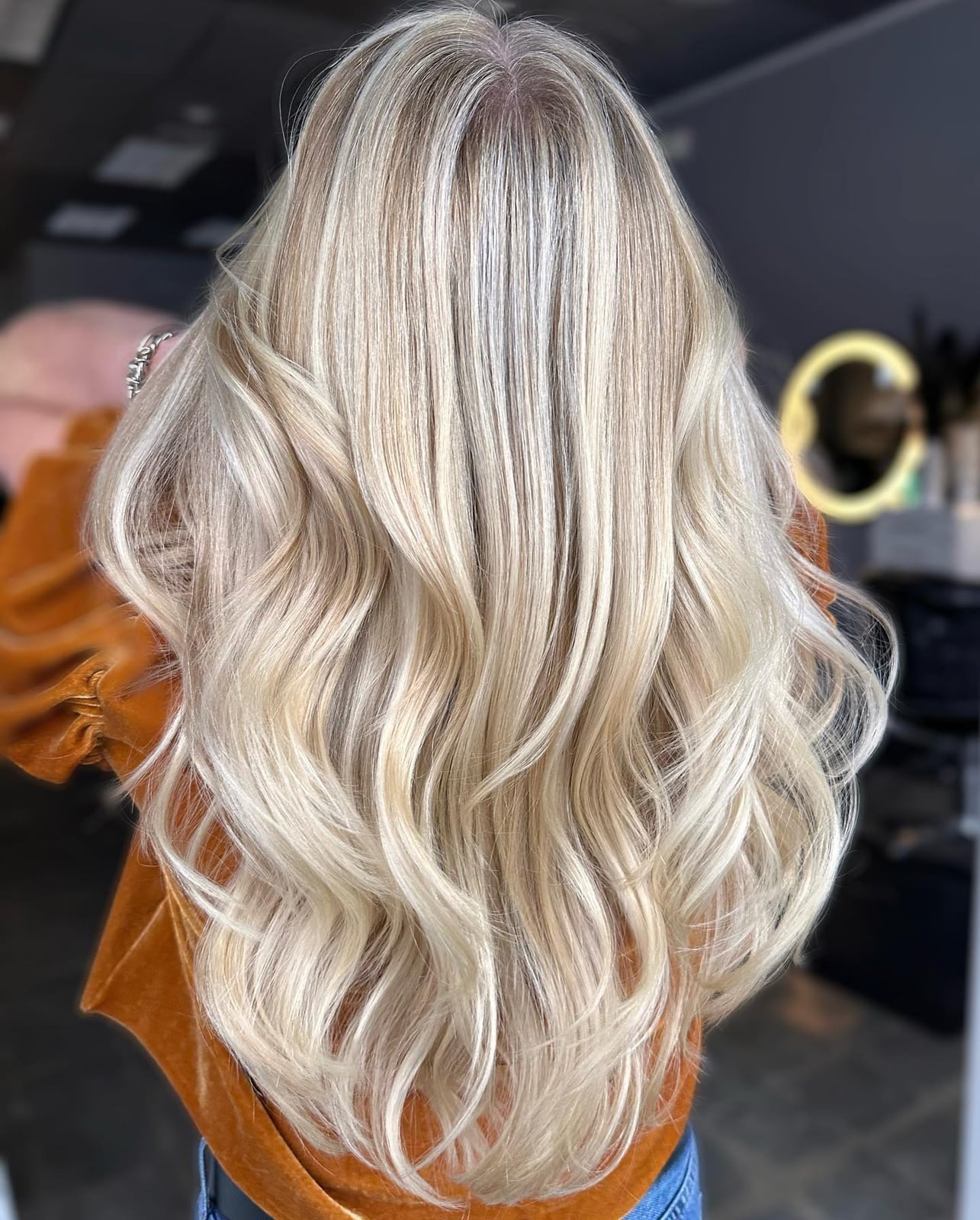
Ash blonde balayage with darker roots to lighter ends mimics how hair naturally lightens at the bottom. The mistake most people make: asking for a smooth blend but then using a heavy conditioner that weighs the wave out. Thick, wavy hair needs the root left dry, load product only from the ears down. One real drawback: ash tones grab green or muddy if you swim in chlorinated water. A clarifying shampoo once a month resets the shade.
This effect relies on soft transitions, not sharp lines, so it is not suitable for a high-contrast stripe from root to tip.
Dark root shadow with ash blonde balayage
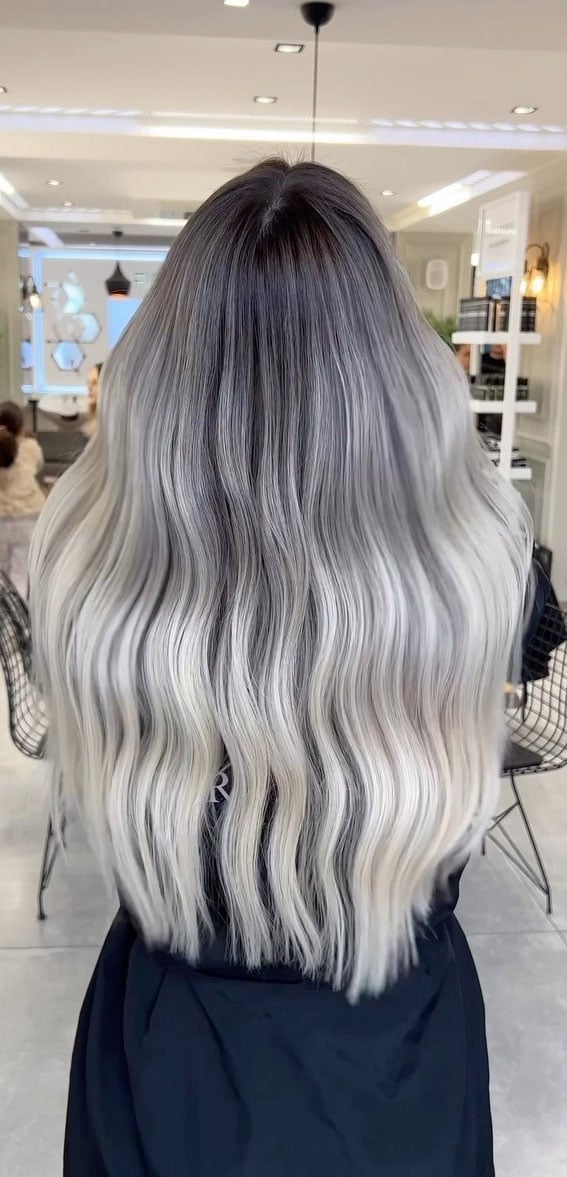
Set this against a full-root shadow that fades into ash blonde balayage. The difference: the dark root shadow stays solid at the part and softens through the mid-lengths, while a standard balayage starts lighter from the crown. Thick, wavy hair wears the contrast well, the volume spreads the dark and light sections so they look dimension, not stripes. Soft waves refresh with dry shampoo and a five-minute diffuser blast. Pass when your natural base is already light blonde; the shadow needs contrast to register.
Easy look with blended blonde hue
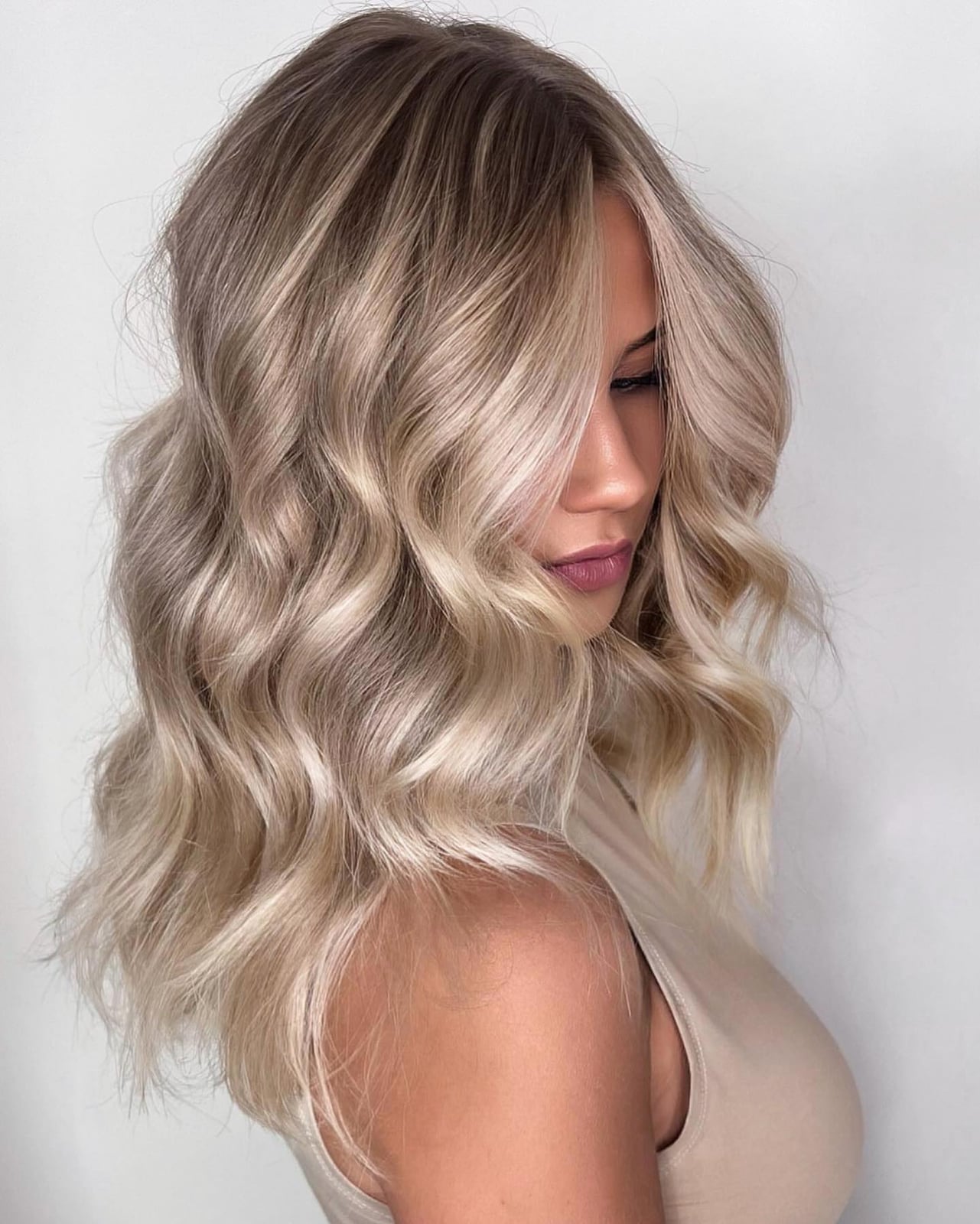
Side view of this ash blonde balayage shows the color concentrated toward the ends. The wavy layers and gentle blowout keep the tone from reading flat. A side parting breaks up the weight of the fine texture. Tell your colorist: ash blonde balayage, wavy layers. A high-contrast line between root and lightener is not the goal here.
Dark blonde balayage with ash blonde highlights, everyday version
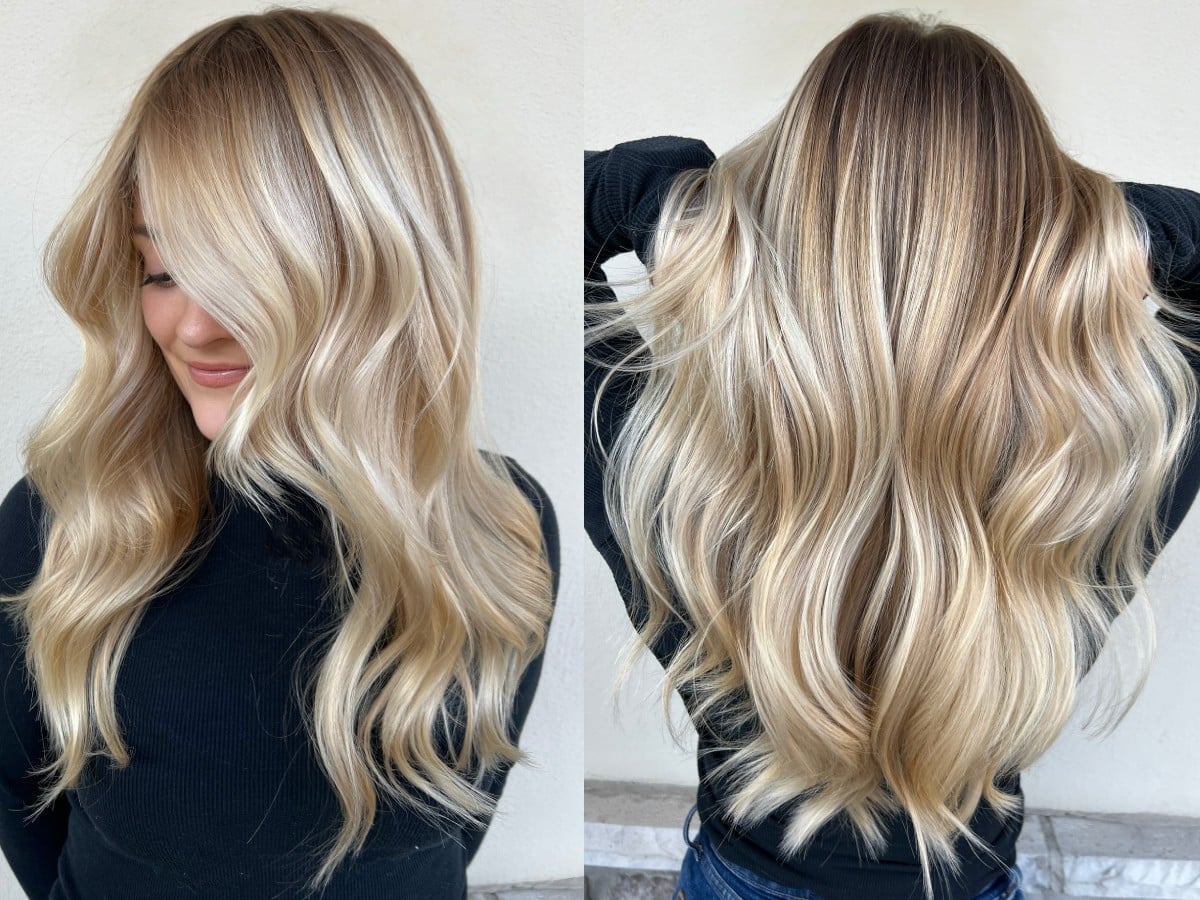
Two views of this design reveal the same structure front and back. A dark blonde base meets ash blonde highlights through a smooth balayage transition. The middle parting lets the waves fall evenly on both sides. Thick, wavy texture carries the layered cut without losing shape. Not for fine hair that may not hold the wave pattern. The blending requires a salon visit, not a kitchen sink job.
Ash blonde balayage with darker roots and creating a natural
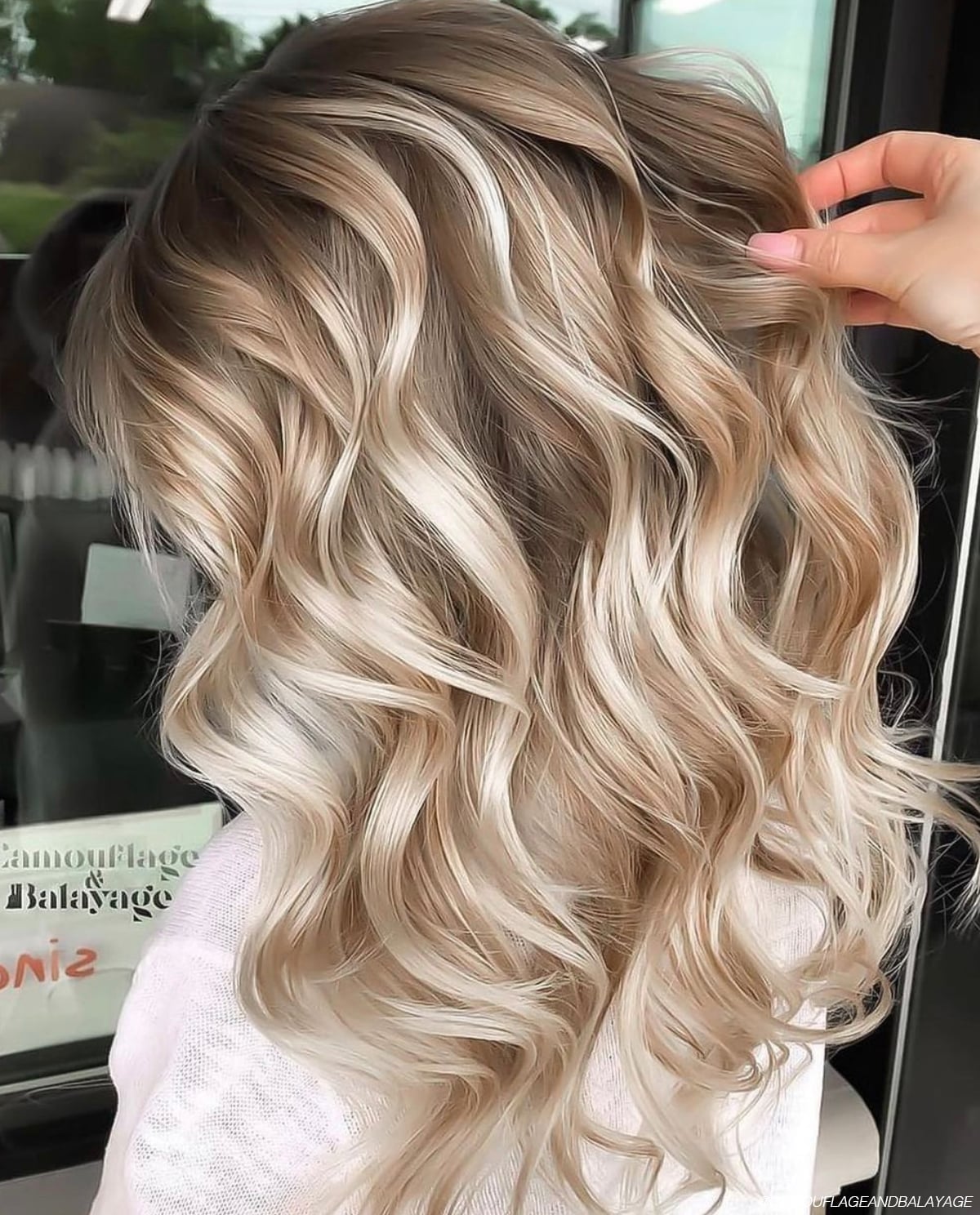
A toning appointment lands around week six with this ash blonde balayage. The darker roots buy you time between salon visits. Loose waves help the multi-dimensional color catch light at different angles. Thick, wavy texture holds the shape without product buildup.
Ask your colorist for: ash blonde balayage, darker roots, smooth blend. This look works for someone who wants a natural lighter effect that grows out soft. The precise balayage technique requires a salon visit for the best result.
Dark blonde lob with side-swept bangs
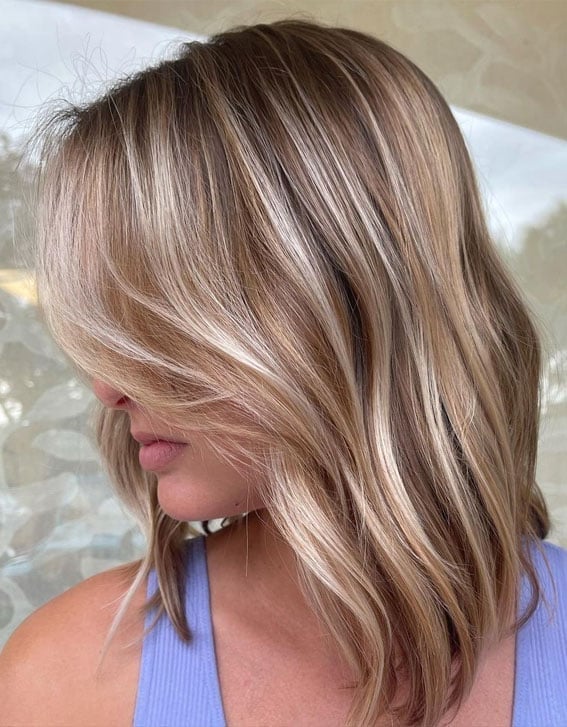
A lob with side-swept bangs reads differently than a blunt bob with fringe. The dark blonde base keeps the look grounded while lighter blonde highlights add dimension. Fine, wavy texture air-dries into a natural wave without heat styling. The side-swept parting lets the bangs blend into the longer layers. Name the design to your colorist: dark blonde lob, balayage, lighter blonde highlights, side-swept bangs. A neat blowout every morning is not required.
Ash blonde balayage with face-framing layers and wavy texture
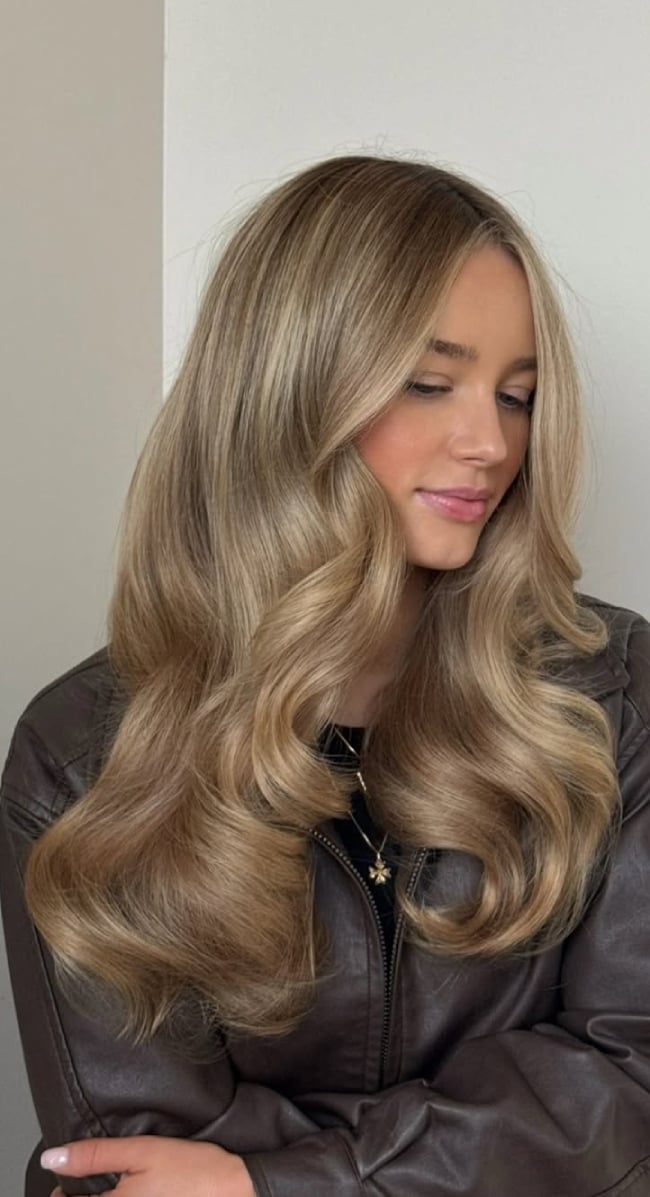
Face-framing layers around the middle part pull attention to the lighter pieces. Thick, wavy texture holds a voluminous blowout for a full day. The ash blonde balayage blends lighter tones through the lengths without a hard root line. This is a salon-leaning design. The layering and color work together, not something to attempt at home. Request from your colorist: ash blonde balayage, face-framing layers, voluminous blowout. Pass when you wear hair straight most days; the layers rely on wave to read correctly.
Smooth transition for warm blonde tones
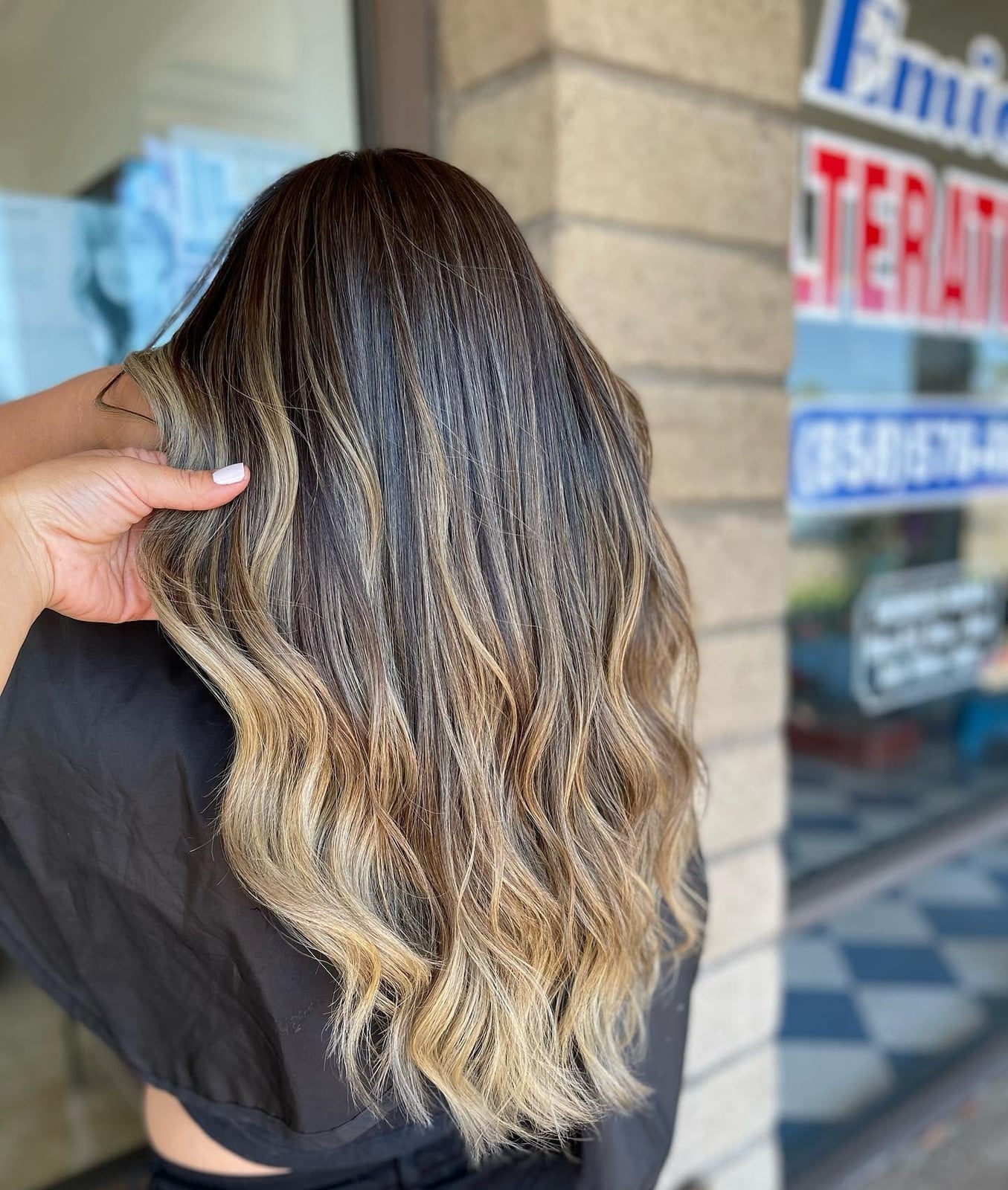
Dark brown roots meet warm blonde ends in a gradient that skips the harsh line. Long, thick hair holds the shape of a soft wave, which is how this balayage looks its best. The tone stays warm without tipping into brass, thanks to the root shadow acting as a buffer. Mention to your colorist: blonde balayage, dark brown root shadow, warm blonde tones. Skip it if your hair is fine and struggles to keep a wave past lunch.
The waves are built with a large barrel and some patience, not a curling iron on high heat.
Rich color with wavy blowout styling
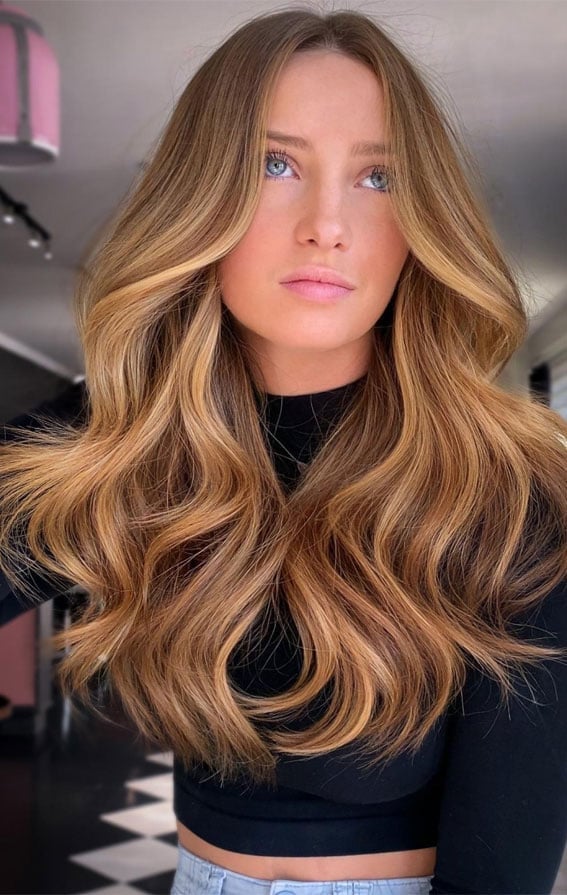
Caramel tones through long, layered hair make this warm blonde balayage look rich, not flat. The face-framing highlights sit close to the part, which is where the common mistake happens: asking for them too thick. Keep them fine and spaced or the dimension turns into a stripe. A middle part and a wavy blowout complete the look, but the blowout requires a round brush and some arm effort. The drawback? Those caramel ribbons fade faster than the base, especially with heat styling.
Dimensional and easy look
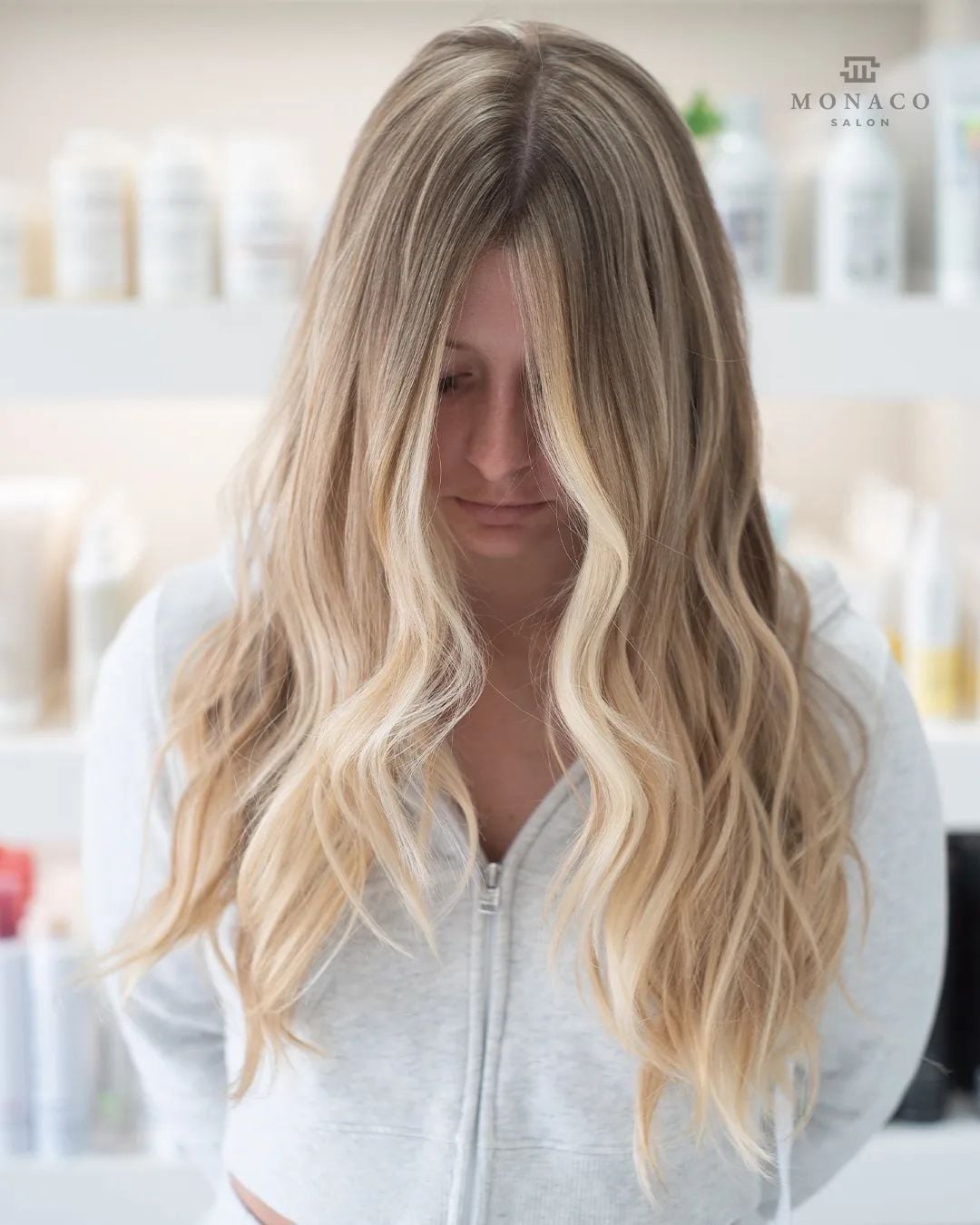
An ash blonde balayage with a natural root shadow looks low-maintenance, but the comparison matters. Against a warm-toned version, this one suits fine, wavy hair that needs a cooler lift without the brass. The face-framing pieces are lighter than the rest, which draws attention to the cheekbones without needing a full highlight. The soft blowout keeps the wave pattern loose, so the grow-out blends rather than announces itself.
Honey blonde balayage with shorter front sections, wavy
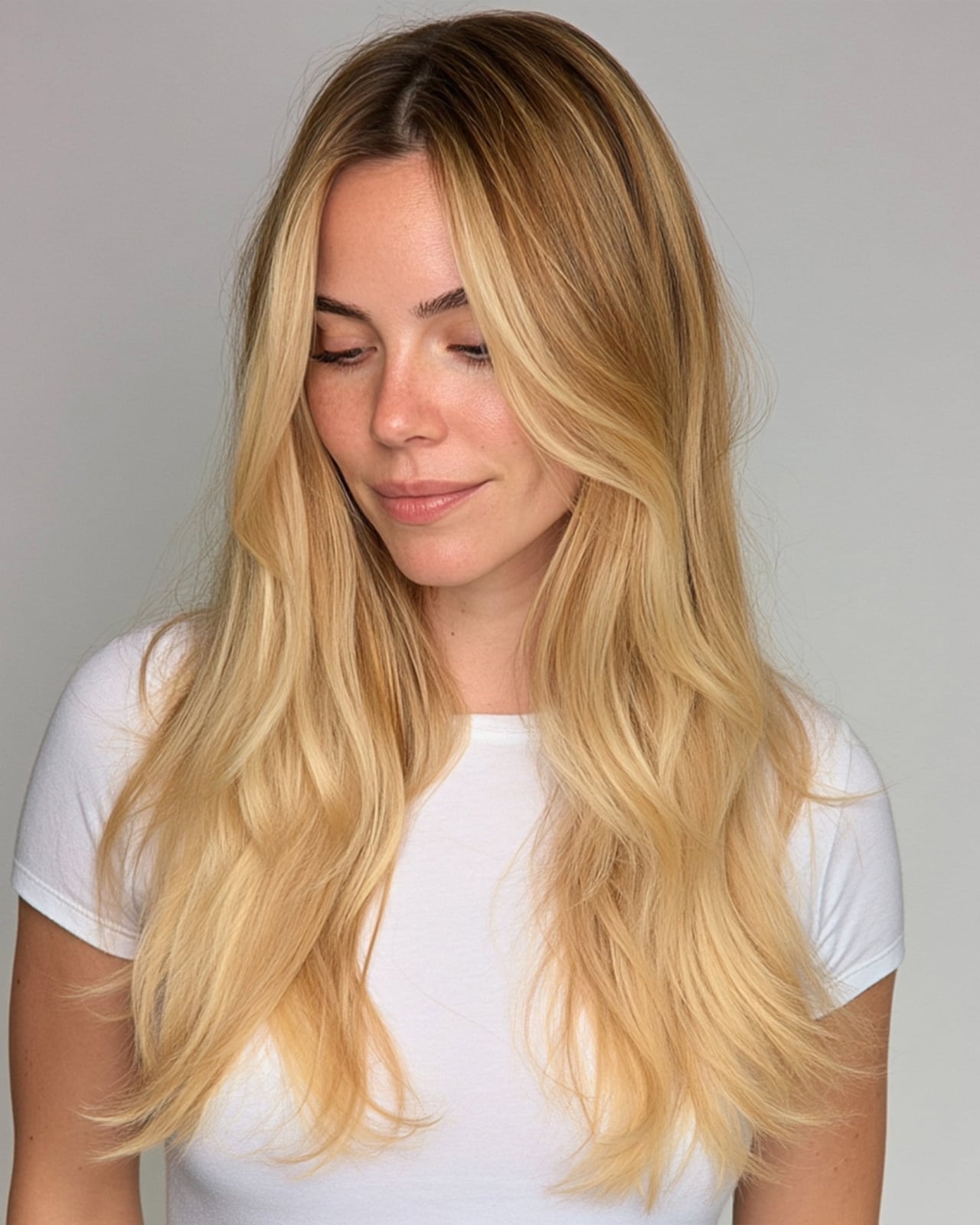
Honey tones land best in late summer, when the light catches the shorter front sections and the natural root shadow does the blending work. Fine, wavy hair takes this warm balayage well because the waves break up the color concentration. The shorter front pieces frame the face without the commitment of actual bangs. Styling is a low-commitment wave with a texture spray, no blowout required.
Grown-up look with centered parting
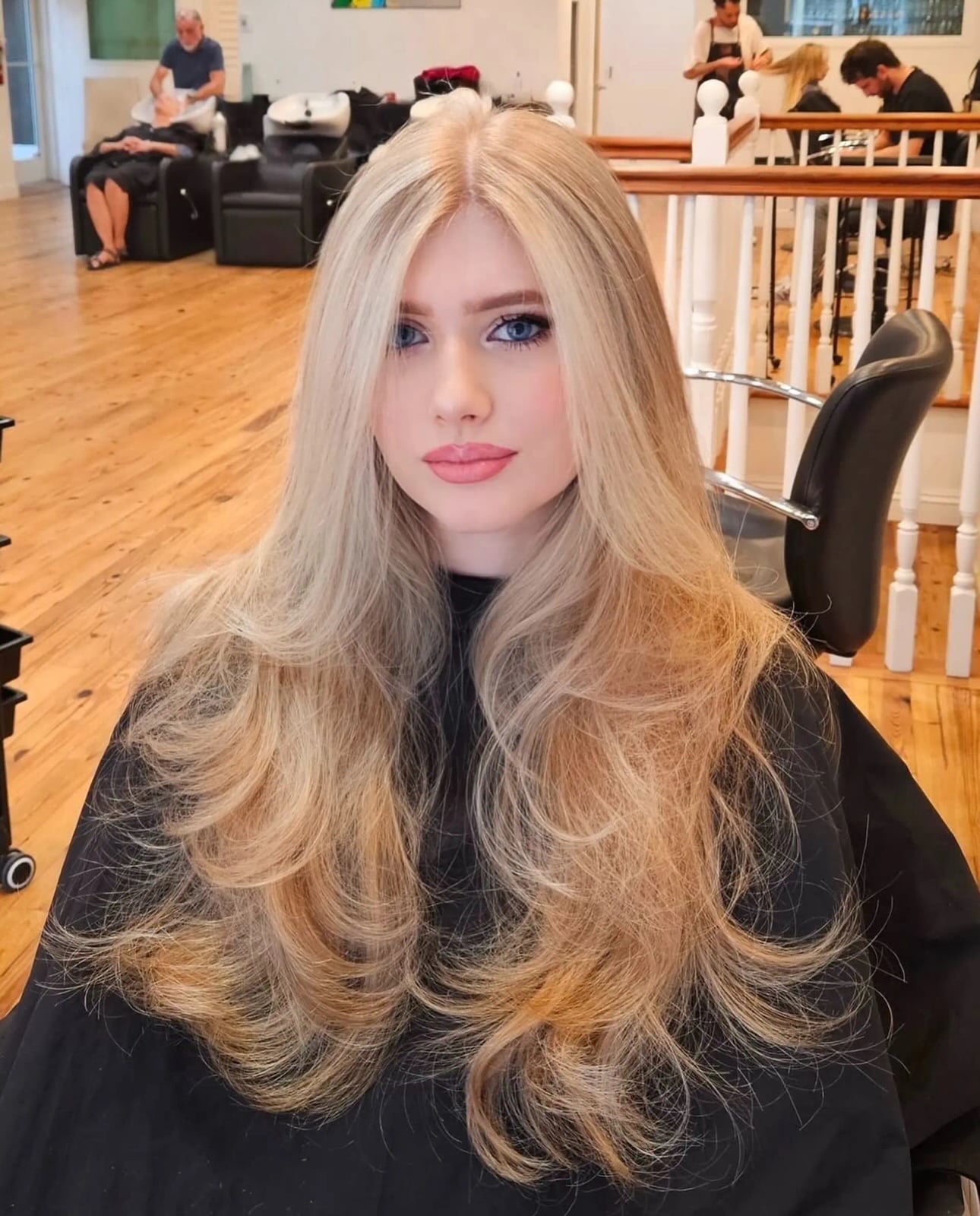
An ash blonde balayage with subtle face-framing layers is a technique-first color: the stylist paints the lightener in a graduated motion, starting darker at the root and feathering out through the mid-lengths. The centered parting and fine wave pattern show off the smooth blend, which means no harsh line at week six. The sophistication comes from the restraint, no heavy highlights, just a soft lift that looks natural.
Ash blonde balayage with face-framing layers and curtain bangs
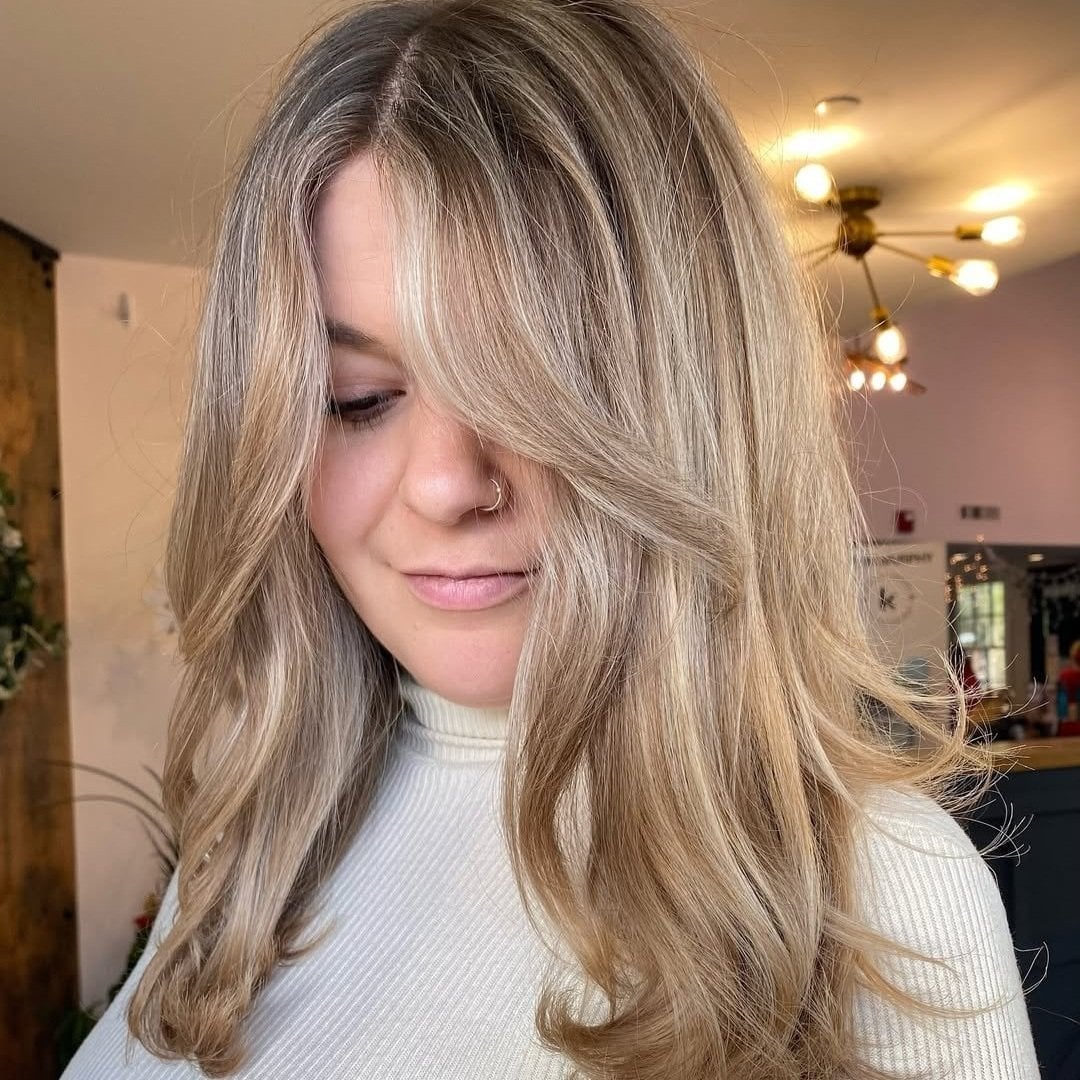
Curtain bangs demand a blow-dry commitment. This ash blonde balayage with darker roots keeps the grow-out natural, so you push back the toning appointment by a week or two. Fine, wavy texture works best. The lighter weight lets the face-framing layers fall without bulk. Request from your colorist: ash blonde balayage, subtle darker roots, face-framing layers, curtain bangs. A small round brush on those front pieces each morning buys you the shape.
Light blonde balayage with dark blonde root shadow, wavy
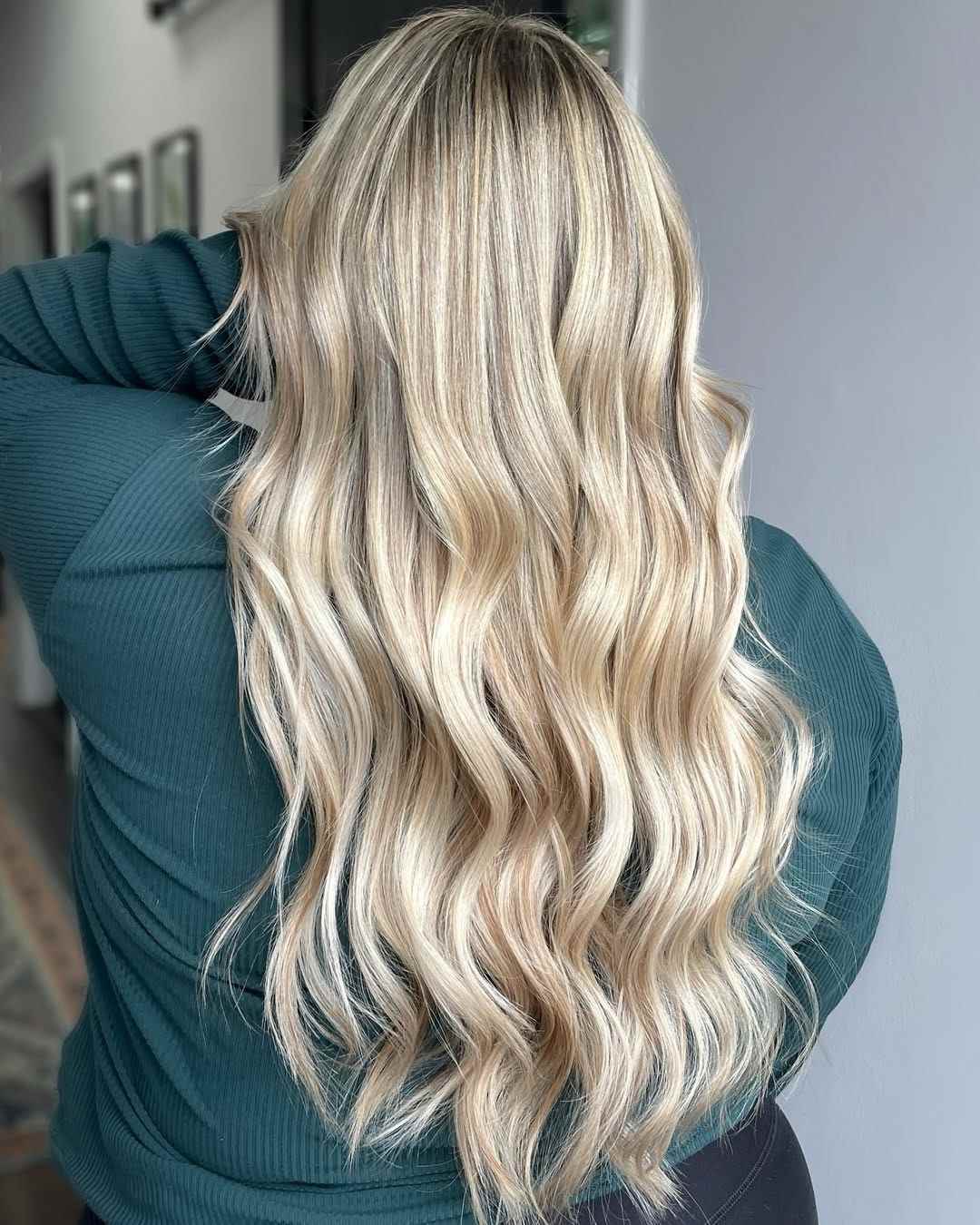
Bright ends against a dark blonde root shadow. The contrast is the whole point. Long, thick hair carries the transition best; the weight keeps the soft voluminous waves from collapsing. Skip it if your hair is fine. The light blonde balayage needs the density underneath to avoid looking thin at the ends.
The chair time runs long here. Precise placement means the colorist paints each section by hand, and thick hair multiplies the sections. Plan for a solid three hours. Toning at week six keeps the vibrant light blonde from tipping into brass. A texture spray on the waves refreshes the shape between washes.
Natural lighter effect with balayage transition
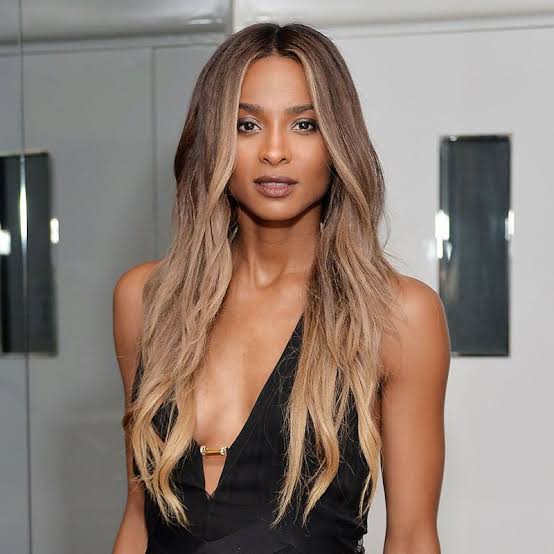
A dark blonde base that melts into lighter blonde ends, no hard line, no banding. The smooth transition is the design. Thick, wavy hair lets the color travel through the layers naturally, with the waves catching both shades at once. Request from your colorist: dark blonde base to lighter blonde ends, balayage. Middle part keeps the distribution even. The blowout is optional; air-dried waves show the blend just as well.
Soft and natural look with blonde tone
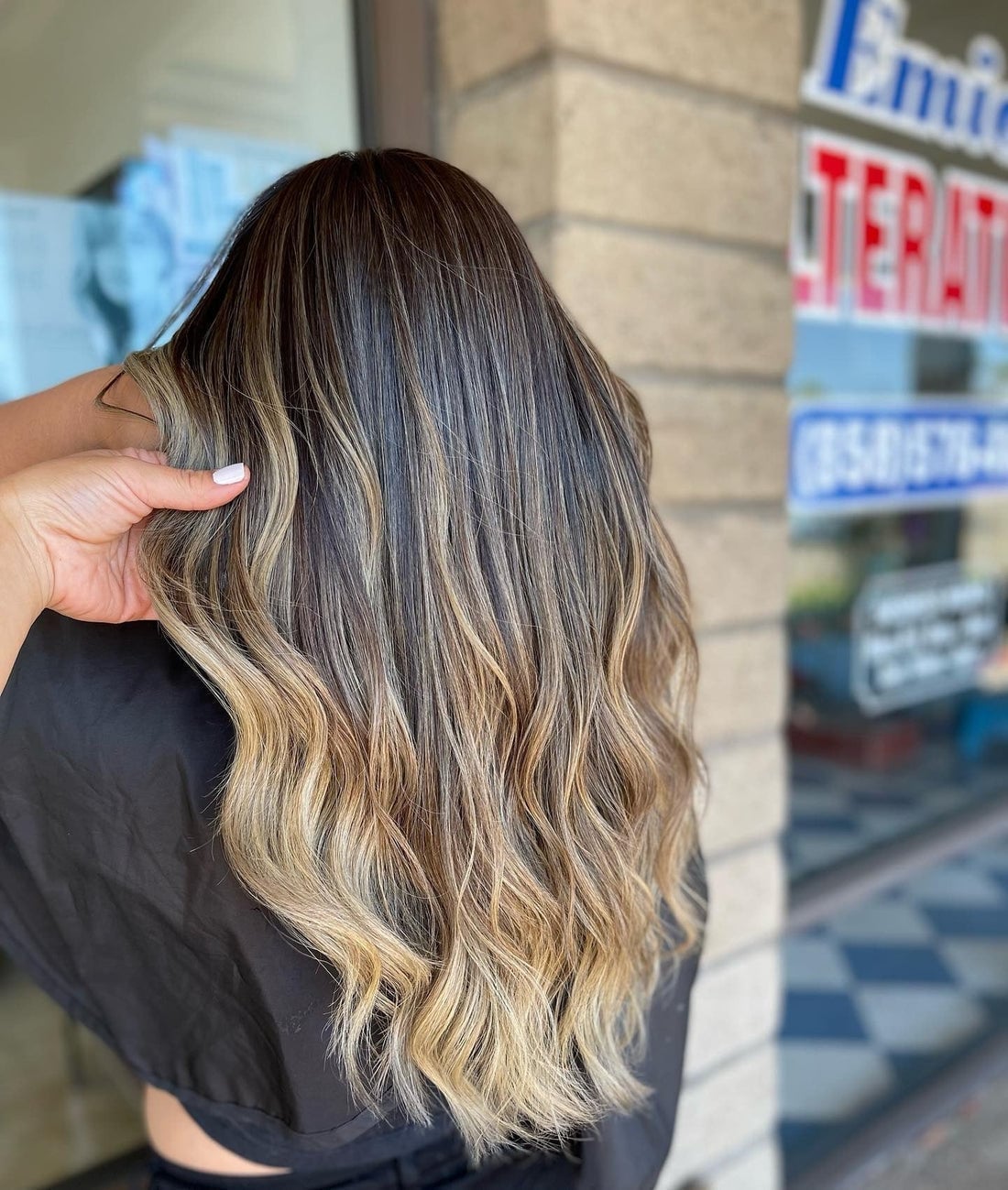
The common mistake? Picking a blonde tone too light for the dark brown base. The result looks two separate colors instead of a blend. This balayage keeps the blonde close to the base shade, so the transition looks soft rather than stark. Thick, wavy hair is the ideal canvas, the loose waves diffuse the color line.
Hand-painted sections prevent the stripe effect that foils can leave on dark brown hair. The drawback: the blonde tone lifts slowly, so expect a second appointment if you want it lighter. A purple shampoo on the blonde sections at week four keeps the warmth in check.
Final Thoughts
This collection gives you a range of choices. Pick based on your hair texture and the styling time you are willing to commit daily.
- Fine hair: avoid heavy root shadows that flatten volume.
- Ten minutes in the morning: choose a lived-in balayage with a dark root shadow.
- Cool base that pulls brassy: keep a purple shampoo on rotation.
- Thick, wavy hair: face-framing layers will define the shape without extra styling.
Find the blonde balayage that complements your lifestyle and hair type.
