You have the inspo board saved, the braiding hair picked out, and a weekend blocked on the calendar. The question is which version of the pattern and adornments actually earns its keep past the first wash. Fulani braids hold for weeks, so the choice needs to work with your schedule, your scalp, and your tolerance for beads clicking against a coffee mug.
26 options cover the range: low maintenance to high detail, shoulder length to waist length, home care to salon precision. That saved board fills up fast, which is why Aesthetic Fulani Braids Hairstyles 2027 fill so many saved boards. The hard part is picking one that still feels right by week three.
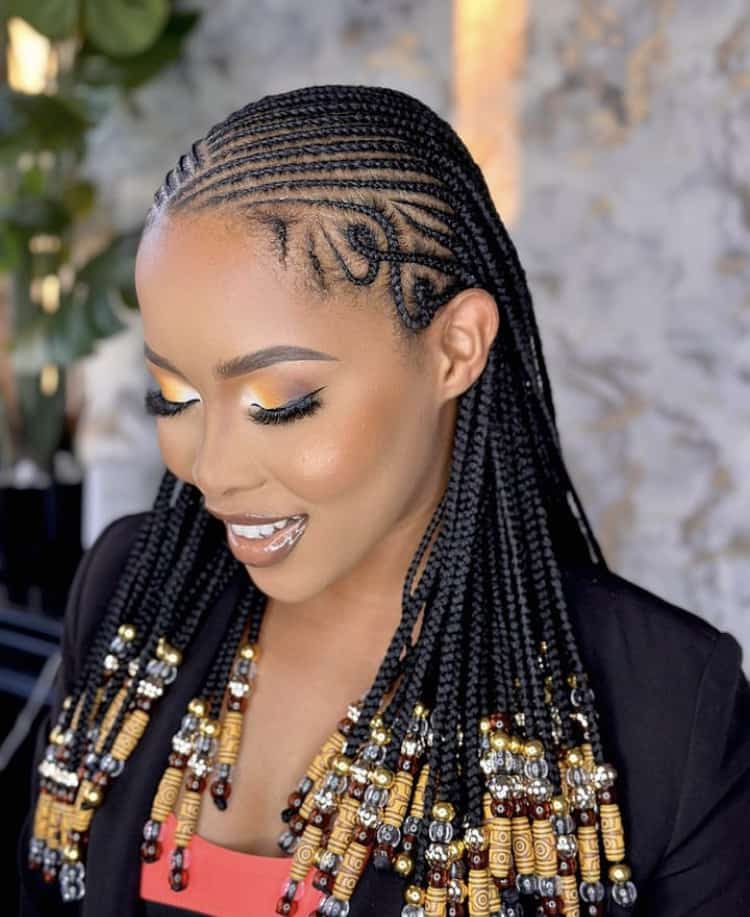
Ornate beads and cowrie shells on long cascading braids
Intricate cornrows carve the crown, then release into long, thick braids weighted with ornate beads and cowrie shells. The middle part keeps the geometry clean, while the shells click softly with every turn of the head. You need coily, thick hair for the braids to hold the heft of the adornments without pulling at the root. Minimal decoration or very fine hair makes this style impractical because the weight will show by lunch. Tell your stylist: Fulani braids with cornrows, long thick braids, beads, cowrie shells. The upkeep is careful handling: sleep on a satin scarf and avoid catching a shell on a bag strap.
Black is the base here, and the shells add the only contrast. No bangs, no highlights, no distraction from the pattern. The braids themselves are thick enough that the beads sit evenly, and the cornrows at the scalp keep the whole structure anchored. This style announces itself before you speak.
Swirl pattern on scalp with black and blonde braids
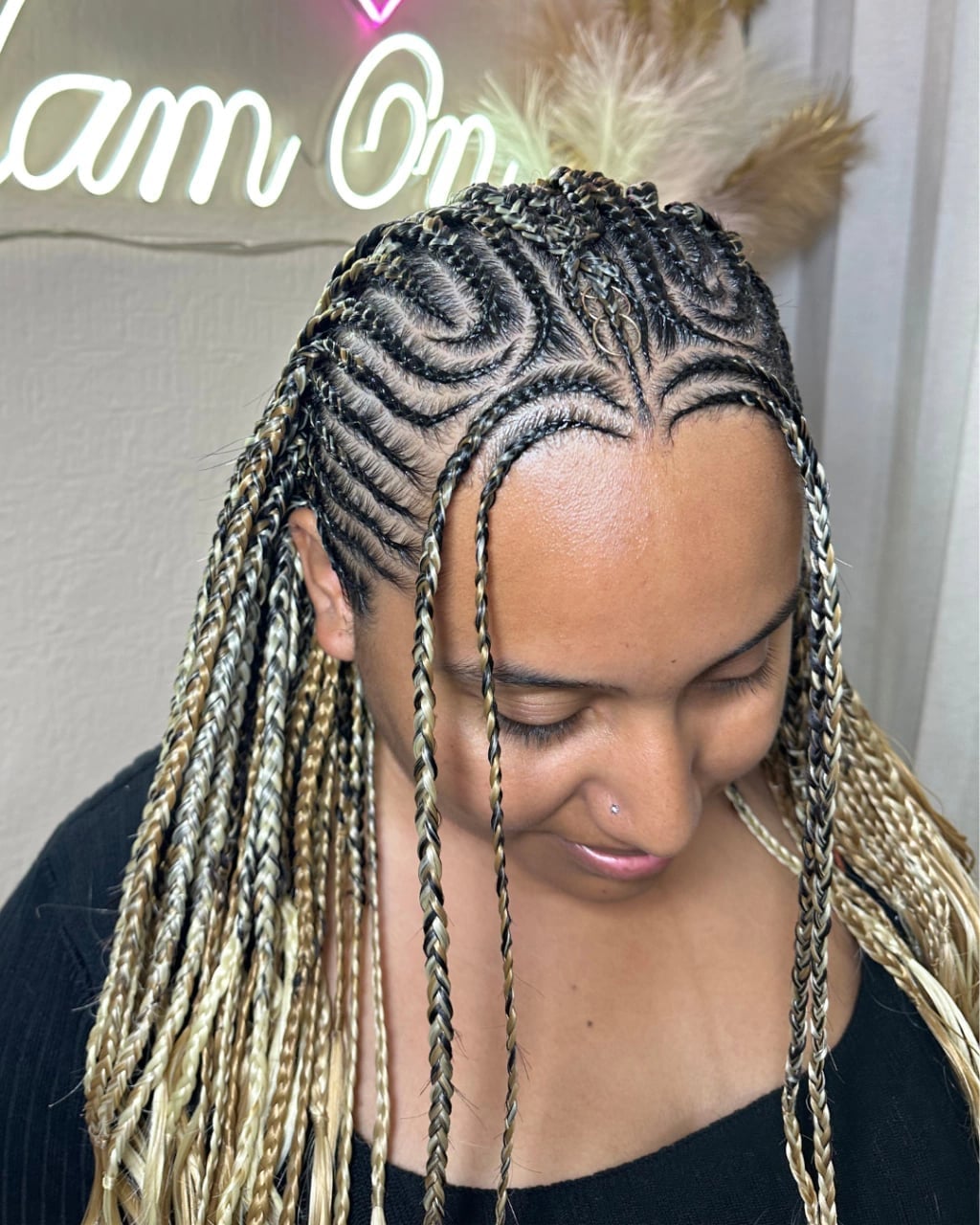
A solid single-color scalp design is reliable. This one is not that. The swirl pattern carved into the scalp turns the parting into an intentional focal point, and the black and blonde mix keeps the eye moving. The middle part lets the swirls mirror each other. Thick hair is the requirement here, fine strands won't hold the sharp lines of the pattern. Pass when you want a quieter look or a single base color. The scalp pattern needs regular oiling to prevent dryness at the part lines.
Geometric parting with curly ends on dark brown hair
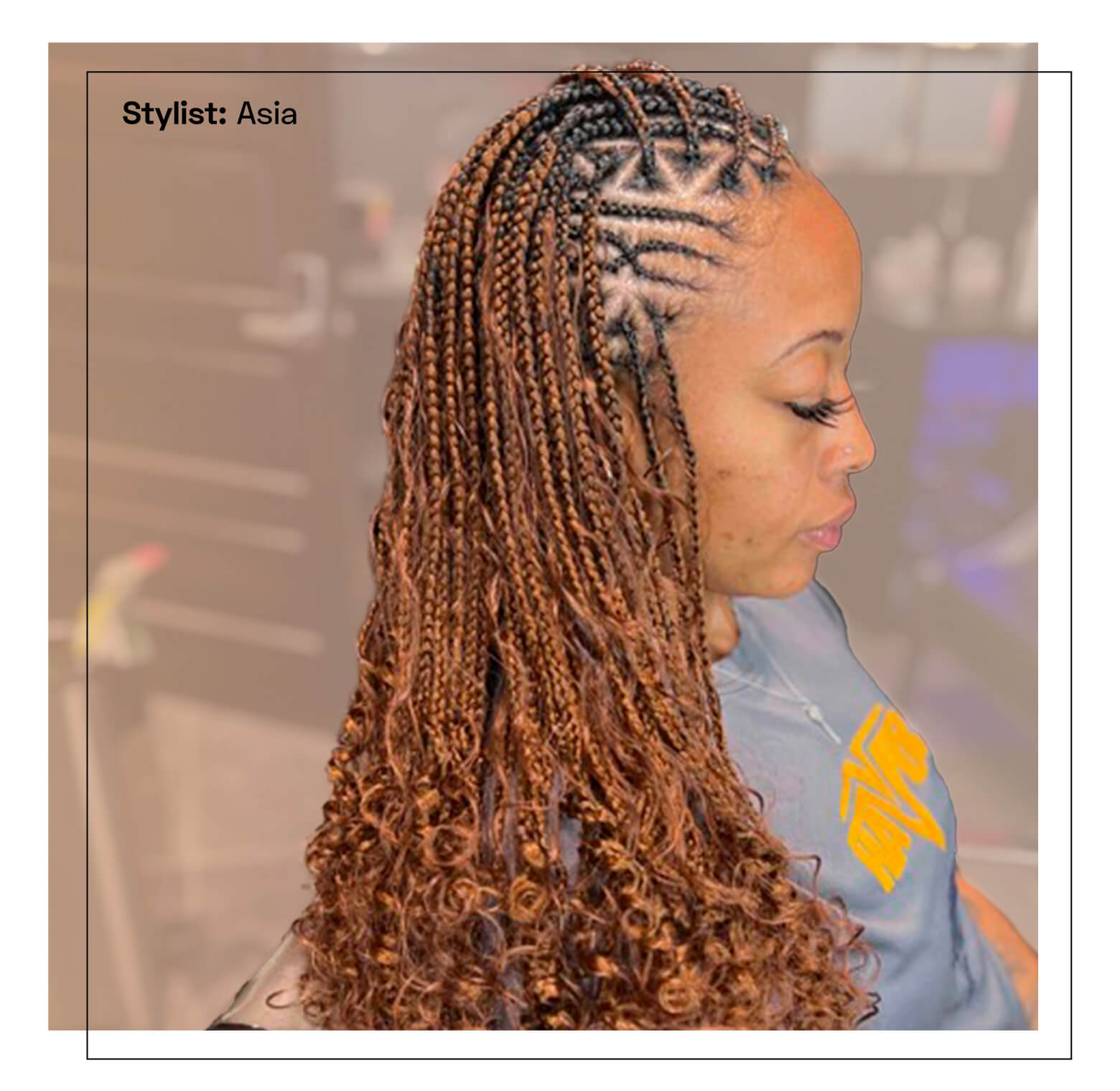
Wondering if you can have both precision and softness in one style? The geometric parting on the scalp delivers the precision; the curly ends deliver the rest. Dark brown with subtle auburn highlights gives the braids depth without a second color process. The side view shows how the geometric lines sit around the face cleanly. Best on coily, thick hair that can hold the part angles and support the curl weight at the ends. Straight braid ends or a solid base shade are alternatives. The curly ends may need a refresh with a curl-defining product every few days to keep their form.
Cornrows to long loose wavy braids with dark roots
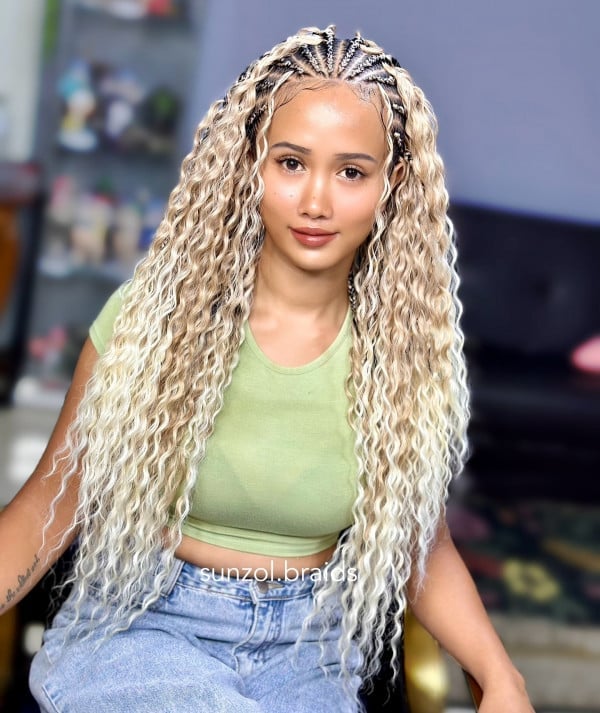
Cornrows at the crown transition into long, loose wavy braids that fall past the shoulders. The blonde is the headline; the dark roots are the practical decision. A grow-out that looks intentional from day one. The center part keeps the cornrows symmetrical, and the wave texture in the extensions adds volume without extra bulk. Styling steps: braid the crown in cornrows, attach pre-waved extensions, then separate a few braids at the front for softness. The dark roots mean fewer salon visits for a touch-up compared to a solid blonde. Thick, wavy hair is ideal here to blend the texture at the transition point.
High ponytail with intricate crown patterns
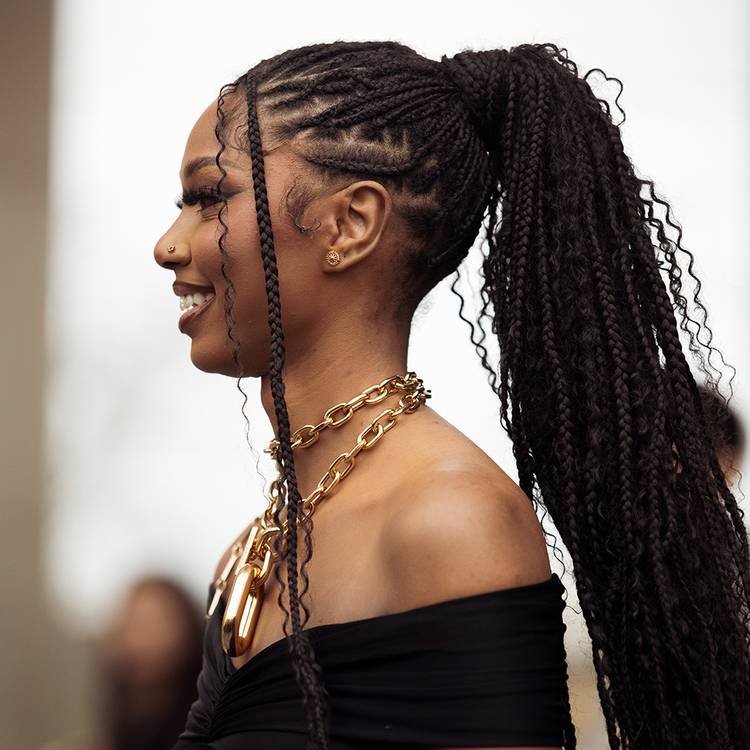
Thick, coily braids swept into a high ponytail that hits mid-back. The intricate patterns at the crown are the real design. They turn a simple ponytail into a structured look. A few loose braids sit around the face from the sides, softening the pull of the updo. This lands best in warmer months when you want the hair off the neck but still want a statement. The center part and the crown patterns keep the scalp interesting even from the back. Pass if you dislike high ponytails or prefer your braids worn down. Secure the ponytail with a strong elastic; the weight of mid-back braids will test a weak hold.
Honey blonde top knot with beaded braids
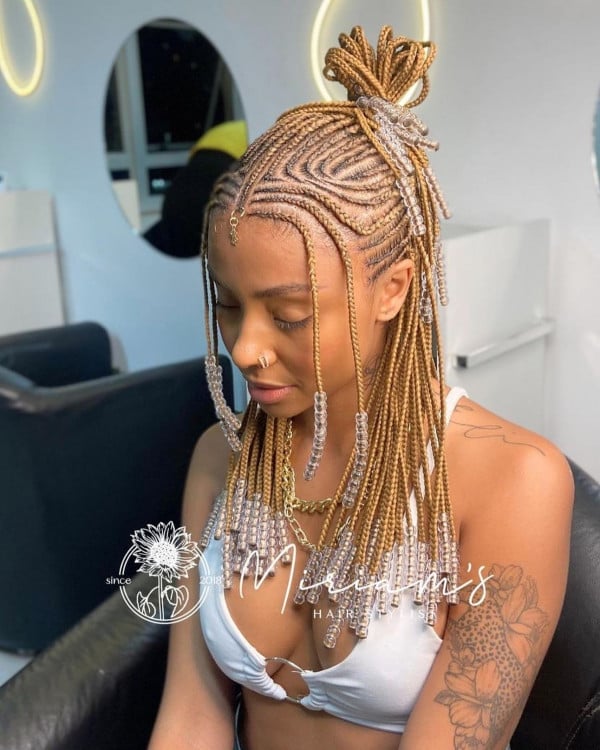
Honey blonde Fulani braids pulled into a high top knot, with clear beads and small charms. The color lifts the whole silhouette, and the top knot keeps the weight off your neck. Request honey blonde Fulani braids, high top knot, beaded charms from your stylist. Thick hair holds the bun shape best, finer textures need a donut or extra pins. Darker tones or a simpler style without adornments are other options. The knot stays put for a full day of movement, but the charms will clink against each other, which is either a feature or a reason to swap them for quiet beads.
Intricate braided pattern at the hairline
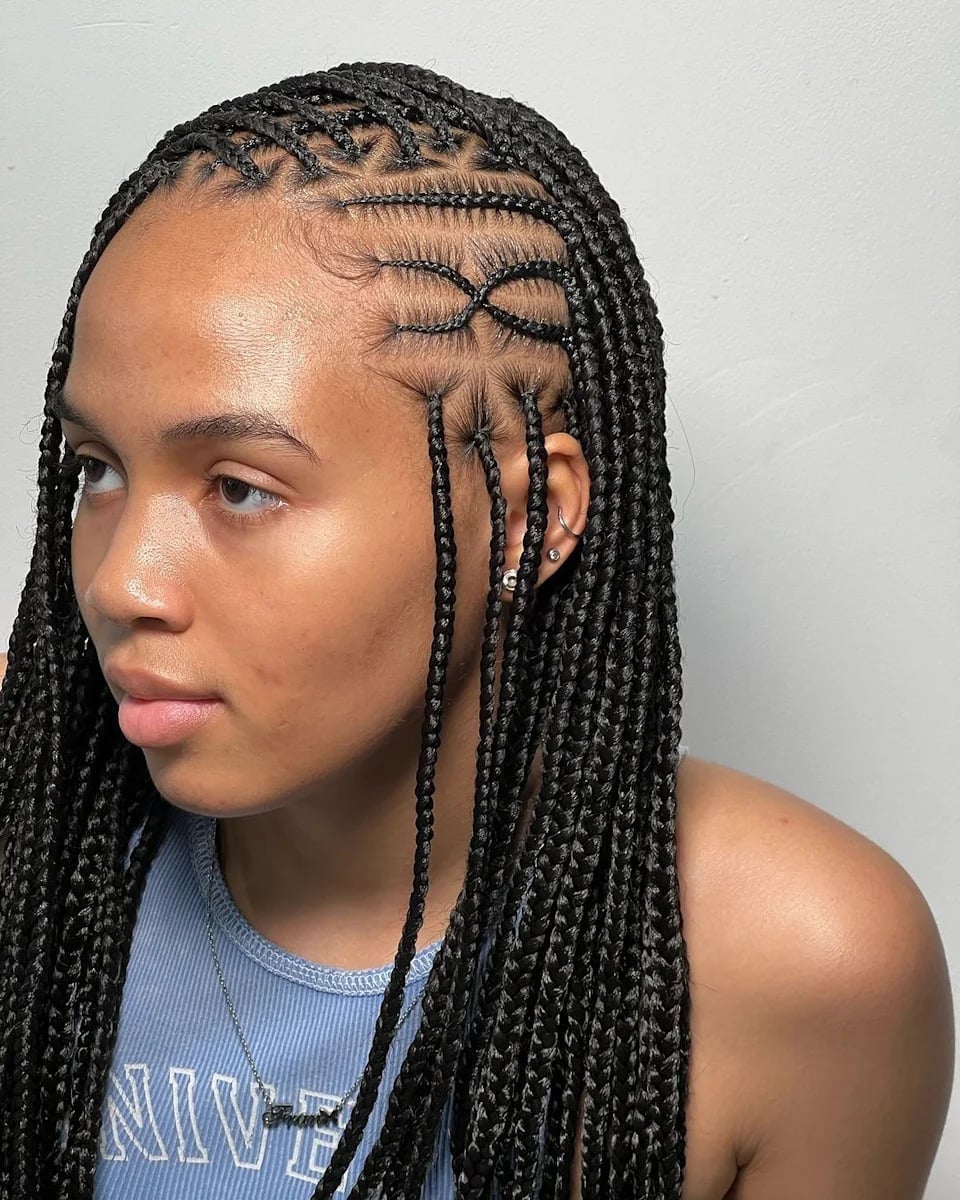
Deep black braids, thick and coily, with a detailed pattern traced along the hairline. The side profile view shows how the cornrows curve and intersect before feeding into the longer lengths. This is a salon job, not a bathroom-mirror project. The parting alone takes time, and the hairline pattern demands a steady hand.
Pass if you prefer patterns further back on the scalp or a simpler hairline. The tight work near the edges means you cannot pull the braids back without distorting the design. Leave it loose, let the detail speak. A satin scarf at night keeps the hairline crisp longer.
Box parts frame the face on long black braids
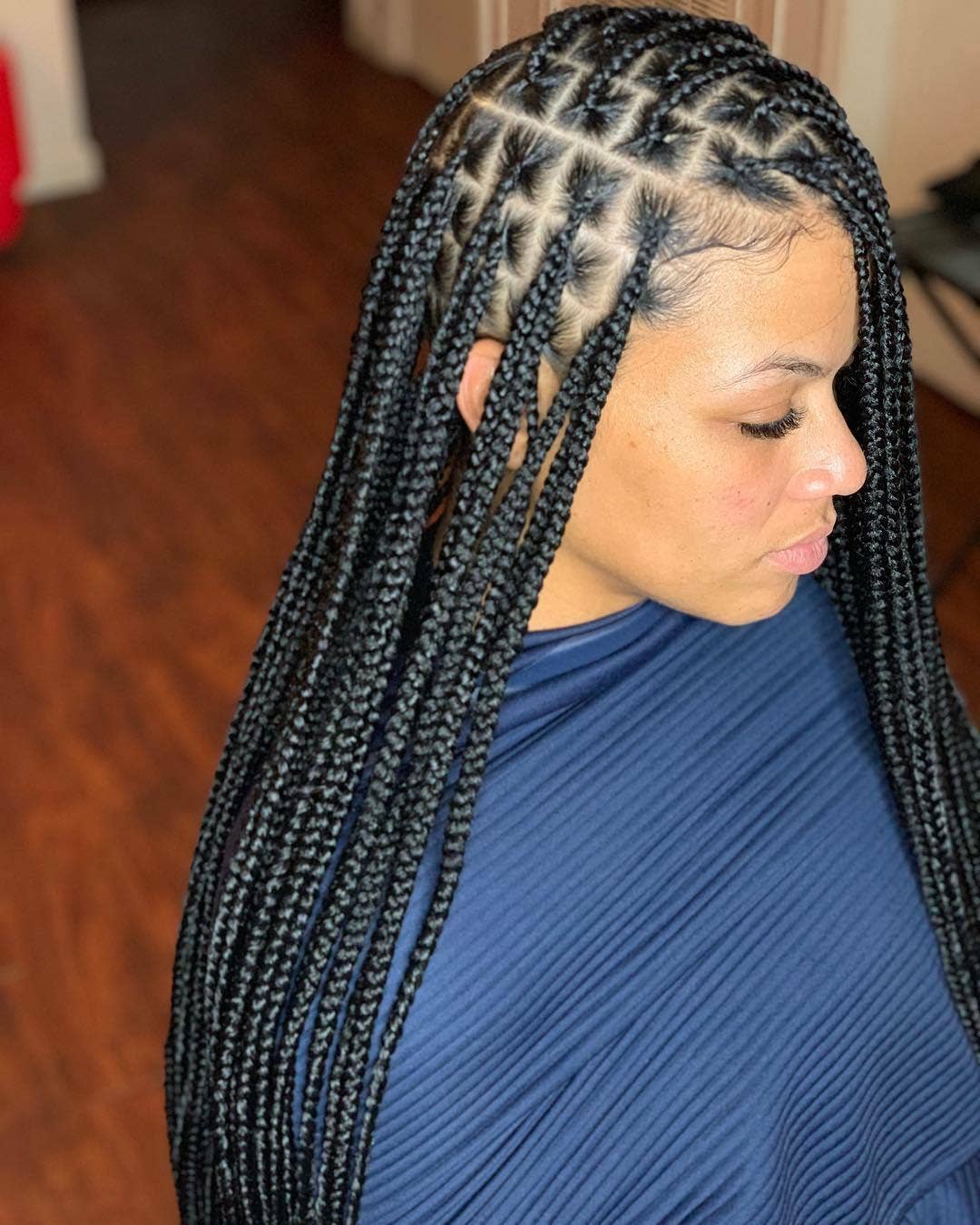
Straight geometric box parts at the crown versus the rounded sections you see in softer Fulani styles. The boxes create a grid that sits visible above the long black braids, giving the whole style a structured, architectural feel. A stylist maps each square before braiding.
A downside: the parts grow out fast. Two weeks in, the squares soften into rectangles, and the geometry blurs. This works for those who like a sharp, defined line from day one. A monthly scalp refresh keeps the grid visible.
Wooden beads on braids with loose curls
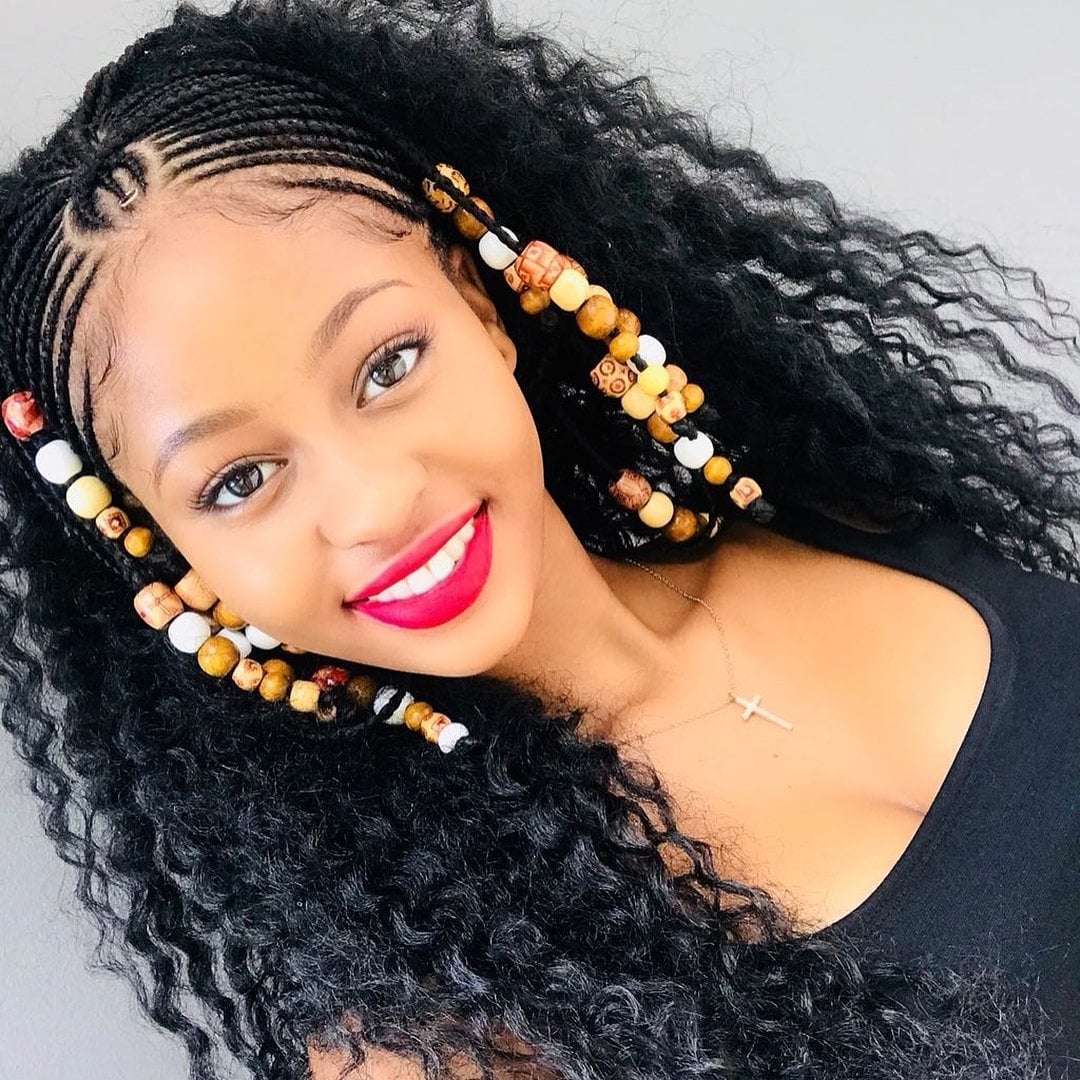
Want the braided crown with the texture of loose, coily curls at the ends? Fulani braids part down the middle, then transition into curly extensions, with wooden and white beads threaded onto the braided sections. The contrast between the smooth braid and the springy curl is the whole draw. Thick, coily hair blends best with the extensions, and the beads weight the braids so they hang evenly. Refresh the curly ends with a spray bottle of water and a light leave-in conditioner. Pass if you prefer all braids or no extensions. The curl sections need re-wetting to stay defined.
Metal beads and rings on straight black braids
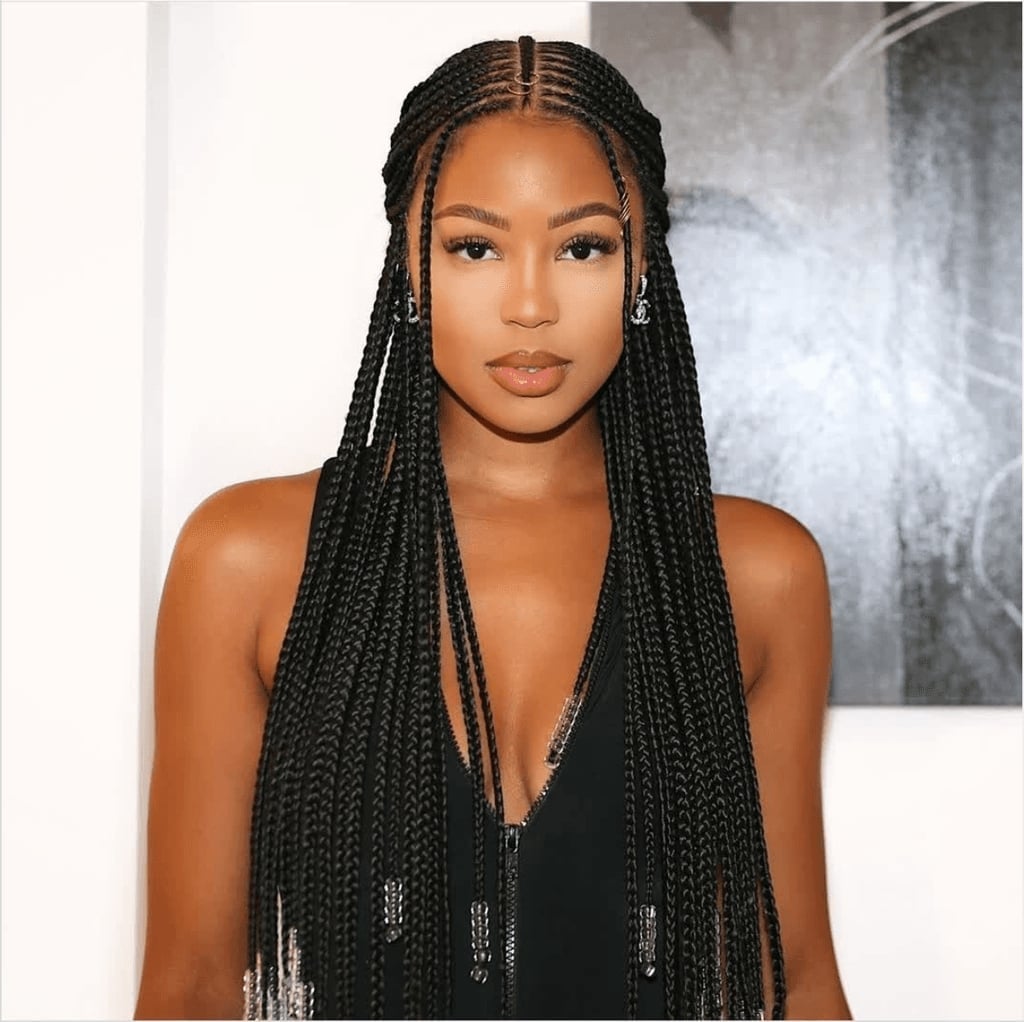
Long, thick, straight black braids parted down the middle, with two face-framing braids that fall forward. Metal beads and rings are threaded along the length, catching light with every turn of the head. The metal adds weight, which pulls the braids straighter and reduces frizz.
The rings slide if they are not crimped tight, so check each one before you leave the chair. A few will need re-securing over the life of the style. The metal is deliberate and loud. Keep a small pair of pliers handy for the inevitable loose ring at week three.
Neatly parted cornrows on long black braids
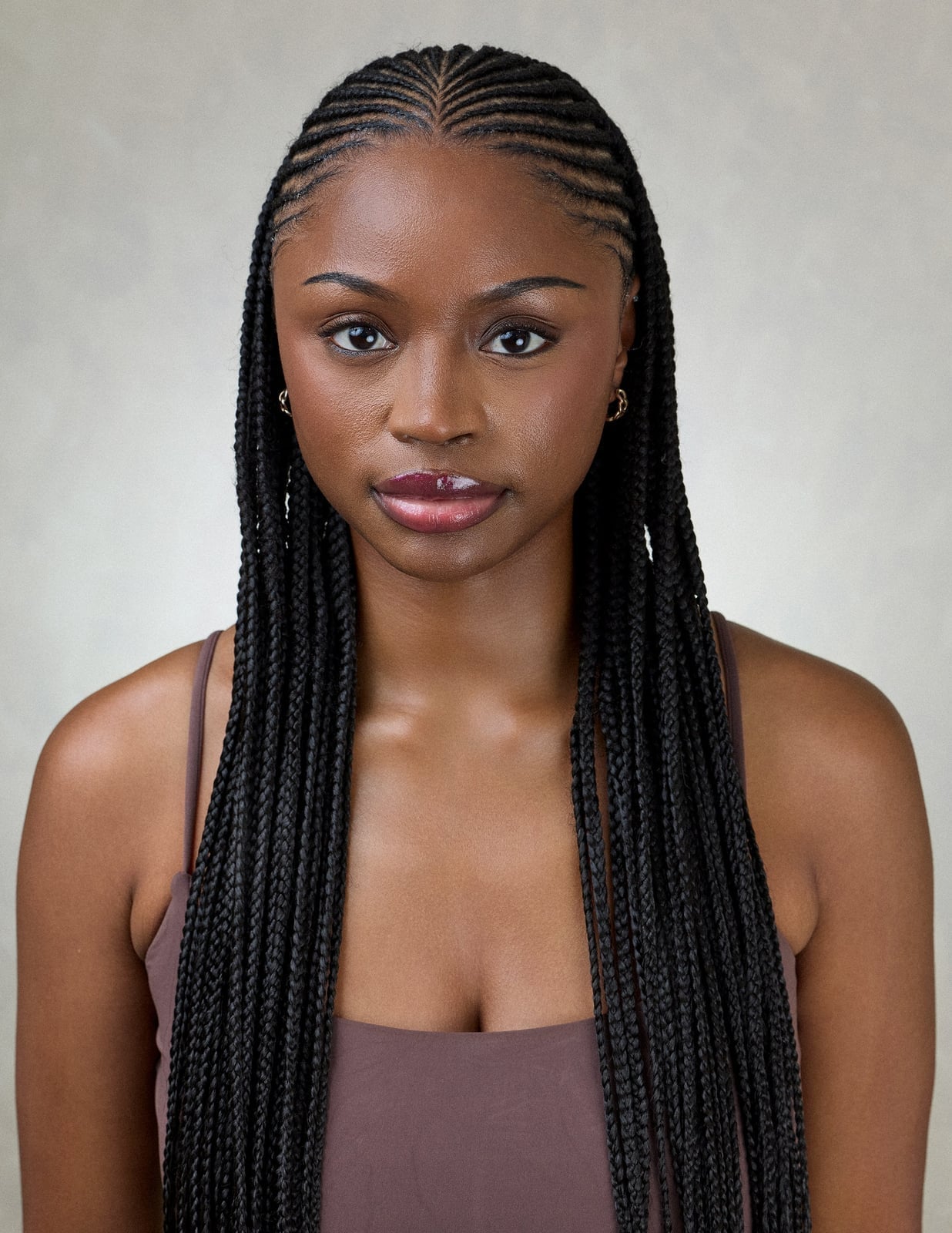
Precision in the parting signals the season for a neat look that works just as well at the office as it does at a winter gathering. Long black braids emerge from cornrows so clean they look drawn with a ruler. The coily texture holds the neat lines without frizz, and the center part keeps everything symmetrical. A more relaxed finish or a softer edge is an alternative. Ask your stylist for Fulani braids with neat cornrows. Regular scalp oiling keeps the parting fresh between washes.
Wavy hair with a geometric side braid pattern
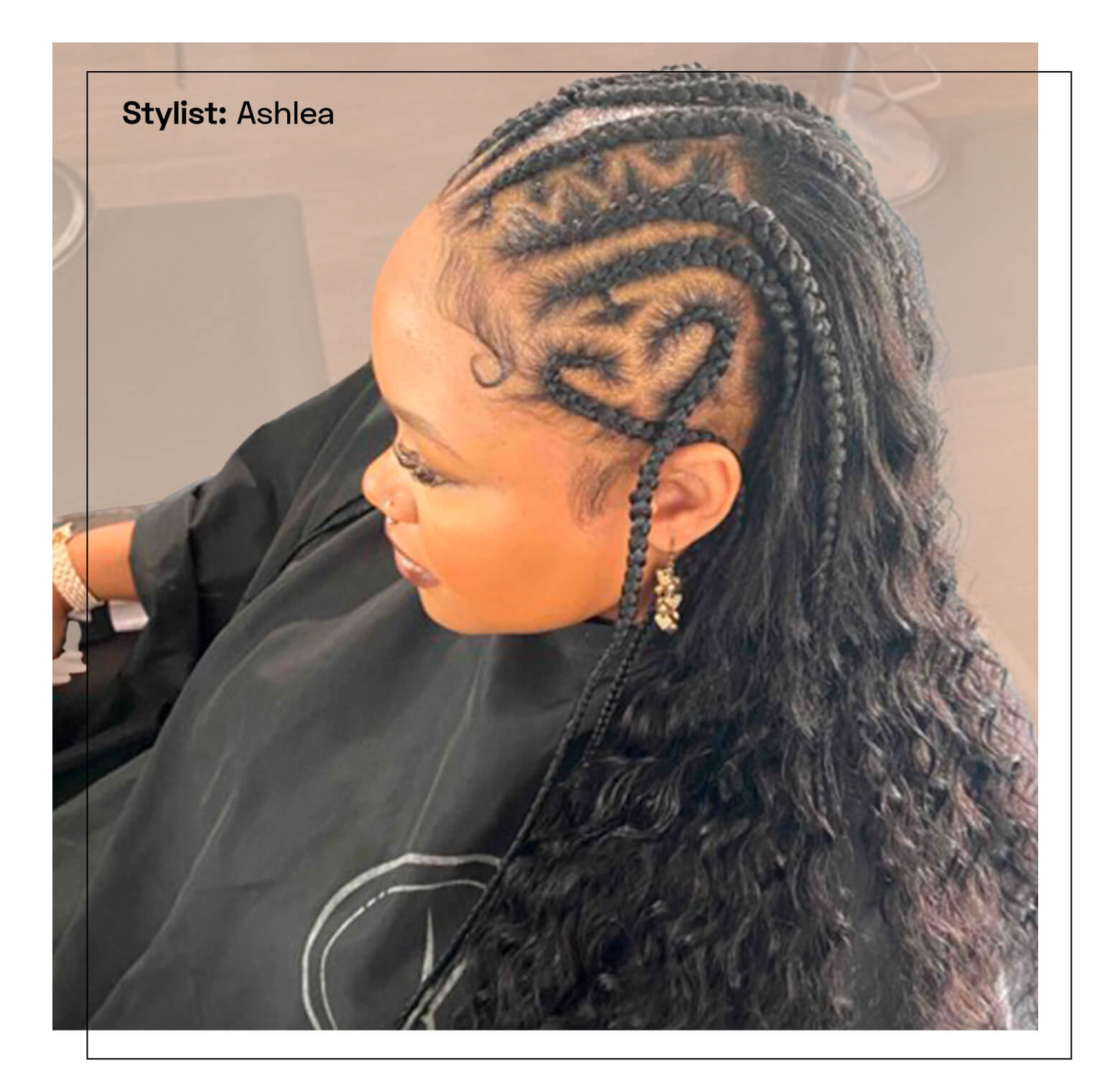
The geometric braided pattern sits on one side of the head, an asymmetry that makes the deep black wavy hair on the other side feel like the contrast it is. Thick hair holds the clean lines of the design; the wavy extensions need a wave-enhancing spray to keep their definition past day two. This is a salon job, given the precision required for the parting. Choose this style for all braids or straight extensions. The center part keeps the scalp pattern readable, and the black color looks one continuous tone across the braided and wavy sections.
Heart-shaped braid detail on straight braids
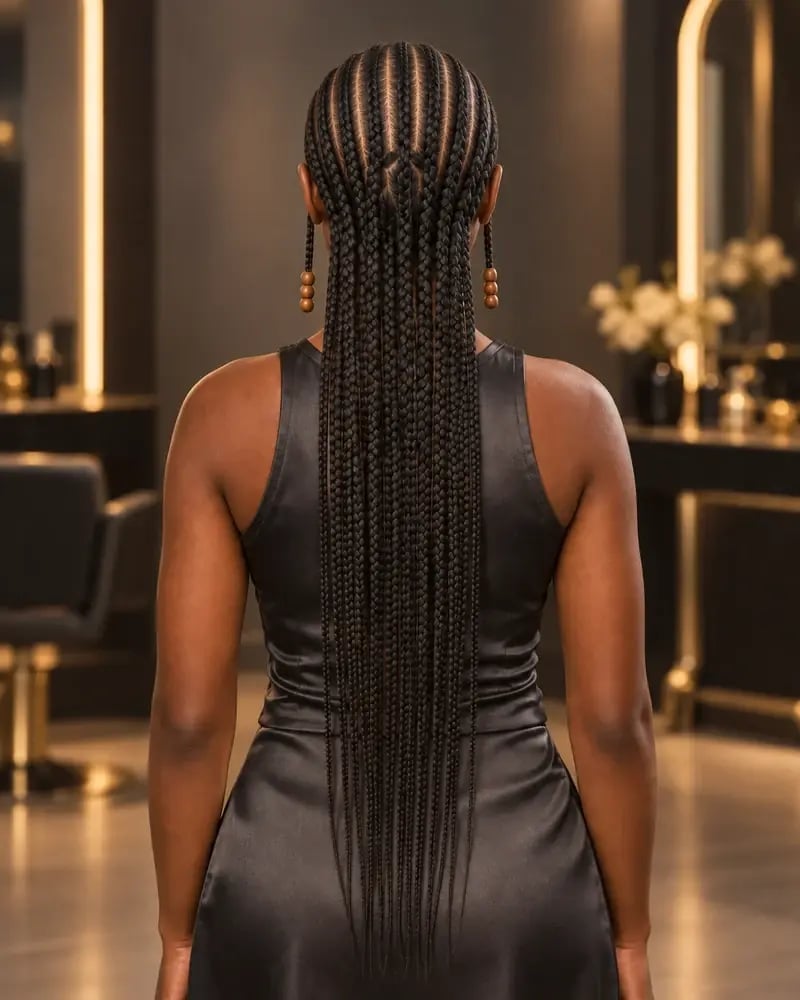
A heart-shaped braid detail at the crown changes the geometry of straight Fulani braids. The centered parting feeds into the design, which requires the stylist to map the shape before braiding. Thick, coily hair is ideal here; it holds the curves of the heart without the pattern pulling loose. A downside: the detail can distort as the braids loosen over time, so the heart shape is sharpest in the first two weeks.
The black color keeps the design clean, with no competing tones. Not for anyone who prefers a more abstract or less defined crown detail.
Updo with gold cuffs on thick coily hair
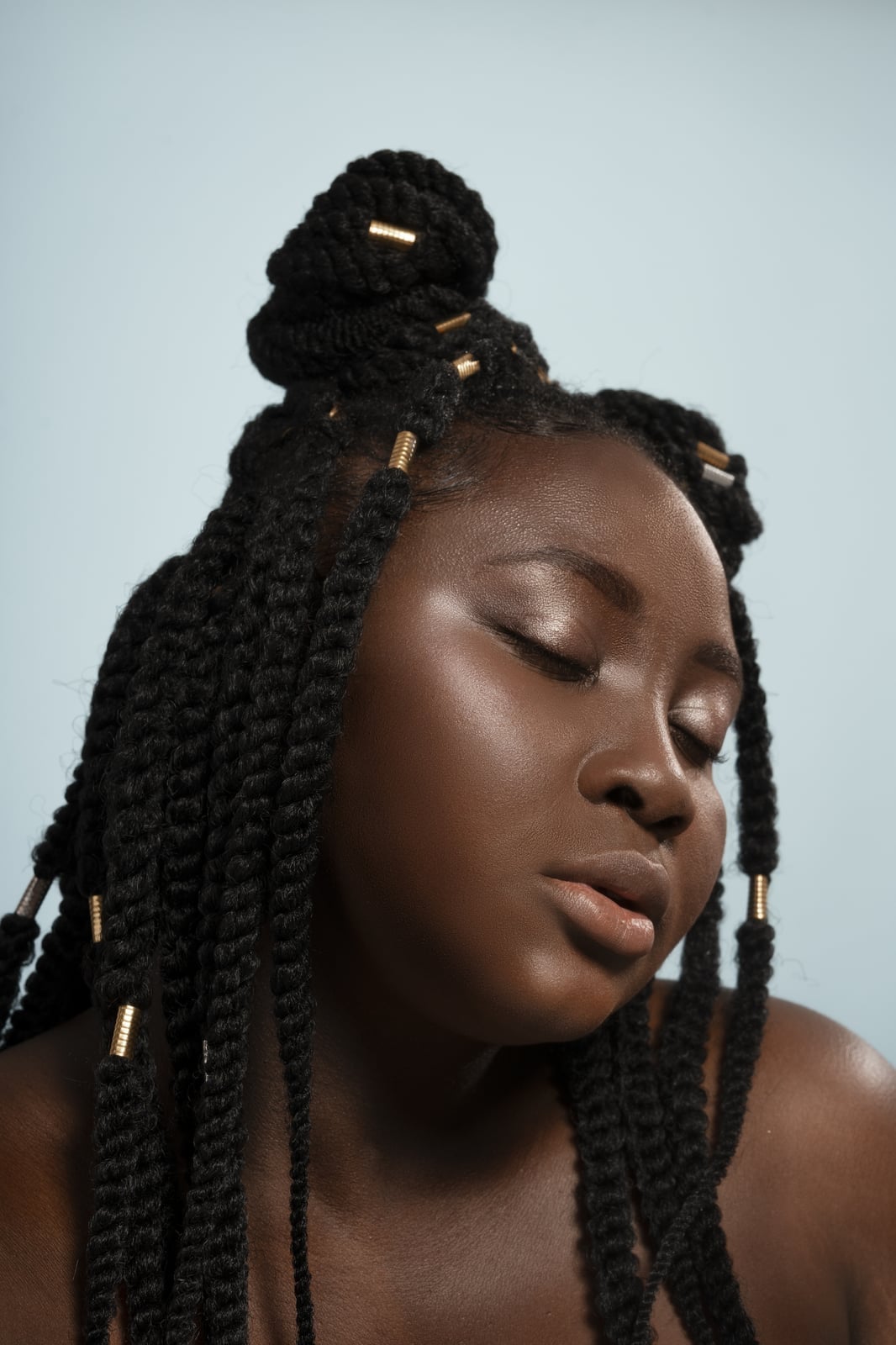
A high bun versus a low ponytail: this one goes high, pulling the thick coily Fulani braids up and letting the rest cascade down the back. Gold cuffs accent the braids at intervals, catching light without overpowering the black color. The center part keeps the scalp design symmetrical, while the bun changes the silhouette entirely. A salon-leaning choice for those who like metallic accents but want the option of wearing the hair down later.
Next time you have a party or a formal event, consider the cuffs. They add weight, which helps the braids hang straight. Pass if you prefer your hair worn down or dislike gold accessories.
Beaded ends on thick coily braids
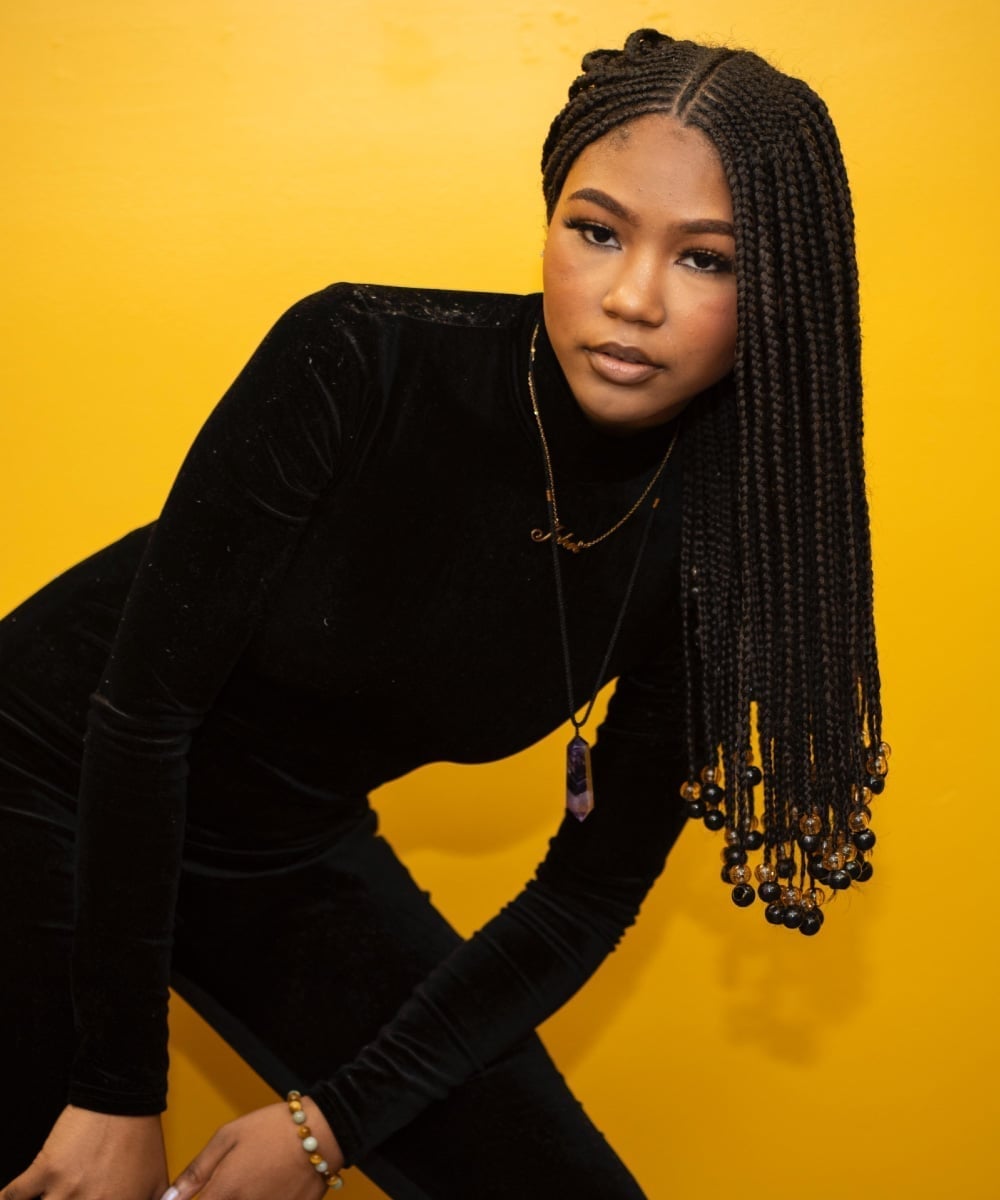
Beads at the ends are the detail that keeps a simple braid from feeling plain. Deep black, thick, coily braids part down the middle, with small decorative beads clasped onto the tips of each section. The beads add a soft weight that helps the braids hang straight. Thick, coily hair is the ideal starting point; the texture holds the beads in place without slipping. Pass if you prefer your braids unadorned, since the beads are the whole point here. Check the clasps every few days. One loose bead changes the balance of that braid, and you will notice.
Cornrows into long wavy extensions
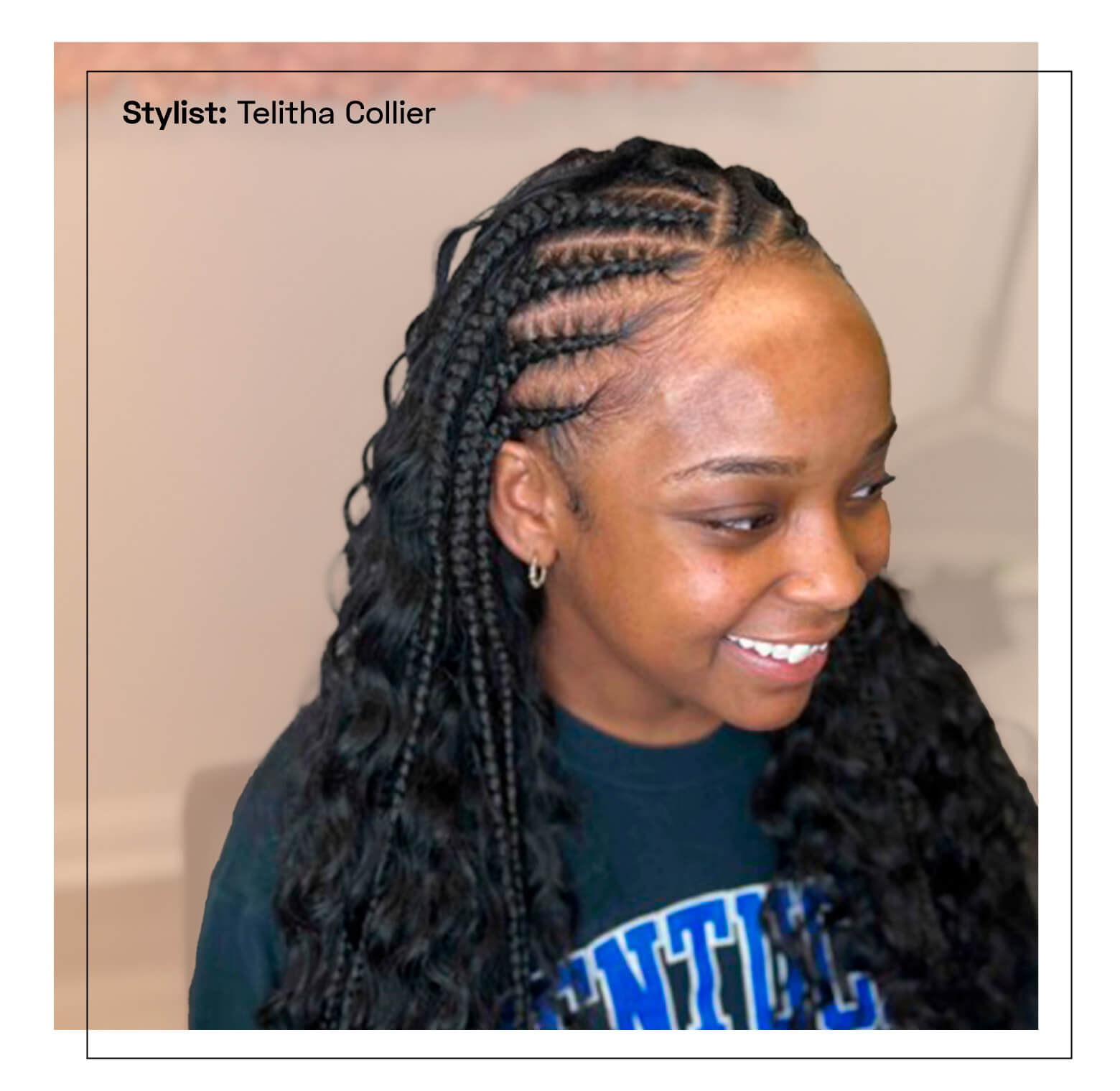
Cornrows that shift into long, wavy extensions create a two-in-one silhouette. The center part keeps the scalp pattern symmetrical, while the wavy section adds volume and a looser finish. You need thick, coily hair that can support the transition without visible gaps at the connection point. Pass if you prefer an all-braid look or want straight extensions instead. Request Fulani braids with wavy extensions from your stylist. Use a serum on the wavy portion to keep the texture defined and cut down on flyaways. The braided part holds for weeks; the waves need a quick finger-comb every morning.
Braids transitioning to curls with dark blonde highlights
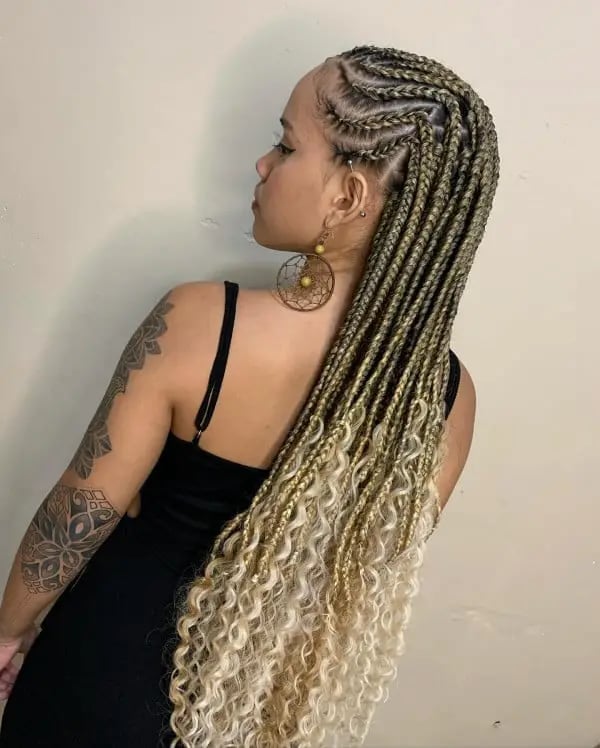
Braids that end in loose curls give you two textures in one style. The dark blonde highlights run through both sections, so the color connects the braided and curly parts. This lands well for summer events where a full braid can feel heavy. The center part frames the face evenly, and the curly ends move without pulling at the scalp. Get the color placed before the braiding begins, not after. A moisturizing spray on the curls keeps them from matting against the braided section.
Contrasting braid and curl textures with blonde highlights
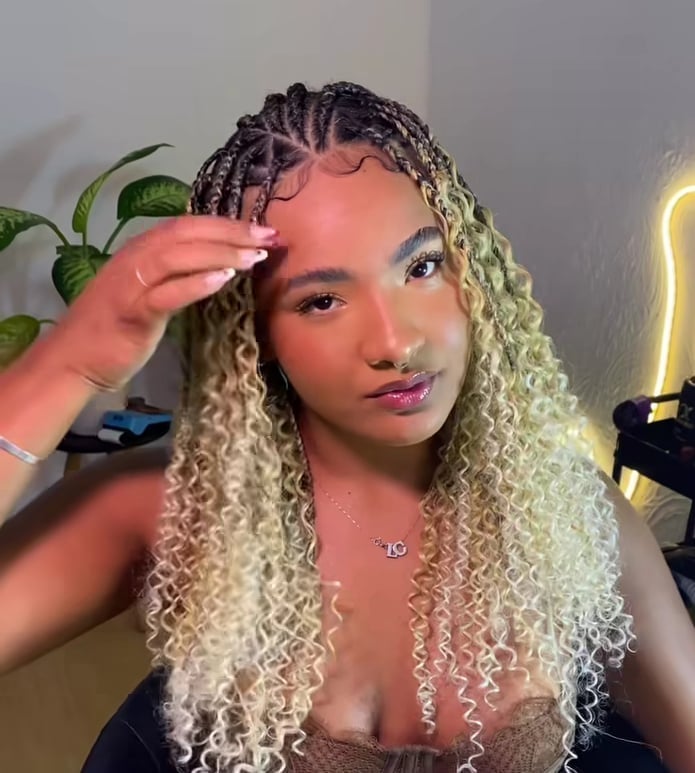
A tight braid structure against loose, curly extensions creates a deliberate textural shift. The dark brown base with blonde highlights looks like two separate tones, not one blend. Request Fulani braids with curly extensions, dark brown and blonde tones from your stylist. The braided scalp section stays neat for two to three weeks, while the curls need a moisturizer every few days to hold their form. The contrast works best when the braids are small enough that the transition point does not look bulky. Use a satin scarf at night to preserve both textures.
Long thin braids with gold beads
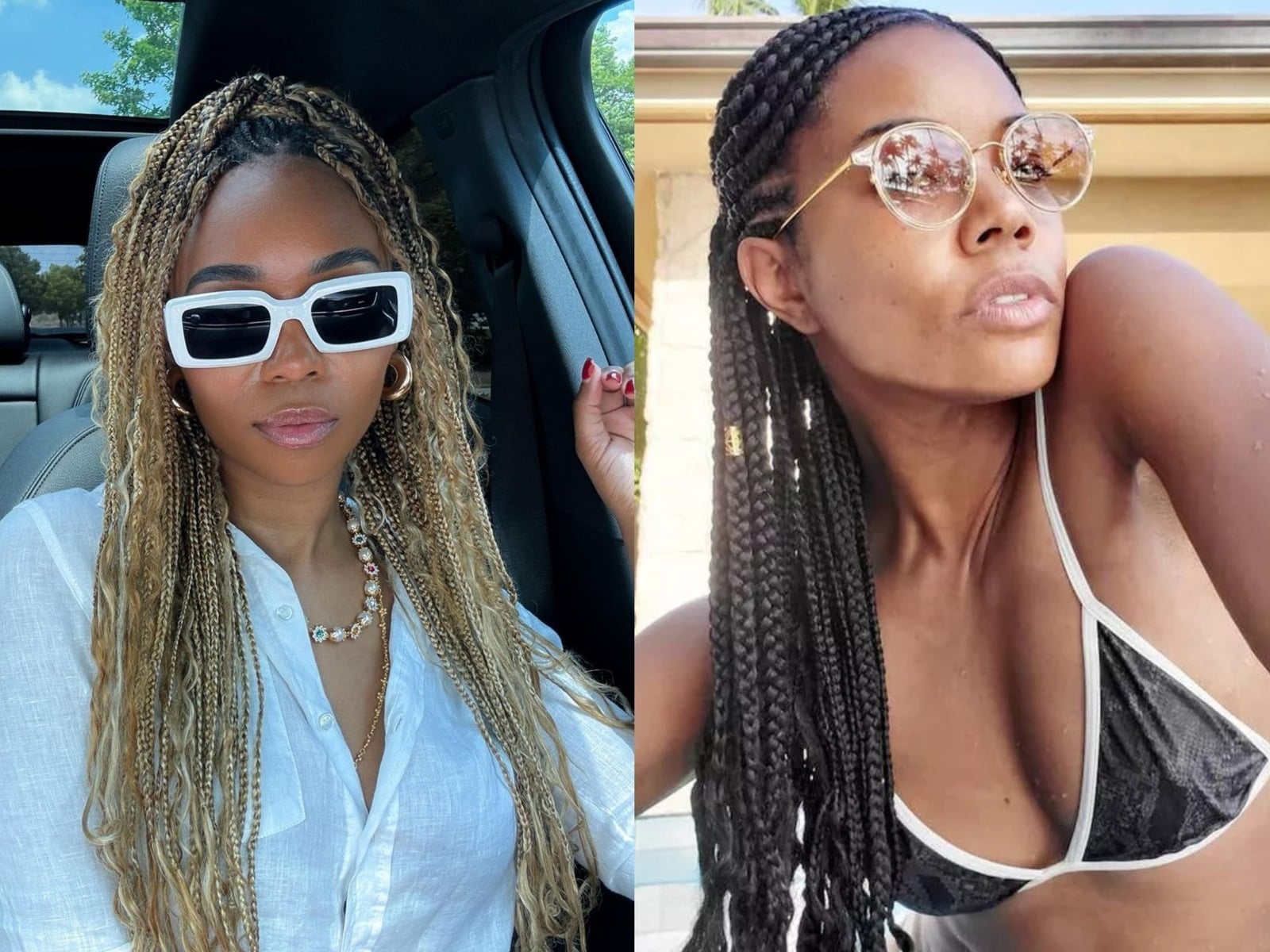
Thin braids take longer to install but sit lighter on the scalp. The blonde highlights against the dark brown base give the length a striped effect, and the gold beads add weight at the ends. This is a salon job, not a DIY weekend project. A downside: thin braids can tangle at the nape if you sleep on them loose. A center part keeps the sections even, and the beads need to be secured tightly so they don’t slide. You can wrap them at night, but the beads will clink against each other until you get used to the sound.
Clear zig-zag parting on black braids with beads
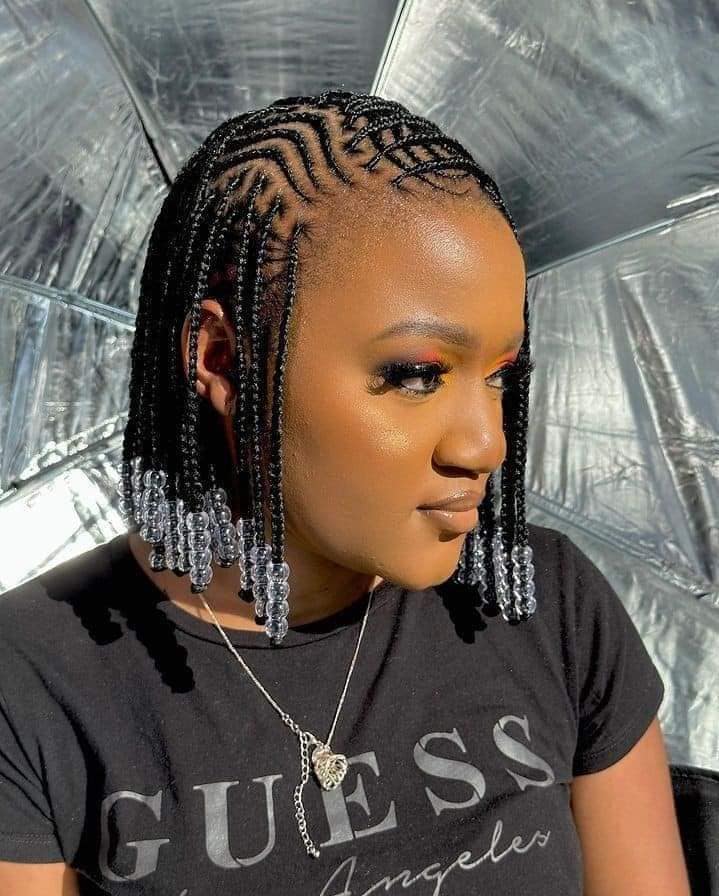
A straight center part is reliable. A zig-zag part is a deliberate choice. This one cuts across the scalp in clean angles, making the black braids look more graphic than organic. The clear beads at the ends add a transparent accent without competing with the parting. Compared to a traditional center part, this suits a round face better because the angles break up the shape. Request Fulani braids with zig-zag parting, clear beads from your stylist. The part needs to stay dry between washes to keep the pattern crisp.
Neatly parted fulani braids with baby hairs
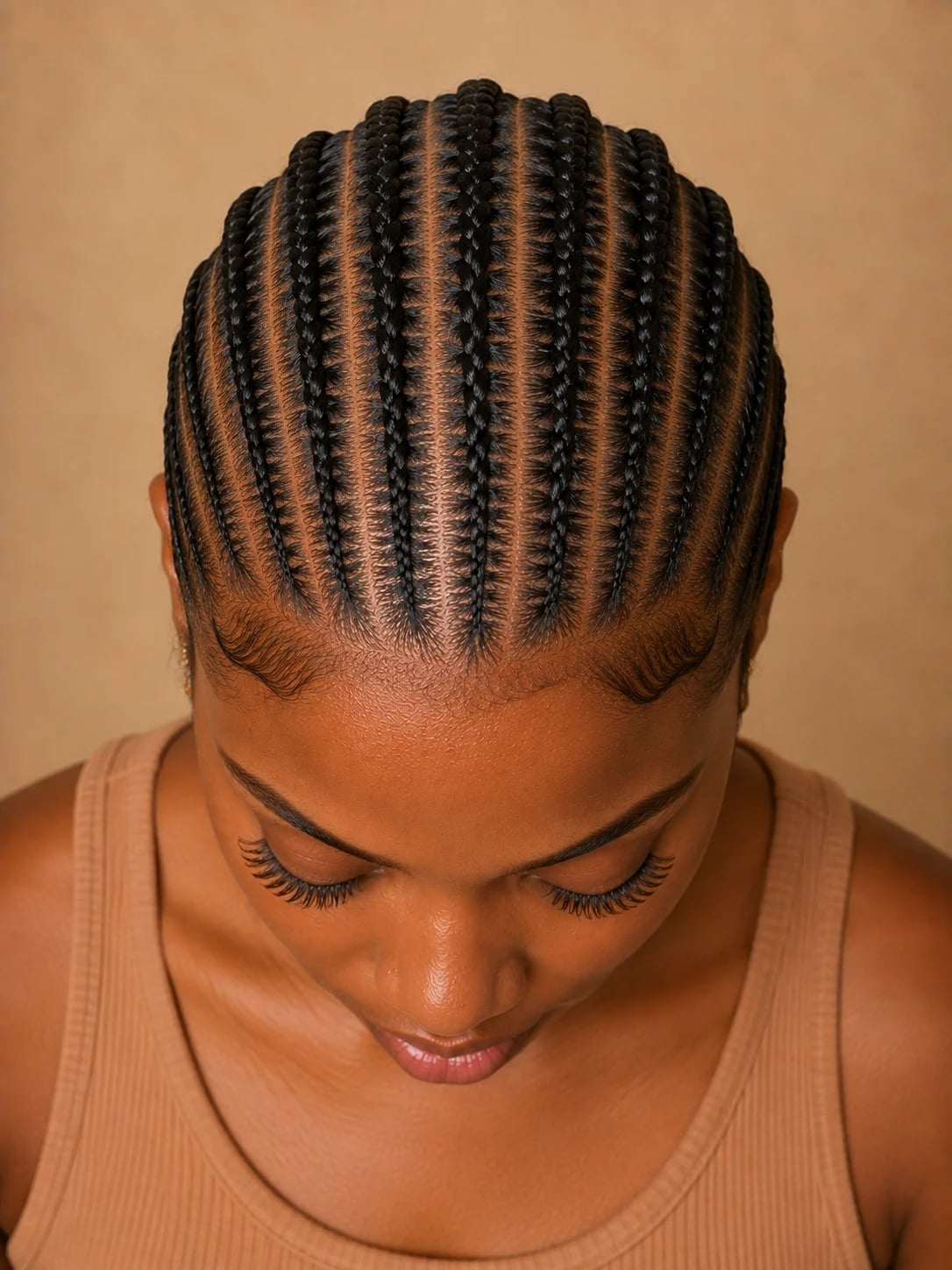
Neatly parted cornrows require a bit of patience at the start. These stay close to the scalp, with the thick, coily texture woven into clean lines from a center part. The black braids hold their shape well, so a light gel along the hairline keeps the baby hairs smooth without stiffness. A looser, less structured finish is an alternative. Request Fulani braids with neat parting and baby hairs from your stylist.
Double braided buns with silver accents
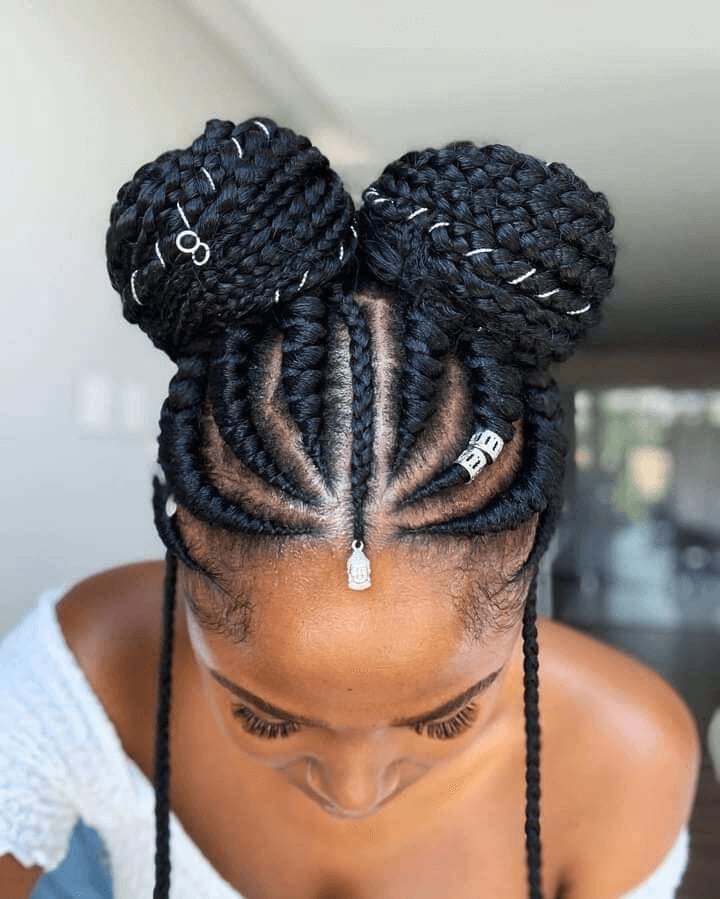
Double buns look more deliberate than a single one. Here, intricate braids feed into two large, coiled buns, with silver beads and rings catching attention along the way. Loose braids sit around the face, softening the overall structure. The hold depends on how well the buns are secured with pins and a hair net. Pass when you dislike ornate accessories or prefer your hair completely down.
Baby hairs framing the face on thick black braids
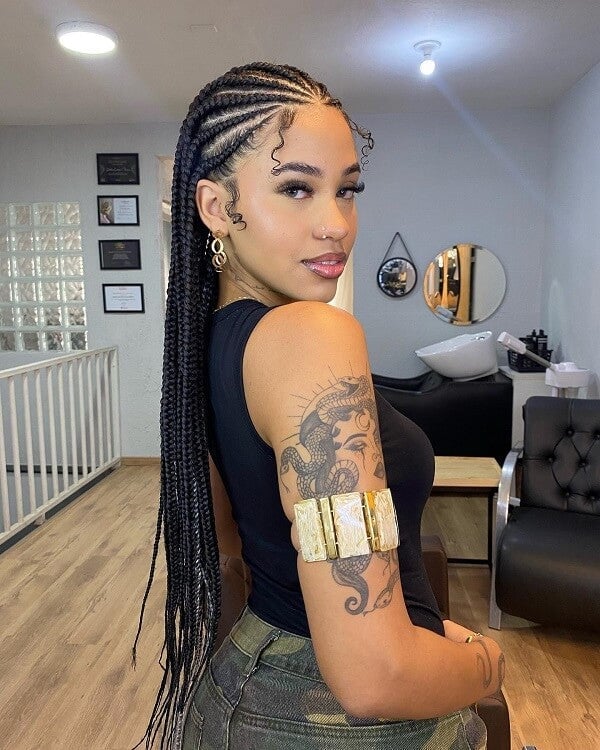
Thick black braids with a centered part and intricate cornrows look a strong foundation. Baby hairs styled along the hairline add a soft, deliberate finish. This works well for everyday wear, where the face-framing detail keeps the look from feeling too pulled back. A soft brush and a light product shape the edges without stiffness.
Wooden beads on neat fulani braids
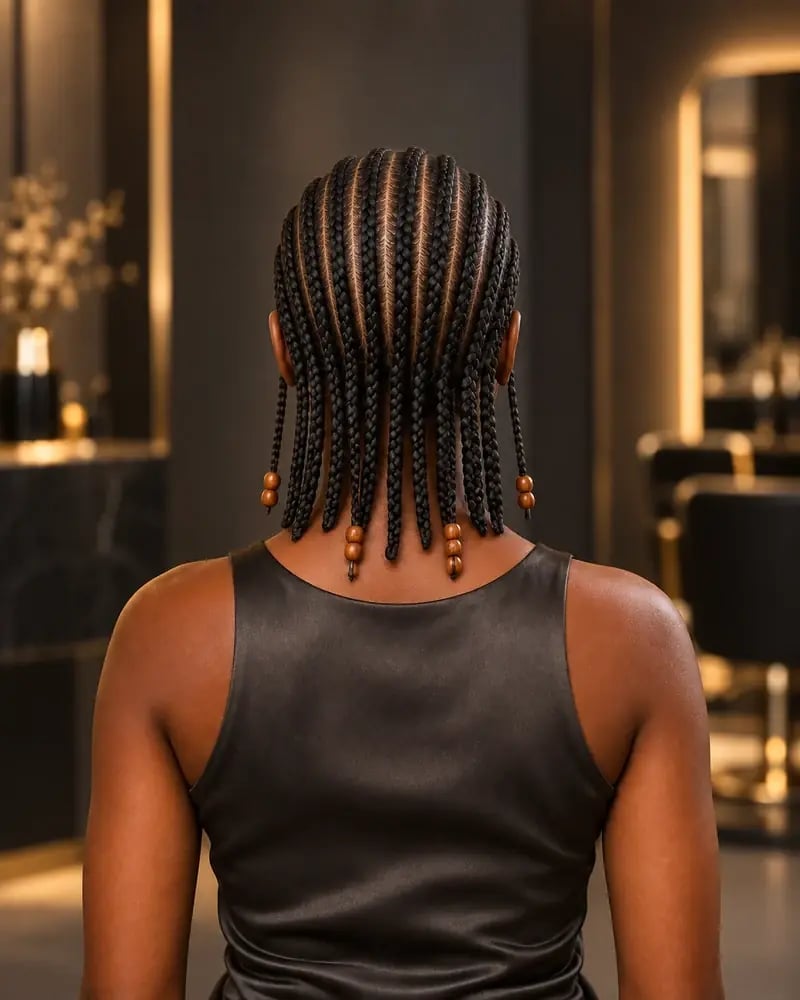
Small wooden beads bring a quieter kind of decoration. On neat fulani braids with a center part, the smooth, thick texture of the black braids lets the beads stand out without competing. The beads stay put unless you pull at them, and a damp cloth keeps them clean. Pass if you prefer metallic or colorful accents. Request Fulani braids with wooden beads from your stylist.
Curved cornrow pattern on thick black braids
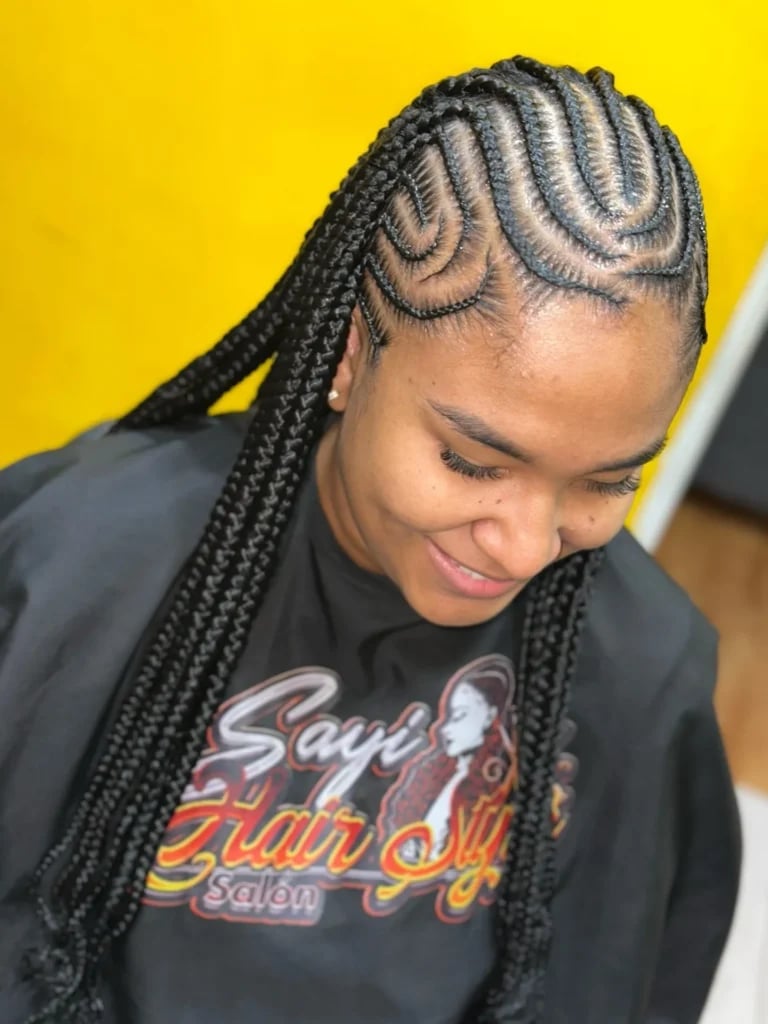
Curved cornrows move differently than straight lines. Thick black braids start from a center part, then sweep into a curved pattern on one side. The detail requires precise parting, so this is a salon job. A downside: the pattern shows dirt faster than a straight design. Not for anyone who prefers geometric or symmetrical scalp art.
Gold beads on intricate scalp cornrow patterns
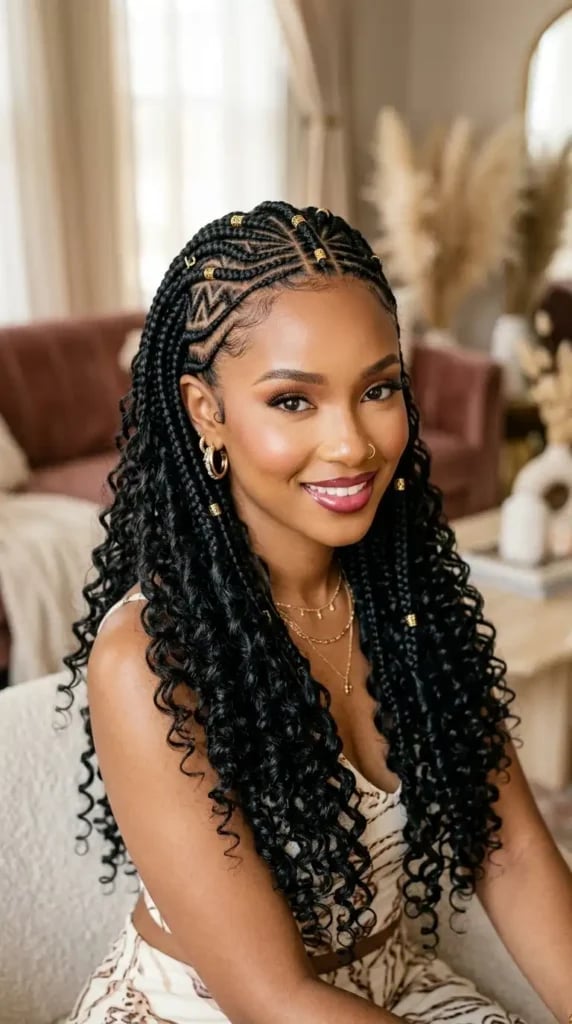
Pick one standout detail and let it lead. Here it is the cornrow pattern itself, curved lines that cross and meet like a map drawn directly onto the scalp. Black, thick, coily hair slicked back from the face, falling to the mid-back in individual braids, some ending in loose curls. Gold beads are threaded at intervals. You need density for this; fine hair leaves gaps in the pattern. This style is for those who like a bold look and don’t mind beads. The hold is firm for weeks, as long as the scalp work is tight.
Request Fulani braids with cornrows, gold beads, curly ends from your stylist. The gold beads should be chosen at the supply store ahead of time, small, uniform, securely fastened. The pattern takes about three hours in the chair. After that, the style sits flat against the head, no fussing needed. The curls at the ends soften the geometry just enough.
Final Thoughts
Pick by how much detail you want to live with day to day, not by the photo alone.
- Low tolerance for tangles: stick to straight extensions and skip the wavy ends.
- Want the adornments to last: choose metal or sealed wooden beads, not string-tied shells.
- Short on morning time: a ponytail or top knot hides bedhead in under a minute.
- Scalp needs air: geometric partings with space between rows breathe better than dense cornrows.
The aesthetic holds up as long as the upkeep does.