You’re scrolling through braid styles and every one seems to be either a weekend commitment or a style that unravels by lunch. A defined parting changes the math: it gives the braid a clean start and keeps the whole thing looking intentional for days.
31 styles cover the spread from a five-minute side braid to intricate cornrows that last two weeks. Which is why Sharp Parting Braids 2027 fill so many saved boards. They solve the gap between wanting a neat look and having actual time to maintain it.
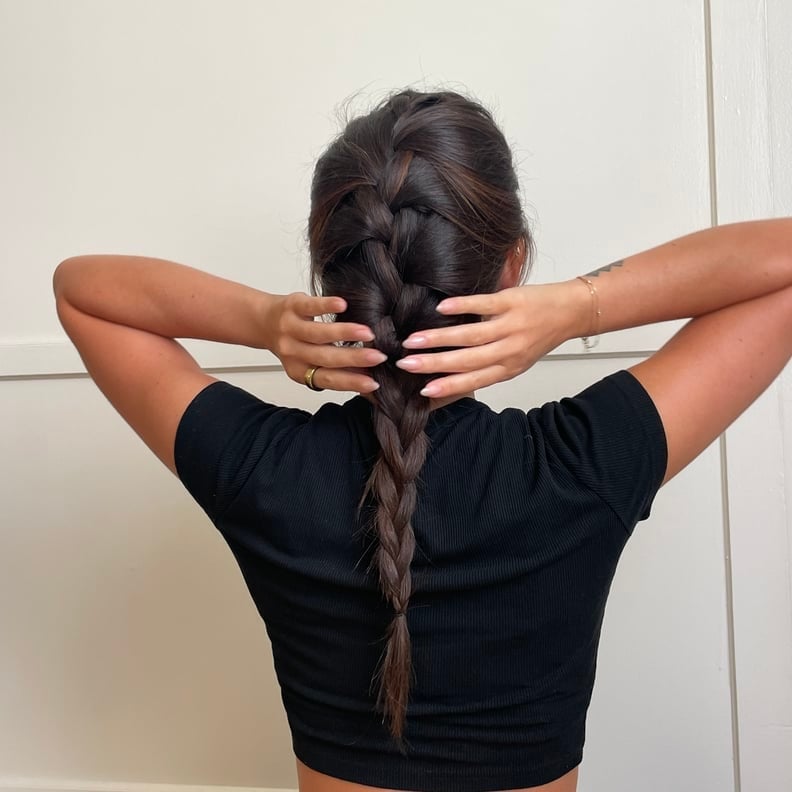
A middle-parted French braid with auburn highlights
The dark brown base gets its depth from subtle auburn highlights that catch the light along each section. This styling works best when the hair has enough weight to hold the braid firm without slipping. Ask your stylist for: middle part french braid, subtle auburn highlights. The catch: very fine hair tends to loosen the weave within hours, so this look favors denser textures. Back-view polish means the part stays crisp and the braid lies flat against the head.
DIY side braids for fine blonde hair
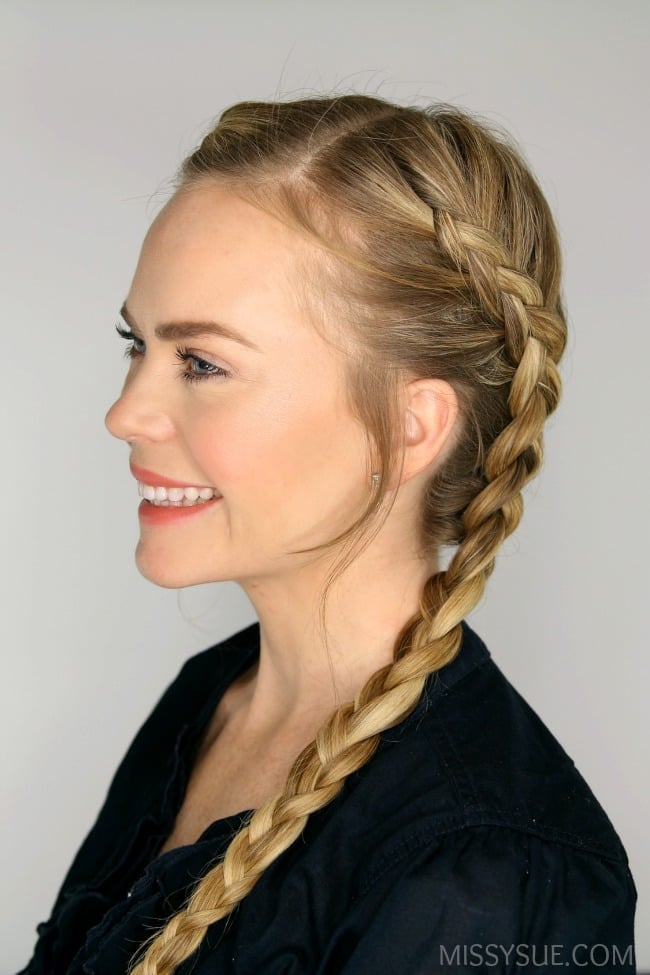
Two neat side braids solve the problem of fine, wavy hair that disappears in a single plait. The side parting keeps the braids visible, and the blonde base with lighter highlights gives each twist its own line. This is a genuine DIY option: section the hair, braid from the ear down, and secure with a clear band. Anyone who wants a sleek, uniform finish should look elsewhere; fine texture shows every uneven tug. The braids stay tidy for a full day when you start with slightly damp hair.
Thick dutch braids on strawberry blonde hair
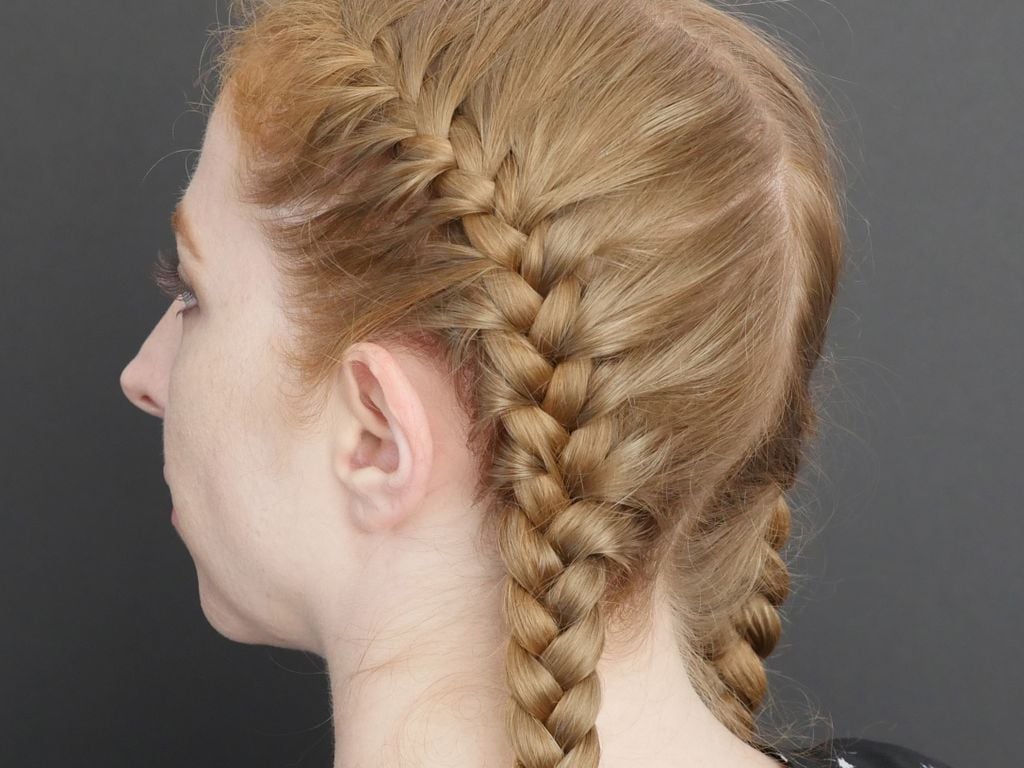
Dutch braids sit raised off the scalp, which gives fine, wavy strawberry blonde hair more visual weight than a french braid would. The middle part splits the color evenly, and the thick, even sections keep the style from looking sparse. Where a french braid recedes into the head, this technique pushes outward. A simple braiding technique makes it a solid DIY pick for anyone comfortable with sectioning. The braids hold their shape through a full workday without pinning.
Face-framing braids with loose waves
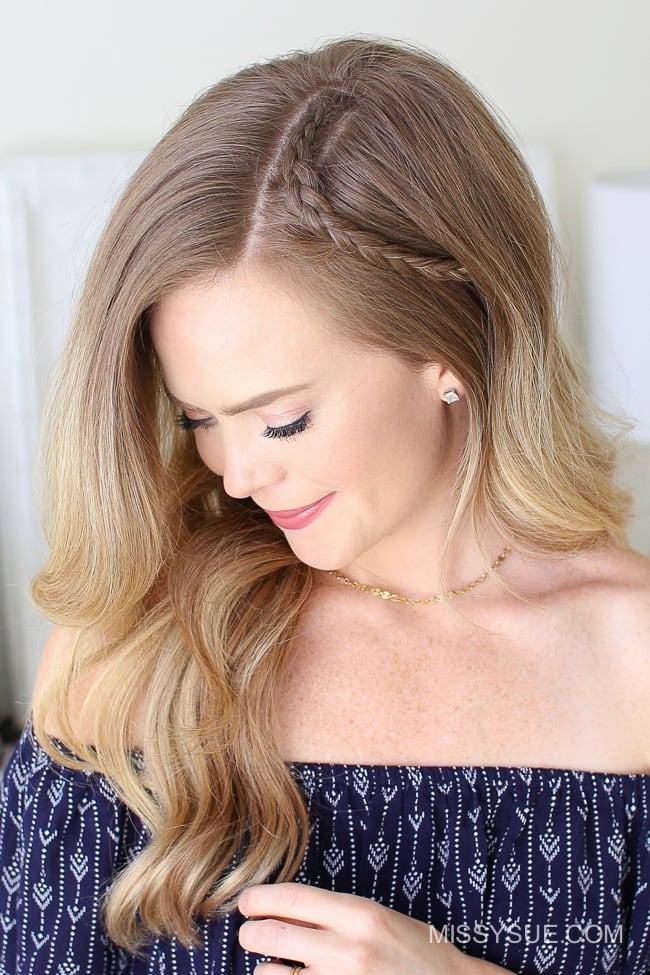
How do you keep braids from taking over the whole look? Two small braids along the middle part frame the face while the rest of the dark blonde hair falls in loose waves. The lighter highlights run through both the braided and waved sections, so the color looks one piece. Ask your stylist for: two small face-framing braids, loose waves. Fine, wavy hair at collarbone length or longer is the ideal canvas. Those who want all their hair braided should choose a different style. The contrast is the point.
Half-up braids meeting at the back
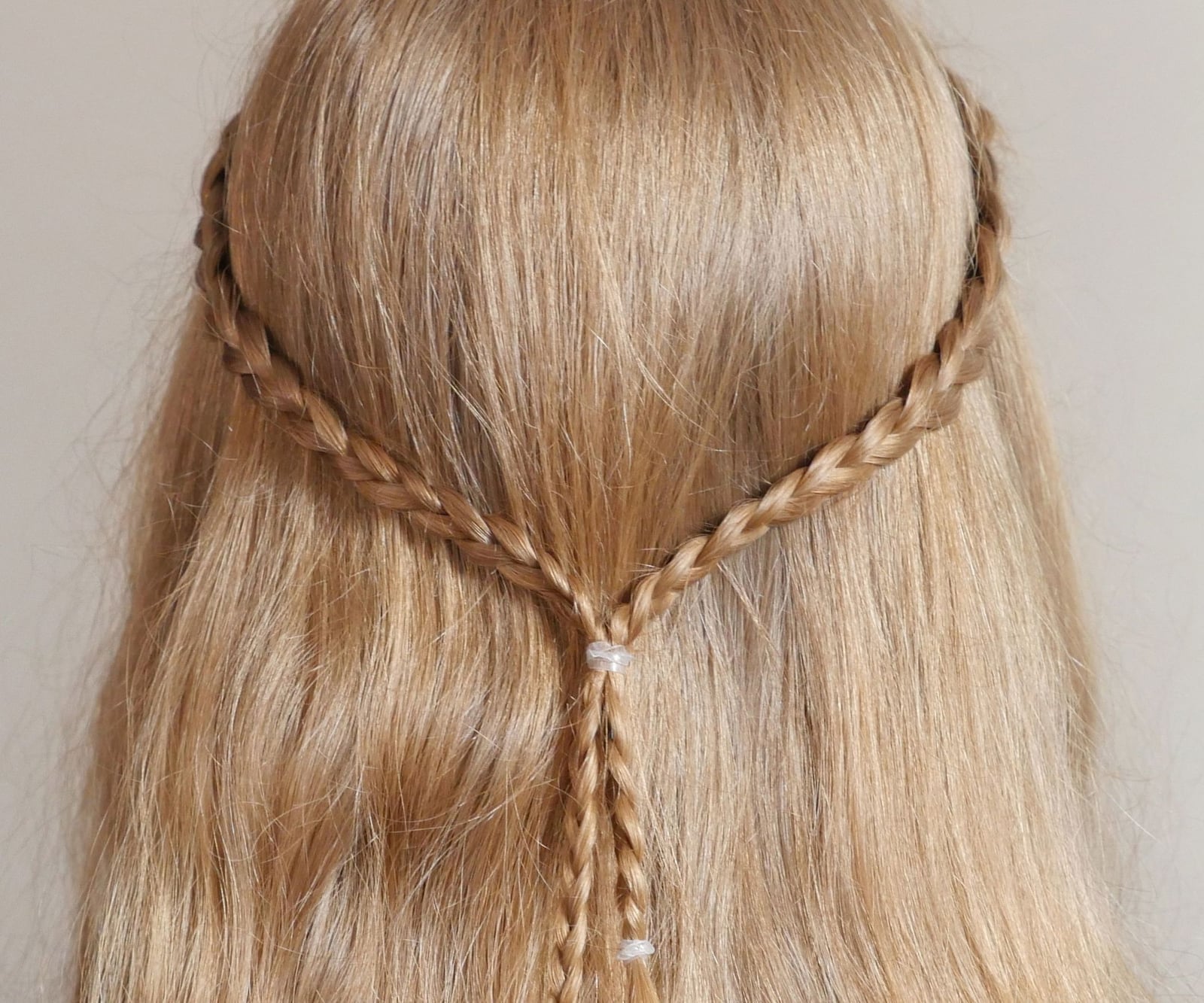
Two thin braids start at the temples and meet in the center back, where they continue as a single braided tail. The half-up construction keeps fine, straight ash blonde hair off the face while the subtle highlights add depth to the lower section. This is an easy DIY style: braid from each temple, join at the occipital bone, and braid the tail to the ends. The hold is reliable for a casual day out or a desk shift. No pins needed beyond the final band.
Loose side braid for warm brown hair
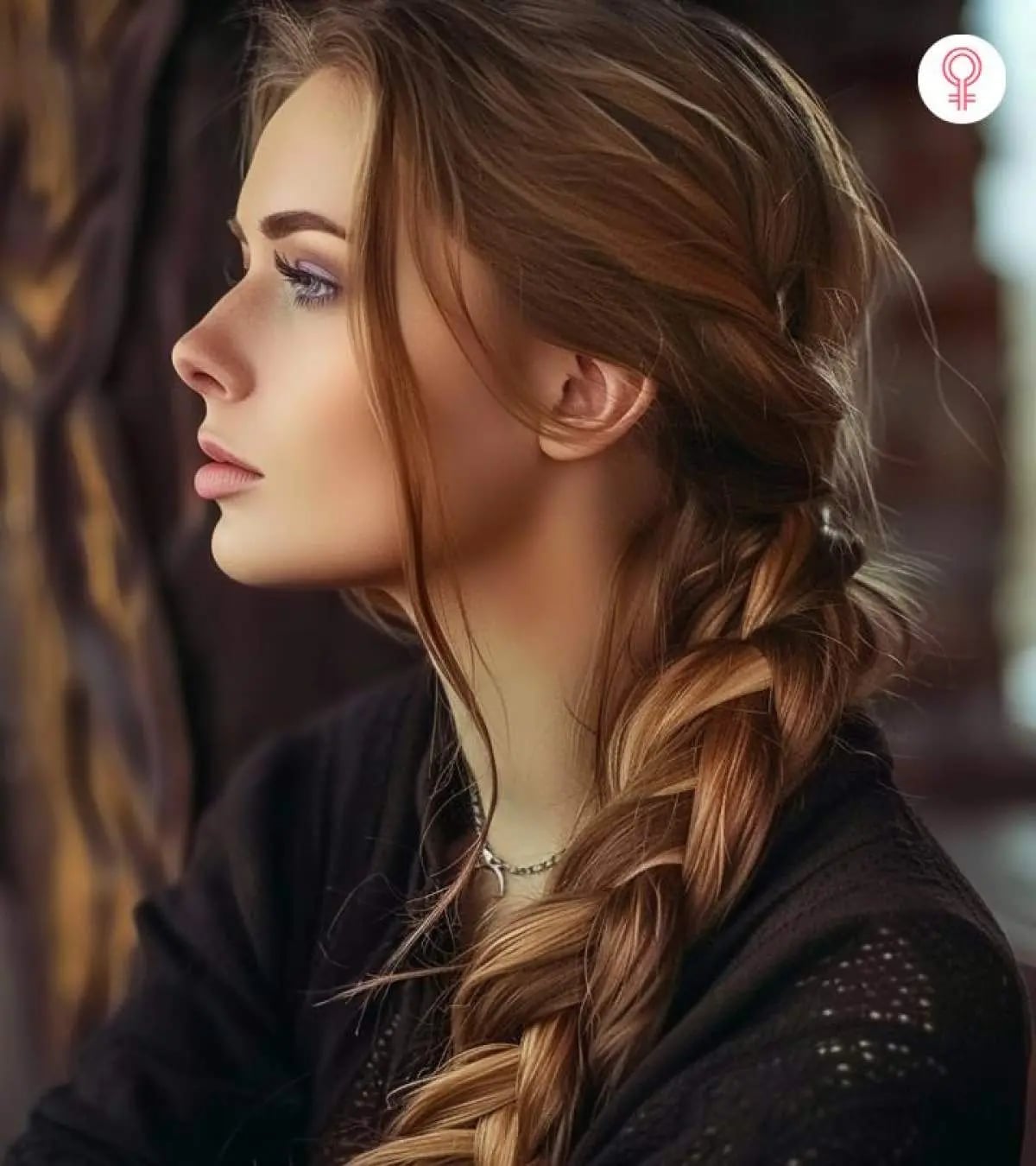
That loose, textured braid looks casual, but the catch is in the tension. Warm brown hair with blonde highlights reads best when the braid is actually loose, meaning a few strands escape within an hour. Fine, wavy texture holds the shape without needing a tight pull. The side part keeps it from feeling like a school style. This braid settles into its own relaxed shape, which is the point. A spritz of texture spray on dry hair before braiding gives the strands enough grip to stay put until you take it out.
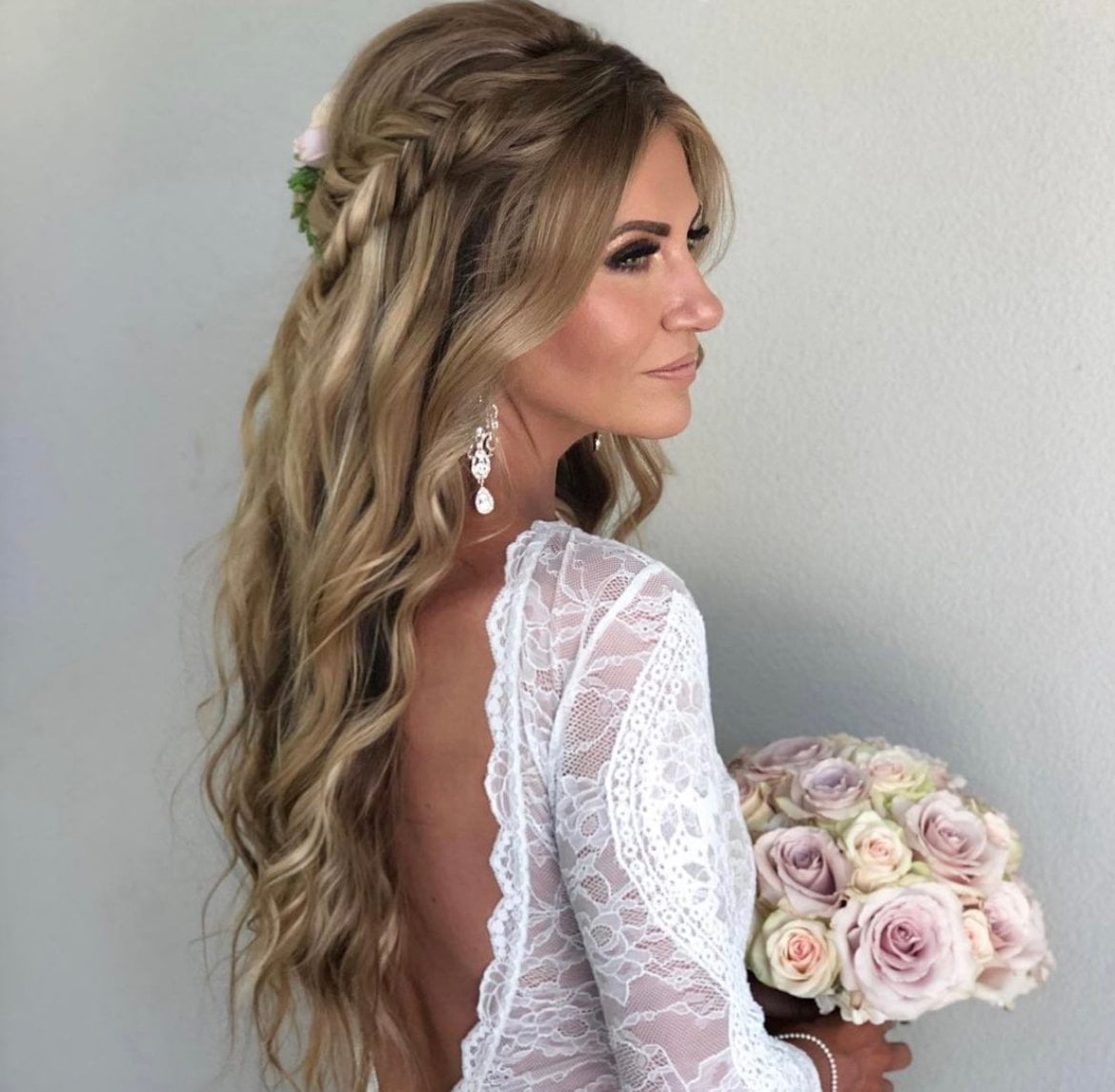
Braided crown wraps around the back
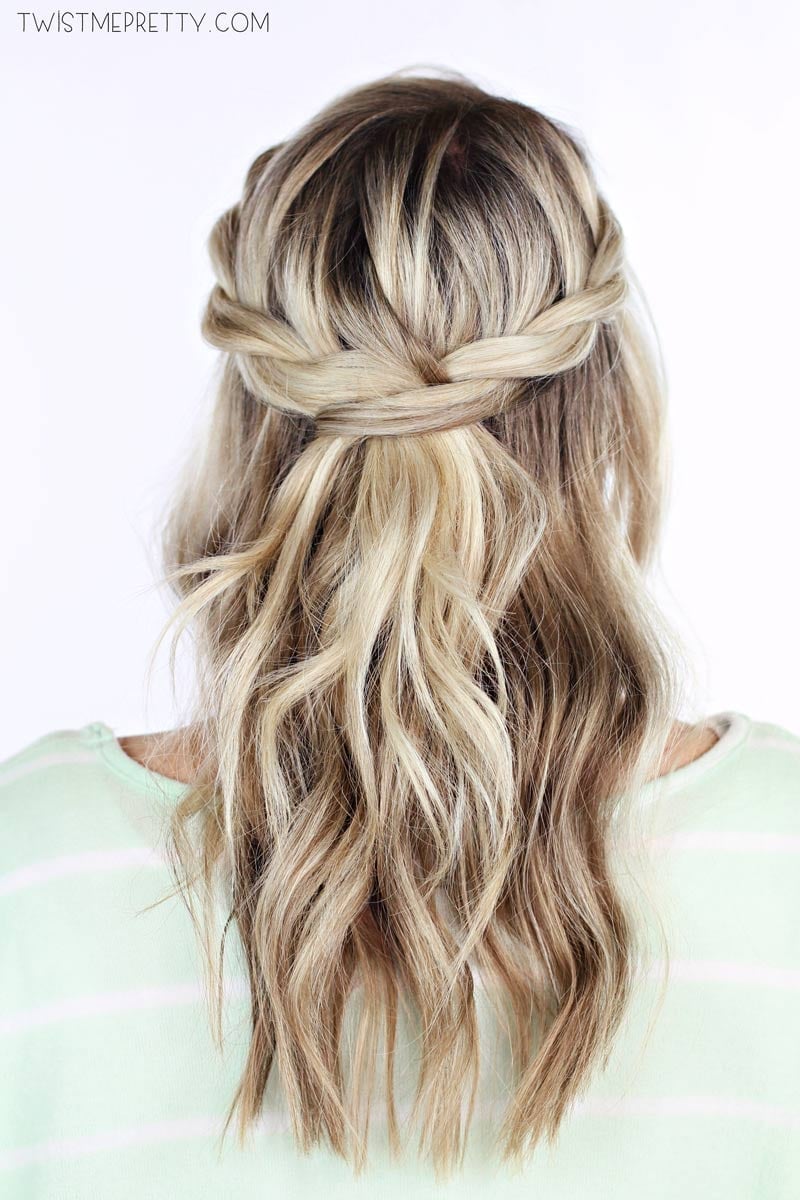
Compared to a full updo, this half-up braided crown keeps the hair down while clearing the face. Thick, wavy hair with a blonde balayage and root shadow shows the braid’s texture against the darker base beneath. The middle part splits the crown section evenly, making the wrap symmetrical from the back. It works for a wedding or a workday when you want something that looks intentional but takes under fifteen minutes. The rest of the hair falls in loose waves, so no curling iron needed if you start with day-two texture. A bobby pin at the nape keeps the crown from sliding.
Platinum blonde bubble braids
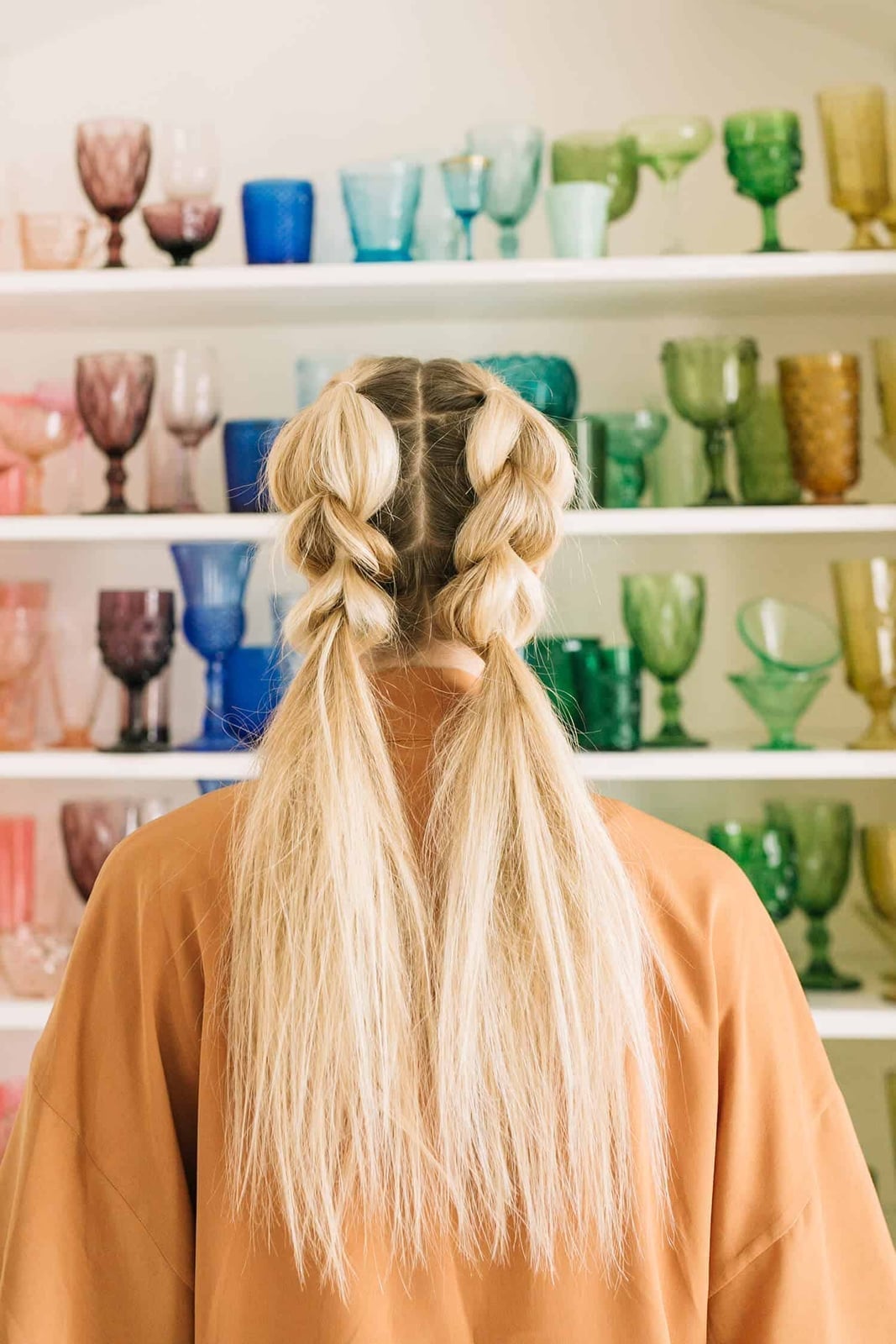
Two bubble braids start with a middle part and turn fine, straight platinum blonde hair into something with volume. The technique: elastic bands every inch or so, then gently tug each section until it rounds out. That straight texture actually helps the bubbles hold their shape without frizzing. No length word needed because the effect works from collarbone to mid-back. The color looks one flat shade, which is the point. A light hold spray over the finished braids keeps the bubbles from deflating by evening. Take the elastics out with scissors, not your teeth.
Long straight box braids with baby hairs
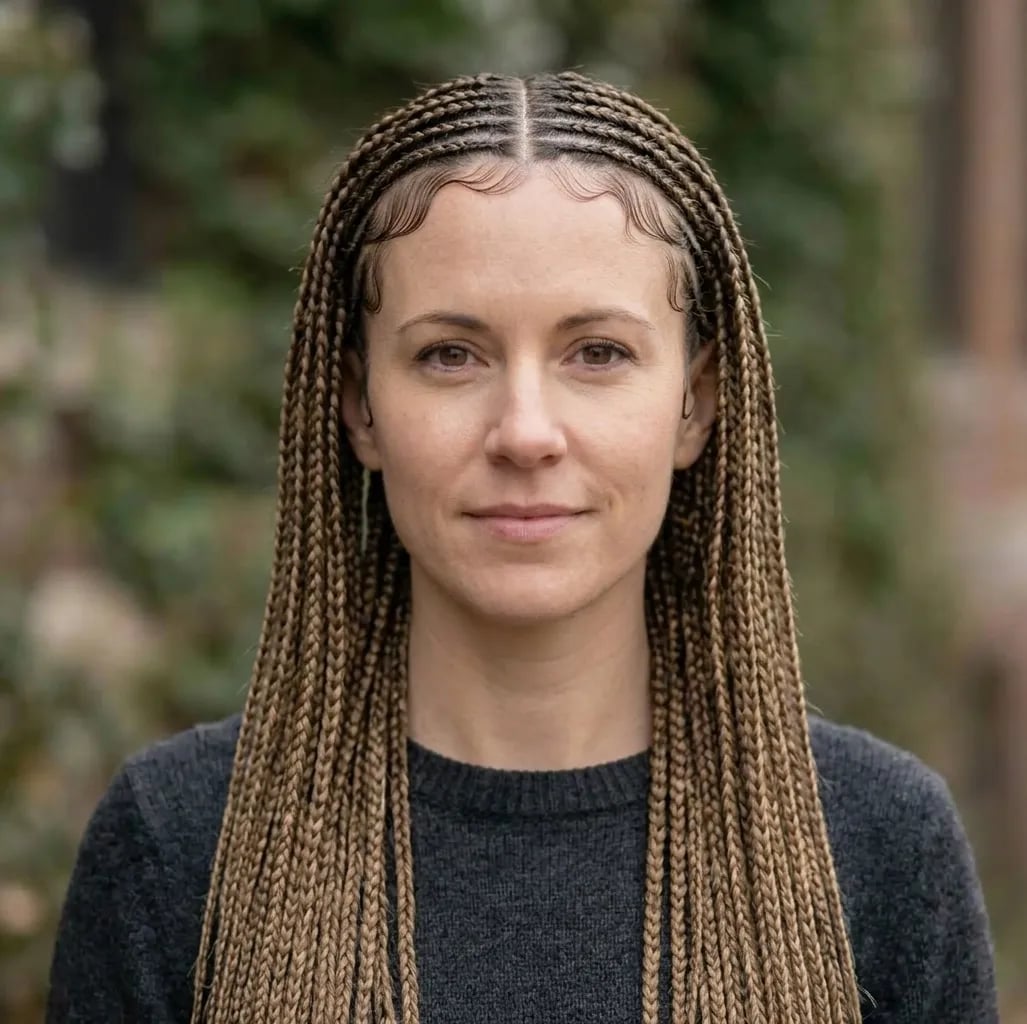
A middle part and long, straight box braids in dark blonde with lighter highlights create a clean frame. The detail that changes the look: wavy baby hairs laid along the hairline. They soften the geometry of the braids and keep the style from feeling severe. Most hair types can wear box braids, but the baby hairs require a gel or pomade with enough hold to stay curled without flaking. The highlights catch light differently than a solid shade, so the braids look more dimensional. Pass when you prefer natural texture or avoid synthetic extensions altogether. The install takes several hours; the upkeep is a trim every six to eight weeks.
French braid into a chunky side braid
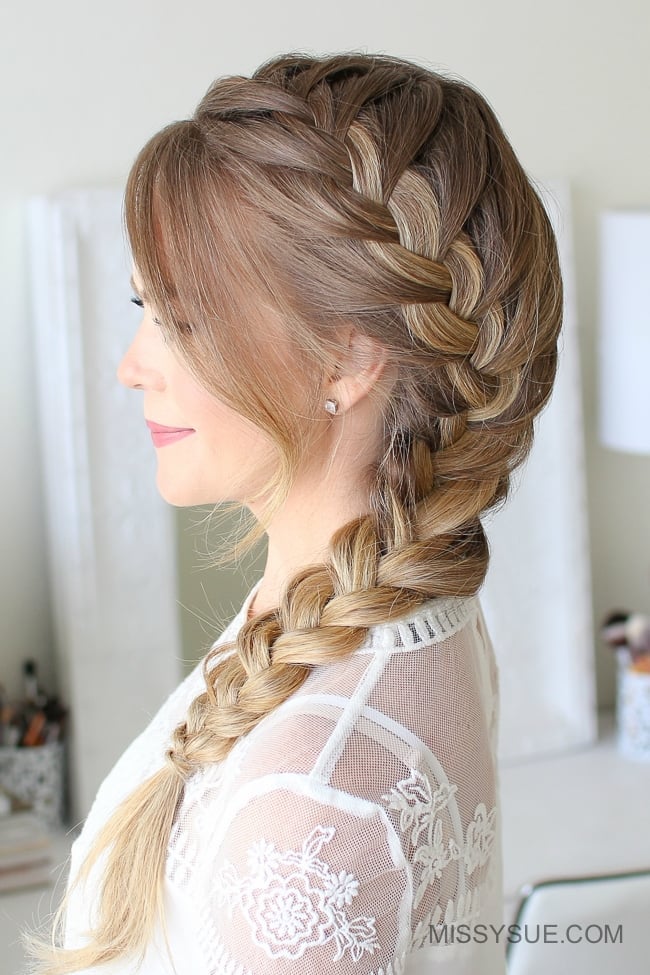
How do you get that transition from a tight French braid at the crown into a chunky side braid without it looking like two separate styles? Tell your stylist: French braid into chunky side braid, side-swept bangs. Dark blonde hair with lighter highlights makes the twist visible through each section. The side part sets the braid off-center, and the side-swept bangs soften the hairline. Fine to medium density works best because thick hair can make the chunky section feel bulky. The braiding skill required is moderate; a salon visit ensures the tension stays even from crown to tip. A texture spray on the finished braid keeps the strands from slipping apart.
Ash blonde dutch braids into a side braid
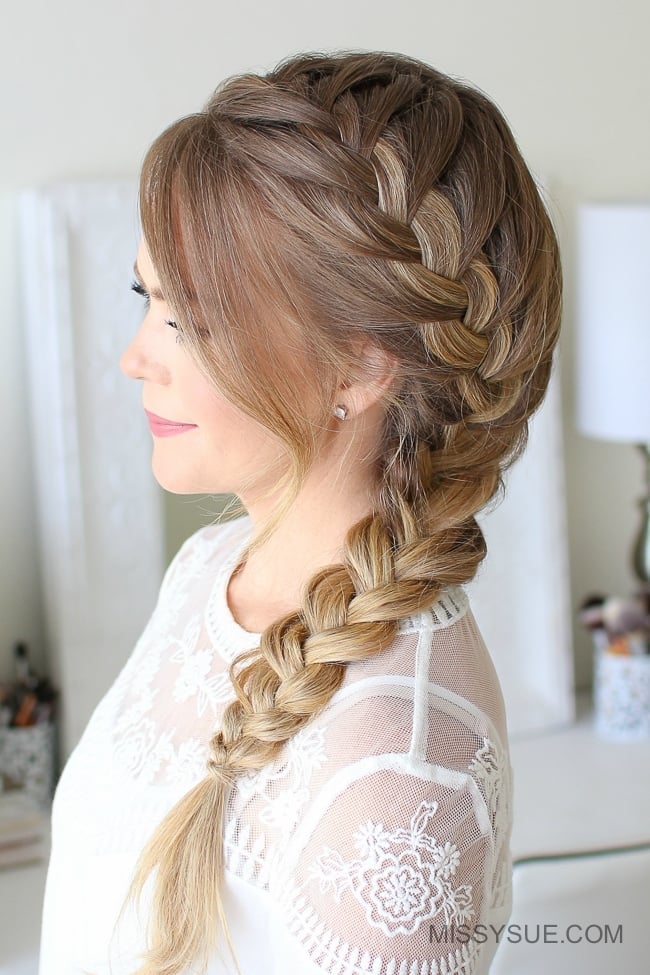
Side braids are one thing; two dutch braids feeding into a single chunky side braid is another. The ash blonde base with subtle highlights gains texture from the alternating weave. Fine, wavy hair holds this structure best, and the side-swept bangs soften the whole thing. Those who prefer a single braid from the start should skip this. The double-to-one transition is the whole point. The chunky side braid lands against the shoulder, visible from any angle. Styling time runs about twenty minutes once you have the rhythm down. Trim rhythm stays every eight weeks to keep the bangs in shape.
Box braids with caramel highlights and curly ends
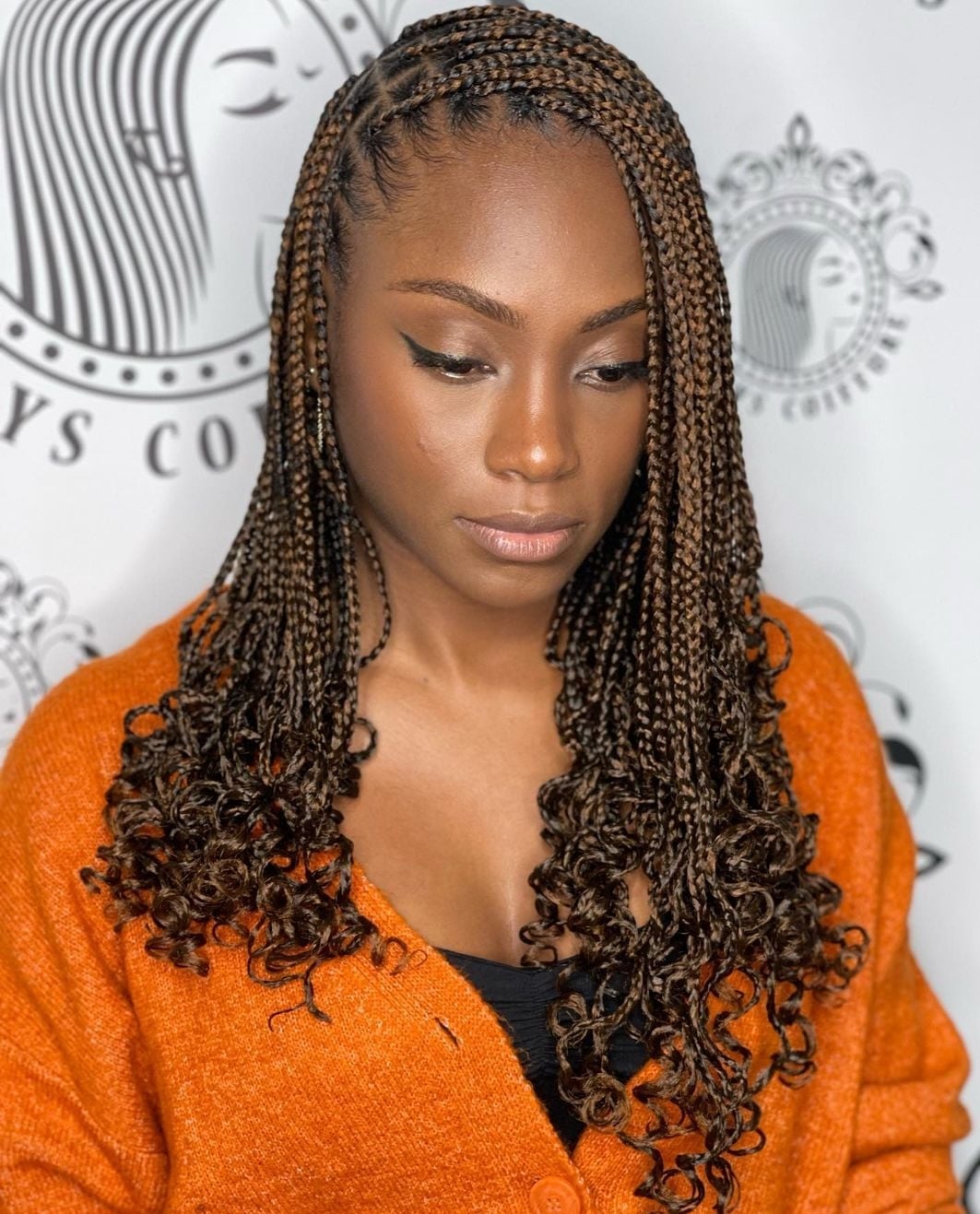
Caramel against dark brown looks intentional, not accidental. The side part opens the scalp pattern, and the curly ends break the straight line of the box braids. Fine, coily texture takes the braid well and keeps the curl at the ends from unraveling. The design relies on the contrast between the smooth braid and the textured finish. An intricate braiding pattern means a salon booking is the smart move. Color maintenance involves a toning shampoo every few washes to keep the caramel from warming up against the dark base.
Thin braids cascade down the back
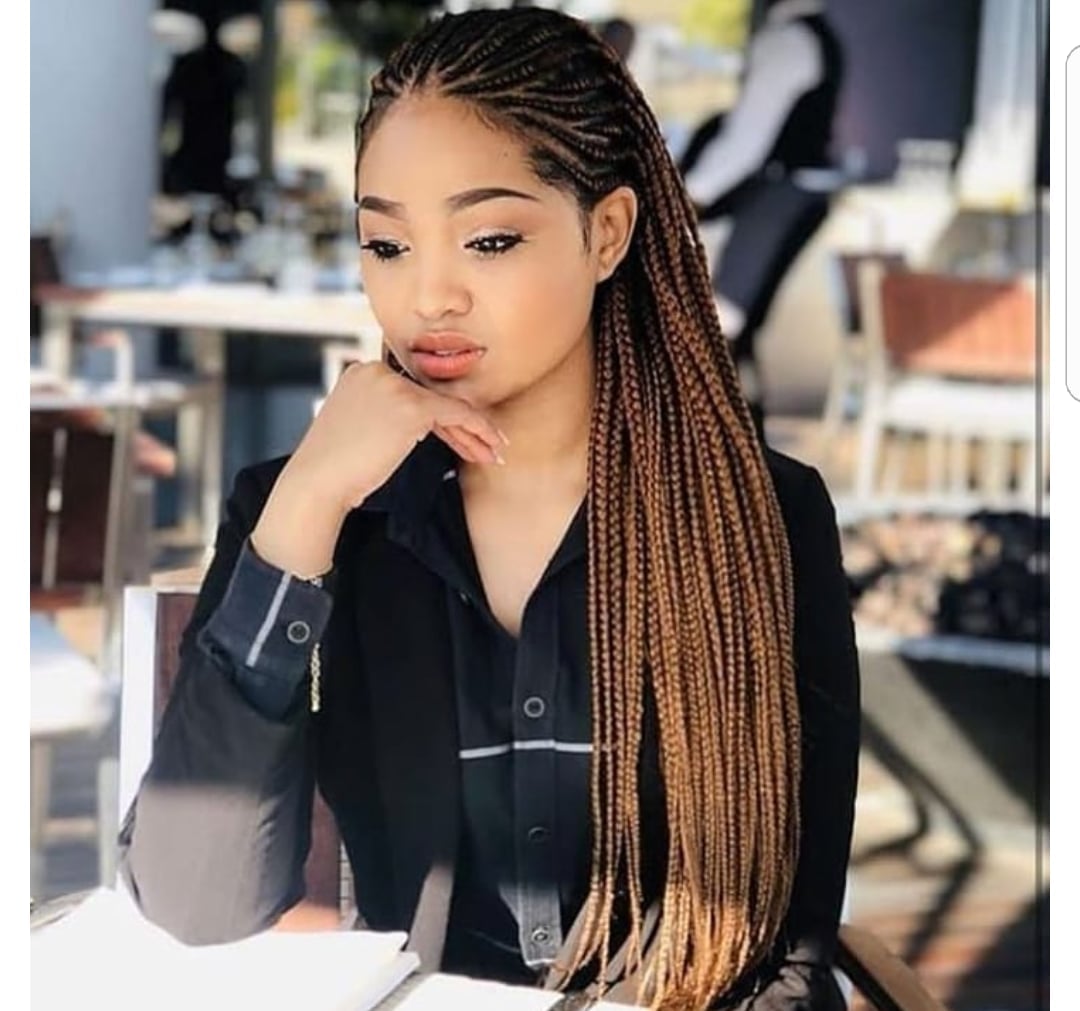
Long, thin box braids carry weight in a literal sense. The middle part keeps the line symmetrical, and the caramel highlights woven through the dark brown base add depth. The trade-off: thin braids take longer to install and more time to take down. Thicker braids install faster. The scalp tension is lower with thin sections, which matters for sensitive scalps. A salon visit is the standard path here, given the hours involved. The braids last about six weeks before the new growth needs attention.
Texture stays straight throughout, which means the highlights read clearly. The front view shows the braids falling past the collarbone, though the exact length depends on your starting point.
Box braids with metal rings and auburn highlights
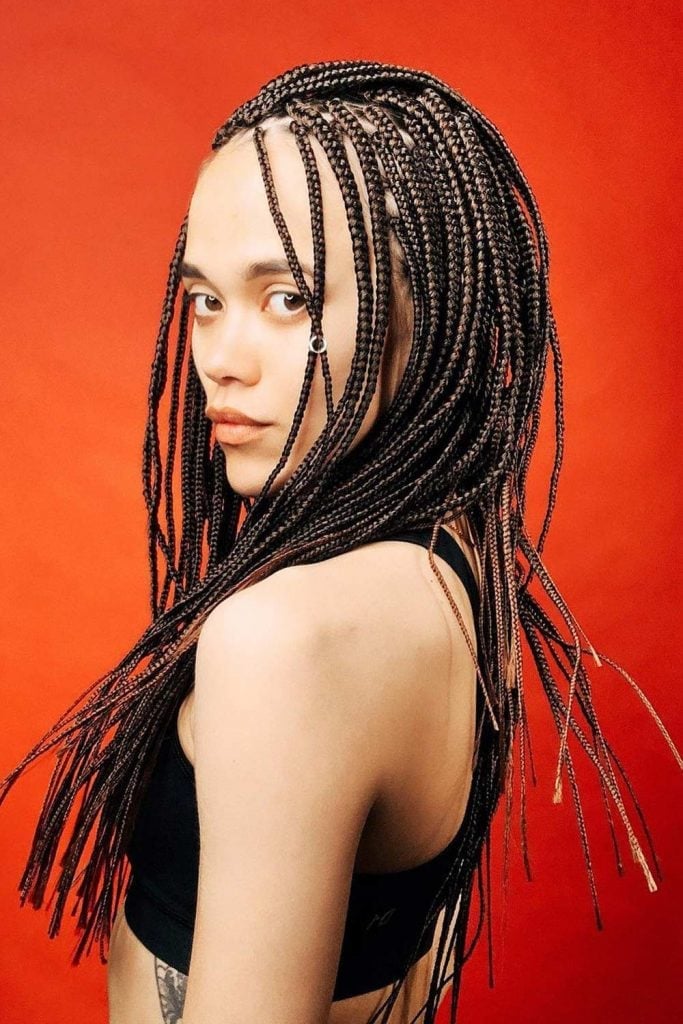
Middle part with auburn highlights against dark brown is a warm combination. Add small metal rings on select braids, and the look shifts from everyday to festival-ready. The rings catch light without adding weight, so the braids move naturally. Fine, straight texture keeps the braids smooth and the rings from catching. This is a time-consuming braiding technique best achieved in a salon setting. The upkeep involves checking the rings for snags and retightening any that shift. Occasion-wise, this one works for summer events where you want the braids to do the talking.
Braids transition into loose wavy curls
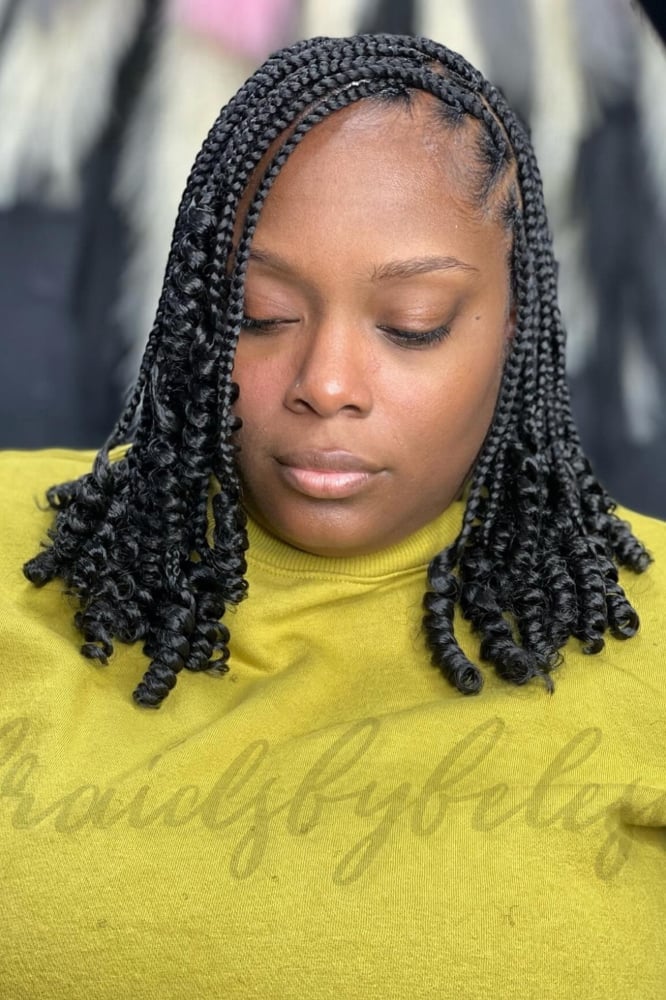
Straight braids for the first few inches, then loose wavy curls at the ends. The middle part balances the volume, and the black base keeps the focus on the texture shift. Fine, wavy hair takes this technique well because the natural wave helps the ends hold. Salon precision matters for the braid section, since the transition point needs to land at a consistent height. The playful contrast works for casual days and keeps the style from looking too uniform.
Geometric part with gold thread accents
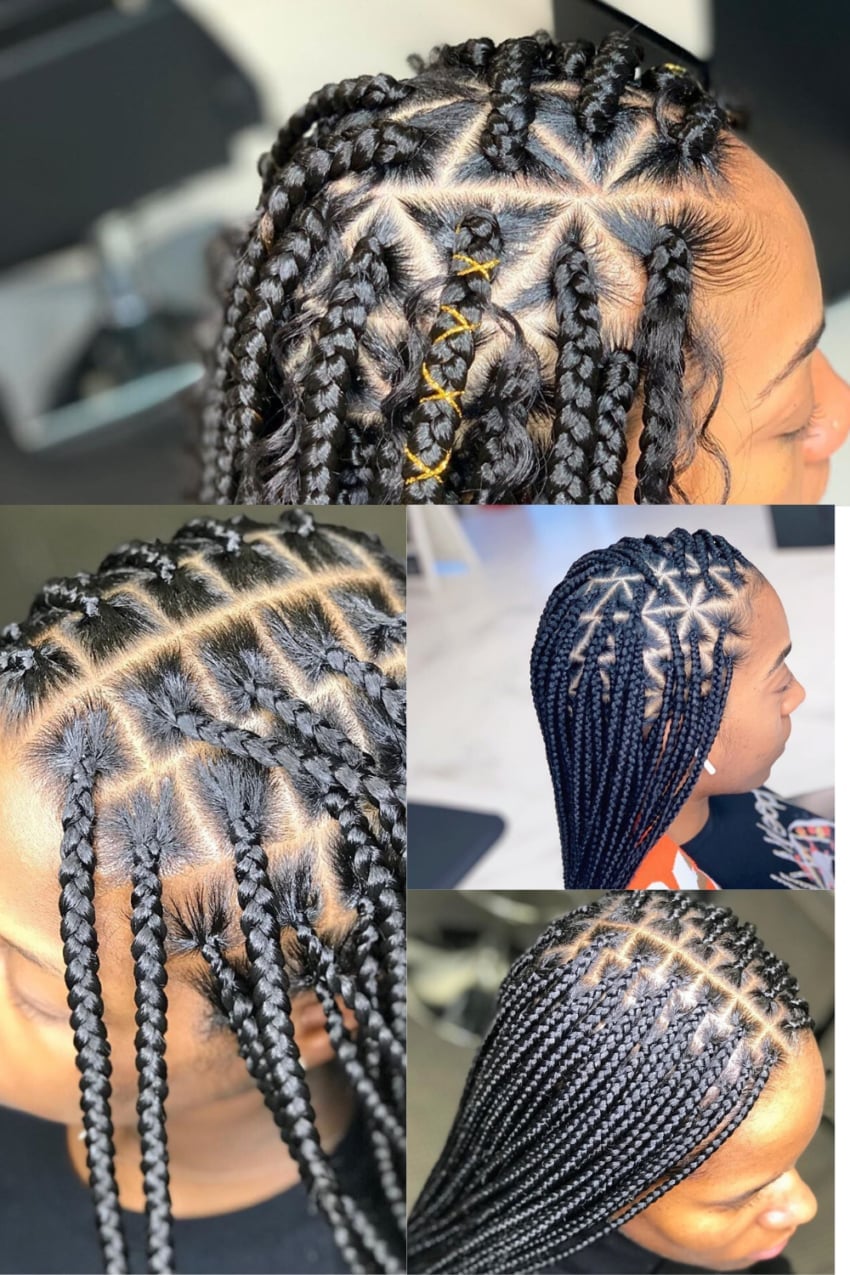
Box braids with wavy ends get an architectural upgrade from a geometric parting pattern on the scalp. The middle part stays clean, but the sectioning around it follows angles, not a straight line. Gold thread wrapped around a few braids turns the design into something you notice across a room. Most face shapes can wear this. The geometry draws the eye upward, so a round or square face looks balanced. Those who feel decorative accents are too much for a Tuesday should choose a simpler style. Tell your stylist: box braids with geometric parting and gold thread accents.
Thin braids with gold beads and dark blonde highlights
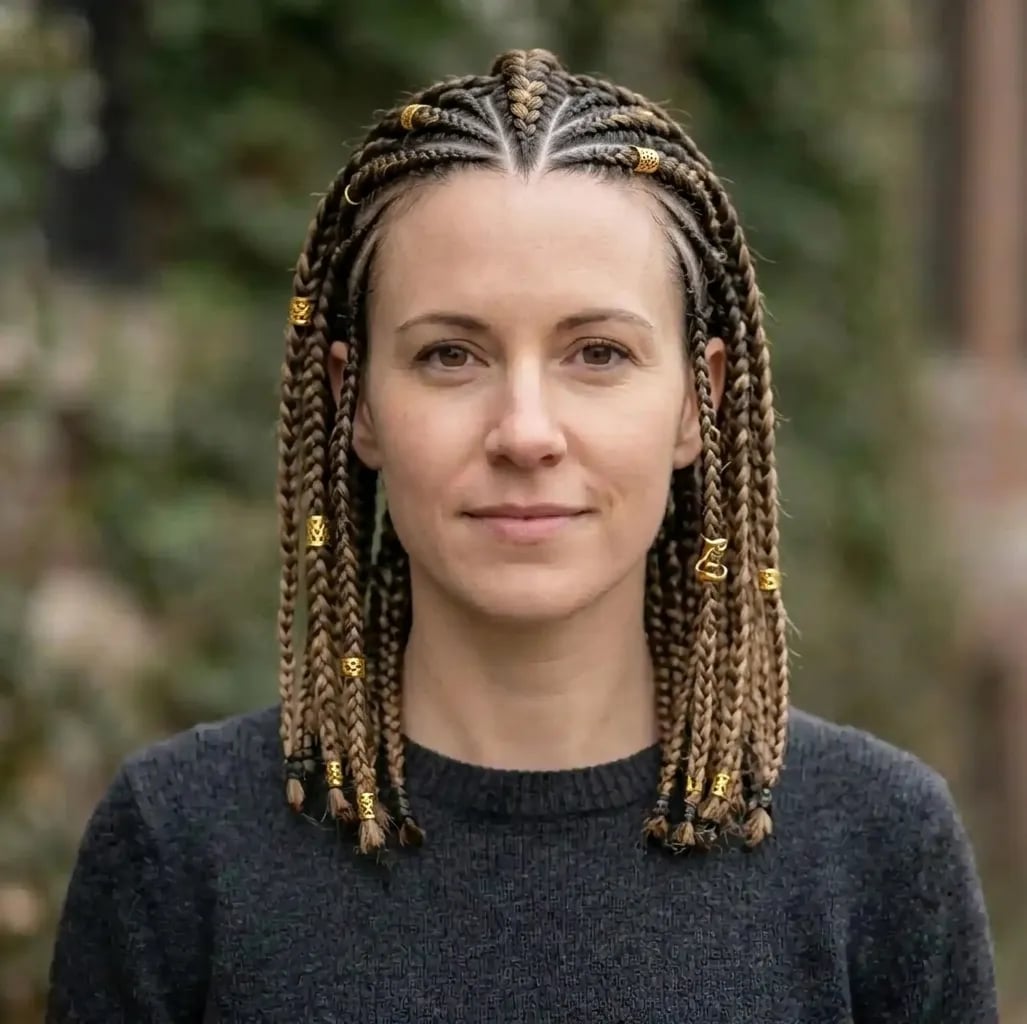
Not every braided style needs a heavy look. This one keeps it light, thin braids in dark blonde with lighter highlights, a sharp middle parting and gold beads woven in at intervals. The beads add weight at specific points, so the braids hang straight rather than fluffing out. Fine hair works well here because the thin sections hold the beads without pulling. The catch: the parting precision and bead placement require a salon visit, not a bathroom mirror. Have your stylist do: thin braids with gold beads in dark blonde with highlights.
Neat black braids with metal rings
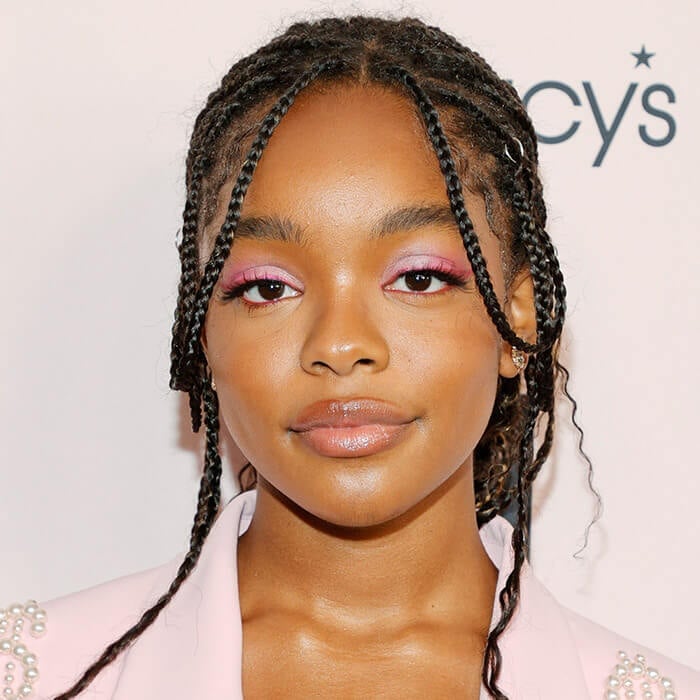
Thick black hair braided into neat, long sections with a precise middle parting and small metal rings threaded onto a few strands. The rings sit flat against the braid, so they do not catch on collars or scarves. This is the version for someone who wants a decorative detail but not the glint of gold. The rings appear cooler and more industrial. Thick hair of at least shoulder length gives the braids enough weight to hang smoothly. If you prefer hair that moves freely, note that the rings anchor each braid in place. Tell your stylist: neat long braids, black hair, metal rings.
Geometric parting for a braided top knot
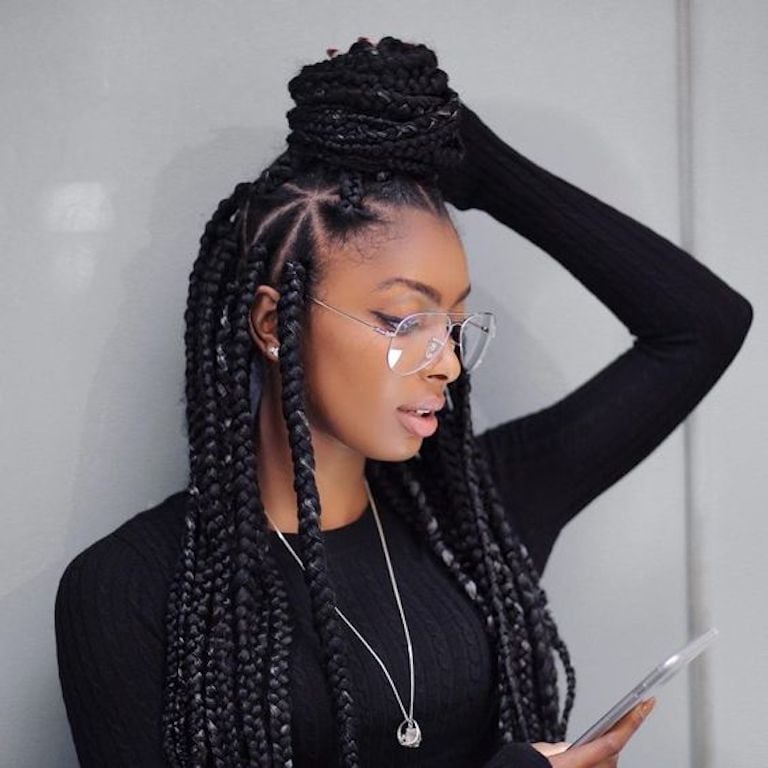
Sharp box braids rise into a high braided top knot, and the geometric parting at the crown makes the whole shape feel deliberate. Thick black hair with subtle gray streaks falls in loose, straight braids below the knot. The gray streaks add a natural tonal shift without a salon color process. Straight hair that can hold a braid without slipping is the base here. The top knot keeps hair off the neck in warm weather, but the mass of braids below still has weight. Those who plan to sleep on this should reconsider. The knot needs a silk wrap or it will dent. Book it as: geometric parting, box braids, braided top knot.
Sleek black braids with zig-zag parting
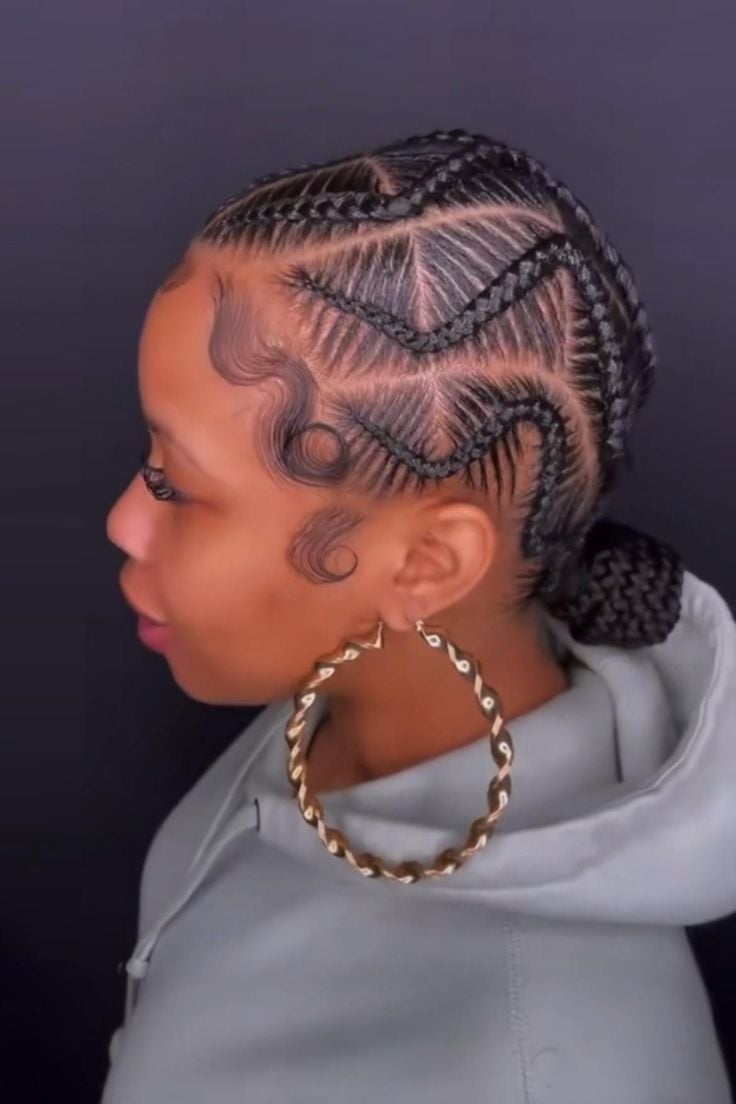
Zig-zag parting turns a straightforward braid style into a graphic pattern. Sleek, straight black hair is braided tightly from scalp to ends, with slicked edges that hold every hair in place.
The trade-off: that parting precision takes time. A straight middle part takes minutes; a zig-zag requires mapping, sectioning and patience. Thick, straight hair of at least shoulder length gives the pattern enough surface area to show. This is a sharp, graphic look that does not blur into casual. The complexity of the parting pattern suggests a salon-leaning effort, so expect a longer appointment and a precise result.
Cornrow braids form a zig-zag pattern
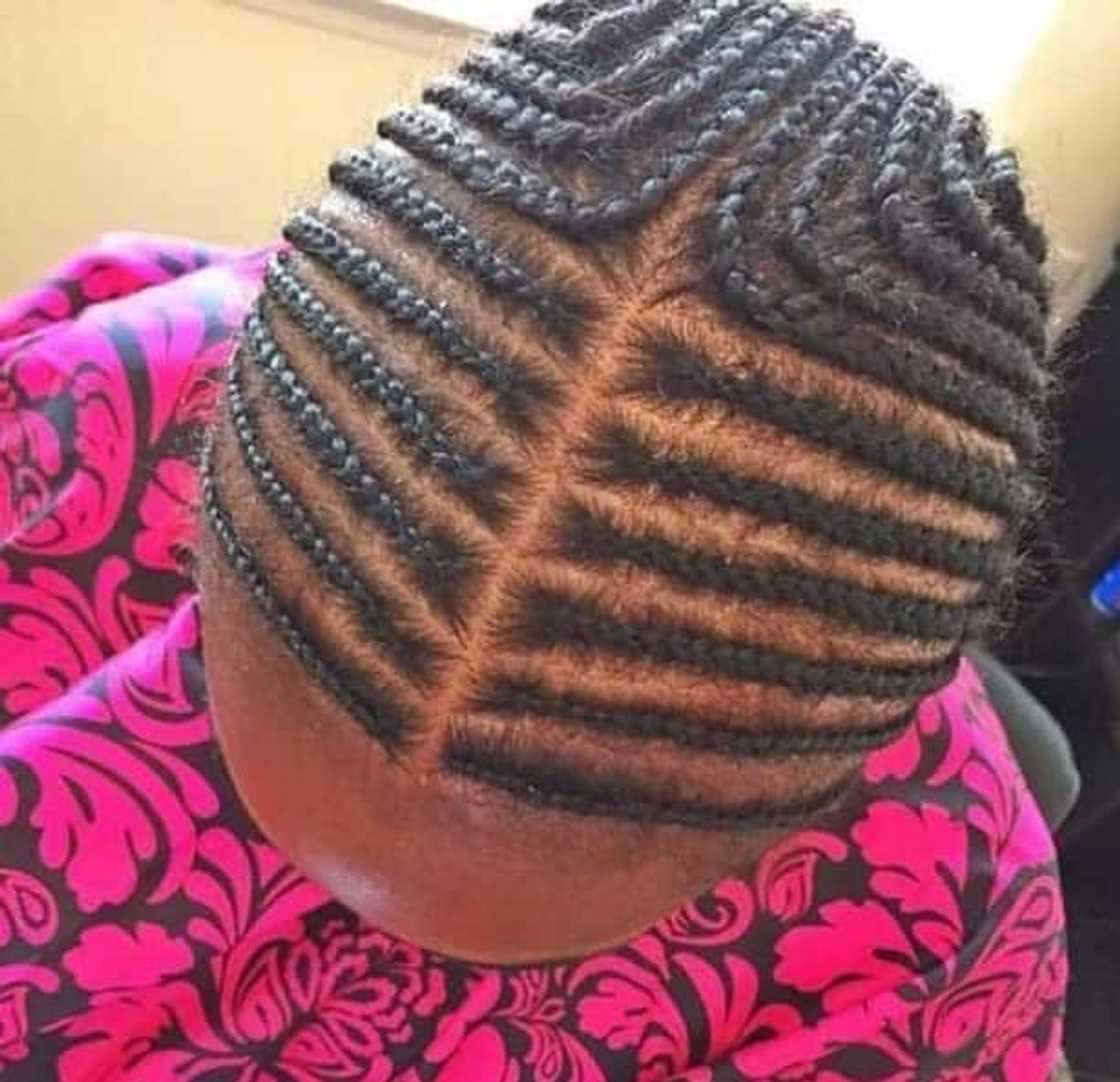
Geometric precision turns a protective style into a statement. The zig-zag parting carves the scalp into sharp angles, each cornrow following the line without deviation. Thick, straight black hair holds the pattern cleanly; no stray strands soften the edges. You need at least shoulder length and a stylist who enjoys drafting. Have your stylist do: zig-zag parting cornrow braids. The catch: this is a sit-still-for-two-hours design, not a quick Friday braid. Softer braid styles let the part blur into the head, but this look demands clean lines. The hold is tight, the finish is deliberately architectural.
Small braids styled with loose coils
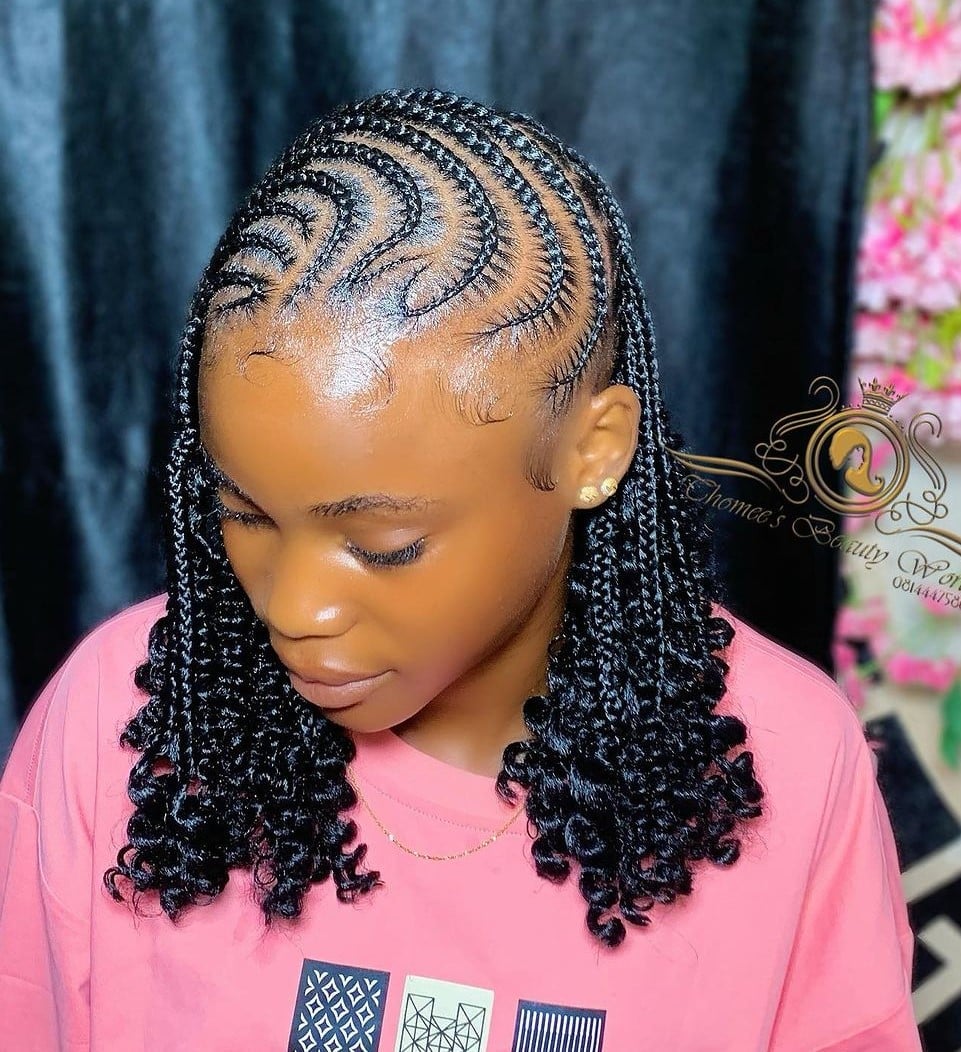
Zig-zag parting again, but this time the braids stop before the ends. The last few inches are left unbraided, coiled into loose spirals that bounce against the shoulder. Thick, coily black hair gives each curl enough weight to swing. The technique is two-part: the braider sections the zig-zag pattern first, then switches to a finger-coil finish. Have your stylist do: zig-zag parting braids, loose coil ends. The hold is firm through the braided section and soft at the tips. Those who want a uniform texture from root to end should skip this.
Cornrows showcase a sleek neat look
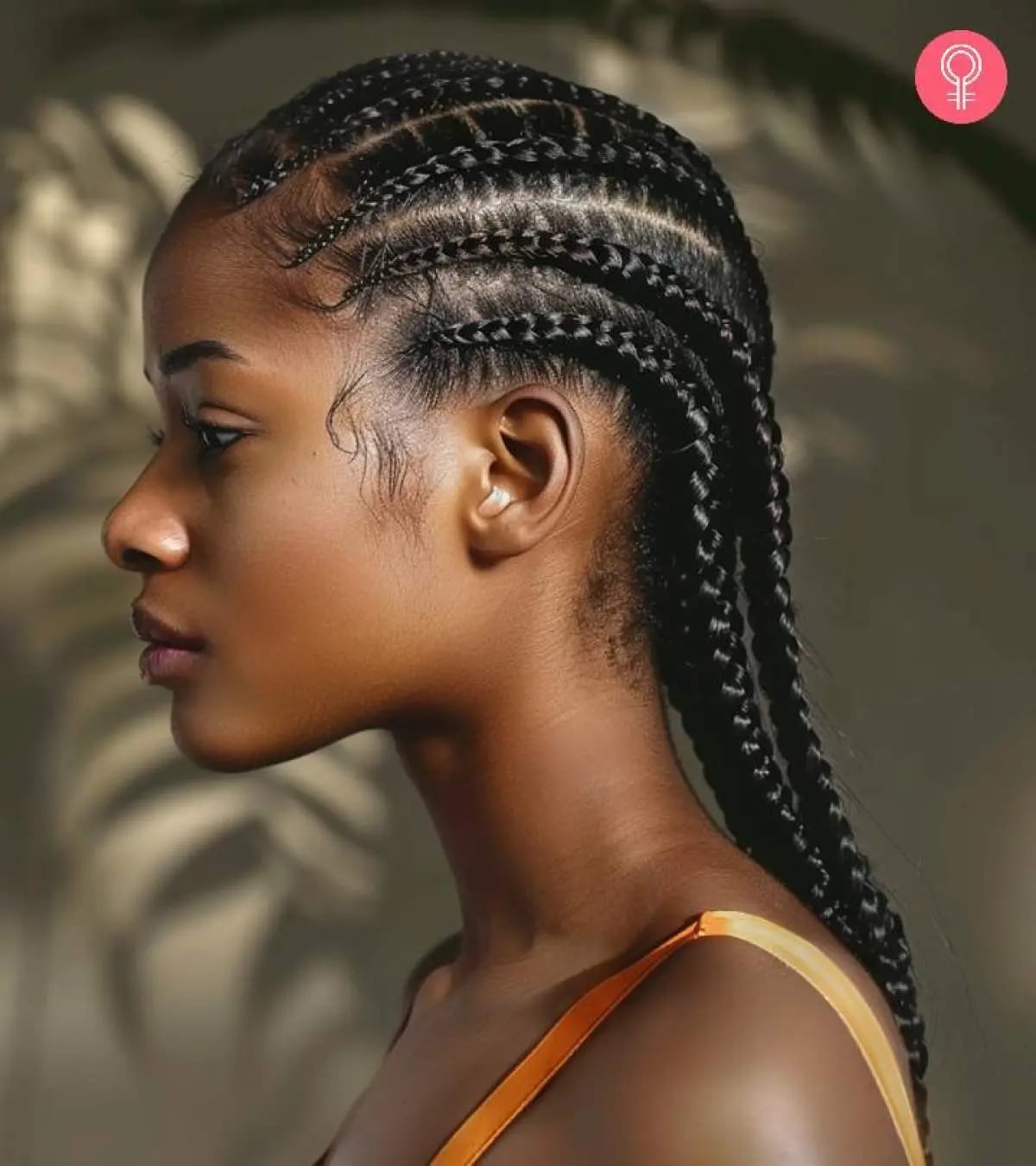
Sleek cornrows and loose braids serve different occasions. This version is all polish: thick black hair parted down the middle, each cornrow fed straight back, no interruption. The hairline is clean, the scalp visible between rows. It suits a round face because the vertical lines add length. Those who prefer braids with texture or volume at the crown should choose a different style. The hold is tight enough to last a week without redoing the edges. A middle part and straight feed-in technique keep the finish glossy and uniform.
Neatly sectioned cornrows with middle part

Fine, straight black hair needs a precise hand to keep cornrows from looking sparse. Here the sections are measured, each row the same width, the middle part a clean line from forehead to nape. The braids lie flat against the scalp, no bumps or loose tension. Have your stylist do: neat cornrows, middle part. The hold is firm and the hairline stays sharp for several days. Textured braids add volume, but a fine texture works in this style’s favor: the rows look delicate, not thin.
Intricate braids feature neatly laid edges, close-up take
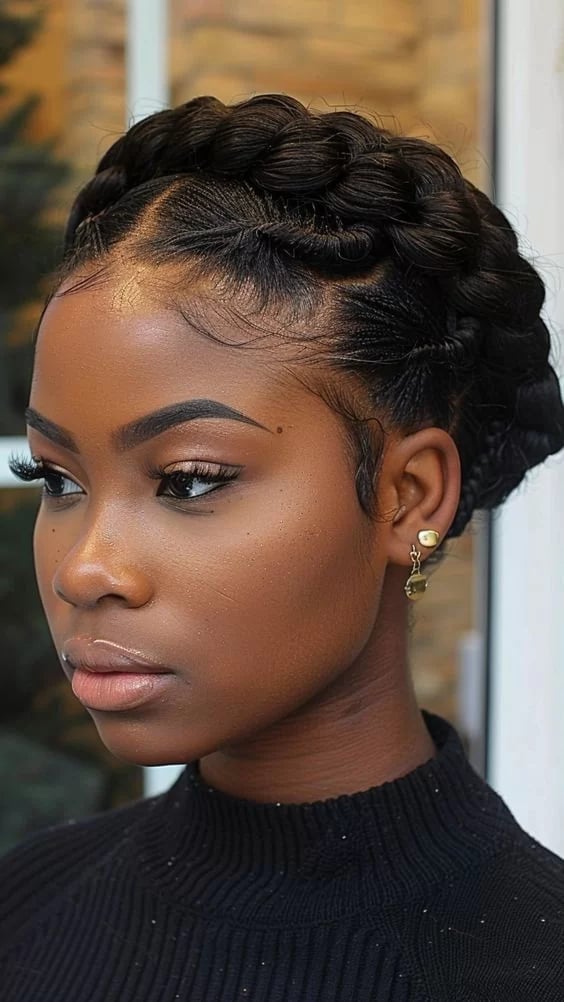
Neatly laid edges separate a neat braid style from one that looks rushed. Thick black hair parts cleanly down the middle, each braid woven with precision from scalp to end. The edges are smoothed flat against the hairline, no stray strands breaking the line. This is the version for when you want the braids themselves to be the focus, not a pattern or an accessory. A more natural hairline that shows texture at the edges is a different look. Thick hair holds the intricate sections without slipping. The middle part keeps the symmetry clean, and the black shade lets the braid structure speak.
Curved cornrows into a low bun with tendrils
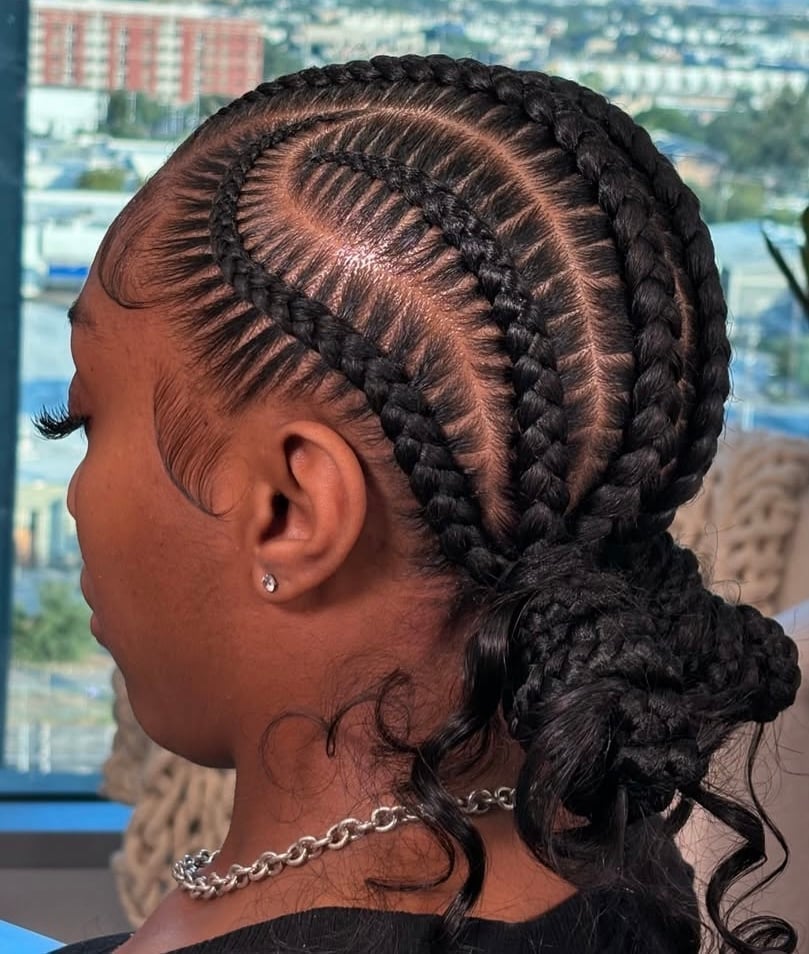
Precisely sculpted cornrows curve from a middle parting into a low bun at the nape. Thick, straight black hair holds the shape cleanly. Loose tendrils frame the face and neck, softening the structure. The curved cornrow pattern is the standout detail. It takes a steady hand and a good eye to map out the lines before you braid. Salon precision is required for the intricate parting. Book it as: curved cornrows, low bun, loose tendrils. The bun is the whole point. Expect the style to hold two or three days before the tendrils need a quick re-set with a curling iron.
Intricate cornrows leading to a low bun
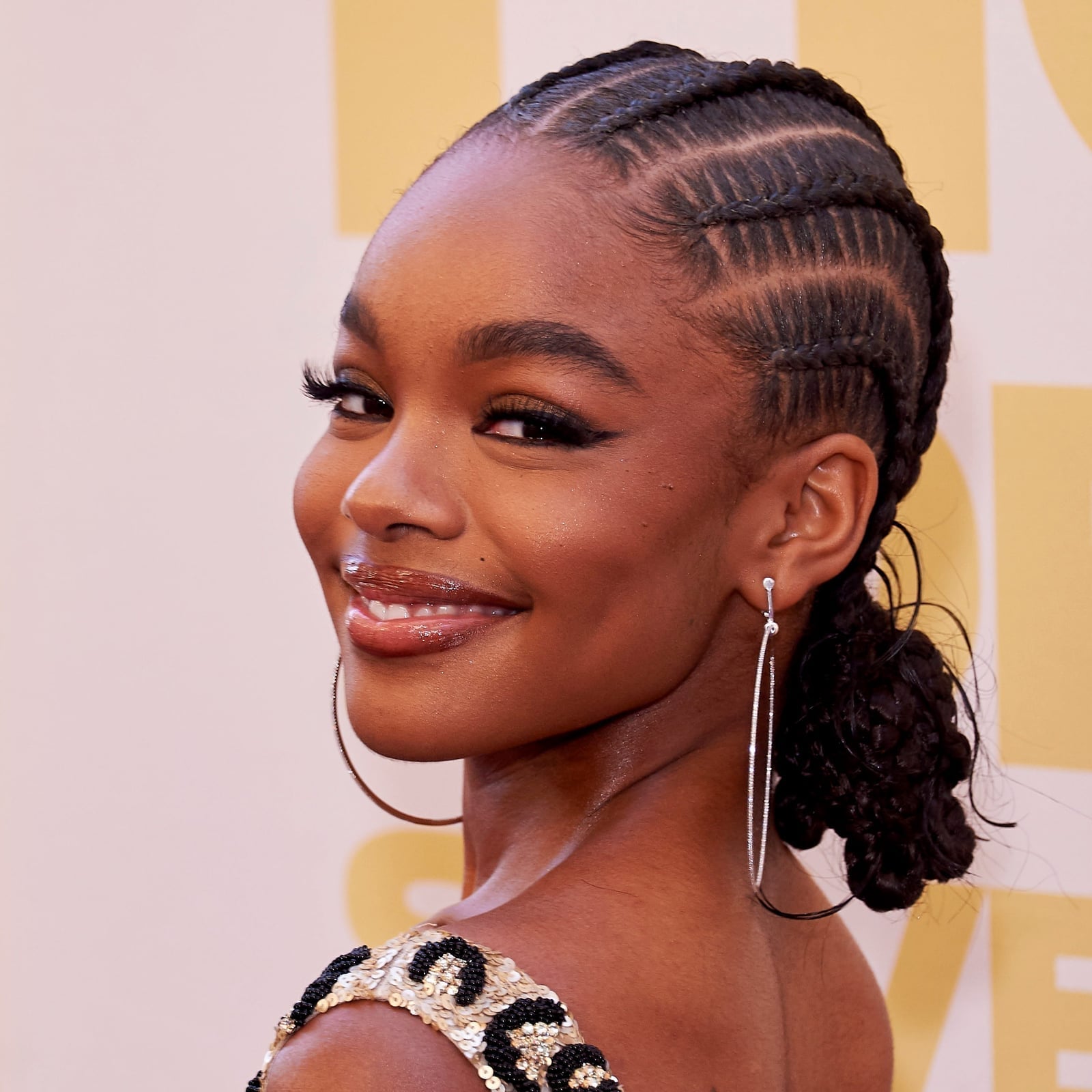
Thick, coily hair gets a middle part and intricate cornrows that sweep into a textured low bun. Loose tendrils frame the face, adding softness to the sculpted scalp. The catch: this look demands a stylist who works slowly and precisely. The intricate braiding takes time, and rushing it shows. Those who prefer straight hair should pass; the cornrows rely on natural texture for grip. Have your stylist do: intricate cornrows, low bun, loose tendrils. The bun hides any uneven ends, which buys you an extra week before a touch-up.
Two high braided buns with middle part
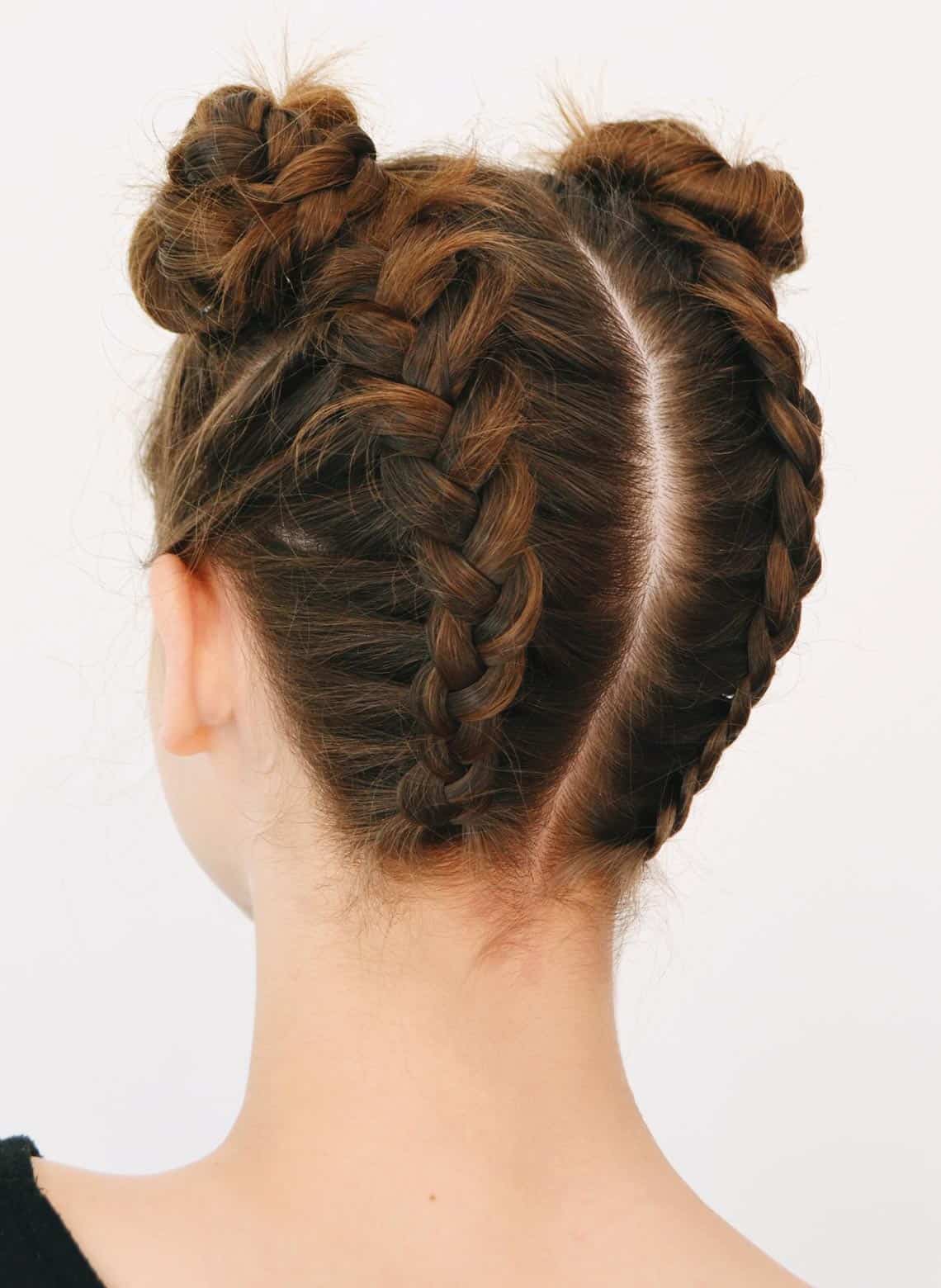
Two high braided buns sit at the crown, parted cleanly down the middle. Thick, wavy medium brown hair is braided and twisted into symmetrical knots. The back view shows the symmetry and the intricate braiding detail that makes this style work. Summer evenings call for this look. It keeps hair off the neck and still looks neat. If you prefer braids worn down, the buns require commitment. The symmetry demands a salon visit; mirror-splitting a middle part yourself is a gamble. Expect a solid three-day hold with a silk scarf at night.
Shaved sides with two-toned braids and ponytail
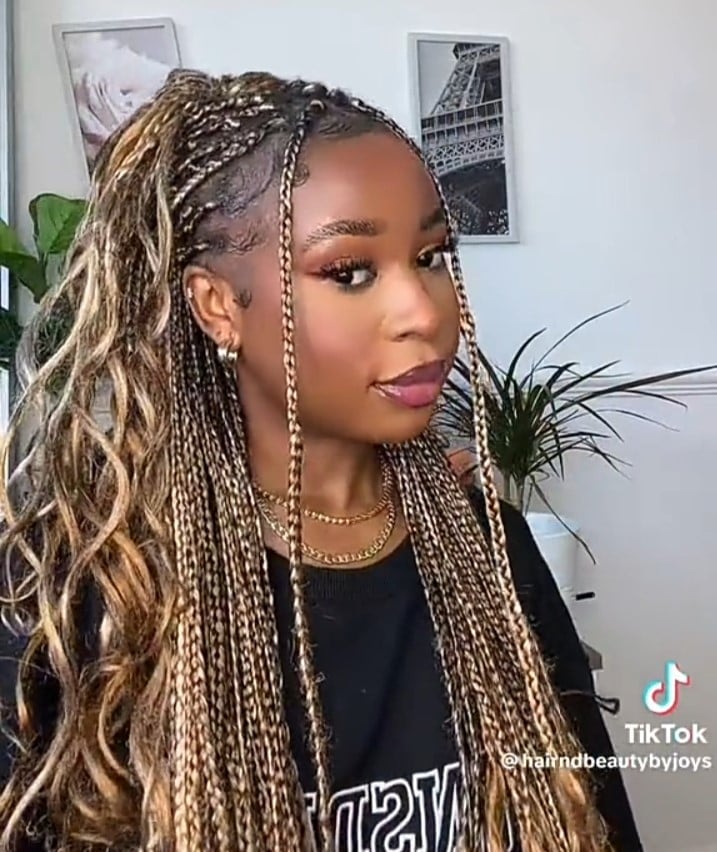
Shaved sides meet a high ponytail with loose wavy ends. Fine hair gets two-toned braids with blonde highlights running through the black base, all parted down the middle. The braids are built from the shaved line upward, gathered, and left wavy for contrast. Any stylist who works with extensions can execute this. Have your stylist do: shaved sides, two-toned braids, high ponytail.
Herringbone braid pattern with loose ends
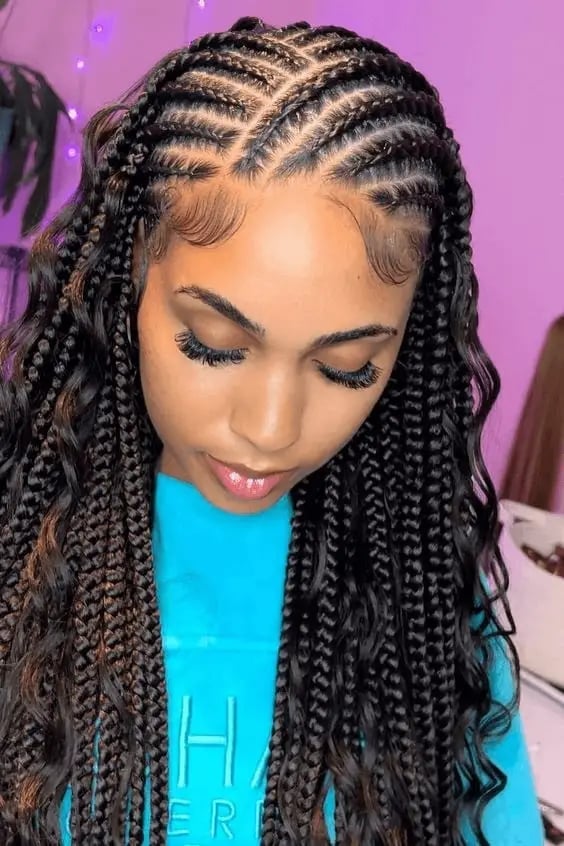
A herringbone braid pattern at the crown transitions into box braids with loose, wavy ends. Thick, wavy black hair shows the chevron detail clearly. The pattern works best on hair that holds a firm part; fine or slippery textures may blur the lines. Those who prefer a uniform braid style should skip this. The herringbone section is a deliberate contrast. The loose ends add movement but will fray faster than sealed tips. Have your stylist do: herringbone braid pattern, box braids, loose wavy ends. Plan for two to two and a half hours in the chair.
Sectioned braids create a defined look
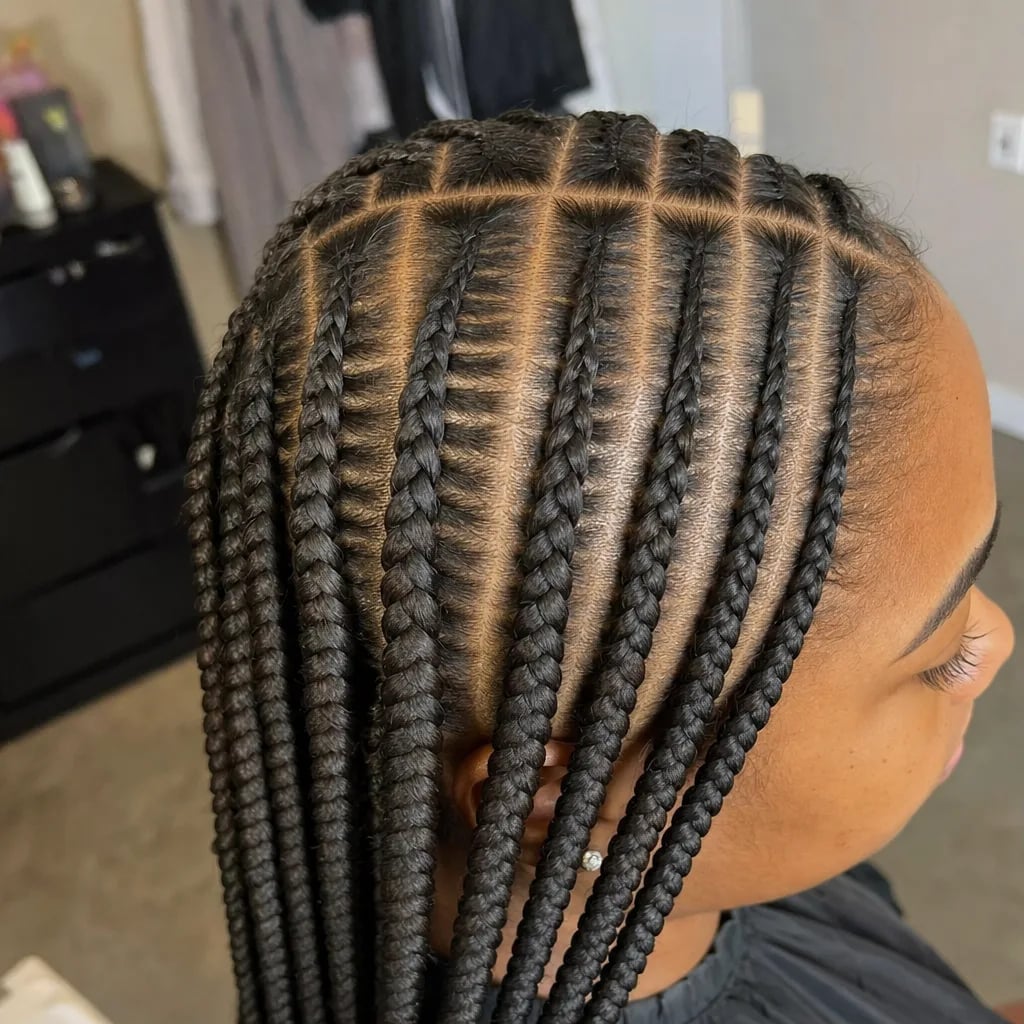
Precision starts at the part. Thick, straight black hair sections into neat box braids from a clean middle parting, and that exact line makes the whole style look deliberate rather than thrown together. The catch: fine or wavy texture won’t hold the structure this cleanly, straight, dense hair is the baseline. Have your stylist do: neatly sectioned box braids, middle part. The look holds its shape for two to three weeks with a silk scarf at night and minimal manipulation during the day.
Final Thoughts
Pick a parting, then pick a braid. The part does the heavy work. It determines how the style sits, how long it stays, and how it looks from the side.
- Fine hair: a middle-part french braid with a firm tension.
- Thick hair: a dutch braid that sits above the ear.
- Ten minutes in the morning: a side braid with loose waves.
- Six weeks between appointments: a geometric part with box braids.
Braids with defined partings offer a structured yet flexible styling canvas.