Every morning starts with the same negotiation: a style that stays put through recess and looks like you tried, even when you did not. That is the sweet spot these 15 ideas hit, with braids, ponytails, and buns that actually hold their shape without a fight.
From quick pigtails to more intricate braided crowns, the collection spans low to moderate effort, so you can pick by the time you have and the texture you are working with. Which is why Lovely Kids Hairstyles 2027 fill so many saved boards: they solve the real problem of a style that lasts until pickup.
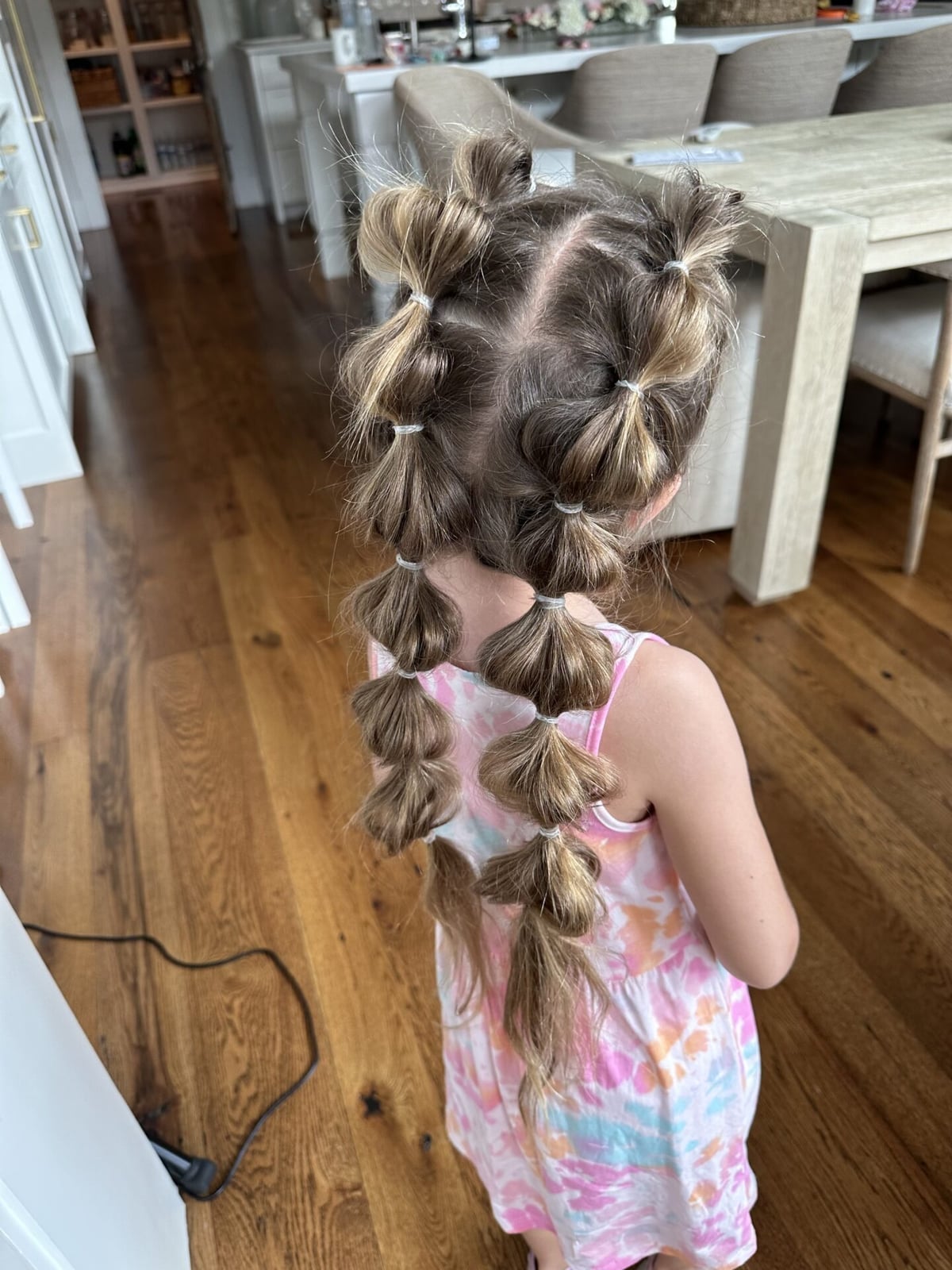
Dark blonde bubble ponytails with lighter highlights
Multiple sections of hair are gathered into a cascade of bubble ponytails, each elastic creating a rounded segment. The dark blonde base shows a few lighter pieces woven through the wavy texture. It suits thick hair that can hold the elastic sections without slipping. Tell your stylist: multiple bubble ponytails with a middle part. Use small, snag-free elastics to avoid breakage. Re-do any sections that loosen during the day. The catch: very fine hair struggles to keep these bubbles defined.
Practical light brown pigtails for everyday wear
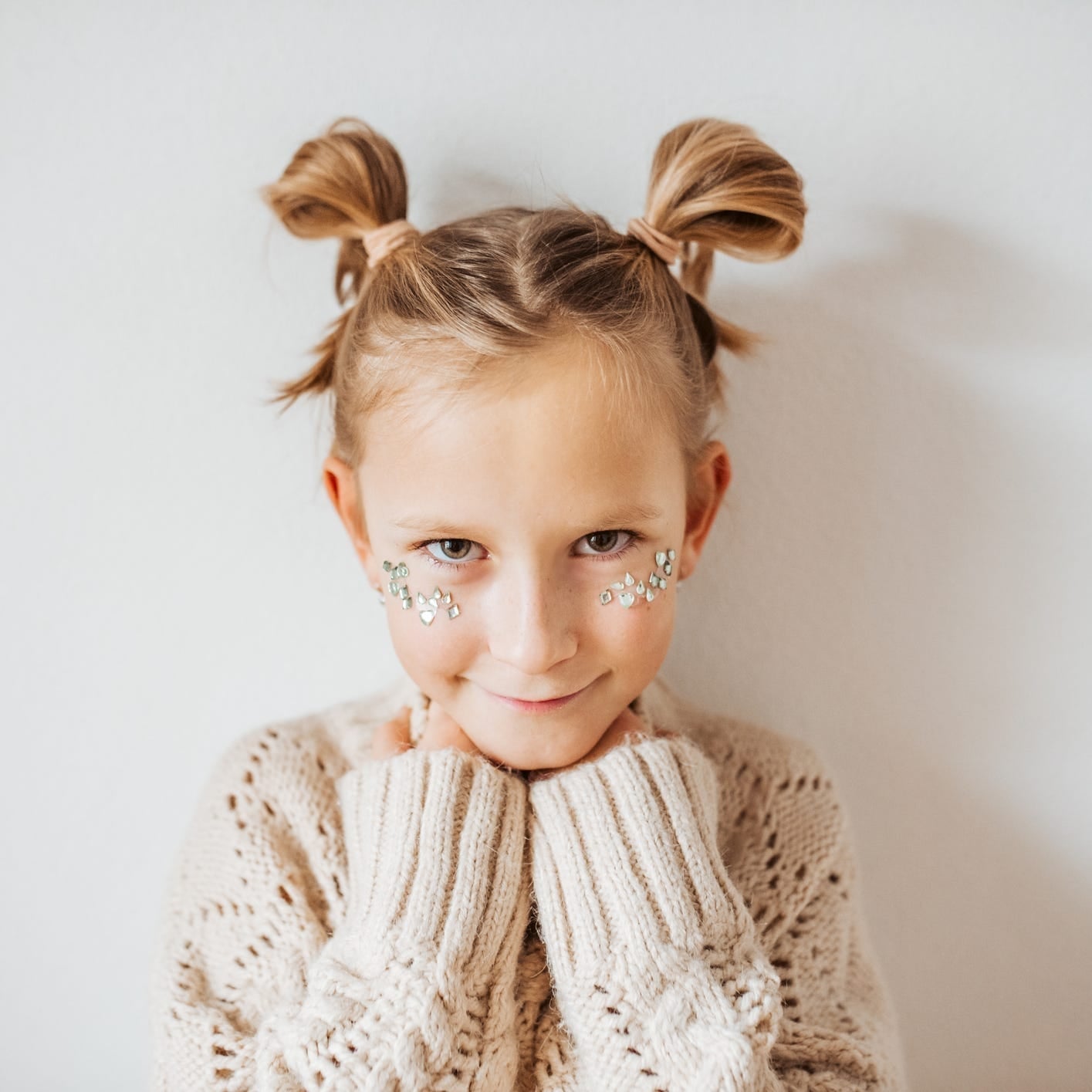
Two high pigtails sit on either side of a middle part, the light brown wavy texture thick enough to hold the shape. Skip it if hair is too short to form defined ponytails. Secure each pigtail with a strong elastic and add a texturizing spray for grip. This is a DIY look that takes minutes. The wavy texture gives the pigtails natural volume without extra work.
Blonde heart-shaped braids with decorative bows
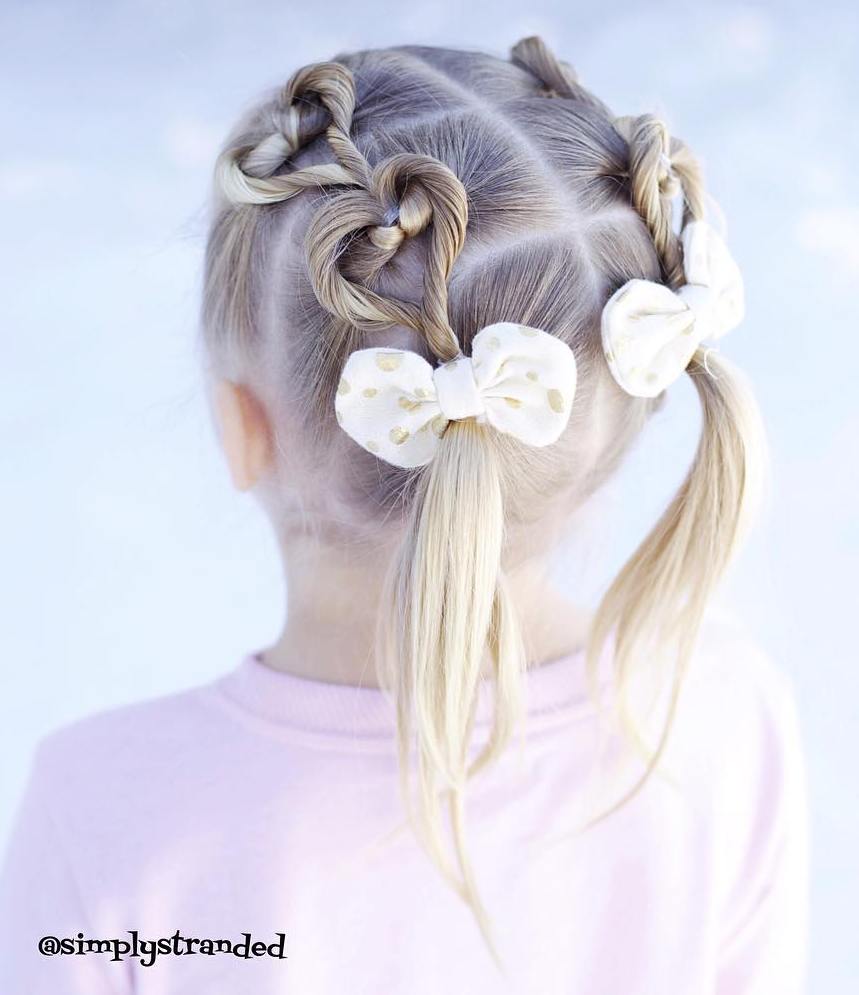
Can heart-shaped braids work on fine hair? Yes, if the blonde hair is at least shoulder length. The braids sit at the crown and flow into two low ponytails. Ask your tech for: heart-shaped crown braids into low ponytails. Place the decorative bows carefully so they don’t pull on the braids. This is a salon-only style that takes time and patience.
Playful light brown bubble ponytails for kids
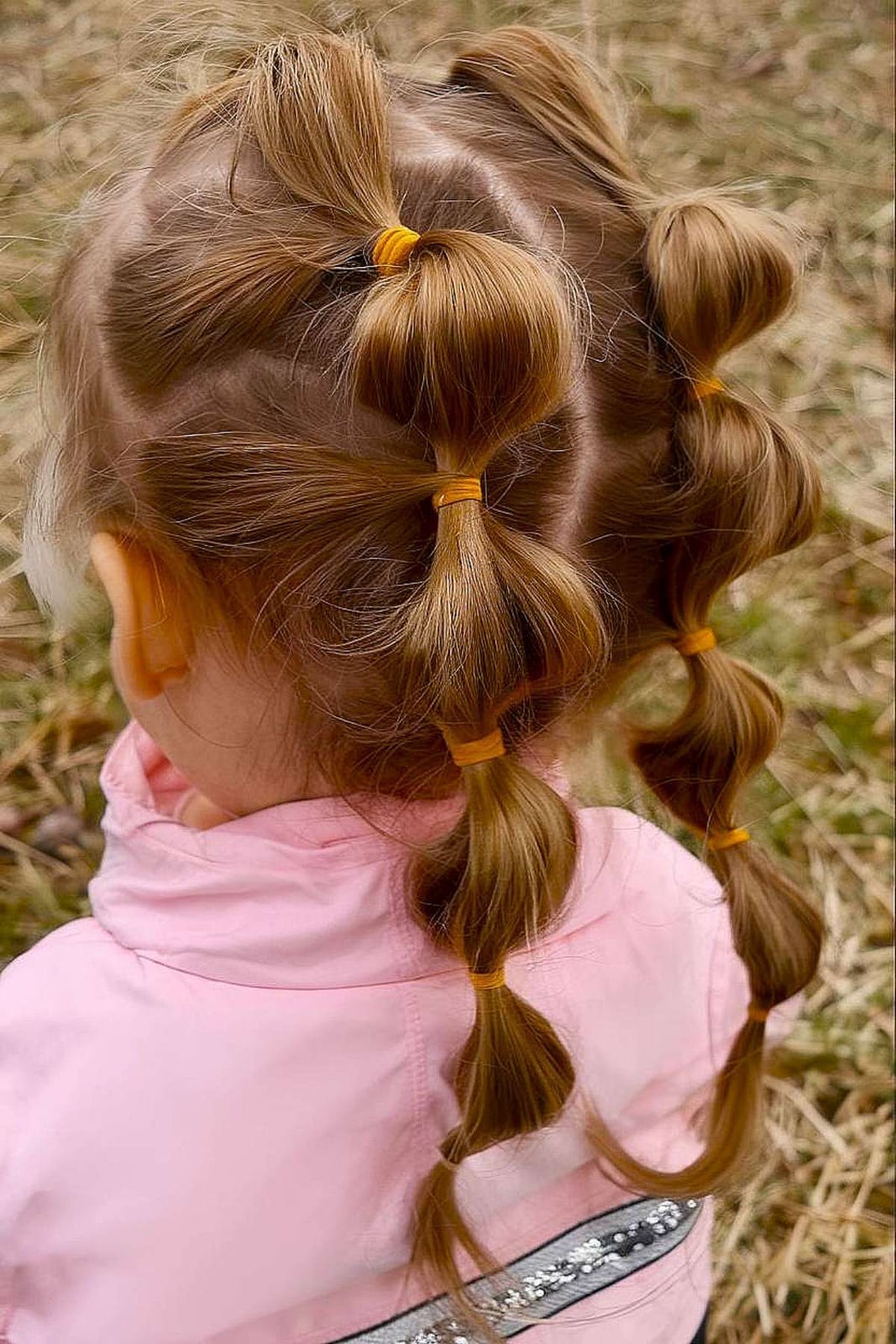
Bubble ponytails use elastics to section the hair into rounded segments, creating a series of puffs from top to bottom. The light brown hair has a thick, wavy texture that holds each bubble well. This look differs from a standard ponytail because the sectioned elastics add structure and visual interest. It suits long hair that can be divided evenly. Use clear elastics for a smooth effect. Skip it if hair is too fine to hold the sections in place.
Compare this to a simple high ponytail: the bubble version stays neater through active play. The centered parting keeps the style symmetrical. Each section needs to be the same size for the bubbles to line up properly. Thick, wavy hair helps the bubbles hold their shape with minimal effort.
Dark blonde twisted braid with lighter blonde ends
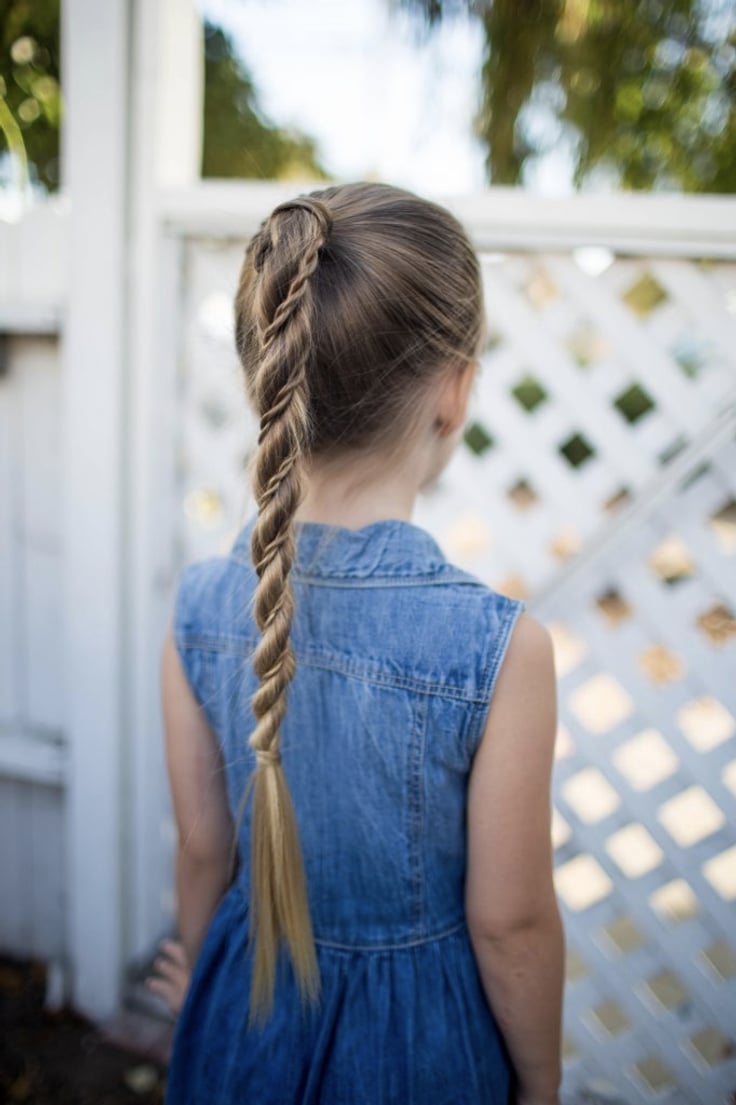
A twisted braid runs down the back from a middle part, the dark blonde hair lightening toward the ends. The texture is straight and thick, which keeps the twist clean. The trade-off: this style works best on long hair that can hold the twist without slipping. Apply a smoothing serum before braiding. Trim every eight weeks to keep the ends healthy. The lighter ends create a subtle gradient effect that adds depth.
Skip it if hair is very short or too curly for a defined twist. The braid holds well through the day with minimal adjustment. It suits heart and oval face shapes due to the centered line.
Diamond braid pattern secured with elastics into a thick braid
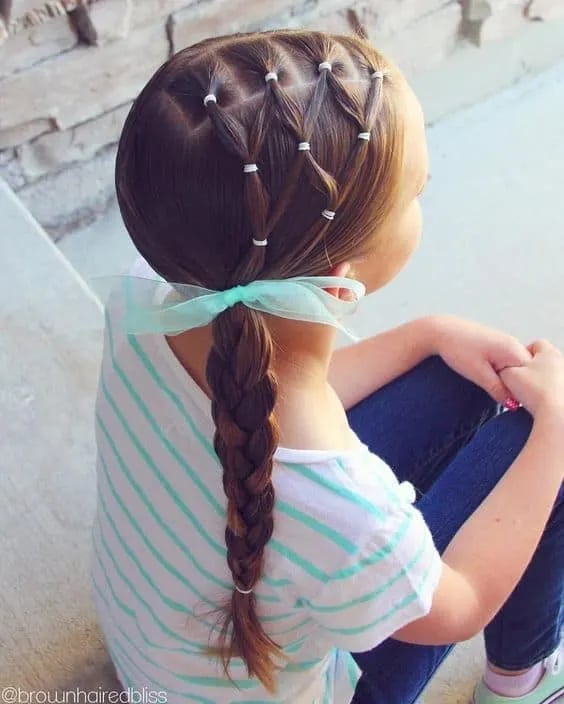
Dark brown, straight, and thick hair is sectioned into a precise diamond pattern on the crown, each segment secured with a small white elastic. The rest gathers into a single thick braid at the nape, tied with a light blue ribbon. The geometry is the point: it is deliberate, not accidental. Not for very fine or curly hair that won’t hold the sections. Ask your stylist for a diamond pattern crown braid to nape ponytail. Re-braid weekly to keep the pattern crisp; a finishing spray tames flyaways between washes.
Black updo with a large bun and diamond braids
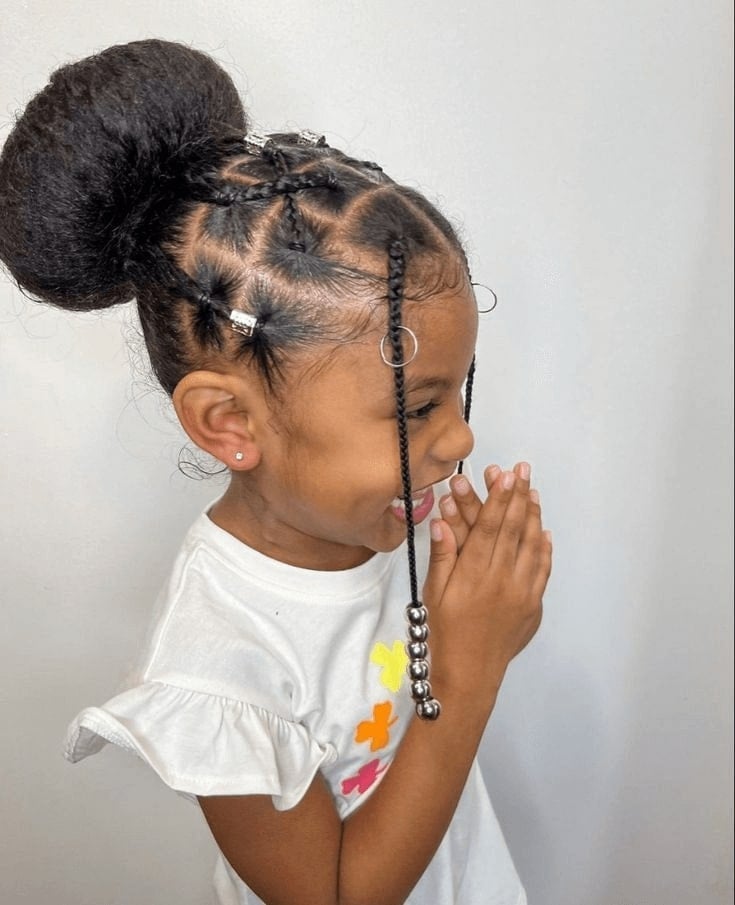
A large, voluminous bun sits on top, with diamond-pattern braids wrapping around the crown. Small silver beads and rings accent the braids, with longer sections carrying larger beads. Thick, coily black hair holds this structure naturally. The catch: it is a salon-only design; recreating the braid geometry at home takes serious skill. A strong hold gel at the roots keeps the sleek finish intact, with a hairspray mist to lock everything in place.
Intricate braids meet low ponytails with pink bows
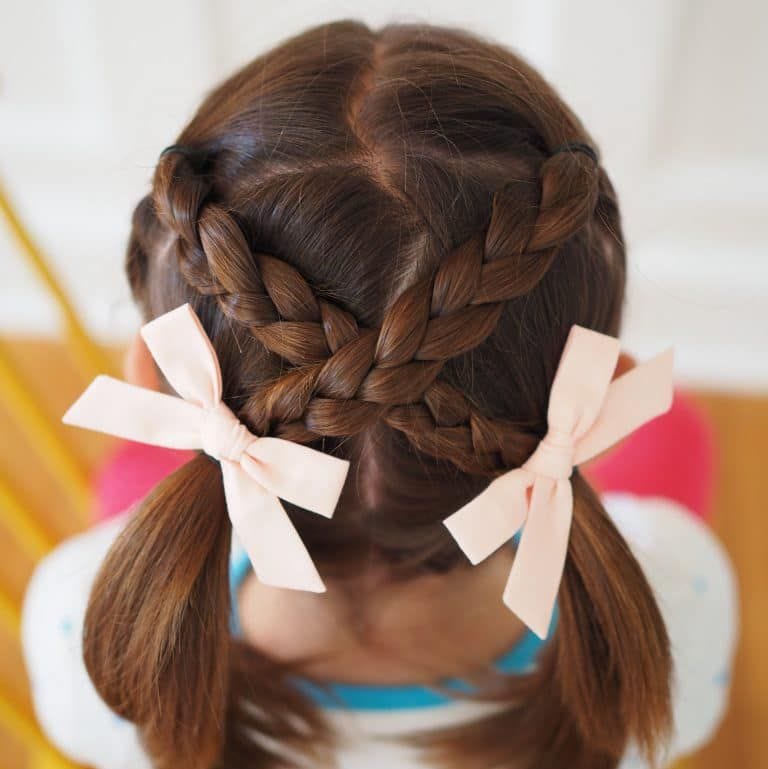
Two intricate braids start at the crown, meet at the nape, and transition into two low ponytails, each tied with a delicate pink bow. Compared to a single braid, this split creates more visual weight at the back and works better for thick, straight dark brown hair. Oval and long faces benefit from the horizontal line at the nape. Skip it if hair is too fine or curly for clean partings. Ask your stylist for a double braided crown into low ponytails with bows. The bows need a firm anchor; a bobby pin through the knot keeps them from sliding.
Light brown braided crown into a fishtail braid
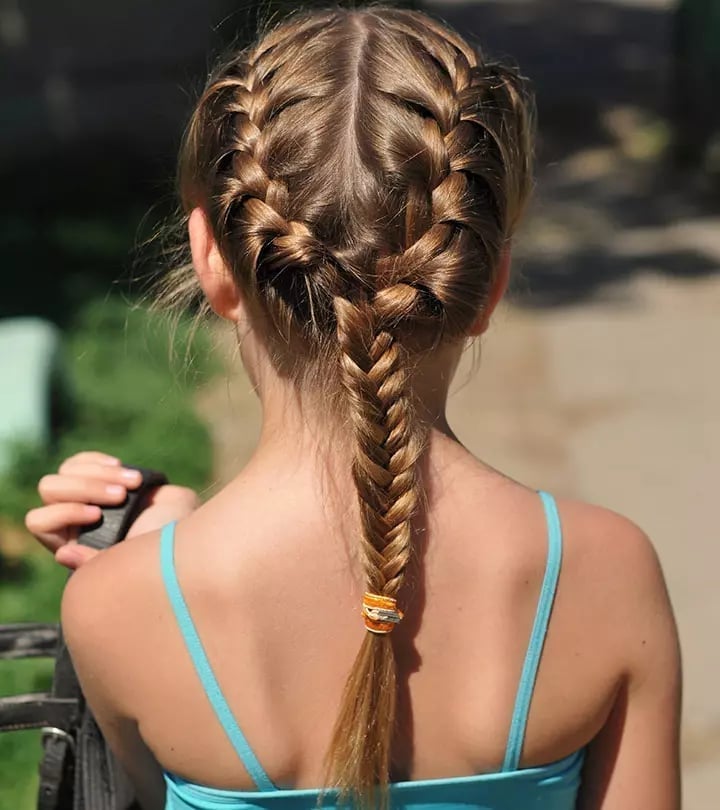
Two French braids start at the temples, meet at the nape to form a crown-like band, then flow into a single thick fishtail braid. The light brown hair has subtle blonde highlights that catch the braid structure. The technique: French braid sections are taken from the hairline, not the crown, which keeps the braids flat against the head. A tail comb creates the clean partings needed for symmetry. A shine spray at the end pulls out the highlight contrast.
Single French braid runs down one side with a large bow
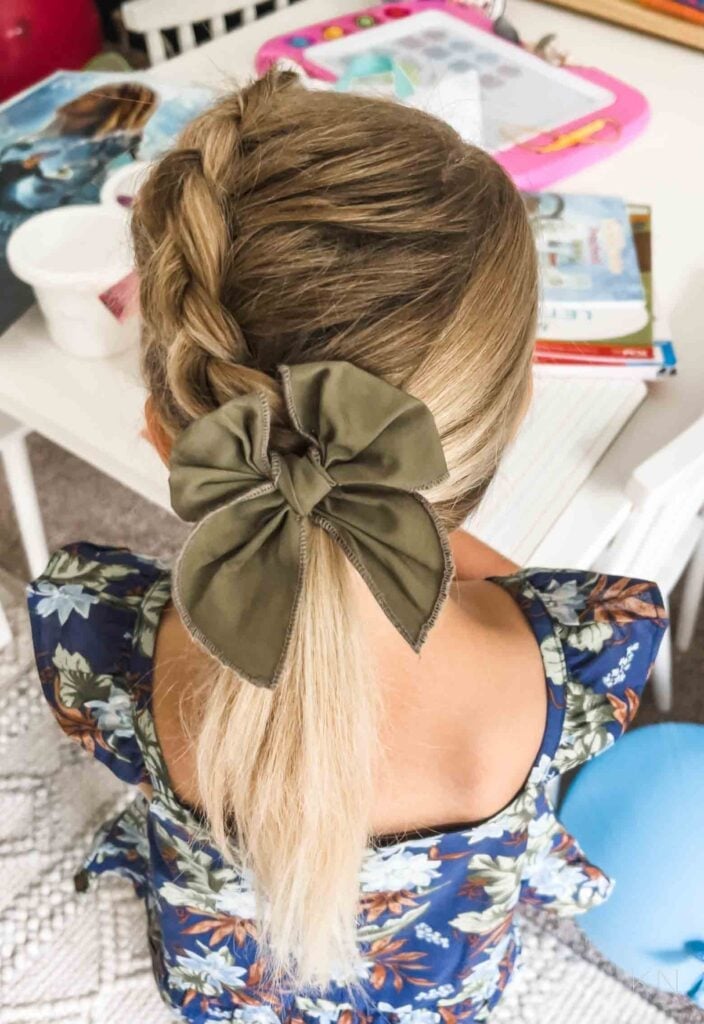
A single French braid starts at the left temple and runs down one side, meeting a sleek ponytail at the nape. The blonde hair is straight and fine, which allows the braid to lie flat and neat. A large olive green bow sits at the base, adding a playful punch. This is a salon-leaning style: the braid requires even tension to stay tight against the head. Fine hair works best here, thick or curly strands make the side braid bulky. Tell your stylist: a side French braid into a nape ponytail with a bow.
At home, section the hair from the temple to the nape before starting the braid. Secure the bow with a bobby pin through the knot so it stays put through a full day of play.
Brown looped braid from a high ponytail
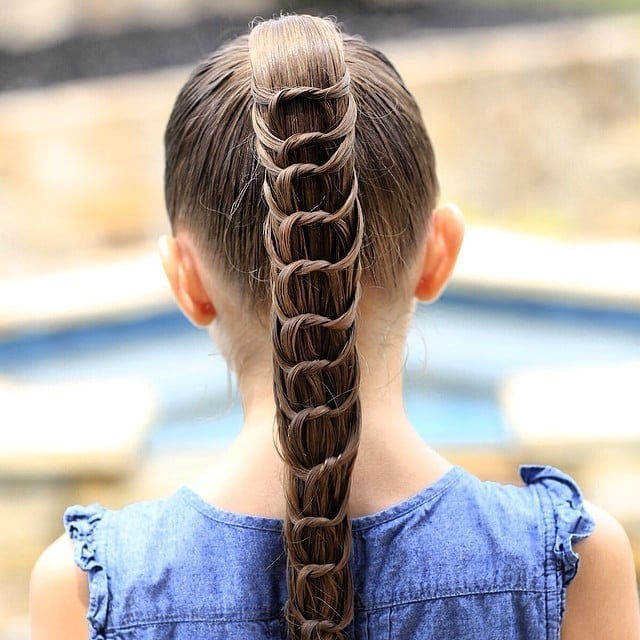
Need a style that survives a party and still looks intentional at pickup? The looped braid from a high ponytail does exactly that. Long, thick brown hair is pulled into a middle part and swept up high. The braid itself is the standout: loops create a woven effect that holds shape without slipping. It works best on thick straight hair that can support the structure. Not for very fine or curly hair that cannot hold the looped braid pattern.
Upkeep is minimal once the braid is set. A strong hold hairspray keeps the loops defined through movement and naps. Trim every six to eight weeks to keep the ends clean. The design does all the work; you just send them off.
Braids styled with beads and small blue ribbons
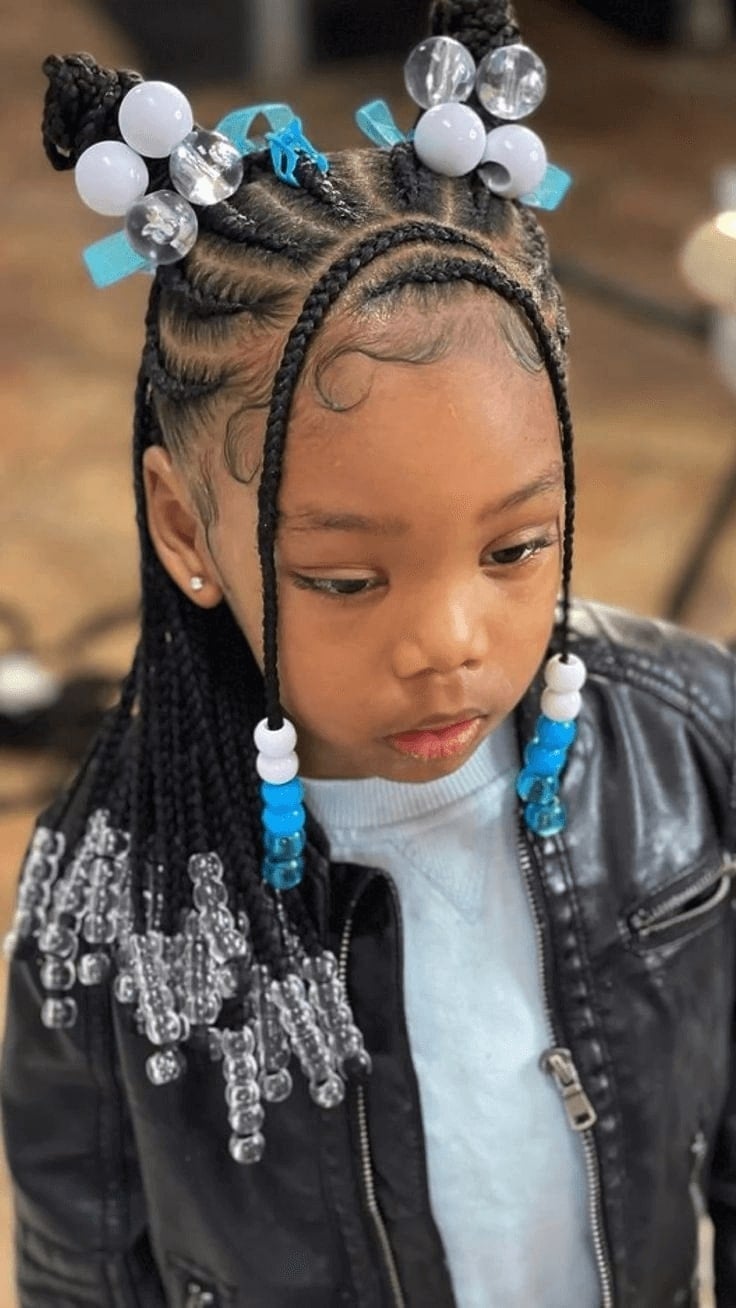
Beads and ribbons turn a standard braid into something that takes the whole morning to admire. Black, straight hair is sectioned into multiple braids, each threaded with white and blue beads and tied with small blue ribbons at the top. The baby hairs at the hairline are left out and smoothed down, which softens the whole look. Pass when hair is very fine or curly and the beads will slip or tangle. The beads and ribbons need to be checked and tightened every few days; loose ones become a hazard. A dab of edge control keeps the baby hairs neat through a full day of play.
Thick wavy dark brown braids with a large blue bow
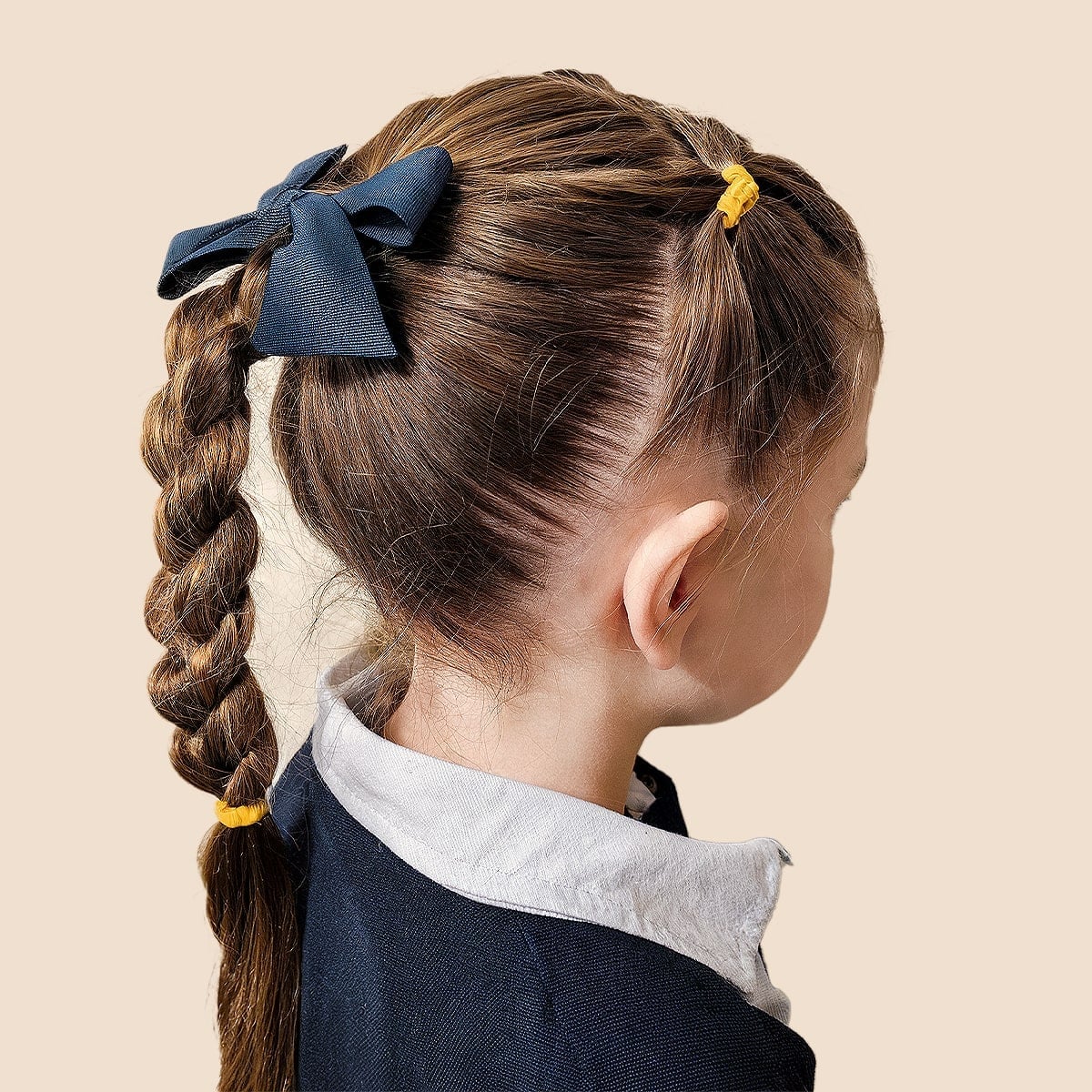
Two thick braids are always faster than one intricate one. The dark brown wavy hair is parted down the middle and divided into two even sections, each braided loosely to keep the wave visible. Subtle lighter strands catch the braid structure without looking streaky. A large dark blue bow sits on one side braid, secured with a small yellow elastic. This is a salon-leaning look: getting the part even and the braids equal takes practice. Square and round faces benefit from the width the braids add at the sides. For a DIY attempt, apply a texturizing spray before braiding to stop the waves from sliding apart.
Intertwined braids with bows into low ponytails
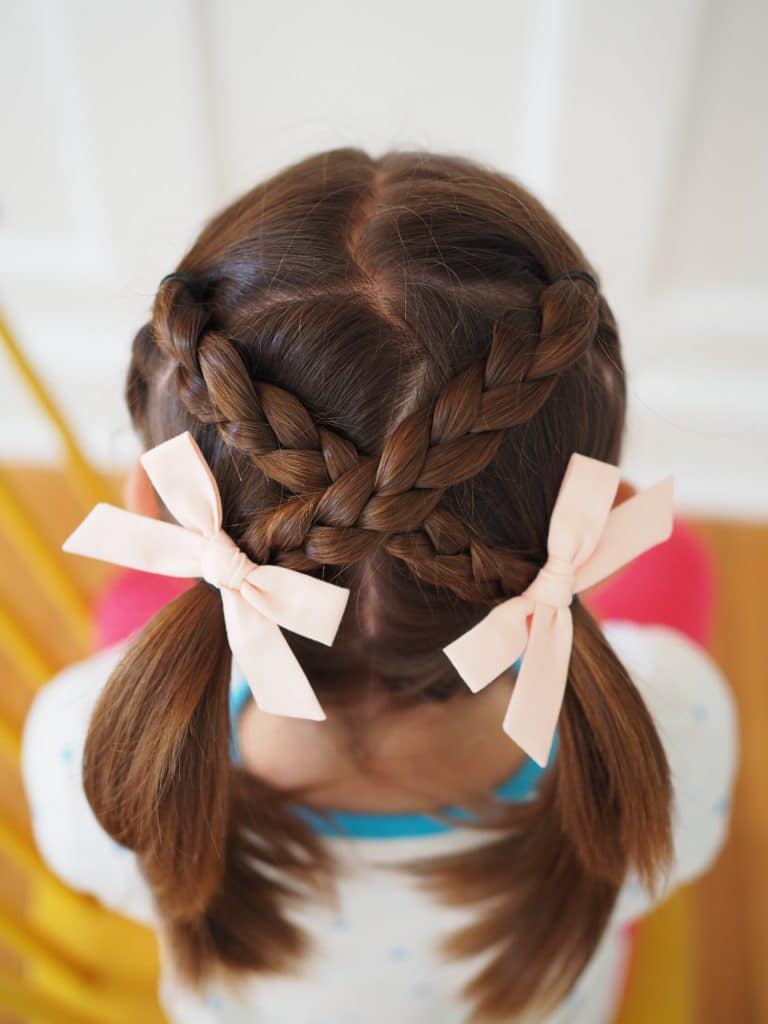
Criss-cross braids at the crown look more effort than two separate braids, yet they take about the same time. The dark brown, straight, thick hair is divided into sections that cross over each other on top, creating a lattice pattern. The remaining length falls into two low ponytails, each tied with a soft pink bow. The middle part keeps the pattern symmetrical. Oval and heart-shaped faces suit the centered structure best. This design works for weddings or picture day because the braids stay tight and the bows stay visible. No heat is needed; the braids alone create the shape.
Honey blonde fishtail braid with subtle highlights
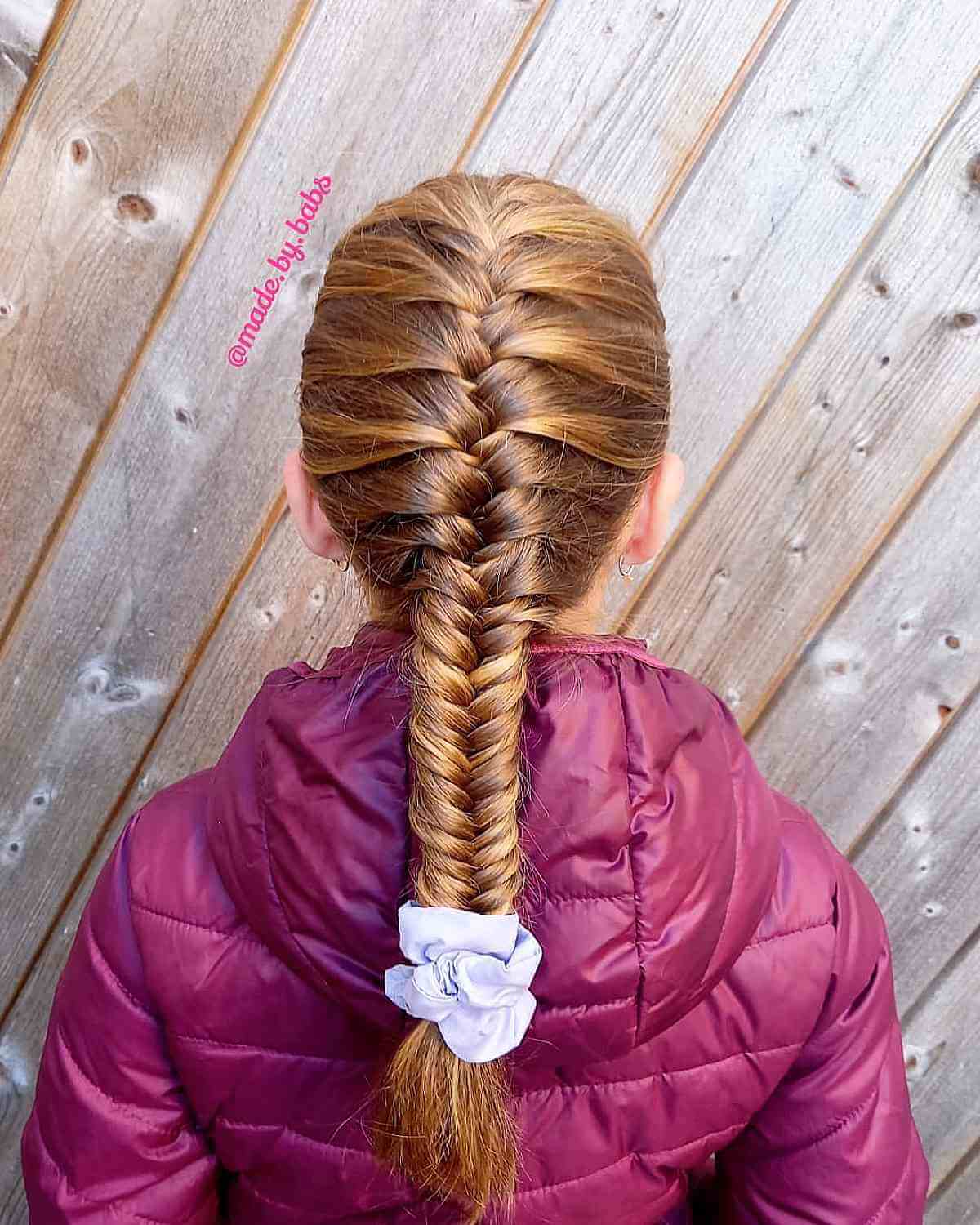
Fishtail braids hold tighter than a three-strand braid, so they last through naps and playground tumbles. Honey blonde hair with subtle lighter highlights runs from a middle part into one long braid down the center. The thick, straight texture keeps the pattern crisp. Not for very fine hair that cannot section into two clean strands. Apply a texturizing spray before braiding for grip. Pull the edges gently apart for a fuller look, then secure with a scrunchie. The braid alone creates the shape; no heat needed.
Round and square faces suit the centered middle part best. The honey blonde base with lighter strands catches the braid structure without looking streaky. This style works for parties because it stays put all day. Not for curly hair that cannot hold a fishtail pattern. Tell your stylist: honey blonde fishtail braid, middle part.
Final Thoughts
Pick by the time you have or the braiding skill you want to build.
- Ten minutes: bubble ponytails or simple pigtails with bows.
- Twenty minutes: heart braids or a single French braid with a bow.
- Thirty minutes: diamond braids or a braided crown into a fishtail.
- For all: keep braids loose enough to avoid discomfort and refresh beads or bows weekly.
Choose a style that fits your child’s hair and your daily rhythm.